Veterinary Tools: Classification, Uses, and How to Choose the Right Tools for a Farm
Veterinary tools include instruments and supplies used for examination, animal restraint, medication administration, sample collection, animal care, and hygiene control during procedures.
A farm does not necessarily need the same “standard veterinary kit” as every other facility. The needs of a farm that mainly monitors herd or flock health will differ from those of a farm whose staff directly administer vaccines, collect samples, or perform other veterinary procedures.
Before purchasing tools and supplies, farms should therefore answer three questions:
- What tasks does the farm actually perform itself?
- Who will use the tools?
- After use, will the tools be discarded, cleaned, disinfected, or sterilized?
A suitable veterinary kit not only makes procedures more convenient but also helps reduce cross-contamination, minimize material waste, and prevent farms from purchasing products beyond their actual needs.
Which tools should a farm start with?
| Actual task | Priority tools and supplies |
| Daily health monitoring | Thermometer, observation tools, suitable scales or measuring tools, record-keeping materials |
| Care and first aid | Gauze, bandages, scissors, and appropriate care supplies |
| Medication or vaccination | Syringes, needles, sharps container |
| Diagnostic sample collection | Tubes, swabs, containers, labels, and transport supplies |
| Procedures involving large livestock | Restraint equipment appropriate for the species and procedure |
| Use of reusable instruments | Appropriate cleaning, disinfection, or sterilization capability |
| Tasks involving possible exposure to blood, secretions, or chemicals | Gloves, safety glasses, and appropriate personal protective equipment |
There is no need to purchase every type of veterinary tool. The list should be based on the farm’s actual tasks, users, frequency of use, and ability to process tools after use.
1. Before Buying Veterinary Tools, Identify What the Farm Actually Does

A common mistake is to create a purchasing list based on product names rather than actual tasks.
Farms should begin by reviewing activities such as:
- Monitoring herd or flock health.
- Weighing animals or assessing growth.
- Providing minor wound care.
- Administering medications or vaccines.
- Collecting and sending samples for testing.
- Restraining animals.
- Cleaning and processing tools.
- Disposing of sharps.
- Recording information at the individual-animal or herd/flock level.
If most professional veterinary procedures are performed by a veterinarian or an external service provider, the farm should agree in advance on:
- Which tools the farm will prepare.
- Which supplies the veterinary service provider will bring.
- Which items only need to be kept as backup.
This approach helps avoid two opposite problems:
- Buying too many tools that are rarely or never used.
- Discovering that an important item is missing when a procedure needs to be performed.
How are veterinary tools different from veterinary equipment?
In practical use, veterinary tools usually refer to handheld instruments or supplies used directly during procedures, such as:
- Syringes.
- Needles.
- Forceps.
- Scissors.
- Thermometers.
- Stethoscopes.
- Sample tubes and containers.
By contrast, veterinary equipment generally refers to machines used for examination, diagnosis, or specialized procedures, such as:
- Ultrasound machines.
- Centrifuges.
- Biochemistry analyzers.
The distinction between these two groups is not always absolute.
When preparing a budget, more important considerations include:
- The task that needs to be performed.
- The person operating the tool or equipment.
- Technical requirements.
- Maintenance costs.
- Processing and storage requirements after use.
2. Veterinary Tools Should Be Grouped by Task
Health monitoring and initial examination
This group may include:
- Thermometers.
- Stethoscopes.
- Examination lights.
- Scales.
- Appropriate measuring tools.
- Record books or digital recording systems.
When choosing a thermometer, check:
- Measurement range.
- Stated accuracy.
- Measurement time.
- Ease of cleaning.
For stethoscopes, the chestpiece size should be suitable for the animal being examined. A design that works well for large livestock may not be convenient for poultry or smaller animals.
If a measuring tape is used to estimate body weight, choose one appropriate for the animal group and remember that the result is only an estimate.
Animal restraint
Restraint equipment helps:
- Reduce the risk of sudden animal movement.
- Reduce the risk of injury to handlers.
- Support more accurate procedures.
The appropriate choice depends on:
- Species.
- Body weight.
- Behavior.
- Duration of restraint.
- Type of procedure being performed.
For cattle, buffalo, or adult pigs, facilities may need:
- Restraint frames or chutes.
- Restraint crates.
- Lead ropes or other suitable specialized restraint equipment.
For poultry or smaller animals, restraint equipment should be:
- Lightweight.
- Appropriately sized.
- Designed to avoid unnecessary injury.
Before use, check:
- Locks.
- Latches.
- Contact surfaces.
- Whether the equipment can be released quickly in an emergency.
Appropriate equipment does not replace proper animal-handling and restraint skills.
Care and first aid
Depending on the type of farm, suitable supplies may include:
- Gauze.
- Bandages.
- Appropriate scissors.
- Cleaning supplies.
- Wound-care products used according to veterinary guidance.
A first-aid kit should be:
- Easy to access.
- Clearly organized into compartments.
- Checked regularly.
- Organized so that clean materials are separated from opened supplies.
Products that must remain sterile should stay in their original packaging until use.
If an injury is beyond the capabilities of farm personnel, a veterinarian should be contacted rather than continuing an inappropriate intervention.
3. Injection Tools: Choose Syringes and Needles Based on the Procedure, Not Just the Animal Species
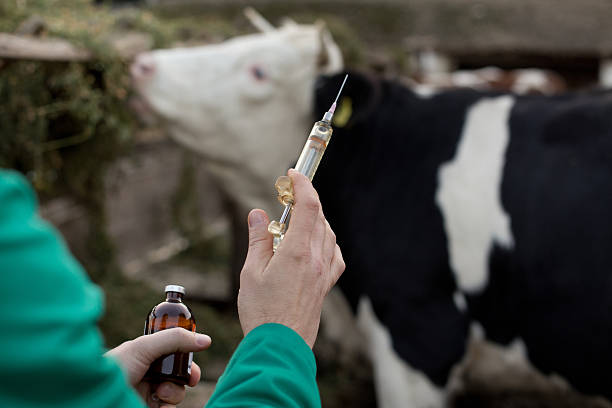
Syringes and needles are among the most commonly used veterinary supplies, but they should not be selected only according to general labels such as:
- Needles for piglets.
- Needles for cattle.
- Needles for poultry.
The specific procedure should also be considered.
Choosing a syringe
A suitable syringe should have:
- Appropriate capacity.
- Graduation intervals suitable for the required volume.
- Clear measurement markings.
- Smooth and stable plunger movement.
- A leak-free connection.
- Compatibility with the required needles and accessories.
For automatic or multi-dose syringes, also check:
- Dosing accuracy.
- Adjustment mechanism.
- Availability of replacement parts.
- Cleaning instructions.
- Maintenance requirements.
Multi-dose syringes may be useful when vaccinating or treating large numbers of animals, but users still need proper instruction and should inspect the equipment before each use.
Choosing a needle
Two specifications should be considered together:
- Needle gauge.
- Needle length.
The correct choice depends on:
- Species.
- Age or body weight.
- Route of administration.
- Injection site.
- Volume to be administered.
- Product viscosity.
- Manufacturer’s instructions.
- Veterinary guidance.
Needle size should not be selected solely from general experience without first confirming the product and route of administration.
Checks before use
Do not use:
- Bent needles.
- Rusted needles.
- Cracked syringes.
- Leaking syringes.
- Sterile supplies with damaged packaging.
- Expired products where an expiry date applies.
During preparation, avoid allowing parts that need to remain sterile to come into contact with:
- Hands.
- Dirty work surfaces.
- Barn surfaces.
Supplies labeled single-use must not be reused.
A sharps container should be placed close to the procedure area so that needles can be discarded immediately after use.
4. Sample Collection Tools Should Be Selected According to the Test
Sample-collection supplies should not be prepared according to a “one kit fits all” approach.
The appropriate tools depend on:
- Sample type.
- Intended test.
- Storage method.
- Laboratory requirements.
Blood sample collection
Supplies may include:
- Blood collection needles.
- Tube holders or suitable syringes.
- Sample tubes.
- Tube racks.
- Labels.
Different tubes serve different purposes.
For example:
- EDTA tubes are commonly used for hematology testing.
- Tubes intended for serum collection have different requirements.
- Citrate tubes are used for certain coagulation tests.
Do not rely only on the color of the tube cap.
Confirm:
- The additive used.
- Required sample volume.
- Required sample-to-additive ratio where applicable.
- Storage conditions.
Fecal samples and swabs
Fecal samples require containers that are:
- Tightly sealed.
- Leak-resistant.
- Suitable for the intended test.
- Designed to minimize cross-contamination.
For swab samples from the:
- Nose.
- Oropharynx.
- Vagina.
- Cloaca.
confirm:
- Swab-tip material.
- Shaft type.
- Transport medium.
Do not assume that all swabs are interchangeable.
Some viral tests have specific requirements for swab materials.
Other clinical samples
For example, synovial fluid is collected using an aseptic aspiration technique by appropriately trained personnel.
The correct container may differ depending on whether the sample is intended for:
- Cellular evaluation.
- Microbiological culture.
- Other diagnostic tests.
A container suitable for cytological examination may not be suitable for culture.
Sample storage and transportation
Samples should be:
- Securely sealed.
- Leak-resistant.
- Clearly labeled.
- Matched correctly with the sample submission form.
There is no universal rule that every sample should simply be placed in a refrigerator after collection.
Storage temperature and holding time depend on the sample type and intended test.
Whenever possible, the laboratory should be contacted before sample collection, especially for specialized tests.
5. Single-Use and Reusable Tools Require Different Management
Single-use supplies
Products labeled for single use should be discarded after use.
If sterility is required for the procedure, also check:
- Packaging integrity.
- Sterile status.
- Expiry date, where applicable.
Not every single-use product is automatically supplied sterile.
Reusable tools
A tool should only be reused when:
- The manufacturer permits reuse.
- The material can withstand the required processing method.
- The facility is able to clean and process it correctly.
Reusability should not be considered only as a way to reduce purchasing costs.
The full cost also includes:
- Cleaning labor.
- Chemicals.
- Sterilization.
- Maintenance.
- Cross-contamination risk.
- Processing time.
If a facility cannot provide the required level of reprocessing, sterile single-use supplies may be more suitable for certain procedures.
6. Cleaning, Disinfection, and Sterilization: Three Different Levels of Processing
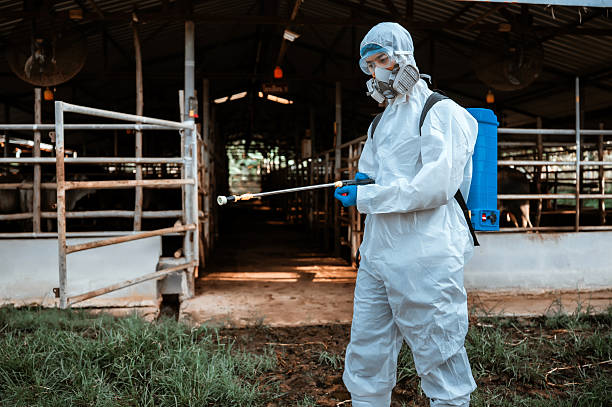
These three terms should not be used interchangeably.
Cleaning
The purpose of cleaning is to remove:
- Blood.
- Secretions.
- Organic material.
- Visible contamination from tools.
Cleaning is usually an essential step before disinfection or sterilization.
If significant organic material remains on a surface, the effectiveness of subsequent processing may be reduced.
Disinfection
Disinfection aims to:
- Remove or inactivate microorganisms to a level appropriate for the intended use.
However, disinfection does not necessarily eliminate all spores.
Its effectiveness depends on:
- Quality of initial cleaning.
- Disinfectant used.
- Concentration.
- Contact time.
- Tool material.
Sterilization
Sterilization aims to eliminate or inactivate all microorganisms, including spores.
Tools that enter:
- Sterile tissue.
- The vascular system.
must be sterile at the time of use.
Options may include:
- Sterile single-use products.
- Reusable tools that have undergone appropriate sterilization.
Processing reusable tools
After use:
- Collect contaminated tools separately.
- Discard single-use supplies.
- Clean surfaces, joints, and internal spaces.
- Inspect the condition of the tool.
- Proceed with disinfection or sterilization as required.
For tools that require heat sterilization, appropriate:
- Drying.
- Inspection.
- Packaging.
should be completed before the sterilization cycle.
A tool should not be considered “clean” or “sterile” based only on its external appearance.
Storage after processing
Processed tools should be stored in a way that prevents recontamination.
Tools that need to remain sterile should be kept:
- Dry.
- In suitable packaging.
- Intact until use.
Packages that become:
- Wet.
- Torn.
- Unsealed.
should be reprocessed before the tool is used.
7. Personal Protective Equipment and Sharps Management Are Also Part of a Veterinary Kit
A veterinary kit should not include only supplies intended for animals.
The person performing the procedure must also be protected.
Personal protective equipment
Depending on the task, appropriate PPE may include:
- Gloves.
- Safety glasses.
- Face protection.
- Protective clothing.
- Appropriate respiratory protection.
Selection depends on the risk of exposure to:
- Blood.
- Secretions.
- Chemicals.
- Splashes.
- Potentially infectious agents.
Gloves do not replace hand hygiene.
Hands should be cleaned:
- Before putting on gloves.
- After removing gloves.
Gloves should also be changed appropriately when moving between:
- Clean and contaminated tasks.
- Different areas.
- Animals or groups with different infection risks.
Needles and other sharps
Used needles, blades, and other sharps should be placed directly into a dedicated sharps container.
The container should be:
- Puncture-resistant.
- Leak-resistant.
- Closable.
- Located close to the procedure area.
Do not:
- Recap needles using two hands.
- Bend needles.
- Compress waste by hand.
- Force additional items into a sharps container once it has reached its fill limit.
- Dispose of needles with general household waste.
Once the container reaches the specified fill limit, it should be closed and transferred for disposal according to applicable requirements.
8. How to Build a Veterinary Kit for Different Types of Farms
A farm does not necessarily need the same list of tools and supplies as a specialized veterinary facility.
The following table can be used as a starting point:
| Farm activity | Tools and supplies that may be needed | Condition before purchase |
| Health and growth monitoring | Thermometer, observation tools, scale/measuring tape, record-keeping tools | Suitable for the species and the person responsible for monitoring |
| Care and first aid | Gauze, bandages, scissors, care supplies | Must not exceed the capabilities of farm personnel |
| Examination and restraint | Stethoscope, examination light, restraint equipment | A trained person must be available to use them safely |
| Medication/vaccination | Syringes, needles, sharps container | Specifications must match the product and route of administration |
| Sample collection and submission | Sample-collection supplies, containers, labels, transport materials | Requirements should be confirmed in advance with a veterinarian or laboratory |
| Processing reusable tools | Cleaning agents, cleaning tools, disinfection/sterilization equipment | The facility must genuinely be capable of performing the required processing |
| Protecting personnel | Gloves, eye protection, and other PPE | Select according to the hazards of the task |
Inventory management
Purchase quantities should be based on:
- Consumption rate.
- Vaccination seasons.
- Sampling frequency.
- Delivery lead times.
- Storage capacity.
Avoid overstocking supplies that:
- Have expiry dates.
- Are temperature-sensitive.
- Can lose sterility if the packaging is damaged.
Inventory records should include:
- Tool or product name.
- Specifications.
- Quantity.
- Expiry date, where applicable.
- Condition.
- Reorder point or time for replenishment.
Damaged tools should be separated from ready-to-use items to prevent accidental use.
9. Five Criteria to Check Before Making a Purchase
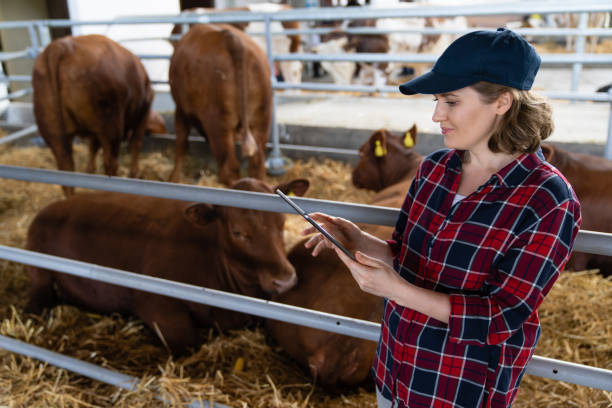
1. Does the tool match the actual task?
This should be the first question.
A product should not be purchased simply because it looks “professional” or commonly appears in veterinary kits.
Confirm:
- Who will use it?
- How often will it be used?
- Does the user have the necessary skills?
- Is there a suitable plan for storage and processing after use?
2. Is it suitable for the species and procedure?
The same type of tool may not be suitable for every animal because size and design requirements vary.
Consider:
- Animal body size.
- Procedure site.
- Ability to restrain the animal.
- Actual barn conditions.
3. Is the material compatible with the cleaning method?
Product descriptions such as:
- “Stainless steel.”
- “Medical-grade plastic.”
are not enough to confirm that a tool can withstand every type of:
- Chemical.
- Heat exposure.
- Sterilization cycle.
This is particularly important for:
- Connections and joints.
- Internal channels.
- Removable parts.
It should be possible to determine whether these areas can be fully cleaned.
4. Can the tool maintain its accuracy?
For items such as:
- Thermometers.
- Syringes.
- Measuring instruments.
products with clearly stated specifications should be prioritized.
Inspection, calibration, or replacement should be carried out according to relevant instructions when appropriate.
Signs that an item should be taken out of service include:
- Faded graduations.
- A leaking plunger.
- A jammed adjustment mechanism.
- Abnormal measurement results.
- Rust.
- Cracks.
- Deformation.
5. What is the total cost of use?
Do not compare only the initial purchase price.
Total cost may also include:
- Accessories.
- Chemicals.
- Maintenance.
- Post-use processing.
- Training.
- Replacement parts.
- Consumables.
A low-cost tool that wears out quickly or is difficult to clean may become more expensive over the long term.
Suppliers should provide:
- Clear product information.
- Product origin.
- Technical specifications.
- Instructions for use.
- Availability of replacement parts.
For consumable supplies, also check:
- Expiry dates.
- Lot numbers, where applicable.
- Reliability of future supply.
Frequently Asked Questions About Veterinary Tools
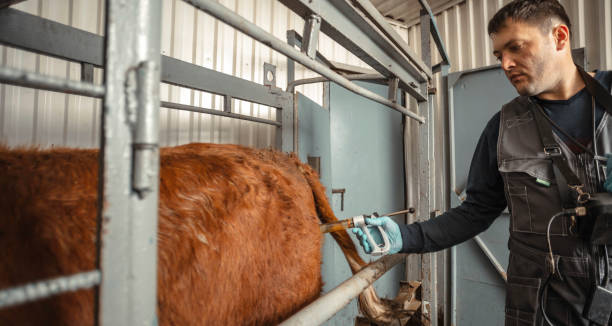
What should a basic veterinary kit for a farm include?
There is no single fixed list suitable for every farm.
A farm may begin with:
- Health-monitoring tools.
- Animal-care supplies.
- Cleaning and hygiene materials.
- Personal protective equipment.
Syringes, sample-collection tools, and specialized restraint equipment should only be added when the farm genuinely needs them and has personnel who are competent to use them.
Can the same examination tools be used for livestock and poultry?
Some tools can be used across different animal groups when they are:
- Appropriately sized.
- Suitable for the intended function.
- Able to be cleaned and processed correctly.
However, farms should still consider separating equipment by:
- Animal housing area.
- Risk group.
- Isolation area.
This can help reduce cross-contamination.
Can disinfection be used instead of sterilization?
Not when a tool must be sterile.
For example, tools that enter:
- Sterile tissue.
- The vascular system.
must meet sterility requirements at the time of use.
The required level of processing should be based on:
- Intended use.
- Product design.
- Manufacturer’s instructions.
How often should tools be inspected or replaced?
Do not wait only for scheduled inventory checks.
Tools should be inspected before use.
If an item is:
- Damaged.
- No longer accurate.
- No longer hygienically safe.
- Cracked.
- Rusted.
- Deformed.
it should be removed from use and assessed for repair or replacement.
When should a veterinarian or laboratory be contacted?
A veterinarian should be contacted when:
- Animals show signs with an unclear cause.
- A specialized veterinary procedure is required.
- An infectious disease is suspected.
- The procedure exceeds the capabilities of farm personnel.
Before collecting samples, contact the laboratory to confirm:
- Sample type.
- Container.
- Collection method.
- Storage temperature.
- Transport conditions.
Proper preparation from the beginning helps avoid situations where a sample has already been collected but is unsuitable for the intended test.
Compare and Choose Suitable Veterinary Tools at VIETSTOCK 2026
A suitable veterinary kit should be built around the farm’s actual tasks rather than purchased from a fixed checklist. Animal species, frequency of use, operator skills, sterility requirements, and the farm’s ability to process tools after use all affect purchasing decisions. This is particularly important for syringes, needles, sample-collection supplies, and reusable tools, where technical specifications and cleaning procedures should be considered from the time of purchase.
For farms reviewing or expanding their veterinary tools, VIETSTOCK 2026 provides an opportunity to see products in person, compare different options, and speak directly with suppliers before making an investment decision. The event is expected to bring together 300 brands across more than 10,000 sqm of exhibition area and welcome around 13,000 trade visitors from 40 countries.
Rather than comparing price alone, visitors can focus on factors that affect long-term use, including:
- Examination and monitoring tools: explore thermometers, stethoscopes, observation tools, and other supplies used for herd or flock health checks.
- Syringes, needles, and vaccination supplies: compare capacities, graduation intervals, needle sizes, replacement accessories, and cleaning requirements for different tasks.
- Sample collection and transport supplies: explore tubes, swabs, sample containers, and packaging solutions appropriate for different types of diagnostic testing.
- Cleaning, disinfection, and sterilization solutions: review products and equipment designed to process tools according to their intended use and reduce cross-contamination.
- PPE and sharps disposal: explore solutions that help protect users and support safer disposal of used needles, blades, and other materials.
This article also emphasizes that veterinary tools are only effective when supported by appropriate hygiene and infection-control procedures. Those interested in biosecurity and hygiene in livestock production can also follow the One Health Forum on October 22, 2026.
The program addresses practical solutions related to farm management, biosecurity, and hygiene — topics directly connected to how veterinary tools are used, processed, and organized at livestock facilities.
Date: October 21–23, 2026
Venue: Saigon Exhibition and Convention Center – SECC, 799 Nguyen Van Linh Street, Tan My Ward, Ho Chi Minh City, Vietnam
Event website: VIETSTOCK 2026
👉 Register to Visit VIETSTOCK 2026
👉 Visitor Registration Information
👉 Learn More About the One Health Forum
👉 Explore Innovation, Green Transition and Competitiveness at VIETSTOCK 2026
Contact information:
Exhibiting: Ms. Sophie Nguyen – [email protected]
Group Delegation Support: Ms. Phuong – [email protected]
Marcom Support: Ms. Anita Pham – [email protected]