Obstetric Disorders in Livestock: Warning Signs and Postpartum Management
Obstetric disorders in livestock can occur before, during, and after parturition. Learn how to recognize dystocia, retained placenta, uterine prolapse, and postpartum uterine infection, and when veterinary intervention is needed.
Obstetric disorders in livestock are diseases and complications that occur during pregnancy, parturition, and the postpartum period. They can affect the health of the dam, the survival of newborn animals, and reproductive performance in subsequent breeding cycles.
Conditions that commonly require monitoring include:
- Dystocia.
- Retained placenta.
- Uterine prolapse.
- Postpartum uterine infection or inflammation.
- Disorders that delay reproductive recovery.
An important point is that these problems do not always occur independently. A case of dystocia may leave the dam exhausted or cause injury to the reproductive tract, increasing the risk of postpartum complications.
For this reason, livestock producers should not consider the birth of the newborn to be the end of the monitoring process.
For breeding cattle in particular, effective management during the peripartum period plays an important role in herd health, productivity, and reproductive performance in subsequent cycles. Pasted markdown(20261008-092943)
Monitoring Livestock Around Parturition: What Should Be Watched at Each Stage?
| Stage | Warning signs to watch for | Priority action |
| Before parturition | Abnormal body condition, history of dystocia, heifers, or risk of a large fetus | Prepare the calving area, monitor the expected due date, and be ready to seek veterinary assistance |
| During parturition | Prolonged straining without fetal progress, fetus becoming stuck, dam becoming exhausted | Do not attempt uncontrolled traction or administer uterine stimulants; contact a veterinarian |
| First few hours after birth | Placenta not yet expelled, weakness, or abnormal bleeding | Record the time of birth and monitor closely; do not manually remove the placenta |
| Immediately after birth | A large mass of tissue protruding from the vulva | Suspect uterine prolapse and call a veterinarian immediately |
| Following days | Foul-smelling discharge, reduced appetite, weakness, or reduced milk production | Assess the risk of uterine infection and arrange veterinary examination |
Do not consider the birth of the newborn to be the end of monitoring. Many obstetric complications appear within hours or days after parturition and may affect reproductive performance in the next breeding cycle.
1. Before Parturition: Good Preparation Helps Reduce the Risk of Complications
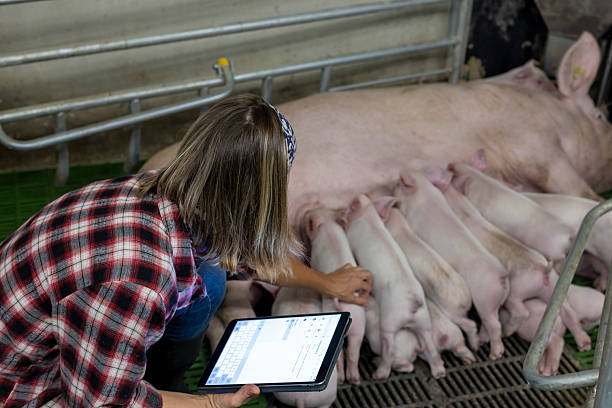
Obstetric management should begin before the animal enters labor.
Factors related to:
- Body condition.
- Nutrition.
- Health of the dam.
- Fetal size.
- Reproductive history.
- Conditions in the birthing area.
can influence both the course of parturition and postpartum recovery.
Monitor body condition
Animals that are excessively fat or excessively thin may both face difficulties during the peripartum period.
Before the expected due date, monitor:
- Body condition.
- Feed intake.
- Mobility.
- Signs of illness.
- Any unusual changes.
In first-calving heifers, the risk of dystocia deserves particular attention because of possible disproportion between:
- Fetal size.
- Pelvic size.
- Development of the reproductive tract.
Selecting an appropriate sire is also part of managing dystocia risk in heifers.
Balance the ration
The ration should meet the needs of the:
- Species.
- Breed.
- Stage of pregnancy.
- Body condition.
- Production level.
Minerals, vitamins, or energy should not be adjusted aggressively simply with the goal of “making birth easier.”
Some metabolic disorders around parturition may be associated with an increased risk of complications. Nutritional programs should therefore be built around actual requirements rather than relying only on supplementation after a problem has already appeared.
Prepare the birthing area
The birthing area should be:
- Dry.
- Clean.
- Spacious enough.
- Easy to observe.
- Designed to reduce slipping.
- Accessible if professional assistance is needed.
Animal caregivers should know in advance:
- The expected due date.
- Which animals are considered high risk.
- How to contact the veterinarian.
- What to do if labor becomes abnormal.
Record key times
Keeping records helps determine whether labor is progressing normally.
Record:
- When signs of labor begin.
- When active straining begins.
- When the water bag ruptures.
- When the fetus first becomes visible.
- When the newborn is completely delivered.
This information is also very useful when describing the situation to a veterinarian.
2. During Parturition: When Should Dystocia Be Suspected?
Dystocia is a difficult or abnormal birth in which the dam has difficulty delivering the fetus and may require professional assistance.
The cause may be related to the:
- Dam.
- Fetus.
- Birth canal.
- Uterine contractions and expulsive efforts.
Common causes
In cattle, important causes include:
Fetus too large for the dam’s birth canal
This deserves particular attention in:
- Heifers.
- Animals with a relatively small pelvis.
- Cases involving disproportion between fetal and maternal size.
Abnormal fetal presentation or position
The head, legs, or body of the fetus may not be positioned properly for passage through the birth canal.
Incomplete cervical dilation
If the cervix has not dilated adequately, the fetus may fail to progress even when the animal is straining.
Insufficient expulsive force
This may be associated with:
- Exhaustion.
- Metabolic disorders.
- Abnormal uterine contractions.
Other abnormalities affecting the fetus or dam
These may include:
- Fetal developmental abnormalities.
- Injury to the reproductive tract.
- Other health problems.
Warning signs of dystocia
Close monitoring is needed when:
- The animal strains strongly and repeatedly but the fetus does not progress.
- The water bag has ruptured but the fetus does not appear.
- Only part of the fetus remains visible for an extended period.
- The dam becomes exhausted.
- The animal spends excessive time lying down.
- The animal stops straining abnormally after having strained for some time.
- There is heavy bleeding.
- There are clear signs of severe pain or weakness.
In cattle, if active straining has begun but there is no clear progress for around one hour, a veterinarian should be contacted for assessment.
However, there is no need to wait for the full hour if any of the following are already present:
- The fetus is stuck.
- Heavy bleeding.
- Severe exhaustion of the dam.
- Other serious abnormalities.
Do not attempt fetal traction before identifying the cause
Incorrect traction can cause:
- Injury to the reproductive tract.
- Injury to the fetus.
- Bleeding.
- More severe obstruction.
Do not attempt manual or instrument-assisted traction if:
- Fetal position has not been identified.
- The birth canal has not been assessed.
- The person performing the procedure has not been trained.
Do not administer oxytocin without professional guidance
Oxytocin or other drugs that stimulate uterine contractions should not be administered without professional guidance.
If the fetus is:
- Stuck.
- Malpositioned.
- Obstructed mechanically.
stronger contractions may make the situation more dangerous.
A more appropriate approach is to:
- Record the timing.
- Observe progression.
- Avoid unnecessary intervention.
- Contact a veterinarian when abnormalities appear.
3. Immediately After Parturition: Monitor the Placenta and the Risk of Uterine Prolapse
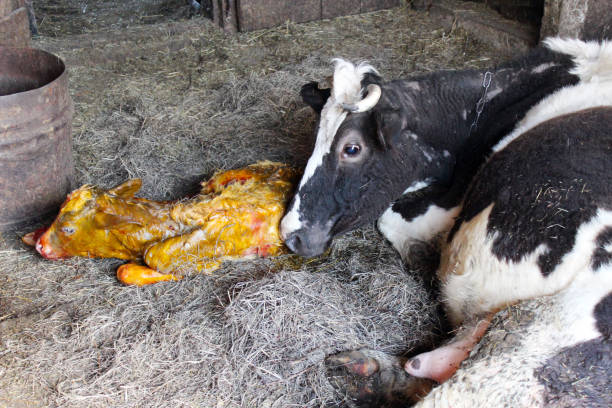
After the newborn has been delivered, the dam still requires close observation.
Two problems requiring particular attention during the first few hours are:
- Retained placenta.
- Uterine prolapse.
Retained placenta: do not judge only by whether membranes are hanging outside
Retained placenta, also referred to as retained fetal membranes, occurs when the fetal membranes are not completely expelled from the uterus after parturition.
In cattle, the placenta is commonly expelled within approximately 3–8 hours after calving. According to the source content, retained fetal membranes in cattle are generally identified when the placenta has not been expelled after 24 hours.
This timing applies to cattle and should not automatically be used to assess other livestock species.
Signs to monitor
The most visible sign is:
- Fetal membranes still hanging from the vulva.
However, the membranes are not always visible externally.
Part of the placenta may remain:
- Inside the uterus.
- Difficult to observe from the outside.
Therefore, record:
- Time of birth.
- Time when the placenta is expelled.
- Feed intake.
- Body temperature.
- Vaginal discharge.
- General alertness.
Factors that may increase the risk of retained placenta
In cattle, risk may be associated with:
- Dystocia.
- Twin births.
- Premature birth.
- Stillbirth.
- Periparturient metabolic disorders.
- Certain diseases or inflammatory conditions during pregnancy.
- Nutritional imbalance.
- Poor health before calving.
From a physiological perspective, retained placenta should not be understood simply as “weak uterine contractions.”
Failure of the fetal membranes to separate properly from the uterus also plays an important role.
Do not manually remove the placenta
Do not:
- Pull on the placenta.
- Manually strip or remove it.
- Infuse medication into the uterus without veterinary guidance.
- Administer medication without professional advice.
Pulling or manually removing fetal membranes before placental structures have fully separated may damage uterine tissue.
Manual removal is not recommended as a routine treatment for retained placenta in cattle.
Retained placenta also does not mean that every case automatically requires antibiotics.
Management should be based on:
- General condition.
- Signs of infection.
- Postpartum progression.
- Veterinary assessment.
Uterine prolapse: an obstetric emergency
Uterine prolapse occurs when the uterus turns inside out and protrudes through the cervix and vulva, usually immediately or shortly after parturition.
This is an emergency because it may lead to:
- Tissue damage.
- Bleeding.
- Contamination.
- Swelling.
- Circulatory compromise.
- Life-threatening complications.
Typical signs
You may see:
- A large mass of tissue protruding from the vulva.
- Red or dark-red tissue.
- Swelling.
- A surface that is easily injured.
- Tissue contaminated with soil, feces, or other debris.
The dam may:
- Continue straining.
- Appear restless.
- Spend excessive time lying down.
- Show signs of pain.
- Become weak.
- Show signs of shock in severe cases.
Uterine prolapse and vaginal prolapse are not the same
Vaginal prolapse is more commonly observed:
- During late pregnancy.
Uterine prolapse usually occurs:
- Immediately after parturition.
- Shortly after parturition.
However, diagnosis should not be made solely from:
- Size of the protruding tissue.
- Color.
- External appearance.
If an abnormal mass protrudes from the vulva, a veterinarian should be contacted.
While waiting for the veterinarian
You can:
- Keep the animal in a clean area.
- Limit movement.
- Prevent the prolapsed tissue from contacting soil or feces.
- Protect the tissue surface with a clean, appropriately moistened towel or cloth.
- Minimize mechanical trauma.
Do not:
- Pull on the tissue.
- Rub it aggressively.
- Apply chemicals on your own.
- Attempt to replace the uterus yourself.
Returning the uterus to its normal position requires proper technique, hygiene, and pain control.
4. In the Days After Parturition: When Should Uterine Infection Be Suspected?
Postpartum uterine infection or inflammation develops after an animal gives birth.
In cattle, these conditions are often detected during the first few weeks after calving.
If severe or prolonged, they may affect:
- General health.
- Milk production.
- Uterine recovery.
- Ability to return to breeding.
- Conception.
Risk factors
Risk may increase when animals experience:
- Prolonged dystocia.
- Retained placenta.
- Stillbirth.
- Twin births.
- Obstetric intervention performed under poor hygienic conditions.
- Metabolic disorders.
- Poor health during the peripartum period.
These factors may:
- Damage the reproductive tract.
- Create conditions that favor bacterial growth.
- Reduce postpartum recovery.
Postpartum discharge does not always indicate disease
After parturition, animals may have vaginal discharge as the uterus recovers.
Normal postpartum discharge may change over time in:
- Color.
- Amount.
- Appearance.
Therefore, uterine infection should not be diagnosed solely because vaginal discharge is present.
Signs that deserve more attention
Early assessment is warranted when there is:
- Clearly foul-smelling discharge.
- Abnormal discharge.
- Possible pus.
- Reduced appetite.
- Depression.
- Weakness.
- Fever.
- A marked decrease in milk production in dairy cattle.
Not every case of uterine infection is accompanied by fever.
Assessment should therefore consider:
- Vaginal discharge.
- Body temperature.
- Feed intake.
- General condition.
- Milk production.
- Postpartum progression.
Effects on reproductive performance
Uterine infection may:
- Delay recovery of the reproductive tract.
- Affect the uterine environment.
- Delay return to estrus.
-
Reduce conception rates.
- Prolong the calving interval.
The degree of impact depends on:
- Severity of disease.
- Timing of detection.
- Overall health status.
- Effectiveness of treatment.
Do not self-administer:
- Antibiotics.
- Intrauterine medications.
- Multiple drug combinations.
Treatment should be selected based on diagnosis, an appropriate product, and veterinary guidance.
5. How Can Obstetric Complications Be Connected?
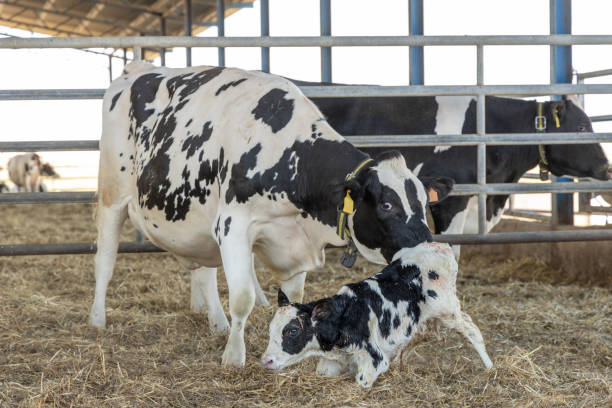
One of the most important principles in peripartum management is not to treat each problem as an entirely separate disease.
A possible chain of risk can be illustrated as follows:
Dystocia
↓
Exhaustion of the dam or injury to the reproductive tract
↓
Higher risk of postpartum abnormalities
↓
Retained placenta
↓
Higher risk of postpartum infection
↓
Uterine infection
↓
Delayed reproductive recovery
↓
Difficulty returning to breeding or reduced reproductive performance
This sequence does not occur in every animal.
A cow that experiences dystocia will not necessarily develop:
- Retained placenta.
- Uterine infection.
- Reduced fertility.
However, once one complication occurs, the level of monitoring during the subsequent period should be increased.
For example:
- Cows that have experienced dystocia should be monitored more closely for placental expulsion.
- Cows with retained placenta should be monitored for postpartum discharge and general condition.
- Cows with uterine infection should have reproductive recovery assessed before rebreeding is managed.
This approach helps farms move from treating isolated cases to managing the entire peripartum period.
6. When Should a Veterinarian Be Called Immediately?
Not every abnormality can simply be monitored in the barn.
Some conditions require prompt or emergency assessment.
During parturition
Contact a veterinarian if:
- The animal strains for an extended period without fetal progress.
- The fetus is stuck.
- Only part of the fetus is visible.
- The dam stops straining abnormally.
- There is heavy bleeding.
- The animal becomes exhausted.
- The animal shows obvious signs of weakness.
Immediately after parturition
Emergency assistance is needed if:
- A large mass of tissue protrudes from the vulva and uterine prolapse is suspected.
- There is heavy bleeding.
- The animal is unable to stand.
- There are signs of shock.
- The animal deteriorates rapidly.
During the following hours or days
A veterinarian should be contacted promptly if:
- The placenta has not been expelled within the expected period.
- Postpartum discharge has a strong foul odor.
- The animal has reduced appetite or stops eating.
- Body temperature is abnormal.
- Milk production falls markedly.
- The animal is weak.
- Overall health continues to deteriorate.
When contacting a veterinarian, provide:
- Time when labor began.
- Time when active straining began.
- Time when the water bag ruptured.
- How labor progressed.
- Time when the newborn was delivered.
- Placental status.
- Vaginal discharge.
- Body temperature, if available.
- Ability to eat, drink, and stand.
7. Checklist for the First 24 Hours and the Following Days

Instead of checking only once immediately after birth, monitoring should continue through each stage.
Before parturition
- Record the expected due date.
- Check the dam’s health.
- Assess body condition.
- Prepare a clean, dry birthing area.
- Reduce slippery flooring.
- Keep the veterinarian’s contact information readily available.
- Identify animals with a history of dystocia or other high-risk factors.
During parturition
- Record when active straining begins.
- Monitor the water bag.
- Observe when the fetus becomes visible.
- Monitor whether the fetus is progressing through the birth canal.
- Observe the condition of the dam.
- Avoid intervention if labor is progressing normally.
- Contact a veterinarian if labor stops progressing or warning signs appear.
Immediately after parturition
- Record the time of birth.
- Monitor placental expulsion.
- Check whether any abnormal mass of tissue is protruding from the vulva.
- Check for bleeding.
- Monitor the animal’s ability to stand.
- Observe alertness.
- Monitor feed and water intake.
- Observe vaginal discharge.
During the first 24 hours
- Continue monitoring expulsion of the fetal membranes.
- Check body temperature when appropriate.
- Monitor feed intake.
- Observe movement.
- Monitor postpartum discharge.
- Record any abnormalities.
- Check whether the newborn is suckling and moving normally.
In the following days
Monitoring should not stop after the first 24 hours.
Continue observing:
- Feed intake.
- Body condition.
- Milk production.
- Vaginal discharge.
- Odor of discharge.
- Mobility.
- Body temperature when abnormalities are suspected.
- Overall recovery.
Some problems, especially uterine infections, may become more obvious only during the days after parturition.
Postpartum monitoring is especially important if the animal has experienced:
- Dystocia.
- Retained placenta.
- Uterine prolapse.
- Obstetric intervention.
Frequently Asked Questions About Obstetric Disorders in Livestock
Which obstetric disorders commonly affect livestock?
Commonly monitored conditions include:
- Dystocia.
- Retained placenta.
- Uterine prolapse.
- Postpartum uterine infection or inflammation.
- Disorders affecting reproductive recovery.
Clinical signs and severity may vary according to:
- Species.
- Age.
- Body condition.
- Reproductive stage.
How can you tell if an animal is experiencing dystocia?
Dystocia should be suspected when:
- The animal strains for a prolonged period but the fetus is not delivered.
- Labor does not progress.
- The fetus becomes stuck.
- Only part of the fetus is visible.
- The dam becomes exhausted.
- There is abnormal bleeding or pain.
Do not continue waiting if labor stops progressing or serious warning signs appear.
How long after calving is a placenta considered retained in cattle?
In cattle, the placenta is commonly expelled within approximately 3–8 hours after calving.
According to the source content, retained fetal membranes in cattle are generally identified when the placenta has not been expelled after 24 hours.
However, if the cow develops:
- Fever.
- Reduced appetite.
- Weakness.
- Foul-smelling discharge.
- Abnormal bleeding.
a veterinarian should be contacted earlier rather than waiting for the full 24-hour period.
Should the placenta be manually removed when a cow has retained placenta?
No.
Pulling or manually removing the placenta is not recommended as a routine management method because it may damage the uterus.
Management should be based on:
- General condition.
- Signs of infection.
- Postpartum progression.
- Veterinary assessment.
Is uterine prolapse dangerous?
Yes.
Uterine prolapse is an emergency that may lead to:
- Tissue damage.
- Bleeding.
- Contamination.
- Circulatory compromise.
- Life-threatening complications.
If tissue consistent with uterine prolapse is seen after parturition, contact a veterinarian immediately and protect the tissue from:
- Soil.
- Feces.
- Friction.
- Mechanical injury.
Can obstetric disorders affect future reproductive performance?
They can.
Conditions such as:
- Dystocia.
- Retained placenta.
- Severe or prolonged uterine infection.
may affect:
- Uterine recovery.
- Time to return to estrus.
- Conception.
- Calving interval.
The degree of impact depends on the individual case and how effectively the condition is managed.
Improve Monitoring and Management of Obstetric Risks at VIETSTOCK 2026
Problems such as dystocia, retained placenta, uterine prolapse, and uterine infection may occur in succession during the peripartum period and directly affect the health of the dam, the newborn, and reproductive performance in subsequent breeding cycles. Farms therefore need a monitoring process that begins before parturition, records the course of labor, and continues through postpartum health checks rather than intervening only after complications become obvious.
At VIETSTOCK 2026, livestock producers and technical teams can explore solutions that support a more proactive approach to reproductive management. The event is expected to bring together 300 brands, cover 10,000 sqm of exhibition area, and welcome around 13,000 trade visitors from 40 countries, giving participants access to a wide range of products, technologies, and solutions for livestock production and veterinary care.
During the event, visitors can focus on practical needs such as:
- Reproductive and pregnancy monitoring: explore technologies that support breeding records, expected due dates, pregnancy status, and key monitoring milestones.
- Peripartum livestock care: explore solutions for birthing areas, monitoring dams, and caring for newborn animals during the first few hours.
- Nutrition during late pregnancy and postpartum: learn about approaches that support body condition, recovery, and reproductive health.
- Veterinary equipment and tools: explore solutions that support examination, monitoring, and professional intervention when abnormalities occur.
- Reproductive data management: explore tools for recording calving history, postpartum complications, and reproductive outcomes for individual animals to support long-term monitoring.
For farms seeking to move beyond treating individual obstetric cases toward improving herd health and management quality, the One Health Forum on October 22, 2026 is also worth considering. Topics related to integrating One Health into livestock-production systems, farm management, and animal health can provide additional perspectives on risk prevention and the development of more coordinated herd-care procedures.
Date: October 21–23, 2026
Venue: Saigon Exhibition and Convention Center – SECC, 799 Nguyen Van Linh Street, Tan My Ward, Ho Chi Minh City, Vietnam
Event website: VIETSTOCK 2026
👉 Register to Visit VIETSTOCK 2026
👉 Visitor Registration Information
👉 Learn More About the One Health Forum
👉 Explore Innovation, Green Transition and Competitiveness at VIETSTOCK 2026
Contact information:
Exhibiting: Ms. Sophie Nguyen – [email protected]
Group Delegation Support: Ms. Phuong – [email protected]
Marcom Support: Ms. Anita Pham – [email protected]