Law on Veterinary Medicine: Regulations and Responsibilities for Farms and Businesses
The Law on Veterinary Medicine in Vietnam sets requirements for animal disease prevention and reporting, quarantine, veterinary drugs, hygiene, slaughter control, and veterinary practice. This guide explains the key responsibilities of farms and businesses and the main compliance points to review in 2026.
The Law on Veterinary Medicine regulates animal disease prevention and control, quarantine, slaughter control, veterinary hygiene, veterinary drug management, and veterinary practice. For farms and businesses, compliance begins with correctly identifying the activities carried out by the facility, the corresponding obligations, and the legal documents currently in force.
For livestock and poultry farms, routine responsibilities include disease prevention, herd or flock health monitoring, veterinary drug management, and preparing the required documents when animals are brought into or moved out of the farm. Businesses involved in additional activities such as transportation, slaughter, or processing must also meet the applicable requirements at each stage.
Quick Summary
- Veterinary obligations vary between livestock farms, transport operators, slaughter facilities, and veterinary drug businesses.
- When reviewing consolidated legal documents, the effective date of each amendment must be checked. The date a consolidated document is issued is not necessarily the date on which every provision becomes applicable.
- When signs of a disease subject to mandatory reporting are detected, the facility owner must immediately notify the relevant veterinary authority or competent local authority.
- Quarantine requirements, documentation, and facility conditions must be determined according to the actual activities being carried out.
- Monitoring herd or flock health, using veterinary drugs correctly, and maintaining traceability information help facilities manage risks more proactively.
What Activities and Entities Are Covered by the Law on Veterinary Medicine?
Scope of regulation
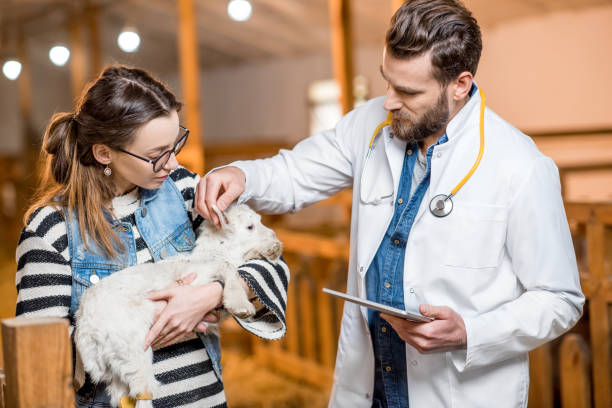
Under Articles 1 and 2 of the Law on Veterinary Medicine, the law covers animal disease prevention, treatment, and control; quarantine of animals and animal products; slaughter control, preliminary processing, and processing; veterinary hygiene inspection; veterinary drug management; and veterinary practice.
The law applies to both terrestrial animals and aquatic animals. However, disease prevention, quarantine, and disease-control procedures differ between animal groups.
Facilities that need to review their obligations
Relevant groups include livestock farms; animal owners, consignors, and transport operators; slaughter, preliminary-processing, and processing facilities; businesses trading animal products; companies manufacturing, trading, importing, or exporting veterinary drugs; veterinary practitioners; and organizations providing veterinary services.
A business involved in livestock production, transportation, and slaughter must review its obligations at each stage. Meeting the requirements applicable to a farm does not automatically replace the requirements applicable to a slaughter facility or transport vehicle.
Relationship with livestock and environmental regulations
In addition to the Law on Veterinary Medicine, facilities should also review legislation on livestock production, environmental protection, food safety, and other regulations relevant to their activities.
When reviewing legal requirements, facilities should check applicable laws, resolutions, decrees, circulars, technical regulations, and transitional provisions. Specific requirements should be determined according to the facility’s actual activities and operating conditions.
Reviewing the Law on Veterinary Medicine in 2026: Consolidated Documents and Effective Dates
Which legal documents should be considered?
The Official Gazette published Consolidated Document No. 153/2026/VBHN-LQ-VPQH dated September 25, 2026, consolidating the Law on Veterinary Medicine. This document was issued after Consolidated Document No. 80/VBHN-VPQH dated March 26, 2026.
However, Law No. 21/2026/QH16, which amends a number of laws in the agriculture and environmental sectors, takes effect on January 1, 2027. When handling matters in October 2026, amendments that do not take effect until 2027 should not automatically be applied in advance.
For administrative procedures and business conditions, facilities should also review the relevant provisions of Resolution No. 66.19/2026/NQ-CP and other documents currently in force for the specific activity concerned.
Can a consolidated document be used as an official legal basis?
Under Ordinance No. 01/2026/UBTVQH16, effective from July 1, 2026, consolidated documents may be used as an official basis for legal citation and application.
Readers should still check the notes, effective dates, and transitional provisions applicable to the relevant content. The date on which a consolidated document is issued does not mean that every provision contained in it becomes effective on that date.
How to check requirements before applying them
- Identify the activity involved: bringing animals onto the farm, transportation, slaughter, veterinary drug use, or service provision.
- Review the relevant documents in the National Legal Database, the Government Portal, or the Official Gazette.
- Check effective dates, amendments, repealed provisions, and transitional provisions.
- Confirm the applicable entity, location, animal species, and type of product.
- For administrative procedures, check the competent receiving authority and the documentation currently published by the relevant locality.
If any aspect of the documentation or disease situation is unclear, the facility should contact the local specialized veterinary authority to determine the appropriate procedure.
Key Groups of Veterinary Regulations to Understand
Disease prevention, reporting, and outbreak control
Farms need to organize cleaning, disinfection, and decontamination; control the source of breeding animals; and implement mandatory disease-prevention measures where applicable. Disease-prevention plans should be developed based on the animal species, epidemiological situation, and professional guidance.
Under Article 19 of the Law on Veterinary Medicine, when animals are found to be sick, dead, or showing signs of an infectious disease, the facility owner must immediately report the situation to the commune-level veterinary officer, the commune-level People’s Committee, or the nearest specialized veterinary authority. Reporting should not be delayed until the number of sick or dead animals increases.
Article 25 requires facility owners to immediately isolate animals that are sick or show signs of disease when handling an outbreak involving terrestrial animals. The reporting obligation should also be fulfilled immediately and should not be delayed until isolation procedures have been completed.
Facilities need to cooperate in providing information, sample collection, and implementing disease-control measures as instructed. Sick or dead animals must not be sold off, slaughtered without authorization, or discarded into the environment.
Quarantine and transportation of animals and animal products
Before transportation, the facility should determine whether the consignment falls within a category or situation requiring quarantine under Chapter III of the Law on Veterinary Medicine and the relevant specialized regulations. Requirements depend on the animal species, product, origin, point of departure, destination, and disease situation.
The consignor or authorized representative responsible for the procedure should check the required documents and relevant certificates. Transport operators should cooperate in checking documentation, ensure that vehicles meet applicable conditions, and carry out cleaning and disinfection as required.
The parties should clearly agree on who is responsible for completing procedures and checking documentation before arranging vehicles and transport schedules.
Slaughter control and veterinary hygiene
Under the requirements set out in Chapter IV of the Law on Veterinary Medicine, slaughter, preliminary-processing, and processing facilities should review requirements relating to location, facility layout, equipment, water use, waste treatment, and hygiene according to their actual activities.
For animals and animal products subject to control, facilities must comply with the relevant slaughter-control or veterinary-hygiene inspection requirements. Incoming documentation, inspection results, and storage conditions should be managed consistently to support traceability.
Veterinary drugs, vaccines, and veterinary practitioners
Farms should check the legality, origin, labeling, and expiry dates of veterinary drugs and vaccines before accepting them. Their use must comply with manufacturers’ instructions, prescriptions, and professional guidance in accordance with Article 104 of the Law on Veterinary Medicine.
When managing veterinary drugs, facilities should pay attention to the following:
- Store products according to the conditions stated on the label, including after the package has been opened.
- Check the intended species, indications, and restrictions applicable to each product.
- Comply with withdrawal periods and restrictions on the use of meat, eggs, or milk, as applicable.
- Determine any mandatory record-keeping requirements applicable to the facility type; tracking the receipt, distribution, and use of veterinary drugs is recommended for management and traceability purposes.
Withdrawal periods should be determined for each product and target animal. Record-keeping requirements may also differ between farms that use veterinary drugs and businesses that sell veterinary drugs.
When hiring veterinary personnel or veterinary service providers, facilities should check the applicable professional qualification, certification, and scope-of-practice requirements for the work involved.
Veterinary Hygiene Conditions Farms Should Review
Location, zoning, and access control
Facilities need to determine the applicable requirements for location, separation distances, livestock conditions, and environmental conditions based on the animal species, farm scale, and type of operation.
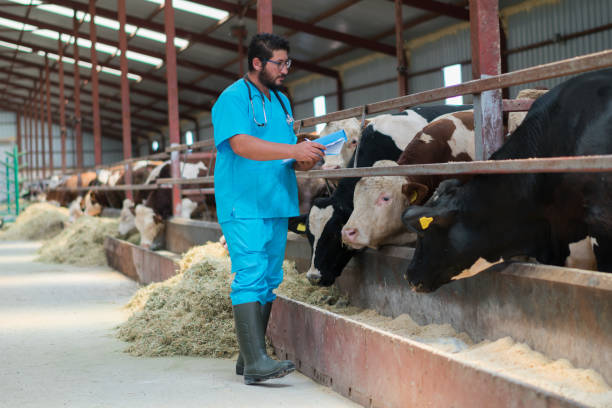
From an operational perspective, farms should clearly separate animal housing areas, animal receiving areas, feed storage areas, waste-treatment areas, and living areas. The movement of people, vehicles, and equipment should be organized to reduce the risk of introducing disease-causing agents into the herd or flock.
Fencing, disinfection facilities, and supporting infrastructure should be arranged in accordance with the requirements applicable to the specific farm type and scale.
Animal housing, isolation, and hygiene
Animal housing should be suitable for the species and facilitate animal care, cleaning, and disinfection. Facilities should establish cleaning schedules, assign responsible personnel, and verify that the required work has been completed.
For newly introduced animals, monitoring areas and isolation periods should be appropriate to the species, origin of the animals, and professional guidance. During outbreak control, sick animals or animals showing signs of disease must be isolated immediately in accordance with disease-prevention and control requirements.
Water, feed, breeding animals, and waste
Water quality should be controlled according to its intended livestock-production use. Monitoring plans should take into account the water source, contamination risks, and the parameters that need to be controlled.
Feed and breeding animals should have a traceable source and meet applicable quality and safety requirements. When introducing animals onto the farm, quarantine certificates or related documents should be checked where required.
Waste must be treated in accordance with applicable regulations. Animal carcasses should be collected and handled according to the cause of death and disease risk. Where an infectious disease is suspected, the case must be reported and handled according to instructions from the competent authority.
Responsibilities by Type of Facility
| Facility type | Key areas to review |
| Livestock farms and animal-production facilities | Disease prevention, disease reporting, hygiene conditions, source of breeding animals, veterinary drug use, and records required under applicable regulations. |
| Integrated livestock businesses | Obligations at each stage of production, transportation, slaughter, processing, and distribution; clear assignment of responsible personnel. |
| Consignors or authorized representatives | Determine quarantine requirements, complete registration procedures, and prepare documentation for consignments subject to quarantine. |
| Transport operators | Cooperate in checking documentation, ensure vehicle conditions, hygiene, and transport requirements; complete procedures where legally authorized or properly appointed as a representative. |
| Slaughter, preliminary-processing, and processing facilities | Facility conditions, input sources, slaughter control, veterinary hygiene, and waste treatment. |
| Animal-product businesses | Product origin, documentation applicable to the product, storage, and business conditions. |
| Veterinary drug businesses and veterinary service providers | Operating conditions, personnel, scope of practice, veterinary drug management, and specialized records. |
Self-Assessment Checklist for Compliance with the Law on Veterinary Medicine
Facility owners can use the table below to review their current activities, identify missing documentation, and assign responsibility for follow-up. Each item should be checked against the requirements applicable to the specific facility.
| Item | Who should review it | Legal basis to check | Documents or evidence to review |
| Legal documents and effective dates | All facilities | Documents governing each activity; effective dates and transitional provisions | List of applicable legal documents and review date |
| Facility conditions | Farms and specialized facilities | Veterinary, livestock, and environmental legislation; applicable technical regulations | Facility documentation, site layout, inspection results |
| Disease prevention | Livestock facilities | Article 15 of the Law on Veterinary Medicine and related disease-prevention requirements | Plans and records showing implementation of disease-prevention measures |
| Disease reporting and response | Livestock facilities | Articles 19 and 25 and applicable outbreak-response guidance | Contact points, reporting information, and response records where applicable |
| Animal movements and quarantine | Consignors, farms, and related parties | Chapter III and applicable quarantine regulations | Origin information, consignment details, and required documents |
| Veterinary drugs and vaccines | Facilities using or trading veterinary drugs | Articles 103–104 and applicable veterinary drug regulations | Labels, expiry dates, storage conditions, and prescriptions where applicable |
| Withdrawal periods and use of animal products | Facilities supplying animals, meat, eggs, or milk | Instructions for each veterinary drug and relevant regulations | Date of last administration, treated animals, and date from which products may be used |
| Veterinary personnel | Facilities using or providing veterinary services | Chapter VI and relevant professional requirements | Qualifications, certificates, scope, and validity period where required |
| Waste and animal carcasses | Livestock, slaughter, and related facilities | Environmental and veterinary regulations and applicable handling guidance | Handling plans and records appropriate to the situation |
For any item that has not been fully addressed or remains unclear, the facility should record the person responsible and the deadline for follow-up. A self-assessment can help the facility prepare and improve compliance, but it does not replace an inspection conclusion or certification issued by a competent authority.
Legal Risks to Keep in Mind
From August 1, 2026, Decree No. 204/2026/ND-CP takes effect and regulates administrative penalties for violations in the veterinary sector.
Issues that facilities need to control include delayed disease reporting, failure to complete required quarantine procedures, use of illegal veterinary drugs, activities carried out beyond the permitted scope, and failure to meet applicable veterinary hygiene conditions.
The applicable enforcement measure depends on the specific violation, the violating entity, the date of the violation, and the relevant legal provision. Penalty levels may differ between individuals and organizations, so facilities should check the provisions applicable to their specific circumstances.
Frequently Asked Questions About the Law on Veterinary Medicine
Which document should be used to review the Law on Veterinary Medicine in 2026?
Official consolidated versions can be reviewed, including Consolidated Document No. 153/2026/VBHN-LQ-VPQH dated September 25, 2026, as published in the Official Gazette. When applying the law, the effective date of the relevant provisions must be checked, particularly amendments that take effect from January 1, 2027.
Do farms need to wait until many animals have died before reporting a disease?
No. The reporting obligation does not require a threshold of “large numbers of deaths.” When a situation covered by Article 19 occurs, the competent authority or veterinary contact point should be notified immediately. Facilities should not wait for laboratory confirmation before making contact.
Does every animal transport shipment require the same set of documents?
No. Requirements depend on the animals or products involved, whether quarantine applies, the origin, the point of departure, the destination, and the disease situation. Consignors should confirm the applicable requirements before arranging transportation.
What records must a farm keep?
The answer depends on the type of activity and the applicable legal requirements. From a management perspective, farms should organize information on the source of breeding animals, animal movements, disease prevention, veterinary drug use, hygiene, and the handling of abnormal events to support traceability.
The same retention period should not automatically be applied to every type of record.
What should be checked before animals or animal products are sold after treatment?
Check the veterinary drugs used, the animals that received treatment, the date of the final dose, and the applicable withdrawal-period instructions. For laying flocks or dairy animals, any restrictions on veterinary drug use and the collection or sale of eggs and milk should also be checked.
Update Veterinary Regulations and Strengthen Operational Procedures at VIETSTOCK 2026
Compliance with the Law on Veterinary Medicine goes beyond documentation and administrative procedures. It is directly connected to how farms and businesses organize their day-to-day operations, including disease reporting, isolation of animals suspected of being sick, veterinary drug and vaccine management, veterinary hygiene, record keeping, and traceability control.
Standardizing these processes helps facilities respond more proactively to regulatory requirements while reducing risks during livestock production and the distribution of animal products.
VIETSTOCK 2026 provides an opportunity for livestock producers, businesses, and veterinary professionals to update their industry knowledge while exploring solutions that help translate regulatory requirements into practical farm operations. The event is expected to bring together 300 brands across more than 10,000 sqm of exhibition area and welcome around 13,000 trade visitors from 40 countries.
During the event, visitors can focus on solution areas directly related to veterinary management at farms and livestock facilities:
- Animal health management and disease prevention: explore solutions that support herd and flock health monitoring, early detection of abnormalities, and the organization of appropriate disease-prevention programs.
- Veterinary drugs and vaccines: access information on products, conditions of use, storage requirements, and key considerations for effective management.
- Traceability and record keeping: explore technologies that support the recording of treatment history, vaccination, animal origin, and other data needed for inspection and traceability.
- Hygiene and biosecurity: learn about solutions for cleaning, disinfection, controlling the movement of people and vehicles, and managing animal housing areas.
- Production management technology: explore tools that help standardize procedures, assign responsibilities, and store operational data at farm level.
For those interested in policy, management mechanisms, and practical implementation capacity, the One Health Forum on October 22, 2026 is also worth following. The session “Policy, Government, and Capacity Building for One Health in Vietnam” can provide additional perspectives on how regulatory requirements can be connected with animal health, human health, and environmental health within livestock-production systems.
Date: October 21–23, 2026
Venue: Saigon Exhibition and Convention Center – SECC, 799 Nguyen Van Linh Street, Tan My Ward, Ho Chi Minh City, Vietnam
Event website: VIETSTOCK 2026
👉 Register to Visit VIETSTOCK 2026
👉 Visitor Registration Information
👉 Learn More About the One Health Forum
👉 Explore Innovation, Green Transition and Competitiveness at VIETSTOCK 2026
Contact information:
Exhibiting: Ms. Sophie Nguyen – [email protected]
Group Delegation Support: Ms. Phuong – [email protected]
Marcom Support: Ms. Anita Pham – [email protected]