Indirect Export of Livestock Products for Small Businesses
Exporting Livestock Products for Small Businesses: Indirect Export Through EMCs and Trading Houses

Why small livestock businesses should consider indirect export
How the three common intermediary models differ: EMCs, trading houses, and aggregators
Before deciding to work with a partner, businesses need to understand the three common intermediary models in export.
An Export Management Company (EMC) acts as an outsourced export department for manufacturers. Depending on the contract scope, an EMC may support identifying foreign buyers, export sales promotion, contract handling, documentation, logistics, customs procedures, and quarantine procedures.
Small businesses may have the opportunity to keep their brand on the product if the contract terms, labeling requirements, and distribution channels in the target market allow it. EMCs usually charge a commission based on shipment value, a fixed service fee, or a combined model. The specific cooperation structure should be clearly defined in the contract, such as an export service contract, agency agreement, entrusted export contract, or another cooperation model that complies with current Vietnamese law.
A trading house, or export trading company, usually buys products from manufacturers and then exports, distributes, or resells them under its own brand or label. This model is simpler for small businesses from a procedural perspective, because the business mainly sells products to the trading house domestically.
However, businesses still need to meet requirements on quality, traceability, food safety, quarantine, or technical documentation according to the buyer’s requirements and the target market. One point to note is that businesses usually have less control over branding, final selling prices, and how the product is positioned overseas.
An aggregator is an organization or business that collects products from multiple small producers to create a shipment large enough to meet the minimum requirements of an export order. Aggregators may operate as cooperatives, aggregation companies, or businesses specializing in a particular product category or market. This model is especially suitable for small farms that do not yet have enough output to create a large shipment or fill a container on their own.
Practical advantages for livestock SMEs when using intermediaries instead of exporting directly
The biggest advantage of indirect export is not only saving money, but also saving operational capacity. For small businesses, having to understand quarantine regulations in each market, negotiate with foreign importers, handle letters of credit (L/Cs), prepare documents, track cargo routes, and deal with issues at ports requires significant expertise and time.
Reputable intermediaries often already have customer networks, understand import regulations in specific markets, and have experience handling issues such as shipments being held by customs, mismatched documents, shipments requiring additional quarantine documents, or product labels failing to meet requirements. These are risks that first-time exporters find very difficult to manage on their own.
Comparison between direct and indirect export for small livestock businesses
| Criteria | Direct export | Indirect export through intermediaries |
| Experience required | High; requires knowledge of export regulations, international logistics, and the target market | Lower, because the intermediary handles or supports most of the process |
| Initial cost | Higher due to the need to set up a team, certifications, customer relationships, and logistics | Lower; usually reflected in commissions, service fees, or margins |
| Brand control | Higher | Lower, especially when selling to a trading house |
| Potential profit margin | May be higher if operations are managed well | Usually lower because profits are shared with the intermediary |
| Speed of market entry | Slower, because the business needs time to build its own network | Faster thanks to the intermediary’s existing network |
| Suitable business scale | Medium to large | Small to medium |
| Financial risk | Higher if the shipment is rejected or extra costs arise | May be lower, depending on contract terms and the extent to which the intermediary shares risk |
| Control over final selling price | Higher | Limited or almost none when working with a trading house |
Note: The comparisons above are relative. Actual results depend on the product, target market, intermediary capability, and specific contract terms.
For businesses exporting for the first time or those without a dedicated import-export team, indirect export is often a more practical starting point. After understanding the market and gaining experience through intermediary channels, businesses can consider shifting to direct export in selected strategic markets.
Choosing the right intermediary partner: EMC, trading house, or aggregator

Selection criteria based on shipment size, target market, and business capability
No single model is best in every case. The right choice depends on three main factors: shipment size, target market, and the level of brand control the business wants.
Shipment size
If the business’s output is still small, not enough to fill a container, or not stable enough on a monthly basis, an aggregator is the most practical option. EMCs and trading houses usually work with shipments that meet a certain minimum value. This threshold varies by company, but if the shipment is too small, the fixed costs they need to spend may not be efficient.
Target market
Some markets have high quarantine and certification barriers, such as the EU, Japan, South Korea, or China. If these are the target markets, businesses should prioritize finding an EMC or trading house with actual export experience in that specific market, not only general export experience.
Desired level of brand control
If the business wants to build its own brand in overseas markets, an EMC is usually more suitable than a trading house, because an EMC may support export under the business’s own brand, depending on the contract terms. By contrast, a trading house usually buys the goods and resells them under its own brand or distribution channel, so the manufacturer has less control in the importing market.
Signs of a reputable intermediary in livestock and agricultural products
Some points to check before signing a contract:
- Clear business registration, tax code, and legal status.
- Actual experience in the product category or market the business wants to access.
- Ability to provide specific information about markets they have exported to, instead of making general claims about a “global customer network.”
- Understanding of quarantine regulations, certification, labeling, and quality documentation required by the target market.
- A clear contract template that details the responsibilities of each party, payment terms, commission, handling of rejected goods, and dispute resolution mechanisms.
- Willingness to allow the business to verify information through third parties such as banks, previous customers, logistics partners, or trade agencies.
Businesses should not work with intermediaries that only promise “stable export demand” but cannot prove their capability through company profiles, transaction history, or clear contracts.
Documents and conditions small businesses need to prepare before cooperation

Checklist of legal and business documents
Even when exporting through an intermediary, businesses still need basic legal documents so the intermediary can work with them legally:
- Enterprise registration certificate or household business registration certificate, depending on the business model.
- Tax code.
- Registered business lines covering livestock farming, slaughtering, preliminary processing, food processing, or trading of livestock products, if required by law.
- A contract suitable for the cooperation model: service contract or export management contract with an EMC, sales contract with a trading house, aggregation contract, or entrusted export contract if the intermediary acts as the named exporter.
- Bank account information for receiving payment. If the business directly receives foreign currency or participates in an export or entrusted export contract, it should discuss with the bank about foreign currency accounts and suitable payment documents.
- Invoices, warehouse dispatch notes, delivery notes, or commercial documents required by the intermediary and current regulations.
- Traceability documents, quality standards, testing documents, and production records if the product belongs to a category subject to control requirements.
Required quality and food safety certifications for livestock product export
This is the part that many small businesses most often overlook. Requirements may vary depending on the product and target market. Businesses need to check each specific case, but in general, they may need to prepare:
- A certificate of food safety eligibility or equivalent document if required, issued by the competent authority according to local management responsibilities.
- An animal quarantine certificate or animal product quarantine certificate issued by the competent quarantine authority, such as the Department of Livestock Production & Animal Health or local livestock and veterinary authorities according to their assigned responsibilities and the type of goods.
- Certificate of Origin (C/O) if required by the importing market or partner. C/O documents need to be coordinated with the named exporter and the relevant C/O issuing authority.
- Product testing results from an accredited or suitable testing laboratory, covering microbiological indicators, antibiotic residues, heavy metals, or other indicators required by the target market.
- Product labels that comply with labeling regulations in the importing market, including language, required information, warnings, and traceability information if required.
- Traceability documents: farming area or production site, production batch, slaughter/preliminary processing/processing date, raw material batch, production facility, and responsible entity.
Note: Some documents, such as quarantine certificates, are often tied to specific shipments, so businesses need to plan the application timing properly to avoid delays.
Indirect export process for livestock products through EMCs and trading houses
Step 1: Approach and evaluate suitable intermediary partners
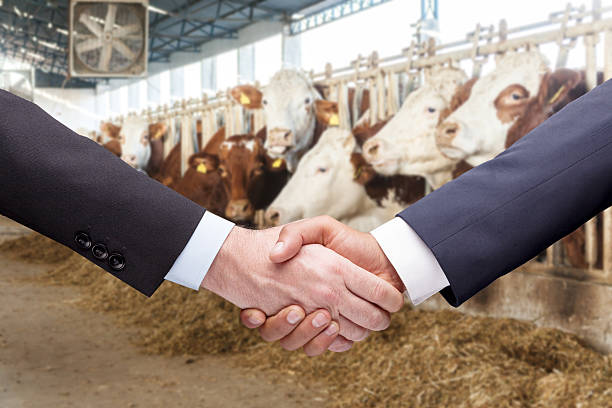
Businesses should start by making a list of EMCs, trading houses, or aggregators operating in agricultural products, food, or livestock products.
Practical sources for finding potential partners may include:
- VIETRADE – Vietnam Trade Promotion Agency.
- Industry associations, livestock associations, and local business associations.
- Trade events and exhibitions in livestock, food, and agricultural products.
- B2B marketplaces or export business directories.
- Referrals from businesses that have exported in the same industry.
- Vietnam Trade Offices in target markets.
Note: VASEP mainly operates in the seafood sector, so its support scope for livestock products may be more limited.
After creating a list, businesses should speak directly with potential partners, request their company profiles, service proposals, list of markets they have handled, and contract templates for evaluation before cooperation.
Step 2: Sign a contract suitable for the cooperation model and agree on handover terms
Depending on the cooperation model, the contract may be a service contract or export management contract with an EMC, a sales contract with a trading house, an aggregation contract, or an entrusted export contract if the intermediary acts as the named exporter.
Whichever model is used, the contract should clearly state at least the following:
- Scope of work: what the intermediary is allowed to do and what responsibilities the business retains.
- Target export markets and any exclusivity terms.
- Commission, service fee, or purchase price if working with a trading house.
- Quality, testing, packaging, storage, and traceability requirements.
- Handling terms if the shipment is rejected, fails to meet quality requirements, or incurs additional costs at the port or border gate.
- Reporting mechanism, payment deadline, and transfer method.
- Confidentiality, contract termination, and dispute resolution terms.
- The competent arbitration body or court in case of disputes.
Businesses should not skip the section on rejected goods. This is one of the most common causes of disputes in livestock product export because storage, re-export, destruction, or reprocessing costs can be very high.
Step 3: Prepare the shipment according to standards and hand it over to the intermediary
At this stage, the business is responsible for product quality and the documents attached to the shipment. The intermediary will provide specific requirements on packaging, labeling, storage temperature, and accompanying documents such as invoices, packing lists, quarantine certificates, testing results, or traceability documents.
Handover may take place at the production facility, cold storage, the intermediary’s warehouse, port, inland container depot (ICD), bonded warehouse, or another location according to the agreed delivery terms. If the contract uses Incoterms, the business needs to clearly understand its responsibilities at each handover point instead of simply signing a standard template.
Step 4: The intermediary handles customs procedures, quarantine, and international transport
This is the stage mainly handled by the intermediary. Depending on the contract, the intermediary may make customs declarations, coordinate with quarantine authorities, book freight, prepare export documents, and handle procedures at the port of departure.
During this stage, the small business mainly needs to be ready to provide additional documents if requested by authorities, carriers, quarantine authorities, or foreign buyers.
Some markets may require production facility registration/approval, facility codes, or quarantine dossiers before import. Specific requirements must be confirmed according to each product and target market.
Step 5: Track the shipment, receive payment, and reconcile commissions
After customs clearance and shipment departure, the intermediary should provide tracking information, confirm shipment status, and update the business if any issues arise. After the buyer receives and pays for the goods, the business receives payment according to the signed terms, after deducting commission, service fees, or other agreed costs.
Businesses should carefully check the commission reconciliation statement, storage costs, quarantine fees, logistics fees, bank charges, and other additional costs. If these are not clearly defined in the contract from the beginning, disputes can easily arise.
Actual processing time and estimated intermediary costs for livestock SMEs
In terms of timeline, from signing the contract to customs clearance of the first shipment, the process may take from a few weeks to a few months depending on the product type, existing documents, target market, and quarantine requirements. Markets requiring prior approval or registration of production facilities often take longer.
In terms of cost, EMC commission does not have a fixed industry-wide rate. Fees depend on the scope of services, market, shipment value, product complexity, and capability of each provider. With trading houses, the “cost” usually lies in the margin between the price the business sells to them and their export price. Therefore, businesses should request quotations or detailed fee schedules from at least two to three providers before making a decision.
Common mistakes and risks to avoid when exporting livestock products indirectly
Common mistakes when signing contracts with aggregators or EMCs

Missing terms on handling rejected goods
This is the most common mistake. When a shipment is held or rejected by the importing country’s customs due to non-compliance with import requirements, disputes are almost certain if the contract does not clearly state who bears the cost and responsibility for handling the issue.
Failing to check the intermediary’s legal status
Some companies call themselves EMCs or trading houses but do not actually have export capability or have never handled the right product category. This can cause businesses to lose time, goods, money, or become bound by unfavorable contracts.
Delivering goods before certification documents are complete
Schedule pressure sometimes leads businesses to deliver goods before quarantine certificates, testing results, or quality documents are fully prepared. For livestock products, this may cause goods to be held at cold storage, border gates, or ports, resulting in significant extra costs.
Not clearly defining market exclusivity terms
If the business wants the EMC to represent it only in a specific market, or wants to prevent the EMC from working with direct competitors in the same segment, this must be stated clearly in the contract. Otherwise, the intermediary may work with multiple manufacturers of the same product at the same time.
Overlooking product labeling requirements in the target market
Labels in the wrong language, missing required information, incorrect batch codes, or failure to meet traceability requirements may cause the shipment to be relabeled, held, or returned.
Legal and regulatory risks to keep updated when exporting livestock products

Livestock product export regulations vary by market and change over time. Some legal risks to keep in mind include:
Changes to the list of products allowed for import
Some markets periodically update the list of animal products allowed for import from Vietnam. Businesses should check the latest status with the Department of Livestock Production & Animal Health, the Ministry of Agriculture and Environment, the Import-Export Department, Ministry of Industry and Trade, Vietnam Trade Offices in target markets, or experienced intermediaries before signing a contract.
Production facility registration requirements in the importing market
Some markets may require production facilities, processing facilities, or products to be registered or approved before goods are allowed to enter. This is a separate process and cannot be replaced by ordinary domestic documents.
Risks related to antibiotic residues, hormones, and banned substances
Some markets strictly test for antibiotic residues, hormones, banned substances, and microbiological indicators in livestock products. If a shipment exceeds the permitted threshold, the business may not only have the shipment rejected, but also damage its reputation and ability to continue exporting.
Lack of traceability
If a business cannot manage production batches, raw material sources, production dates, processing facilities, and testing records, it will be very difficult to meet the target market’s traceability requirements. This is something businesses need to prepare before thinking about the first export shipment.
Practical recommendation: before starting the first shipment, businesses should reconfirm the target market’s regulations with competent authorities, the intermediary, the Vietnam Trade Office in the target market, or a suitable legal, logistics, or import-export expert.
FAQ about indirect export of livestock products for small businesses

How long does it usually take to export small-scale livestock or agricultural products through an EMC, from contract signing to customs clearance?
There is no fixed timeline because it depends on the specific product, target market, completeness of documents, and whether the market requires prior facility approval.
If legal documents, testing results, quarantine documents, and quality certifications are ready, the process from signing a contract with an EMC until the first shipment is exported may take from a few weeks to a few months. However, markets requiring production facility registration may take significantly longer. The important point is that businesses should discuss the roadmap directly with the EMC from the beginning instead of relying on theoretical expectations.
What documents should small businesses prepare to export livestock products indirectly through a trading house?
When selling to a trading house under an outright purchase model, the procedure on the business side is usually simpler than direct export. The business mainly needs a sales contract, invoice, quality documents, traceability documents, and product documents required by the trading house.
If the shipment requires a C/O, the business needs to coordinate with the trading house or the named exporter to prepare origin documents, raw material documents, and manufacturer information according to the required C/O form and target market. Businesses should not assume that the producer always applies for the C/O directly in every case, because this depends on the named exporter and the structure of the shipment.
How is an aggregator different from a trading house or an EMC, and which model is more suitable for small farms?
An aggregator focuses on collecting products from multiple small producers or suppliers to create a shipment large enough for export. This is the core difference.
A trading house usually buys and resells products under its own brand or distribution channel. An EMC supports export management according to the contract scope and may help the business retain its brand better in some cases. An aggregator mainly solves the output volume problem.
For very small farms that do not yet have enough output to fill a container or lack stable supply, an aggregator is often the most practical entry point into the market. However, businesses need to carefully review the contract terms on how products are combined, what common quality standards apply, and who is responsible if products from one source fail to meet quality requirements and affect the entire shipment.
What percentage of shipment value do intermediary export costs for livestock products usually account for?
Costs vary depending on the intermediary type, product type, and target market, so there is no common benchmark for the whole industry.
With EMCs, commission or service fees may be calculated as a percentage of shipment value, as a fixed fee, or as a combined model. Additional costs may include quarantine, testing, logistics, storage, bank charges, and documentation handling.
With trading houses, the actual cost lies in the margin between the price the business sells to them and their export price. Therefore, businesses should not expect a fixed number without specific quotations. A safer approach is to request detailed fee schedules, compare multiple partners, and include potential risk-related costs in the calculation.
Can small businesses control their brand and final selling price when exporting through an EMC or trading house?
With an EMC, businesses have a better chance of controlling their brand and participating in pricing decisions, depending on contract terms. An EMC usually does not buy the goods outright like a trading house, but supports export management or acts as a representative within the agreed scope.
With a trading house, businesses usually have less control over final selling prices and branding in overseas markets because the trading house has purchased the goods and has the right to decide how to resell them. If long-term brand building is a priority, an EMC may be more suitable, but it also requires more preparation in documentation, negotiation, and contract management.
Next steps for small businesses starting indirect export
Indirect export through EMCs, trading houses, or aggregators can significantly reduce the procedural burden for small businesses, but it does not mean businesses can proceed without preparation. Businesses still need proper legal documents, suitable quality certifications, traceability data, and clear contracts to avoid risks.
Some situations indicate that a business should consider seeking additional professional advice:
- The livestock product belongs to a category with complex quarantine requirements, or the target market has high technical barriers.
- This is the first time the business has joined the export chain and it does not have a legal or international trade department.
- The business is considering multiple markets and multiple intermediary models at the same time and needs a practical cost-benefit analysis before making a commitment.
- The contract with the intermediary has high value or includes complex terms that need legal review.
- The shipment involves processed products, frozen products, products requiring quarantine, or multi-layer traceability.
In these cases, the initial cost of consulting is often much lower than the damage caused by a weak contract or a rejected shipment due to poor preparation.
Recommended first points of contact include: VIETRADE – Vietnam Trade Promotion Agency; the Department of Livestock Production & Animal Health under the Ministry of Agriculture and Environment; the Import-Export Department, Ministry of Industry and Trade; Vietnam Trade Offices in target markets; VCCI; and SME support units under relevant ministries or local SME support systems. These points of contact can provide official information on current regulations and suitable export support networks.
In summary
Exporting livestock products does not necessarily have to begin with direct export. For small businesses, indirect export through EMCs, trading houses, or aggregators may be a more practical step to test the market, learn the process, and reduce initial risks.
However, businesses should not view intermediaries as parties that “take care of everything.” Product quality, legal documents, quarantine, traceability, and contract terms remain important responsibilities of the manufacturer.
A suitable approach is to start with a small shipment, one specific market, one capable intermediary partner, and a well-drafted contract. Once the business understands the market, accumulates data, and develops stronger operational capacity, it can gradually expand into direct export or build its own brand in international markets.
Explore Export Opportunities and Connect With International Livestock Partners at VIETSTOCK 2026
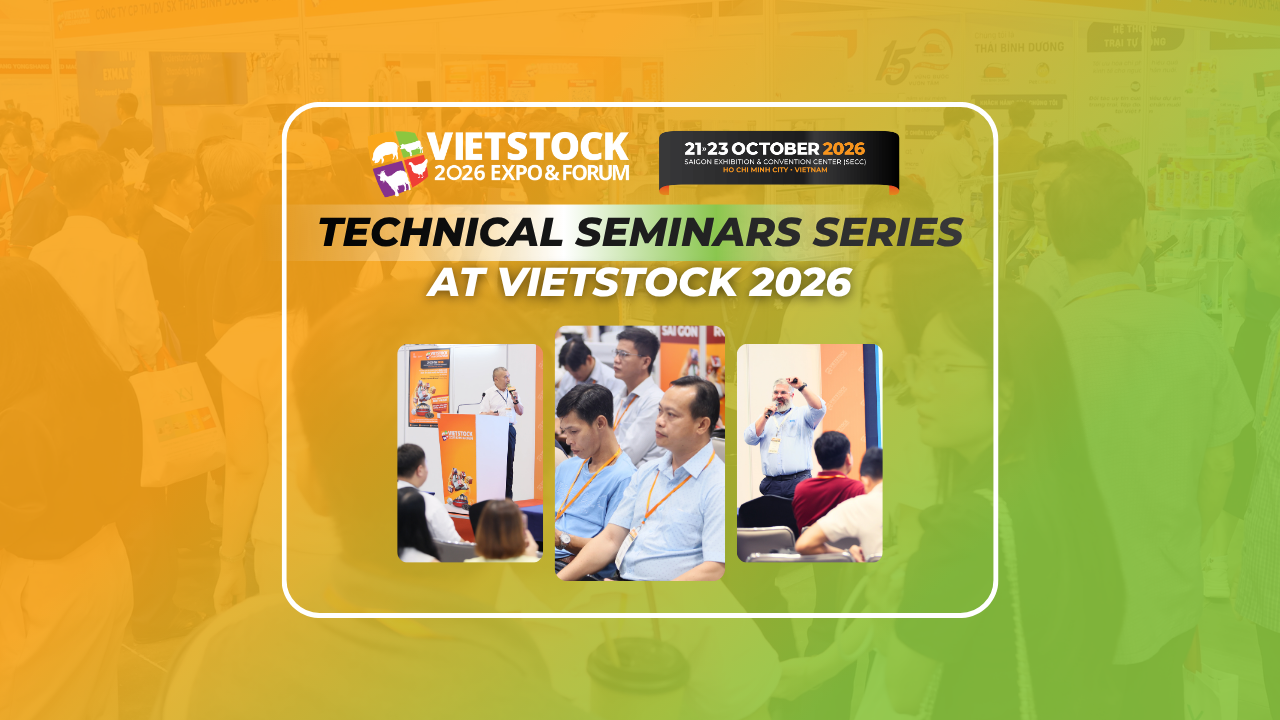
VIETSTOCK 2026 – Vietnam’s Premier International Feed, Livestock & Meat Industry Show – is expected to bring together more than 300 brands and 13,000 trade visitors from many countries, including exporters, international importers, logistics providers, trade promotion organizations, and livestock businesses from over 40 countries and territories. This is an opportunity to:
- Meet directly with international importers, distributors, and trade partners looking for Vietnamese livestock product supplies — a practical networking opportunity that small businesses rarely get through ordinary channels.
- Learn about intermediaries, trading houses, and export promotion organizations that can help SMEs access international markets without having to build the entire export process from scratch.
- Speak with experts about quarantine requirements, quality certifications, and traceability standards for each market — essential knowledge before committing to the first export shipment.
- Stay updated on international market trends and technical barriers shaping export opportunities for Vietnamese livestock products in the coming period.
Time: October 21–23, 2026
Venue: Saigon Exhibition and Convention Center (SECC), 799 Nguyen Van Linh, Ho Chi Minh City.
Register now to seize opportunities for business growth and networking in the livestock industry:
Visitor registration: https://www.vietstock.org/en/online-registration-2/
Event website: https://www.vietstock.org/en/
Contact information:
- Exhibiting: Ms. Sophie Nguyen – [email protected]
- Group Delegation Support: Ms. Phuong – [email protected]
- Marcom Support: Ms. Anita Pham – [email protected]