ESG Roadmap for Livestock Businesses in Vietnam 2026
ESG Roadmap for Livestock Businesses in Vietnam in 2026: From Reporting to Action

Sustainability-related pressure is becoming increasingly clear for Vietnam’s livestock industry. From international supply chain requirements and Vietnam’s Net Zero commitment at COP26 to domestic regulations related to greenhouse gas inventories and sustainability disclosure, livestock businesses — especially large-scale businesses, those involved in modern supply chains, or those aiming for export markets — can no longer afford to stay outside this trend.
However, most existing ESG materials remain at the level of theory, definitions, or applications for finance and industrial manufacturing. Livestock farming — with its specific characteristics such as methane emissions from animals, organic waste management, dependence on land, water, energy, and rural labor — needs an ESG approach that fits the unique nature of the industry.
What do ESG and Net Zero mean for livestock businesses in Vietnam?
How do the three E-S-G pillars apply specifically to the livestock industry?
ESG stands for Environmental, Social, and Governance. In the context of livestock farming in Vietnam, each pillar has a very specific meaning.
Environmental focuses on controlling greenhouse gas emissions, managing waste, water, land, energy, and the impact on the environment surrounding the farm. In livestock farming, CH₄ and N₂O are often two important biogenic greenhouse gas emissions, especially from enteric fermentation in ruminants and livestock waste management. The specific level of contribution depends on the animal species, feed ration, farm scale, manure treatment technology, and operating conditions of each farm.
Social relates to working conditions on farms, occupational safety, worker welfare, relationships with local communities, and animal welfare practices. For modern or export-oriented supply chains, social factors are increasingly considered an important part of supplier evaluation.
Governance refers to transparent governance structures, anti-corruption policies, leadership accountability, internal control systems, and the ability to manage ESG-related risks.
What makes livestock different from many other industries is that the Environmental pillar is often prioritized very early, because the industry is directly linked to biogenic emissions, organic waste, water use, land use, and operational energy.
What is the difference between net zero livestock and farm-level carbon neutrality?
These two concepts are often used interchangeably, but there is an important difference in practical implementation.
At the farm level, carbon neutrality is often understood as a state in which a business measures its emissions, carries out appropriate emission reduction measures, and then offsets the remaining emissions through credible carbon removals or carbon credits. This approach can still allow emissions to occur, as long as the remaining emissions are offset according to accepted standards.
Net zero is a broader goal and usually requires deep emission reductions across the entire value chain, followed by balancing the remaining emissions with credible carbon removals or other accepted removal measures. Net zero focuses on reducing emissions at the source, while carbon neutrality may be more flexible in using offsets.
For livestock businesses in Vietnam at the current stage, carbon neutrality may be an intermediate target in some cases, but it requires a clear roadmap, reliable data, and transparent certification standards. Net zero should be seen as a long-term direction, not a target that can be achieved quickly without a data foundation, suitable investment, and reliable measurement capacity.
Which livestock businesses must comply with ESG regulations in Vietnam in 2026?

At present, Vietnam does not have mandatory ESG reporting regulations specifically for the livestock industry. However, businesses need to monitor related legal frameworks.
Decree No. 06/2022/ND-CP is the legal foundation for greenhouse gas emission reduction and ozone layer protection. Livestock businesses should only conclude that they are subject to mandatory greenhouse gas inventory requirements after comparing their operations with the criteria and list of facilities required to conduct greenhouse gas inventories under current regulations, including Decision No. 13/2024/QD-TTg, which promulgates the updated 2024 list of facilities subject to greenhouse gas inventory requirements.
Circular No. 96/2020/TT-BTC provides guidance on information disclosure in the securities market. For listed companies, sustainability content in the annual report is an important foundation for moving toward more structured ESG disclosure.
Beyond mandatory regulations, practical pressure may come from export partners, investors, credit institutions, modern retail chains, and customers that require proof of a sustainable supply chain.
A 7-step ESG roadmap for Vietnam’s livestock industry: from reporting to real action
The roadmap below is a recommendation based on international practices and the specific characteristics of the livestock industry. It is not a mandatory legal procedure under current regulations.
Step 1: Assess the current emissions profile and ESG risks at the farm
The essential starting point is understanding “where you are.” Businesses need to conduct a greenhouse gas inventory under Scope 1, Scope 2, and, if possible, Scope 3.
Scope 1: direct emissions from farm operations, such as livestock, manure management, on-site fuel use, and other direct emission sources.
Scope 2: indirect emissions from electricity purchased from the grid.
Scope 3: emissions across the value chain, such as purchased animal feed, transportation, packaging, end-of-life treatment of products, and other related activities.
At the same time, businesses need to assess overall ESG risks, including water risks, social risks, working conditions, community relations, legal compliance, supply chain transparency, and data governance capacity.
Step 2: Set SMART targets for each stage through 2026
After establishing a baseline, businesses should set targets that are specific, measurable, achievable, and time-bound. For example:
- Reduce emissions intensity per unit of product compared with the baseline.
- Increase the share of waste treated through biogas or compost.
- Reduce the share of electricity purchased from the grid by using solar power on barn rooftops.
- Build a data system to support internal ESG reporting by 2026.
Businesses should avoid vague goals such as “becoming greener.” This is a common mistake that causes ESG plans to fail to move forward because there are no measurable indicators, no responsible owner, and no way to prove progress to partners or auditors.
Step 3: Build a plan to reduce CH₄, N₂O, and CO₂ emissions in livestock farming
An emission reduction plan needs to clearly identify the largest emission sources and prioritize interventions at those points.
In cattle farming, CH₄ from enteric fermentation is a very important emission source. In pig and poultry farming, waste management, energy use, and feed inputs are usually the groups that need close monitoring.
Possible measures include:
- Optimizing feed rations by animal species.
- Improving feed efficiency.
- Considering emission-reducing feed additives if nutrition experts assess them as suitable.
- Improving biogas systems to recover CH₄ from manure.
- Increasing the use of renewable energy, such as solar power on barn rooftops.
Step 4: Take action at the farm level — waste management, renewable energy, and feed rations
This is the step where the plan turns into real implementation. Three priority action groups include:
Waste management: Invest in biogas systems at a suitable scale, manage fresh manure properly, reduce prolonged open storage, and develop organic compost models if appropriate. This action group can help reduce emissions while also improving hygiene and biosecurity.
Renewable energy: Install solar power on barn rooftops or suitable areas if technical and legal conditions allow. The goal is to gradually reduce dependence on grid electricity and diesel, while stabilizing part of the farm’s long-term energy costs.
Optimized feed rations: Work with nutrition experts to design feed rations that maintain productivity while improving feed efficiency and reducing nutrient waste. For ruminants, any ration adjustment aimed at reducing methane emissions must be carefully assessed to avoid negative impacts on animal health, productivity, or economic efficiency.
Step 5: Measure and monitor emissions data regularly
No data, no ESG. Businesses need to set up a regular data collection system — at least quarterly — covering:
- Electricity consumption.
- Fuel use.
- Number of animals.
- Production output.
- Manure volume.
- Waste treatment methods.
- Water use.
- Other relevant operational data.
Some farm management software can integrate emissions tracking modules, or businesses can use emissions calculation tools based on methods accepted by competent authorities. Businesses should also monitor guidance from the relevant regulatory authority, currently the Ministry of Agriculture and Environment.
Step 6: Continuously improve and move toward suitable carbon neutrality targets
Based on monitoring data, businesses need to adjust their plans every year. Once emissions have been reduced at the main sources and the remaining emissions are difficult to reduce further in the short term, businesses may consider carbon credits from recognized programs such as Verra VCS or Gold Standard, if the credits are suitable for the emissions scope, have credible quality, and are accepted by partners or certification frameworks.
However, offsets should not be treated as the first step. A safer approach is to measure first, reduce emissions at the source first, and only then consider offsetting the remaining emissions. This is also the stage where businesses can prepare documentation for international certifications if they aim to export or seek green financing.
Step 7: Prepare and publish a complete ESG report for livestock businesses in 2026
An ESG report is not just a formality. It is a strategic communication tool for partners, investors, customers, and financial institutions.
A 2026 report should summarize the full journey from baseline to achieved results:
- What has the business measured?
- What has been reduced?
- What risks remain?
- What is the next plan?
- How verifiable is the data?
For businesses with international partners, the report should be prepared using an appropriate framework such as GRI, and may also refer to ISSB/IFRS S2 if climate risk disclosure is needed for investors or financial institutions.
ESG checklist for livestock businesses: what to complete before the 2026 report

The checklist below is a reference roadmap for livestock businesses to review what should be completed before preparing the 2026 ESG report. It is a practical suggestion based on international practices and the specific characteristics of the livestock industry, not a mandatory legal checklist.
Foundation stage — Complete the baseline if it has not been done in previous years
- Complete or supplement the Scope 1 and Scope 2 greenhouse gas inventory to create a baseline before preparing the 2026 report.
- Identify material ESG risks for farm operations.
- Set up a team or assign an internal person responsible for ESG.
- Collect baseline data on electricity, water, fuel, livestock, waste, and labor.
- Assess the current status of worker welfare, occupational safety, and compliance with environmental regulations.
Implementation stage — Standardize data and start emission reduction actions
- Implement at least one specific emission reduction project, such as biogas, solar power, or feed ration optimization.
- Set up a regular internal measurement and reporting system.
- Train the team on ESG data collection procedures.
- Review and update governance policies related to ESG.
- Prepare an internal trial ESG report to test the data, structure, and process.
2026 reporting stage — Complete, verify, and publish
- Measure and compare emission reduction results against the baseline.
- Complete the ESG report using the GRI framework and, if climate risk disclosure is needed for international financial partners, refer to ISSB/IFRS S2 or TCFD recommendations that are still used in practice.
- Audit or obtain independent assurance for the report if required by partners, investors, or financial institutions.
- Submit the report to regulatory authorities under current regulations if the business is subject to reporting requirements.
- Publish the ESG report publicly on the company website and corporate communication channels if appropriate.
Livestock farms before and after ESG adoption: direction of change
| Indicator | Before adoption | Direction after adoption |
| CH₄ emissions from manure | Uncontrolled release or not fully measured | Recovered through biogas if the system is properly designed and operated, which may reduce emissions from manure management |
| Farm electricity source | Dependent on grid electricity, diesel, or the farm’s existing power source | Combined with solar power if suitable, gradually reducing dependence on grid electricity/diesel |
| Organic waste management | Direct discharge, open storage, or inconsistent treatment | Treated through biogas, organic compost, or a treatment model suitable for the farm scale |
| Emissions data | None or rough estimates only | Measured regularly and stored systematically |
| Energy costs | Fluctuate with electricity or fuel prices | May become more stable if the farm generates part of its own energy |
| Access to export markets | Limited if there is no sustainability evidence | Improved if the business meets partners’ ESG requirements |
| Access to green loans | Not yet eligible for consideration | May become eligible depending on the credit institution and the quality of the documentation |
| Sustainability reporting | None or fragmented | Regular ESG reporting under an appropriate framework |
Note: The table above shows target directions based on good industry practices, not guaranteed results. Actual outcomes depend on the scale, animal species, investment level, operating capacity, and specific conditions of each business.
ESG reporting guidance for agriculture in Vietnam in 2026
ESG indicators to report in livestock farming under GRI and ISSB/IFRS S2
Under the GRI Standards, livestock businesses may refer to the following groups of indicators:
| Indicator group | What to monitor |
| GRI 305 — Emissions | Total greenhouse gas emissions under Scope 1, Scope 2, and Scope 3 if available; emissions intensity per unit of product, for example kg CO₂e/kg live weight |
| GRI 303 — Water | Water use, water sources, reused water, and risks related to water sources |
| GRI 306 — Waste | Total waste generated, treatment methods, and the share of waste reused or safely treated |
| GRI 401 — Employment | Number of workers, turnover rate, working conditions, and labor policies |
| GRI 403 — Occupational Health and Safety | Workplace accidents, prevention measures, safety training, and risk control in the farm environment |
For climate risk disclosure, businesses may refer to ISSB/IFRS S2. TCFD recommendations are still useful for structuring governance, strategy, risk management, and climate-related metrics and targets, but businesses should update toward ISSB/IFRS S2 if they work with financial partners or international investors.
Given the specific characteristics of livestock farming, emissions intensity per animal or per kg of product is one of the most important indicators for showing real progress over time.
Tools and reference materials for agricultural ESG reporting
Some practical tools businesses can refer to include:
Emission calculation:
Businesses may refer to IPCC Tier 1/Tier 2 methods for livestock emissions inventories, while also monitoring guidance from the relevant regulatory authority, currently the Ministry of Agriculture and Environment. When using international tools such as the Cool Farm Tool, businesses need to check whether they are applicable to the Vietnamese context before using them as the basis for official reporting.
Reporting templates:
GRI provides guidance documents by sector and topic. Businesses can use GRI as an initial reference framework if they need to build a clearly structured ESG report.
Data management platforms:
For medium and large-scale farms, businesses may consider investing in farm management software that integrates emissions tracking modules to help automate data collection.
Carbon neutrality verification:
Businesses may refer to ISO 14068-1 for carbon neutrality claims, ISO 14064 for greenhouse gas inventories and verification, and carbon credit programs such as Verra VCS or Gold Standard if credible carbon credits are needed.
Reporting process and ESG information submission to regulatory authorities in 2026
At present, there is no unified ESG reporting submission process specifically for the livestock industry. Businesses need to monitor the following channels:
Greenhouse gas inventory reports under Decree No. 06/2022/ND-CP apply to facilities included in the mandatory inventory list. Businesses need to check the receiving authority, forms, and deadlines under current regulations applicable to their sector or facility, because management responsibilities may involve several specialized authorities.
Sustainability information in annual reports applies to listed companies under Circular No. 96/2020/TT-BTC.
Voluntary reports may be published on the company website, sent to partners/investors, or registered on international disclosure platforms such as CDP if the business targets international markets.
Recommendation: businesses should closely monitor new legal documents from the Ministry of Agriculture and Environment, the Ministry of Finance, the State Securities Commission of Vietnam, and other relevant regulatory authorities.
Practical challenges in implementing ESG in livestock farming and a more effective approach

Five common mistakes when livestock businesses implement ESG for the first time
Mistake 1: Starting from the report instead of the data
Many businesses want to have an ESG report immediately but do not yet have baseline data. A report without a reliable baseline loses credibility with partners and auditors.
Mistake 2: Treating ESG as a one-time project
ESG is a continuous management system, not a short-term project. If a farm makes a strong investment in the first year but then stops tracking data, the initial effort will be difficult to fully recognize and demonstrate.
Mistake 3: Focusing too much on carbon offsets while ignoring emission reductions at the source
Buying carbon credits to “offset” emissions without making real reductions is an approach that can easily be questioned by partners and auditors.
Mistake 4: Not having a clearly responsible ESG owner
When ESG has no owner within the organization, tasks often fall into the gaps between departments.
Mistake 5: Setting targets that are unrealistic compared with available resources
Targets that are too ambitious without a specific investment roadmap can lead to disappointment and loss of trust from stakeholders.
Practical experience from livestock businesses implementing ESG
In Vietnam, some large-scale livestock businesses may already be implementing or exploring solutions such as biogas, rooftop solar power, and emissions data management. However, if no specific case is cited, this should be treated as a reference trend, not a general conclusion for the entire industry.
A common point among early movers is that they often start with one specific, measurable issue — for example, a biogas system that both helps reduce emissions and creates energy for on-site use — instead of trying to implement ESG comprehensively right away.
From there, businesses build data, experience, and organizational capacity to expand into other ESG aspects.
Practical lesson: start small, measure seriously, and expand gradually. This is a more sustainable approach than rolling out everything at once without a data foundation.
FAQ: Common ESG questions for livestock businesses in 2026

How many steps does the 2026 ESG roadmap for Vietnam’s livestock industry include, and where should businesses start?
The roadmap includes 7 steps, starting with an assessment of the farm’s current emissions profile and ESG risks. This is a foundation step that cannot be skipped because, without a baseline, businesses cannot set meaningful targets or prove progress later.
If businesses start in 2024 or 2025, they can still build a data foundation for a more reliable ESG report in 2026, as long as measurement is carried out seriously and consistently.
What data do livestock businesses need to prepare for ESG reporting?
The minimum data needed includes:
- Electricity and fuel bills.
- Number of animals by species and stage.
- Production output.
- Manure volume and treatment methods.
- Water use.
- Waste treatment status.
- Labor data.
- Occupational safety data.
To move toward carbon neutrality or net zero targets, businesses need to add Scope 3 data, especially data related to purchased animal feed, transportation, and key inputs in the supply chain.
Under which standards can farm-level carbon neutrality be certified for livestock farms in Vietnam?
At present, Vietnam does not have a dedicated carbon neutrality certification standard for livestock farms. Businesses may refer to international standards and frameworks such as ISO 14068-1 for carbon neutrality claims, ISO 14064 for greenhouse gas inventories and verification, and carbon credit programs such as Verra VCS or Gold Standard.
However, which standard is suitable depends on the business’s goal, partner requirements, emissions scope, and the independent assurance provider accepted by stakeholders.
How much does it cost for a medium-scale farm to implement ESG and achieve carbon neutrality?
Costs vary widely depending on scale, animal species, existing infrastructure, current level of investment, and the business’s targets.
Instead of giving one general number that may cause misunderstanding, businesses should classify costs into three groups:
- Initial assessment and consulting costs.
- Infrastructure investment costs, such as biogas, solar power, measuring equipment, or data management software.
- Annual operating costs, such as data maintenance, audit/assurance, training, and reporting.
Some projects such as biogas or solar power may deliver long-term economic benefits, but the payback period and specific effectiveness need to be calculated based on actual data from each project.
How is agricultural ESG reporting different from conventional sustainability reporting?
There is an important difference. Traditional sustainability reporting is often voluntary, less standardized, or lacks quantitative measurement indicators. ESG reporting based on frameworks such as GRI, ISSB/IFRS S2, or partner requirements usually requires quantitative data that can be verified and compared over time.
In agriculture and livestock farming, the major difference is the need to account for biogenic emissions from animals, manure management, water use, land use, animal welfare, and working conditions on farms. These factors are not as clearly present in many other industries.
Does CBAM directly affect livestock exporters?
CBAM currently focuses on several high-emission product groups, such as cement, iron and steel, aluminum, fertilizers, electricity, and hydrogen. It does not directly apply to meat or agricultural products yet. However, export-oriented livestock businesses should still monitor changes in climate policies and emission requirements from import partners, because supply chain standards may become increasingly strict.
The ESG roadmap is not an additional burden
The ESG roadmap is not an additional burden. If implemented properly, it is an opportunity for Vietnamese livestock businesses to improve operational efficiency, expand market access, increase trust with partners, and build a more sustainable position in the global value chain.
Starting with a baseline assessment gives businesses the foundation to build a reliable ESG report and gradually move toward emission reduction or carbon neutrality targets through a roadmap that fits their scale, resources, and partner requirements — if they have a clear plan, measure consistently, and are ready to adjust based on actual implementation.
Stay Updated on Sustainability and ESG Trends in the Livestock Industry at VIETSTOCK 2026
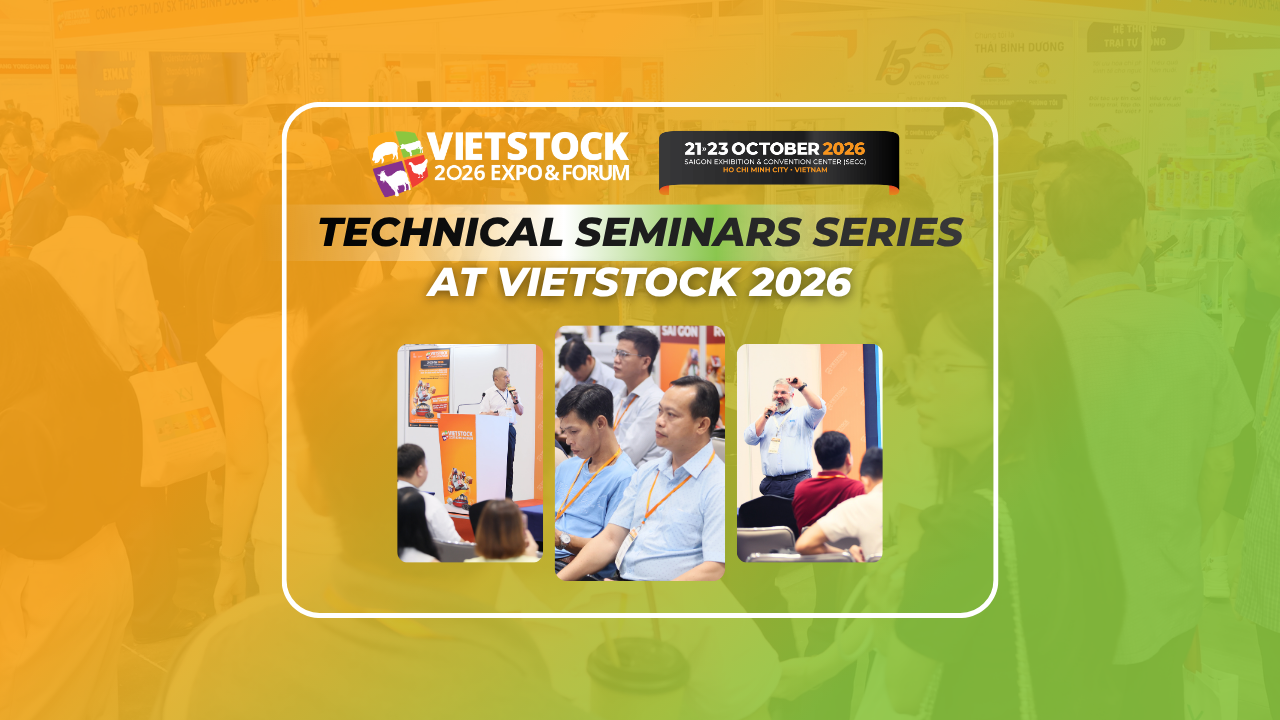
VIETSTOCK 2026 – Vietnam’s Premier International Feed, Livestock, Meat Industry Show – is expected to bring together 300+ brands and 13,000+ trade visitors from many countries, including businesses, organizations, and experts pioneering sustainable livestock solutions in Vietnam and the region. This is an opportunity to:
- Directly explore biogas, renewable energy, waste management, and emission reduction technologies currently being applied in the livestock industry
- Have practical discussions with businesses and experts about ESG roadmaps, emissions inventories, and sustainability standards suitable for Vietnam’s livestock industry
- Connect with supply chain partners to better understand the growing sustainability requirements of domestic and international markets
Date: October 21–23, 2026
Venue: Saigon Exhibition & Convention Center (SECC), 799 Nguyen Van Linh, Ho Chi Minh City.
Register now to seize growth and networking opportunities in the livestock industry:
Visitor registration: https://www.vietstock.org/en/online-registration-2/
Event website: https://www.vietstock.org/en/
Contact information:
- Exhibiting: Ms. Sophie Nguyen – [email protected]
- Group Delegation Support: Ms. Phuong – [email protected]
- Marcom Support: Ms. Anita Pham – [email protected]