Cold-Weather Care for Cattle and Buffalo: Warmth, Nutrition, and Respiratory-Disease Prevention
Cold-weather care for cattle and buffalo requires more than simply keeping animals warm. Learn how to manage shelter, dry bedding, ventilation, nutrition, grazing, cold stress, and respiratory-disease risks during adverse weather.
Cold-weather management for cattle and buffalo should not be based on a single fixed temperature threshold.
The ability of animals to tolerate cold conditions also depends on:
- Wind.
- Rain.
- Humidity.
- Hair-coat condition.
- Body condition.
- Age.
- Nutrition.
- Acclimatisation to weather conditions.
- Access to feed and water.
In particular, cold rain and strong winds can greatly accelerate heat loss when the hair coat becomes wet, even when air temperature itself is not extremely low.
Effective cold-weather management therefore requires a combination of:
appropriate shelter → dry flooring and bedding → adequate ventilation → sufficient energy and water → priority protection for high-risk animals → early monitoring for respiratory signs.
Young calves and buffalo calves, thin animals, animals that are sick or recovering, high-producing dairy cows, and cows in late pregnancy require particular attention during prolonged cold spells.
Cold-weather cattle and buffalo care: priorities by situation
| Situation | Management priority |
| Cold but dry weather with little wind | Monitor body condition and ensure adequate feed, water, and a dry resting area |
| Cold conditions with wind, rain, or a wet hair coat | Increase protection from the weather, move animals to a dry area, and limit grazing |
| Young calves, buffalo calves, thin animals, or sick animals | Prioritise dry bedding, protection from wind, and closer monitoring of feed and water intake |
| Temperature around 13–15°C | Limit prolonged grazing, particularly in the early morning and late afternoon or evening |
| Around 12°C or below, particularly with adverse weather | Do not graze cattle or buffalo or use them for outdoor work |
| Coughing, nasal discharge, or reduced feed intake in the herd | Check ventilation, humidity, ammonia, and the overall clinical picture; do not use antibiotics simply because the weather is cold |
| Laboured breathing, marked loss of appetite, reduced suckling in young animals, or multiple animals affected | Seek early veterinary assessment rather than waiting several days |
The most important point is not to manage cold weather using the thermometer alone. Wind, rain, wet flooring, a wet hair coat, body condition, and access to feed and water can make the same air temperature very different for different herds.
1. When do cattle and buffalo actually experience cold stress?
Cold stress occurs when an animal must increase heat production to maintain body temperature under adverse environmental conditions.
There is no single temperature at which every cow or buffalo begins to experience cold stress.
Cold tolerance varies according to:
- Breed.
- Age.
- Body condition.
- Hair coat.
- Whether the coat is dry or wet.
- Wind.
- Rain.
- Humidity.
- Nutrition.
- Health status.
- Acclimatisation to the weather.
Lower critical temperature – LCT
The concept of lower critical temperature (LCT) describes the environmental temperature below which an animal needs to increase heat production to maintain normal body temperature.
However, LCT is not a fixed value for every animal.
A cow with:
- A thick hair coat.
- A dry coat.
- Good body condition.
- Protection from wind.
- Adequate feed intake.
may tolerate cold conditions considerably better than an animal that is:
- Wet.
- Thin.
- Sick.
- Underfed.
- Exposed to wind.
In practice, it is therefore more useful to consider effective temperature and the overall environmental conditions rather than air temperature alone.
Do buffalo tolerate cold better than cattle?
This should not be assumed.
Cold tolerance in buffalo also depends on:
- Breed.
- Age.
- Housing conditions.
- Body condition.
- Degree of acclimatisation.
Water buffalo have a relatively sparse hair coat and can still be significantly affected by:
- Cold winds.
- Rain.
- Wet flooring.
- Prolonged cold conditions.
Risk is higher in:
- Young buffalo calves.
- Older buffalo.
- Thin animals.
- Sick animals.
- Animals that are not acclimatised to cold weather.
Buffalo therefore still require:
- A dry resting area.
- Protection from wind.
- Adequate feed.
- Clean water.
- Health monitoring.
2. Which animals should be prioritised for protection?
Not every animal in the herd has the same level of risk.
Young calves and buffalo calves
This is one of the most vulnerable groups.
Young calves have:
- Less developed thermoregulatory capacity.
- A larger surface-area-to-body-mass ratio.
- Limited energy reserves.
- Lower tolerance of adverse environmental conditions than mature animals.
During the first weeks of life, particular attention should be paid to:
- Deep, dry bedding.
- Protection from direct draughts.
- Adequate colostrum intake.
- Sufficient milk or milk replacer according to the feeding programme.
- Monitoring suckling.
- Monitoring diarrhoea and respiratory disease.
Thin animals or animals in poor body condition
Animals with a low body condition score (BCS) generally have:
- Lower energy reserves.
- Reduced cold tolerance.
- Greater risk of further body-condition loss if dietary energy is inadequate.
Management may include:
- Grouping animals appropriately.
- Reducing feed competition.
- Providing better resting areas.
- Improving access to the ration.
Sick or recovering animals
Cattle or buffalo recovering from:
- Pneumonia.
- Diarrhoea.
- Surgery.
- Severe illness.
may tolerate cold less effectively.
For these animals, warming and environmental protection are supportive measures only; the underlying disease must still be addressed.
High-producing dairy cows
The main issue is not that high-producing dairy cows are always less cold-tolerant than beef cattle, but that their energy requirements are already high.
Their ration must support:
- Maintenance.
- Milk production.
- Additional energy demand under cold conditions.
If dietary supply is inadequate, cows may:
- Lose body condition.
- Produce less milk.
- Experience greater metabolic pressure.
Cows in late pregnancy
Additional attention is warranted because:
- Nutrient requirements increase.
- Foetal growth is rapid.
- Calving is approaching.
- Wet or slippery flooring may increase injury risk.
Pre-calving areas should be:
- Dry.
- Clean.
- Protected from direct wind.
- Easily accessible to feed and water.
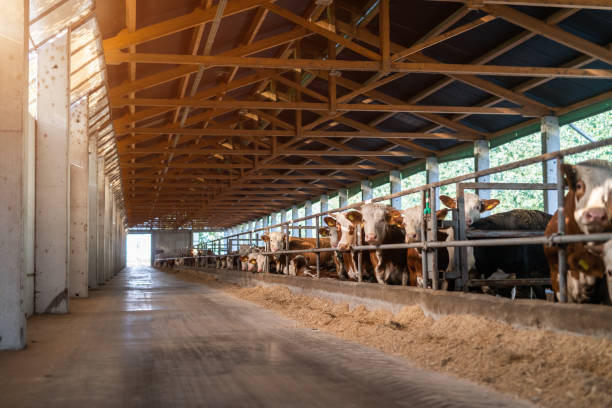
3. Cold-weather housing: protect animals from draughts without sealing the building completely
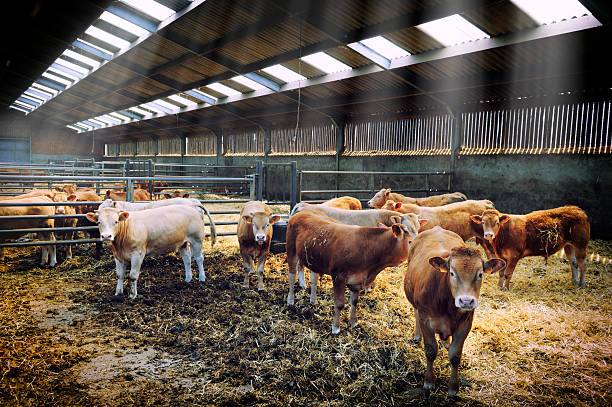
One of the most common mistakes in cold weather is closing the housing completely in an attempt to “keep the heat in.”
This can worsen air quality.
Reduce direct draughts
Check:
- Doors.
- Gaps.
- Prevailing wind direction.
- Side walls.
- Areas that regularly receive cold airflow.
Suitable windbreak materials may include:
- Tarpaulins.
- Woven mats.
- Plastic sheeting.
- Other appropriate barriers.
The objective is to reduce direct cold airflow across areas where animals stand or lie.
Maintain adequate ventilation
An excessively enclosed building may lead to:
- Increased humidity.
- Ammonia accumulation.
- Higher CO₂ levels.
- Poorer air quality.
- Respiratory irritation.
A useful principle is:
Reduce draughts at animal level while maintaining air exchange above the animals or through appropriately positioned ventilation openings.
Ventilation does not mean allowing cold air to blow directly across the herd.
Prevent rain penetration and keep flooring dry
Housing should:
- Have a leak-free roof.
- Prevent rain from reaching resting areas.
- Have appropriate drainage.
A wet hair coat greatly reduces insulation.
Flooring should also be managed to:
- Remove manure.
- Drain water.
- Reduce mud.
- Replace or top up bedding when damp.
Animals lying on cold, wet flooring may lose heat rapidly even when ambient air temperature is not extremely low.
Bedding materials
Depending on the housing system, suitable materials may include:
- Dry straw.
- Rice husks.
- Appropriate sawdust.
- Suitable bedding materials.
- Other specialised bedding products.
There is no single best bedding material for every farm.
The key requirements are that bedding is:
- Dry.
- Clean.
- Non-injurious.
- Replaced or replenished when damp.
Are coats or blankets necessary?
They may be considered for:
- Young calves and buffalo calves.
- Thin animals.
- Sick animals.
- Wet animals.
- Animals that are not acclimatised to cold weather.
Routine blanketing is not necessary for every healthy adult animal.
Any coat or blanket used should be:
- Dry.
- Properly fitted.
- Not restrictive.
- Checked regularly.
It is an additional measure, not a substitute for appropriate housing.
Should fires be lit inside the housing?
Open fires should not be used inside enclosed livestock housing.
Risks include:
- Fire.
- Smoke.
- Carbon monoxide.
- Respiratory irritation.
If heating equipment is used:
- Install it correctly.
- Maintain safe clearance from flammable materials.
- Check electrical systems.
- Avoid placing equipment too close to animals.
- Continue to provide ventilation.
4. When should grazing be limited or stopped?
Decisions should not be based on temperature alone.
Also assess:
- Wind.
- Rain.
- Frost.
- Ice.
- Humidity.
- Availability of shelter on pasture.
- Condition of the animals.
Under practical cold-weather guidance commonly applied in Vietnam:
Around 13–15°C
Consider:
- Limiting grazing duration.
- Avoiding turnout in the early morning.
- Limiting late-afternoon or evening grazing.
- Closely monitoring calves, buffalo calves, and thin animals.
- Checking wind and rain conditions before turnout.
Around 12°C or below
Particularly when combined with:
- Severe cold.
- Strong winds.
- Rain.
- Frost.
- Ice.
cattle and buffalo should generally not be grazed outdoors or used for outdoor work.
Instead:
- Keep animals in appropriately sheltered housing.
- Feed them indoors.
- Increase dry bedding.
- Monitor high-risk groups.
- Check feed and water availability regularly.
If conditions improve around midday, brief exercise may be considered when conditions are:
- Dry.
- Relatively calm.
- Free from rain.
Normal grazing routines should not be maintained rigidly when weather conditions are unsuitable.
5. Cold-weather feeding: increase available energy, not simply the amount of concentrate
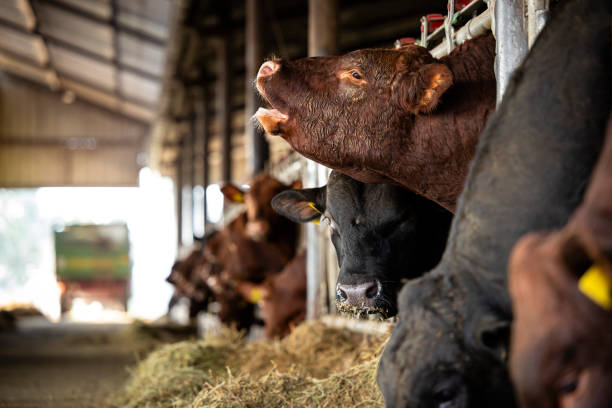
When effective environmental temperature falls below the animal’s LCT, maintenance energy requirements increase.
If the ration does not meet this increased demand, animals may:
- Mobilise body fat.
- Lose BCS.
- Gain weight more slowly.
- Produce less milk.
Do not simply increase concentrate rapidly
A rapid increase in concentrate may increase the risk of:
- Digestive disturbance.
- Ruminal acidosis.
- Reduced feed intake.
- Dietary imbalance.
Energy adjustments should be:
- Gradual.
- Appropriate for each group.
- Based on forage quality.
- Balanced between forage and concentrate.
Forage remains important
Rumen fermentation produces heat, so forage remains an important component of cold-weather feeding.
Potential forage sources include:
- Hay.
- Straw.
- Elephant grass.
- Maize stover.
- Grass silage.
- Maize silage.
- Appropriate agricultural by-products.
However:
Poor-quality forage does not automatically meet energy requirements simply because fermentation produces heat.
The ration still needs to be assessed for:
- Forage quality.
- Feed intake.
- Protein.
- Energy.
- Minerals and vitamins.
Prepare feed reserves before cold weather
Feed planning should be completed before prolonged cold conditions develop.
Useful reserves may include:
- Hay.
- Straw.
- Silage.
- Ensiled maize stover.
- Concentrate.
- Suitable by-products.
- Premix where required by the ration.
Storage areas should be:
- Dry.
- Well ventilated.
- Protected from leaks.
- Managed to reduce mould growth.
Adequate reserves help reduce the risk of:
- Feed shortages.
- Abrupt dietary changes.
- Reliance on poor-quality ingredients.
Water remains essential
Cattle and buffalo still require substantial water intake during cold weather.
Inadequate water access may reduce:
- Feed intake.
- Rumen activity.
- Digestion.
- Milk production.
Water should be:
- Clean.
- Continuously available.
- Easy to access.
- Protected from freezing where relevant.
Moderately warmer water may support intake under some conditions, but there is no need to impose one mandatory water temperature for every farm.
Do not provide electrolytes simply because the weather is cold
Electrolytes should be considered where there is:
- Dehydration.
- Diarrhoea.
- Electrolyte imbalance.
- Another appropriate indication.
Vitamins and minerals
The diet should meet requirements for nutrients such as:
- Vitamin A.
- Vitamin D.
- Vitamin E.
- Zinc.
- Copper.
- Selenium.
- Other minerals.
However, doses should not be increased indiscriminately in the hope of “boosting immunity.”
Certain nutrients, including:
- Copper.
- Selenium.
can be toxic when supplied excessively.
Premixes should be used according to:
- Diet formulation.
- Product instructions.
- Recommended inclusion rate.
- Actual herd requirements.
6. Cold weather and respiratory disease: cold itself does not directly cause pneumonia
Cold weather is not the sole direct cause of pneumonia.
Bovine respiratory disease (BRD) is a multifactorial syndrome.
Risk may increase when several factors occur together, including:
- Cold stress.
- Weaning.
- Transport.
- Commingling.
- High stocking density.
- Poor ventilation.
- Ammonia.
- Inadequate nutrition.
- Viruses.
- Bacteria.
Stress can reduce the effectiveness of respiratory defence mechanisms, creating more favourable conditions for pathogens.
Bacterial pathogens commonly associated with BRD include:
- Mannheimia haemolytica.
- Pasteurella multocida.
- Histophilus somni.
- Mycoplasma bovis.
Several respiratory viruses may also contribute to the disease complex.
Therefore:
Antibiotics should not be given automatically simply because cattle cough during a period of cold weather.
Signs to monitor
Coughing
This may be:
- Occasional.
- Progressively more frequent.
- More apparent during movement.
Coughing alone is not sufficient to diagnose pneumonia.
Nasal discharge
It may be:
- Clear.
- Cloudy.
- Thick.
It should be assessed together with other clinical signs.
Abnormal breathing
Particular attention should be paid to:
- Increased respiratory rate.
- Laboured breathing.
- Abdominal respiratory effort.
- Flaring nostrils.
- Neck extension during breathing.
Reduced feed intake
This can be an important systemic sign.
Depression
Affected animals may:
- Separate from the herd.
- Move less.
- Spend more time lying down.
- Respond less normally.
Body temperature
In adult dairy cattle, rectal temperature is commonly around 38.0–39.3°C.
However, disease should not be diagnosed using a single temperature threshold alone.
Temperature should be interpreted alongside:
- Feed intake.
- Respiratory pattern.
- Cough.
- Nasal discharge.
- Level of alertness.
7. What should be done first when cattle or buffalo begin coughing, eating less, or becoming weak?
Assess the whole clinical picture
Check:
- Feed and water intake.
- Cough.
- Nasal discharge.
- Respiratory rate and pattern.
- Rectal temperature where feasible.
- Ability to stand.
- Number of affected animals.
Check the environment immediately
Review:
- Draughts.
- Wet flooring.
- Humidity.
- Ventilation.
- Ammonia.
- Water supply.
- Stocking density.
Environmental correction may be an important part of management.
Separate affected animals where appropriate
Where infectious disease is suspected, affected animals may be moved to a separate area.
The isolation area should be:
- Dry.
- Protected from direct draughts.
- Well ventilated.
- Provided with easily accessible feed and water.
- Managed to minimise unnecessary stress.
Maintain feed and water access
Sick animals should have:
- Water continuously available.
- Feed within easy reach.
- No abrupt change in diet.
There is no need to assume that every sick animal must automatically be fed multiple small meals.
When is veterinary assessment needed?
Seek veterinary assistance promptly if:
- Breathing becomes difficult.
- Respiratory effort is increased.
- Feed intake decreases markedly or stops.
- Calves or buffalo calves become weak or suckle less.
- Animals spend excessive time lying down.
- Animals cannot stand independently.
- Disease progresses rapidly.
- Several animals are affected.
- Mortality exceeds expected levels.
- Abnormal body temperature is accompanied by systemic signs.
A fixed rule such as “wait a few days to see whether care helps” should not be followed when warning signs are already present.
8. Medication during cold weather: when should it not be used without veterinary guidance?
Antibiotics should not be administered automatically because:
- The weather is cold.
- An animal coughs.
- Nasal discharge is present.
BRD may involve:
- Viral pathogens.
- Bacterial pathogens.
- Multiple pathogens together.
- Environmental and management factors.
Antibiotics should be used only where:
- There is an appropriate basis for suspecting or diagnosing bacterial infection.
- The product is authorised for the relevant animal and production group.
- Veterinary or other appropriate professional guidance supports its use.
Do not independently:
- Increase the dose.
- Reduce the dose.
- Extend treatment.
- Shorten treatment.
Withdrawal time
For beef cattle, the applicable withdrawal time before slaughter must be observed.
For dairy cattle, check:
- Whether the product is authorised for cattle producing milk for human consumption.
- Milk withdrawal time where applicable.
- Meat withdrawal time.
If the label states that a product must not be used in cattle producing milk for human consumption, a milk withdrawal period should not be independently assumed to justify off-label use.
9. Seven common mistakes that can increase cold-stress or respiratory-disease risk
1. Completely sealing the housing
This may increase:
- Humidity.
- Ammonia.
- CO₂.
- Poor air quality.
A better approach is to:
block direct draughts while maintaining adequate ventilation.
2. Increasing concentrate only
This may increase the risk of:
- Ruminal acidosis.
- Digestive disturbance.
- Dietary imbalance.
Energy supply should be adjusted within the overall ration.
3. Assuming more forage is always better
Forage remains important, but very poor-quality forage may not provide enough energy.
4. Lighting an open fire inside the housing
Risks include:
- Fire.
- Smoke.
- Carbon monoxide.
- Respiratory irritation.
5. Crowding animals together to “keep them warm”
Excessive stocking density may:
- Increase floor moisture.
- Increase feed competition.
- Reduce air quality.
- Increase transmission risk.
6. Giving large amounts of vitamins and minerals
“More is better” does not apply.
Some nutrients may become toxic at excessive doses.
7. Assuming buffalo or healthy adult cattle are automatically safe
Healthy adult cattle and buffalo may still experience:
- Cold stress.
- Loss of body condition.
- Weakness.
- Increased respiratory-disease risk.
particularly when cold conditions occur together with:
- Wind.
- Rain.
- Wet flooring.
- Feed shortage.
10. Checklist before and during a cold spell
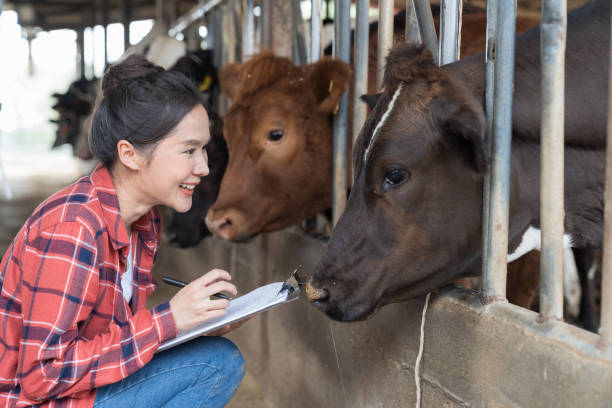
Before cold weather arrives
Housing
- Inspect the roof.
- Repair leaks.
- Identify prevailing wind direction.
- Prepare windbreaks.
- Check drainage.
- Prepare dry bedding.
- Check heating equipment where used.
Feed
- Store sufficient hay.
- Prepare straw.
- Prepare silage.
- Check concentrate supplies.
- Remove mouldy or spoiled ingredients.
- Check the water supply.
Animals
- Assess BCS.
- Identify young calves and buffalo calves.
- Identify thin animals.
- Identify sick or recovering animals.
- Monitor high-producing dairy cows.
- Monitor cows in late pregnancy.
- Prepare an isolation area.
- Review vaccination programmes where appropriate.
During a cold spell
Check daily:
- Weather forecast.
- Temperature.
- Wind.
- Rain.
- Floor condition.
- Bedding dryness.
- Feed intake.
- Water intake.
- BCS or signs of body-condition loss.
- Calves and buffalo calves.
- Cough.
- Nasal discharge.
- Respiratory pattern.
- Number of depressed animals.
If several animals show similar abnormalities, the problem should be assessed at herd level rather than managing each animal in isolation.
Frequently asked questions about cold-weather care for cattle and buffalo
Do buffalo need protection from cold weather like cattle?
Yes.
Buffalo should not be assumed to tolerate cold conditions under all circumstances.
They still require:
- Dry flooring.
- Protection from direct wind.
- Protection from rain.
- Adequate feed.
- Clean water.
Young buffalo calves, thin buffalo, and sick animals require particular attention.
When should cattle and buffalo not be taken outside?
Under practical conditions in Vietnam, when temperatures are around 13–15°C, grazing duration should generally be limited, particularly during the early morning and late afternoon or evening.
When temperatures fall to around 12°C or below, especially with:
- Wind.
- Rain.
- Frost.
- Severe cold.
animals should generally not be grazed or used for outdoor work and should be kept in sheltered areas.
These temperature ranges are practical management references rather than universal physiological cut-offs; wind, rain, wet coats, body condition, and acclimatisation can substantially alter cold stress at the same measured temperature.
Should a large amount of concentrate be added during cold weather?
No.
Energy density may need to increase, but changes should be gradual and the ration should remain balanced between:
- Forage.
- Concentrate.
- Protein.
- Minerals.
- Vitamins.
What should be prioritised for calves and buffalo calves during cold weather?
Key priorities include:
- Keeping the body and lying area dry.
- Protecting animals from direct draughts.
- Ensuring adequate colostrum intake.
- Providing an appropriate milk allowance.
- Monitoring for diarrhoea.
- Detecting respiratory disease early.
Does coughing during cold weather mean cattle need antibiotics immediately?
Not necessarily.
Coughing may be associated with:
- Environmental irritation.
- Viral infection.
- Bacterial infection.
- Multifactorial BRD.
The overall clinical picture should be assessed before deciding whether antimicrobial treatment is appropriate.
Proactive Cold-Weather Protection for Cattle and Buffalo at VIETSTOCK 2026
Effective cold-weather protection for cattle and buffalo involves more than closing the housing or increasing feed. Wind, rain, wet flooring, ration quality, body condition, and the degree of acclimatisation all influence cold-stress risk. For young calves and buffalo calves, thin animals, and animals that are sick or recovering, maintaining dry bedding, adequate energy intake, and early detection of respiratory abnormalities is particularly important during prolonged cold spells.
At VIETSTOCK 2026 – Vietnam’s Premier International Feed, Livestock & Meat Industry Show, livestock producers, technicians, and businesses can exchange practical experience, explore developments in herd management, and connect with organisations across the livestock and animal health value chain. The event is expected to bring together 300+ brands, over 10,000 sqm of exhibition area, 13,000 trade visitors, and participants from 40+ countries and territories.
For farms preparing for adverse weather conditions, participants can explore solutions that directly support cattle and buffalo management, including:
- Ventilation and housing-environment control: solutions that help maintain air quality, reduce direct draughts, and manage humidity without completely sealing the housing.
- Feed and nutrition: approaches involving forage, silage, feed additives, and ration design to support the energy requirements of different animal groups.
- Calf and buffalo-calf care: solutions supporting early-life management, from bedding and nutrition to health monitoring.
- Farm equipment and technology: systems that support monitoring of temperature, humidity, ventilation, and other environmental changes.
- Animal health and disease prevention: developments in vaccination, biosecurity, and herd-health management that can help reduce respiratory-disease risk during adverse weather.
Participants interested in building livestock-production systems that are more resilient to environmental challenges can also learn more at the One Health Forum on 22 October 2026. The programme addresses topics related to nutrition, water, farm management, biosecurity, and hygiene, as well as the integration of One Health into commercial livestock-production systems. These themes provide a useful broader context for linking seasonal herd care with long-term animal health and production efficiency.
Date: 21–23 October 2026
Venue: Saigon Exhibition and Convention Center (SECC), 799 Nguyen Van Linh Street, Tan My Ward, Ho Chi Minh City, Vietnam
Event website: https://www.vietstock.org/en/
👉 VIETSTOCK 2026 Visitor Registration Information
👉 Learn more about the One Health Forum
Contact information:
Exhibiting: Ms. Sophie Nguyen – [email protected]
Visitor Support: Ms. Phuong – [email protected]
Marcom Support: Ms. Anita Pham – [email protected]