Industry Experts Unite at Vietstock 2025 to Mitigate Antimicrobial Resistance
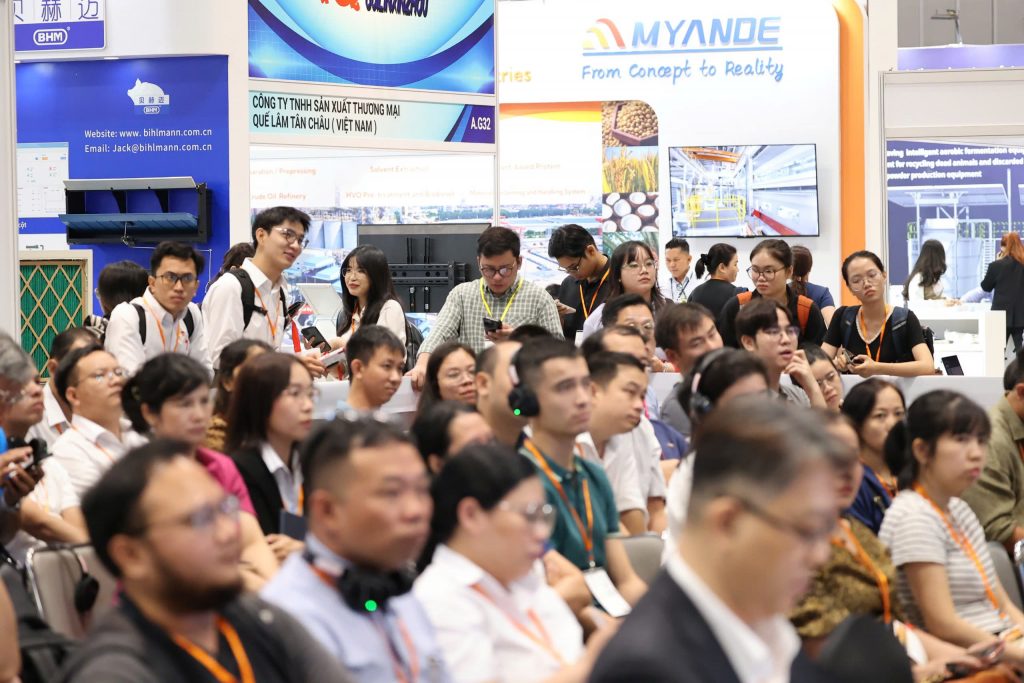
Informa Markets the organizers of Vietstock 2025 Expo & Forum, continue to support sustainable animal agriculture through initiatives like the recent Forum titled From Policies To Practice–Tackling Antimicrobial Resistance Together. This event gathered industry experts to foster collaboration, including understanding the local regulations and the National action plan to combat Antimicrobial Resistance (AMR), and drive actionable strategies to mitigate AMR.
The use of antibiotics as growth promoters in livestock and poultry has been banned in Vietnam since 2018, while prophylactic use will phased out effective 1 January 2026 as part of a National Action Plan to combat AMR.
Multi-Factorial Strategies to Reduce AMR
Edward Manchester, Global Commercial Director of Ecolex Animal Nutrition and AMR Forum sponsor, presented on “Nutritional Interventions to Reduce Antimicrobial Resistance.” He explained that monolaurin, a compound derived from lauric acid, acts as a natural antimicrobial effective against gram-positive bacteria such as Bacillus subtilis and Streptococcus suis. However, it is less effective against gram-negative bacteria unless delivered as a microemulsion (alpha-monolaurin), which disrupts pathogen membranes, increasing permeability and causing disintegration. Tests showed pre-emulsified alpha-monolaurin (Lipo ZAP) at 600 ppm and 1200 ppm strongly inhibited E. coli and S. suis, unlike monomeric forms.
Nguyen Cong Huy, Country Technical Manager, Vietnam for Forum co-sponsor Boehringer Ingelheim, emphasized that 80% of antibiotics are used in pigs under 10 weeks, especially during weaning when immunity declines. He advised full vaccination programs for sows and piglets and proper colostrum management (minimum 250 mL per piglet within 16 hours). A study reported a 79% reduction in antibiotic group medication after vaccination with Enterisol Ileitis, along with improved weight gain (+46 g/day), carcass weight (+1.25 kg), and an 8-day shorter fattening period.
Dr. ChungHyun (Chris) Kim, ADM Director for APAC CD&D Animal Nutrition & Technical Services, detailed copper’s role as an essential trace mineral that promotes growth by enhancing fat digestibility, gut morphology, appetite, and immune function. Since copper resistance and AMR genes can transfer together on plasmids, limiting copper in feed may help reduce AMR gene expression.
Thai Thach Thao, Strategic and Marketing Manager at Trouw Nutrition, highlighted mycotoxins as indirect drivers of AMR by damaging gut health and immunity, increasing infections and antibiotic use. She recommended a defense strategy including mycotoxin binders (smectite-based bentonite clays), gut wall protectants (glucose biopolymers), and immunity boosters (purified β-glucans).
Gert-Jan Gerrits, Regional Director at EW Nutrition, emphasized that nutrition plays a crucial role in mitigating AMR through a holistic approach to pig farm efficiency. He highlighted phase feeding during the grow–finish period, using 3 to 6 diets precisely formulated with standardized ileal digestible lysine to net energy ratios customized by pig weight and sex. This targeted nutrition improves growth performance and feed efficiency while minimizing nitrogen waste and preventing nutrient oversupply, ultimately supporting better gut health and reducing reliance on antibiotics.
Ywert Visser, Country Director of Schippers Vietnam and AMR Forum speaker, stressed hygiene as the foundation of biosecurity and antibiotic reduction ahead of the antibiotic ban starting 1 January 2026. He introduced HyCare, a customizable hygiene system combining quality products, equipment, and guidance for farms. His key message: “Disinfection is impossible without proper cleaning; you cannot disinfect dirt!”
Craige Allan, Managing Director of AgPro, explained that antibiotic growth promoters’ benefits come mainly from their anti-inflammatory effects rather than antimicrobial action. Additives like virginiamycin and bacitracin methylene disalicylate reduce inflammation, supporting gut health and productivity while minimizing antibiotic reliance. Penicillin lacks these anti-inflammatory effects and is not used as an AGP. This understanding highlights the importance of using feed additives with proven anti-inflammatory properties to support gut health, reduce antibiotic reliance, sustain productivity, and combat antimicrobial resistance.
Vietstock 2026 One Health Forum—Integrating People, Animals, and Environment
Informa Markets looks forward to continue advancing sustainable livestock and poultry development at the Vietstock 2026 on 22 October 2026, featuring a One Health Forum. This will promote integrated health management of people, animals, and the environment, to enhance disease control, food security, and environmental protection.

———–
For more details, please contact:
- Exhibiting: Ms. Sophie Nguyen – [email protected]
- Group Delegation Support: Ms. Phuong – [email protected]
- Marcom Support: Ms. Anita Pham – [email protected]