Oxytocin in Veterinary Medicine: Obstetric Indications, Contraindications, and Risks of Incorrect Use
When a cow, sow, goat, or ewe experiences prolonged labor, one common response on farms is to consider oxytocin to “speed up delivery.” However, slow or prolonged labor does not necessarily mean there is insufficient oxytocin or inadequate uterine contraction.
An oversized fetus, abnormal presentation or position, obstruction of the birth canal, inadequate cervical dilation, or the dam’s overall condition can all prevent labor from progressing. In these situations, making the uterus contract more strongly does not address the underlying cause and may make the obstetric case more difficult.
Oxytocin is a hormone used in veterinary medicine to stimulate uterine smooth-muscle contractions and the milk let-down reflex in appropriate situations. It may be useful when a veterinarian determines that uterine contractions are inadequate but the birth canal remains suitable for delivery to continue, or for certain postpartum and lactation-related indications according to the specific product.
Therefore, the most important question before use is not:
“How many minutes of prolonged labor should pass before oxytocin is given?”
but:
“Why is labor not progressing, and would increasing uterine contractions actually address the underlying cause?”
1. Before Considering Oxytocin, Determine Why Labor Is Not Progressing
Oxytocin does not resolve every cause of dystocia.
Before use is considered, a veterinarian or a trained staff member should assess several important factors:
- Has the animal actually entered the appropriate stage of labor?
- Is the cervix sufficiently dilated for delivery to continue?
- Is the birth canal unobstructed?
- Is the fetus in an appropriate presentation and position?
- Is fetal size compatible with the birth canal?
- Is there evidence of mechanical obstruction?
- Is uterine or reproductive-tract injury suspected?
- Is the dam exhausted, dehydrated, or experiencing a systemic problem?
- Is the delay in labor actually related to inadequate uterine contractions?
The situation can be simplified into two broad groups:
| Situation | Is oxytocin a direct solution? |
| Inadequate uterine contractions, unobstructed birth canal, no mechanical obstruction | May be considered by a veterinarian if the product is appropriately indicated |
| Oversized fetus | Does not resolve the mechanical cause |
| Abnormal fetal presentation or position | Appropriate obstetric management is needed first |
| Cervix not adequately dilated | Should not be used simply as a “trial” |
| Suspected uterine rupture or injury | Requires urgent obstetric management |
| Cause of prolonged labor is unknown | Assessment is needed before medication is used |
| Support of milk let-down | May be considered when the product is approved for this indication |
This is the most important principle when considering oxytocin use on farms.
The drug increases uterine contractions; it does not correct fetal position, reduce fetal size, or remove an obstruction from the birth canal.
2. How Does Oxytocin Affect the Uterus and Mammary Gland?
Oxytocin is a peptide hormone synthesized in the hypothalamus and stored and released from the posterior pituitary gland.
Veterinary oxytocin products produce effects similar to endogenous oxytocin, acting primarily on two systems: uterine smooth muscle and the mammary gland.
Effects on the Uterus
Oxytocin binds to receptors on uterine smooth-muscle cells, activating intracellular signaling that increases calcium availability and promotes muscle contraction.
The degree of response depends on factors including:
- Animal species;
- Physiological stage;
- Uterine condition;
- Receptor density;
- Timing of administration;
- Product formulation and route of administration.
The uterus is generally more responsive to oxytocin late in gestation and around parturition.
However, the ability of the uterus to contract strongly does not mean that the fetus can pass through the birth canal.
If the fetus is obstructed, stronger contractions may simply increase pressure on the:
- Uterus;
- Fetus;
- Cervix;
- Reproductive tract.
This is why mechanical obstruction should be assessed before oxytocin is considered.
Effects on the Milk Let-Down Reflex
Oxytocin also acts on myoepithelial cells surrounding the mammary alveoli.
When these cells contract, milk that has already been produced is moved from the alveoli into the ductal system and milk cisterns.
This is the milk ejection or milk let-down reflex.
An important distinction is:
Oxytocin helps release milk that has already been produced; it does not directly increase long-term milk synthesis by the mammary gland.
If a cow or sow has persistently reduced milk production, other factors should also be assessed, including:
- Nutrition;
- Water intake;
- Stress;
- Systemic disease;
- Mastitis;
- Condition of the offspring;
- Milking technique;
- Management conditions.
Oxytocin should not be used repeatedly as a general solution to “increase milk production.”
3. When May a Veterinarian Consider Oxytocin?
There is no single indication that applies identically to cattle, pigs, goats, and sheep. Use should be based on the specific product, animal species, and obstetric situation.
When Uterine Contractions Are Inadequate but There Is No Obstruction
This is one of the most important situations in which oxytocin may be considered.
If a veterinarian determines that:
- Labor has reached an appropriate stage;
- The cervix is adequately dilated;
- The fetus is capable of passing through the birth canal;
- No mechanical obstruction is present;
- The delayed labor is associated with inadequate uterine contractions;
oxytocin may be considered according to the product indication.
The key principle is that the cause should be diagnosed before the decision to use the medicine is made.
Supporting Postpartum Uterine Involution
Some oxytocin products are indicated to support postpartum uterine involution.
Whether use is appropriate depends on:
- Species;
- Postpartum condition;
- Product indication;
- Veterinary assessment.
Oxytocin should not automatically be administered to every animal after giving birth simply to make the uterus “clear out faster.”
Supporting the Milk Let-Down Reflex
In some species and with appropriately indicated products, oxytocin may be used to support milk let-down.
However, if the problem repeatedly occurs, the underlying cause should be investigated rather than relying on oxytocin.
Oxytocin and Retained Fetal Membranes in Cattle
This is a commonly misunderstood issue.
Retained fetal membranes (RFM), often referred to as retained placenta, should not automatically be treated with oxytocin in an attempt to promote faster detachment and expulsion.
RFM should be assessed according to factors including:
- Time since parturition;
- General condition of the cow;
- Discharge;
- Risk of metritis;
- Metabolic status;
- Other postpartum clinical findings.
The presence of retained fetal membranes should not automatically be interpreted as an indication for oxytocin.
4. How Do Considerations Differ Between Cattle, Sows, Goats, and Sheep?
Oxytocin should not be used according to the principle:
“Use less for a smaller animal and more for a larger animal.”
Responses to hormones are not determined by body weight alone.
In Cattle
Oxytocin may be considered in selected situations such as:
- Certain cases of inadequate uterine contractions after obstruction has been ruled out;
- Support of postpartum uterine involution when appropriate;
- Support of milk let-down when the product is indicated for this purpose.
It should not be regarded as a routine treatment for retained fetal membranes.
In Sows
During farrowing, the interval between piglets can provide useful monitoring information but is not sufficient on its own to justify oxytocin administration.
If farrowing is prolonged, relevant factors to assess include:
- Whether piglets remain in the uterus;
- Whether a piglet is obstructed;
- Fetal presentation and position;
- Condition of the sow;
- Strength of uterine contractions;
- Progress of farrowing.
Oxytocin may be considered when uterine contractions are inadequate after mechanical causes have been excluded.
Some products may also be used to support milk let-down when appropriately indicated.
In Goats and Sheep
Oxytocin should only be used when:
- The product is indicated for the species;
- The obstetric situation is appropriate;
- There is no mechanical obstruction;
- A veterinarian has assessed the case.
Do not extrapolate a cattle or pig dose to goats or sheep simply by adjusting for body weight.
5. Situations in Which Oxytocin Should Not Be Used as a “Trial”
This section should be regarded as a major safety warning.
The Fetus Is Too Large for the Birth Canal
If the fetus cannot pass through the birth canal because of its size, stronger uterine contractions will not solve the problem.
Instead, pressure on the following structures may increase:
- Fetus;
- Uterus;
- Cervix;
- Vagina.
Abnormal Fetal Presentation or Position
If the fetus is not positioned appropriately for delivery, oxytocin cannot correct the fetal position.
The situation should first be assessed and managed using an appropriate obstetric approach.
Inadequate Cervical Dilation
Increasing uterine contractions before the birth canal is adequately prepared may increase pressure without allowing delivery to progress.
Suspected Uterine Injury or Rupture
This is a situation requiring urgent assessment.
Further stimulation of uterine contractions should not be continued when serious injury is suspected.
Fetal Death or Severe Fetal Abnormality
Oxytocin should not automatically be assumed to resolve these situations.
Assessment should include:
- Fetal position;
- Presence of obstruction;
- Uterine condition;
- Appropriate method of fetal removal;
- General condition of the dam.
The Cause of Dystocia Is Unknown
This is likely one of the most common situations encountered on smallholder livestock farms.
If the only available information is:
“She has been straining for a long time but nothing has come out.”
that information alone is not sufficient to justify oxytocin use.
6. What Can Happen if Oxytocin Is Used in the Wrong Situation?
Oxytocin is not a medicine where “stronger contractions mean easier delivery.”
If the birth canal is obstructed, continued strong uterine contractions may make the obstetric situation more serious.
Potential risks may include:
- Uterine injury;
- Injury to the reproductive tract;
- Hemorrhage when trauma is present;
- Increased risk of fetal distress;
- Reduced placental perfusion;
- Exhaustion of the dam;
- Greater difficulty with subsequent obstetric intervention.
Illustrative Example
An animal has been straining for a prolonged period.
The owner has not checked fetal position and independently administers oxytocin.
If the actual cause is an oversized fetus or abnormal fetal position, the uterus may contract more strongly while the fetus remains unable to pass.
The result is:
The original cause remains + uterine pressure increases.
This is why dystocia should be approached primarily as a problem of identifying the cause, not simply as a problem of increasing uterine force.
Are All Complications After Oxytocin Use Caused by the Drug?
No.
Problems such as:
- Uterine prolapse;
- Metritis;
- Reduced milk production;
- Reproductive-tract injury;
- Reduced reproductive performance;
may be associated with multiple factors related to the dystocia itself.
Complications occurring after oxytocin administration should therefore not automatically be attributed to the drug without a complete assessment.
The important point is that using oxytocin in an inappropriate situation can worsen some obstetric cases.
7. Dose, Route of Administration, and Repeat Dosing: Why a Single Formula Should Not Be Applied
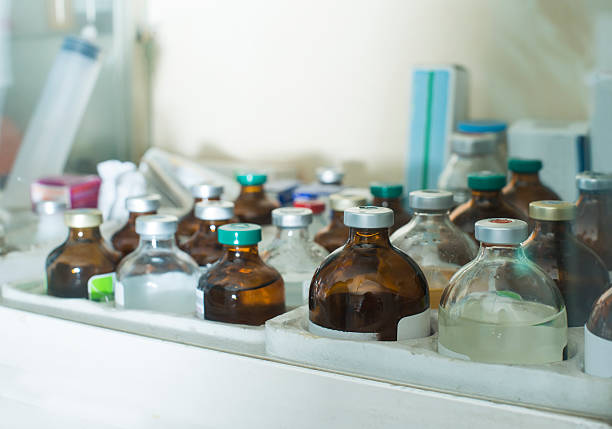
Veterinary oxytocin products are commonly available as injectable formulations, but:
- Concentrations may differ;
- Indications may differ;
- Approved animal species may differ;
- Routes of administration may differ;
- Dose and frequency of administration may differ.
Depending on the product, the label may permit one or more routes such as:
- Intramuscular injection – IM;
- Intravenous injection – IV;
- Subcutaneous injection – SC.
No single route should automatically be assumed to be preferable.
Intravenous administration, in particular, requires appropriate technical skill and monitoring capability.
Why This Article Does Not Provide a Fixed IU Table
A table such as:
Cattle = X IU
Pigs = Y IU
Goats = Z IU
could easily be used by readers as a practical treatment protocol even though:
- Product concentrations differ;
- Indications differ;
- Obstetric conditions differ;
- Species respond differently.
A safer table is:
| Species | Situations in Which Use May Be Considered | Dose and Route |
| Cattle | Selected obstetric indications when appropriate; support of milk let-down when the product is indicated | According to the product label and veterinary guidance |
| Sows | Inadequate uterine contractions after obstruction has been ruled out; support of milk let-down when appropriate | According to the product label and veterinary guidance |
| Goats and sheep | Only when the product is indicated for the species and the obstetric case is appropriate | According to the product label and veterinary guidance |
Lack of Progress After the First Administration Does Not Automatically Mean Another Dose Is Needed
This is a particularly important mistake to avoid.
If labor still does not progress after oxytocin has been administered, the key question is:
Why is there no progress?
Possible explanations include:
- An obstruction has not yet been identified;
- The fetus is malpositioned;
- The obstetric situation has changed;
- The initial diagnosis may have been inaccurate;
- Another intervention may be needed.
A repeat dose should not be administered automatically simply because oxytocin has a relatively short duration of action.
8. Practical Checklist: From Detecting Prolonged Labor to Deciding on Management
Rather than placing the checklist only at the end of the article, oxytocin use can be approached through a practical decision-making checklist.
When Labor Appears Longer Than Expected
Record:
- When signs of labor began;
- Duration of active straining;
- How many offspring have already been delivered;
- Time since the previous offspring was delivered;
- Whether abnormal discharge or bleeding is present;
- Condition of the dam;
- Whether signs of weakness are present.
Before Oxytocin Is Considered
Assess:
- Is the cervix adequately dilated?
- Is the birth canal unobstructed?
- Is a fetus present in the birth canal?
- What are the fetal presentation and position?
- Is fetal size compatible with delivery?
- Is there an obstruction?
- Is the uterus still contracting?
- Are there signs of injury?
- Is the dam stable?
After a Veterinarian Decides to Use Oxytocin
Record:
- Product name;
- Concentration;
- Batch number when necessary;
- Time of administration;
- Dose;
- Route of administration;
- Person administering the medicine;
- Progress after administration.
Signs Requiring Urgent Assessment
- Marked abnormal pain;
- Sudden cessation of straining;
- Recumbency with inability to rise normally;
- Rapidly worsening weakness;
- Pale or bluish mucous membranes;
- Abnormal bleeding;
- Failure of labor to progress;
- Suspected injury to the reproductive tract or uterus.
If these signs occur, do not independently continue administering oxytocin.
9. Storage, Withdrawal Periods, and Use With Other Drugs in Obstetric Cases
Storage
Do not assume that all oxytocin products have identical storage requirements.
Requirements may differ by product.
Check:
- Storage temperature;
- Protection from light;
- Conditions after opening;
- Expiry date;
- Whether freezing is permitted or prohibited.
Do not store the medicine in a vehicle or another area with large temperature fluctuations if this conflicts with the product label.
If incorrect storage is suspected, do not increase the dose in an attempt to “compensate for reduced potency.”
Withdrawal Periods
A short duration of oxytocin action should not be used to infer the withdrawal period.
For food-producing animals, check the product-specific requirements for:
- Meat withdrawal;
- Milk withdrawal;
- Other relevant restrictions.
Withdrawal information from one product should not be applied to another product.
Use With Other Medicines
An obstetric case may require several different types of medication, but each should have a clear purpose.
Antibiotics
They should not be used routinely simply because an animal has recently given birth or has retained fetal membranes. Appropriate indication is needed when bacterial infection is suspected or confirmed.
Analgesics or anti-inflammatory medicines
These may be considered by a veterinarian depending on the case, underlying disease, and condition of the dam.
Sedatives
These may be required for certain interventions but should be selected with consideration of cardiovascular and respiratory effects.
Other reproductive hormones
Oxytocin should not be independently combined with prostaglandins or other hormones based on the assumption that “more hormones will work better.”
Hormonal protocols should be designed according to a specific reproductive objective.
10. Frequently Asked Questions About Oxytocin in Livestock
How Long Can Labor Continue Before Oxytocin Is Considered?
There is no single time threshold that is sufficient to make this decision.
Time is only one piece of information.
More important factors include:
- Stage of labor;
- Condition of the dam;
- Fetal condition;
- Presence of obstruction;
- Degree of birth-canal dilation;
- Adequacy of uterine contractions.
Can Oxytocin Help Retained Fetal Membranes Pass Faster in Cattle?
Oxytocin should not be regarded as a routine treatment for retained fetal membranes in cattle.
RFM should be assessed as a separate postpartum condition.
Can Farmers Buy and Keep Oxytocin on the Farm for Emergency Use?
Medication management on farms depends on applicable regulations and the veterinary program of the facility, but livestock producers should not independently decide to administer oxytocin before the cause of dystocia has been assessed.
The greatest risk is not simply lacking injection technique. It is performing the injection correctly while using the medicine for the wrong indication.
Does Oxytocin Increase Milk Production in Cows or Sows?
Oxytocin supports the ejection of milk that has already been produced.
It is not a long-term solution for increasing milk synthesis.
If One Dose Does Not Work, Can Another Dose Be Given?
A repeat dose should not be given automatically.
The case should be reassessed because failure to progress may indicate that inadequate uterine contractions were not the primary problem.
What Signs Require Immediate Veterinary Attention?
Early veterinary assessment is particularly important when:
- Labor does not progress;
- The dam becomes weak;
- Abnormal bleeding occurs;
- A fetus appears to be obstructed;
- The birth canal appears abnormal;
- The animal worsens after intervention;
- Uterine or reproductive-tract injury is suspected.
Note: This article is intended to provide general reference information about oxytocin use in veterinary medicine. Product selection, dose, route of administration, timing, and frequency of administration should be based on the product label, the actual clinical situation, and professional veterinary assessment.
Supporting Safer Use of Veterinary Obstetric Medicines at VIETSTOCK 2026
Oxytocin illustrates an important principle in veterinary practice: using the correct medicine is not enough; the indication and timing must also be appropriate. In obstetric cases, identifying the cause of dystocia, assessing both the dam and fetus, and selecting the appropriate intervention are just as important as the medicine itself.
VIETSTOCK 2026 is an industry networking platform for livestock producers, veterinarians, farm technicians, veterinary pharmaceutical companies, and solution providers across the livestock value chain. The event is expected to bring together more than 300 brands, over 10,000 sqm of exhibition area, and 13,000 trade visitors from more than 40 countries and territories.
For reproductive health and veterinary medicine use, visitors can explore products, equipment, and solutions in areas such as animal health, veterinary pharmaceuticals and vaccines, breeding and reproduction, artificial insemination, nutrition, biosecurity, and farm management.
The event also provides an opportunity for livestock producers and technical teams to engage with companies, suppliers, and industry organizations about practical solutions for reproductive management, herd and flock health monitoring, and safer veterinary medicine use in production settings.
Alongside the exhibition, the VIETSTOCK 2026 Livestock Roadshows in Bac Ninh, Dong Thap and Ho Chi Minh City, continue to bring practical knowledge on farm management, disease control, animal nutrition, technology applications, and sustainable livestock development to key livestock-producing regions.
Date: 21–23 October 2026
Venue: Saigon Exhibition and Convention Center (SECC), 799 Nguyen Van Linh Street, Tan My Ward, Ho Chi Minh City, Vietnam
Event website: https://www.vietstock.org/en/
👉 Visitor registration for VIETSTOCK 2026
👉 Learn more about the VIETSTOCK 2026 Livestock Roadshows
Contact information:
Exhibiting: Ms. Sophie Nguyen – [email protected]
Visitor Support: Ms. Phuong – [email protected]
Marcom Support: Ms. Anita Pham – [email protected]