Veterinary Vaccine Storage Refrigerators: Temperature, Monitoring, and Selection Criteria
Veterinary vaccine storage requires stable temperature control, reliable monitoring, and clear cold-chain procedures. Learn how to select a vaccine refrigerator, use data loggers, arrange vaccines correctly, respond to power outages, and maintain storage quality from receipt to administration.
A veterinary vaccine storage refrigerator is a device used to maintain appropriate temperature conditions to protect vaccine quality and potency before use. However, simply having a refrigerator is not enough to ensure that vaccines are always stored correctly.
The effectiveness of the storage system also depends on:
- The temperature requirements of each vaccine.
- The equipment’s ability to maintain stable temperatures.
- Where vaccines are positioned inside the refrigerator.
- Temperature-monitoring equipment.
- Temperature logs and stored data.
- Procedures for responding to power outages or equipment failure.
- Transport and handling conditions after vaccines leave the refrigerator.
A vaccine that has been affected by inappropriate temperatures may show no obvious change in color or appearance. Therefore, users cannot assess vaccine quality simply by looking at the product.
Effective Vaccine Storage Requires Control at 4 Levels
1. Correct conditions for the product
Do not assume that all veterinary vaccines must be stored at 2–8°C.
Many products require this temperature range, but some specialized vaccines require specific frozen-storage conditions or even liquid nitrogen.
Diluents and vaccines after reconstitution may also have their own storage requirements.
2. Appropriate equipment
The refrigerator should be capable of:
- Maintaining a stable temperature.
- Minimizing excessively warm or cold spots.
- Providing sufficient capacity for the actual vaccine volume.
- Allowing adequate air circulation within the storage compartment.
- Operating appropriately at the ambient temperature of the installation site.
3. Data demonstrating that the required temperature has been maintained
Do not rely only on the temperature shown on the display when the refrigerator is opened.
Depending on the size and requirements of the facility, monitoring may include:
- An independent thermometer.
- A min/max thermometer.
- A data logger.
- Alarm and remote-monitoring systems.
4. A clear procedure for handling temperature excursions
If the temperature moves outside the permitted range:
- Temporarily stop using the affected vaccine batch.
- Record temperature data.
- Quarantine the suspected batch.
- Continue storing it under appropriate conditions.
- Contact the manufacturer or a qualified professional for assessment.
A good refrigerator is only one part of the system. Vaccine potency depends on the entire cold chain, from receipt through final administration.
1. What Is a Veterinary Vaccine Storage Refrigerator?
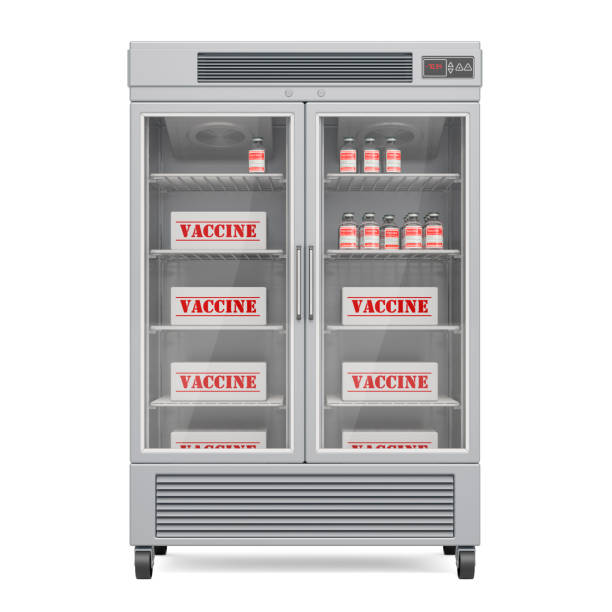
A veterinary vaccine storage refrigerator is equipment used to maintain temperatures within the range required for vaccine storage.
Vaccines are biological products that may be sensitive to:
- Temperature.
- Light.
- Transport conditions.
- The duration of exposure outside permitted conditions.
When storage conditions are inappropriate, vaccine components may be affected, potentially reducing the ability of the vaccine to produce the intended immune response.
The degree of impact depends on:
- Vaccine type.
- Actual temperature.
- Duration of exposure.
- Dosage form.
- Storage conditions specified by the manufacturer.
One challenge is that reduced vaccine potency does not necessarily produce visible changes.
For this reason, vaccine storage should rely on temperature data and control procedures, not visual inspection alone.
2. How Does a Purpose-Built Vaccine Refrigerator Differ from a Household Refrigerator?
Household refrigerators are designed primarily for food storage.
Purpose-built vaccine refrigerators, by contrast, are generally designed to provide tighter control for temperature-sensitive products.
| Criterion | Purpose-built vaccine refrigerator | Household refrigerator |
| Intended purpose | Storage of products requiring temperature control | Primarily food storage |
| Temperature stability | May maintain a narrower temperature range | Depends on the model and how it is used |
| Temperature distribution | Some models use forced-air circulation and uniformity control | Temperature may vary considerably between locations |
| Risk of freezing | May include alarms or design features that reduce excessively cold areas | Particular caution is needed near cooling elements or freezer compartments |
| Data recording | May integrate or connect with a data logger | Usually requires an additional device |
| Fault alarms | May provide temperature, power-loss, or equipment-failure alarms | Usually more limited |
These differences are general.
Actual performance should be evaluated based on the specific model and the manufacturer’s technical specifications.
Some household refrigerators may still be used in appropriate situations when:
- Their ability to maintain the required temperature has been verified.
- Independent monitoring equipment is used.
- The risk of accidental freezing is controlled.
- Appropriate operating procedures are in place.
However, for facilities storing large quantities of vaccines or requiring strict monitoring and traceability, purpose-built vaccine refrigerators are generally more convenient for temperature control and data management.
3. What Is the Appropriate Storage Temperature for Veterinary Vaccines?
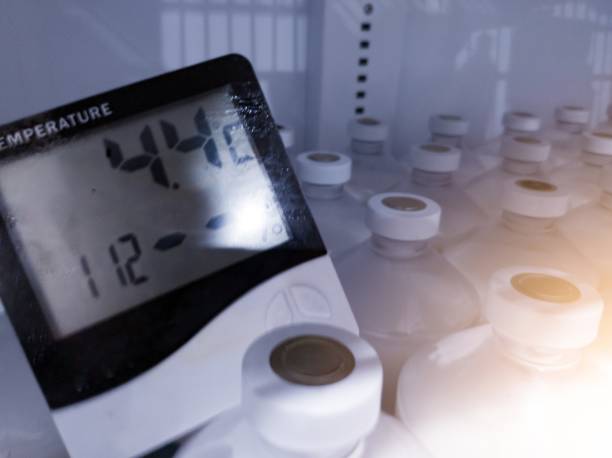
There is no single storage temperature that applies to all veterinary vaccines.
Many products require storage at 2–8°C, but some vaccines require different conditions.
The most important principle is:
Always check the label and instructions for the exact product before choosing storage equipment or setting storage conditions.
Vaccines stored at 2–8°C
The 2–8°C range is commonly required for many refrigerated veterinary vaccines.
Within this range, the objective is not simply to keep the refrigerator “cold enough.” It is also necessary to prevent:
- Temperatures rising above the permitted limit.
- Accidental freezing.
- Large temperature fluctuations.
- Excessively cold areas inside the compartment.
For vaccines labeled do not freeze, placing products close to cooling elements or in areas that become excessively cold may increase the risk of quality loss.
Do not assume a vaccine remains effective simply because it has thawed again.
Vaccines requiring specialized frozen storage
Some vaccines require specialized frozen-storage methods.
For example, some cell-associated frozen Marek’s disease vaccines are stored in liquid nitrogen.
This is completely different from placing a vaccine in:
- A household freezer compartment.
- A conventional freezer.
- Equipment that merely cools below 0°C.
When instructions specify “frozen storage,” confirm the exact:
- Temperature.
- Storage method.
- Equipment required.
- Thawing procedure.
Diluents may have different requirements from the vaccine
A vaccine diluent does not necessarily require the same storage conditions as the main vaccine component.
Check separately:
- Diluent storage requirements.
- Temperature at the time of use.
- Instructions after mixing.
- Permitted period of use after reconstitution.
Vaccines after mixing or reconstitution
Once a vaccine has been mixed or reconstituted, the permitted usage period is often limited.
Do not:
- Store it for an extended period on your own.
- Keep it for use the following day.
- Refreeze it.
unless this is specifically permitted by the product instructions.
| Storage category | Conditions to check | Key consideration |
| Refrigerated storage | Often 2–8°C, depending on the product | Avoid overheating and unintended freezing |
| Specialized frozen storage | According to the specific requirement | May require liquid nitrogen |
| Diluent | According to separate instructions | May differ from the main vaccine |
| Reconstituted vaccine | According to the time and conditions stated on the label | Do not independently extend the permitted use period |
4. Criteria for Selecting a Veterinary Vaccine Refrigerator
Price and capacity are important factors, but they should not be the only criteria.
A suitable refrigerator must control vaccine storage effectively under actual operating conditions.
Ability to maintain a stable temperature
This is one of the most important criteria.
Check:
- Operating temperature range.
- Stability when loaded with the expected quantity of vaccine.
- Temperature differences between locations inside the compartment.
- Temperature recovery after the door is opened.
- Ambient temperature range in which the refrigerator can operate.
The temperature displayed on the unit does not necessarily represent the actual temperature in every part of the compartment.
Therefore, preference should be given to equipment with:
- Temperature-uniformity test data.
- Or the ability to verify temperatures at multiple locations.
Mechanisms to reduce the risk of accidental freezing
For vaccines that require refrigeration but must not be frozen, excessively low temperatures can be as harmful as excessively high temperatures.
Consider:
- Low-temperature alarms.
- Compartment design.
- Position of cooling elements.
- Areas where cold spots may develop.
Do not assume that a product is automatically suitable simply because it is marketed as a “vaccine refrigerator.”
Data logging and alarm systems
Useful features may include:
- A clear temperature display.
- High-temperature alarms.
- Low-temperature alarms.
- Power-failure alarms.
- Historical data storage.
- Data-logger connectivity.
- Remote alerts.
For larger farms, clinics, or distribution facilities, remote alerts can be particularly useful.
However:
An alarm does not mean that the system can correct the problem automatically.
The facility should determine in advance:
- Who receives the alarm.
- Who is responsible for responding.
- Which response procedure should be followed.
- What backup option is available.
Appropriate capacity
A refrigerator that is too small may lead to:
- Overcrowded vaccine storage.
- Poor air circulation.
- Difficult stock handling.
A refrigerator that is unnecessarily large may:
- Increase the initial investment.
- Increase electricity costs.
- Provide little benefit to a small facility.
Capacity should be based on:
- Vaccine volume stored.
- Delivery frequency.
- Vaccination schedule.
- Backup stock requirements.
- Need for separate storage zones.
Durability and maintenance support
Before purchasing, check:
- Warranty.
- Spare-part availability.
- Technical support in Vietnam.
- Ability to test or verify sensors.
- Maintenance requirements.
- Energy consumption.
- Installation requirements.
The refrigerator should also be installed in a location that is:
- Well ventilated.
- Provided with sufficient clearance for heat dissipation.
- Away from major heat sources.
- Within the ambient temperature range specified by the manufacturer.
5. Is Independent Temperature-Monitoring Equipment Necessary?
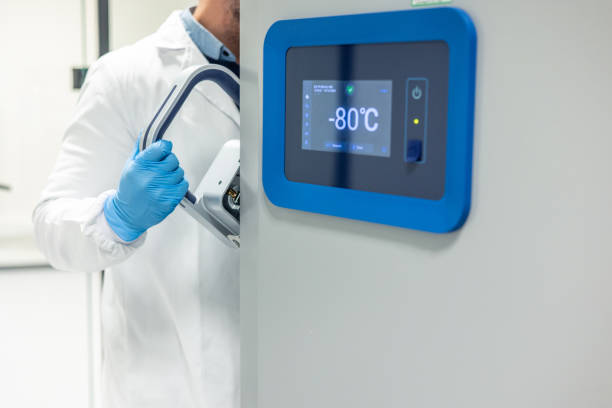
It is recommended, particularly for facilities that store vaccines regularly.
A refrigerator’s built-in sensor may measure temperature at only one location or a limited number of points.
Vaccines, however, may be stored in multiple areas of the compartment.
Independent monitoring equipment can help verify:
- Actual temperature.
- Maximum temperature.
- Minimum temperature.
- Duration of temperature excursions.
- Temperature-fluctuation history.
Common monitoring devices
| Device | Purpose |
| Digital thermometer | Displays the temperature at the time of measurement |
| Min/max thermometer | Records the highest and lowest temperatures |
| Data logger | Automatically records temperature data at set intervals |
| Online monitoring system | Enables remote monitoring and sends alerts |
A data logger is particularly useful for determining:
- When a temperature excursion began.
- The highest and lowest temperatures reached.
- How long the vaccine remained outside the permitted range.
Measuring devices should also be:
- Checked for accuracy.
- Calibrated where appropriate.
- Documented according to the facility’s procedures.
6. How Often Should Vaccine Refrigerator Temperatures Be Checked?
There is no single monitoring frequency that applies to every facility.
The required frequency depends on:
- Vaccine requirements.
- Type of equipment.
- Storage scale.
- Level of automation.
Where continuous recording is not available, a facility may arrange temperature checks:
- At the beginning of the day.
- At the end of the day.
A method for monitoring outside normal working hours should also be considered.
For large storage facilities or operations requiring strict control, priority should be given to systems that provide:
- Continuous recording.
- Out-of-range alarms.
- Historical data storage.
Alarm thresholds must be set according to the requirements of the specific product.
The same alarm limits should not automatically be used for every vaccine when storage requirements differ.
7. What Should Be Included in a Vaccine Storage Log?
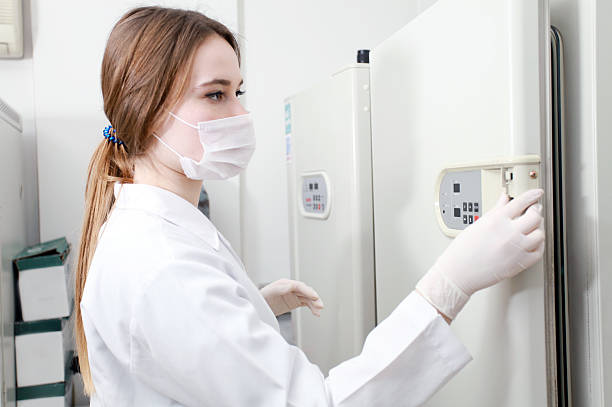
The log should be simple enough to complete consistently but detailed enough to support traceability when a problem occurs.
It may include:
- Date and time of the check.
- Current temperature.
- Min/max temperatures where supported by the device.
- Name of the person performing the check.
- Power-supply status.
- Refrigerator-door status.
- Alarm status.
- Any abnormalities identified.
- Corrective action taken.
- Time corrective action was completed.
Temperature records are particularly important when determining whether:
a vaccine batch may have been exposed to conditions outside the permitted range.
Where automated systems are used, electronic records should also be:
- Stored.
- Backed up.
- Easy to retrieve.
8. How Should Vaccines Be Arranged Inside the Refrigerator?
Even a suitable refrigerator may perform poorly if vaccines are arranged incorrectly.
Before placing vaccines in the refrigerator
Confirm that:
- The refrigerator is operating stably.
- The temperature is appropriate for the product.
- The monitoring device is functioning correctly.
- Vaccine labels and batch numbers are clearly identifiable.
- The products are within their expiration dates.
- Packaging is undamaged.
- There are no known abnormalities in previous transport conditions.
- The shipment has been recorded in the appropriate documentation.
If there is concern that a vaccine may have been stored incorrectly before receipt, quarantine and verify the batch rather than placing it directly into use.
Locations to avoid
For refrigerated vaccines:
- Do not place them directly against cooling elements.
- Avoid locations at risk of freezing.
- Do not store them in the refrigerator door unless that area has been verified to maintain the required temperature.
- Do not overpack the compartment.
- Do not block airflow.
- Do not store unrelated items that increase the frequency of door opening.
- Keep vaccines in their original packaging unless the product instructions state otherwise.
With household refrigerators, particular attention should be paid to:
- The door.
- Areas next to the freezer compartment.
- Areas close to cooling elements.
Manage inventory using FEFO
The principle:
FEFO – First Expired, First Out
should be applied.
Batches with the earliest expiration dates should generally be used first, provided they continue to meet all quality requirements.
However, expiration date is not the only criterion.
Also check:
- Temperature history.
- Packaging condition.
- Previous incidents.
- Batch status.
Expired vaccines or batches whose quality has not been confirmed following an incident should not be used.
9. What Should Be Done During a Power Outage or Temperature Excursion?
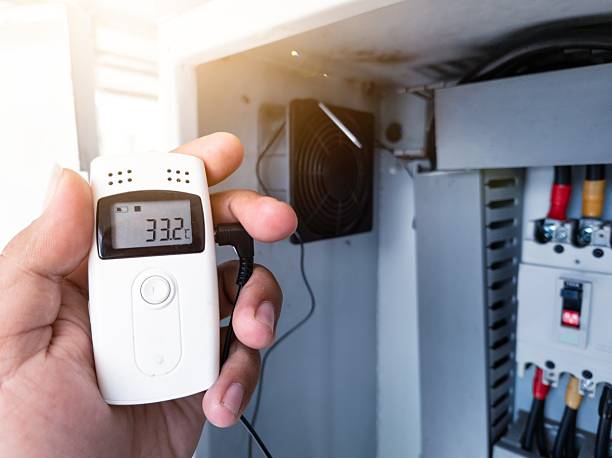
Power outages, refrigerator failure, or a door that does not close properly may cause temperatures to move outside the permitted range.
When this happens, do not immediately conclude that:
- The vaccine has been ruined.
- Or the vaccine is definitely still suitable for use.
Follow a structured process.
Step 1: Temporarily stop using the affected vaccine batch
Do not continue:
- Issuing.
- Administering.
- Distributing.
the affected batch until its quality has been assessed.
Step 2: Record temperature data
Record:
- Current temperature.
- Min/max temperatures.
- Time the problem was detected.
- Historical temperature data.
- Estimated duration of exposure.
Step 3: Identify the cause
Check:
- Power supply.
- Refrigerator door.
- Controller.
- Sensors.
- Alarm system.
- Equipment faults.
During the investigation, avoid unnecessary door opening.
Step 4: Quarantine the affected vaccine batch
Clearly label it:
DO NOT USE – PENDING ASSESSMENT
and separate it from vaccines that are approved for use or distribution.
While awaiting assessment, continue storing the suspected batch under appropriate conditions whenever possible.
Step 5: Contact the appropriate technical source
Provide:
- Vaccine name.
- Batch number.
- Recorded temperature.
- Duration of exposure.
- Logger data.
- Storage conditions.
The manufacturer or a qualified technical organization may assess the situation based on product stability data.
Step 6: Use the batch again only after it has been confirmed as suitable
Do not reuse it simply because:
“the refrigerator is cold again.”
A return to normal temperature does not reverse damage that may have occurred during the earlier excursion.
10. What Should Be Prepared for a Power Outage?
A backup plan should be established before an emergency occurs.
Depending on the scale of the operation, consider:
- A generator.
- Backup power.
- A replacement refrigerator.
- An alternative storage facility.
- Insulated cold-transport containers.
- Temperature-monitoring devices for vaccine transfer.
- A list of responsible personnel.
- Emergency contact information.
During a power outage:
- Limit refrigerator-door opening.
- Monitor temperature.
- Prepare to transfer vaccines if necessary.
Importantly:
Do not place vaccines directly on ice or excessively cold ice packs if the products may be damaged by freezing.
The goal of backup storage is not simply to “keep vaccines cold,” but to maintain the correct temperature range for the specific product.
11. The Veterinary Vaccine Cold Chain Extends Beyond the Refrigerator
The vaccine refrigerator is only one part of the cold chain.
Vaccine quality depends on multiple stages.
At receipt
Check:
- Product name.
- Batch number.
- Expiration date.
- Packaging.
- Transport conditions.
- Temperature data where available.
If there is any concern, quarantine the batch before use.
During storage
Maintain:
- The correct temperature.
- Continuous or scheduled monitoring.
- Temperature records.
- Limited door opening.
During distribution and transport
Use:
- Appropriate insulated transport containers.
- Temperature-control equipment where needed.
- Procedures that minimize time outside controlled storage.
Avoid direct contact with excessively cold cooling sources when there is a risk of accidental freezing.
When preparing the vaccine for use
Follow instructions regarding:
- When the vaccine should be removed from storage.
- Mixing or reconstitution.
- Permitted use period after reconstitution.
- Handling of leftover vaccine.
- Thawing procedures where applicable.
Some Marek’s disease vaccines stored in liquid nitrogen require highly specific handling procedures and cannot be managed in the same way as vaccines stored at 2–8°C.
12. Checklist for Selecting a Veterinary Vaccine Refrigerator Before Purchase
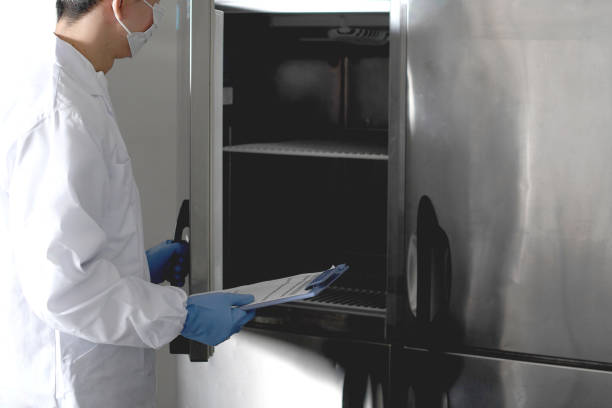
The following is intended as a quick checklist and does not replace reviewing the technical specifications.
Before purchasing, confirm that:
- The refrigerator meets the required temperature range for the vaccines being stored.
- Temperature-stability information is available.
- Data or information on temperature distribution within the compartment is available.
- Measures are available to reduce cold spots where necessary.
- Independent monitoring equipment can be connected or installed.
- Data recording or data-logger support is available if required by the facility.
- Out-of-range temperature alarms are available.
- Power-failure alarms are available where needed.
- Capacity is sufficient without being unnecessarily excessive.
- Vaccines can be arranged while maintaining adequate airflow.
- A backup plan exists for power outages or equipment failure.
- Maintenance instructions are clear.
- Warranty coverage is available.
- Spare parts are available.
- Technical support is available in Vietnam.
Do not select a refrigerator solely because it is inexpensive or has a large capacity. Temperature-control performance and stable operation over the full service life of the equipment should also be evaluated.
Frequently Asked Questions About Veterinary Vaccine Storage Refrigerators
What temperature should a vaccine refrigerator maintain?
Many vaccines require 2–8°C, but not all vaccines do.
Some products require:
- Specialized frozen-storage conditions.
- Liquid nitrogen.
- Other specific conditions.
Always check the product label before selecting the refrigerator.
Can a household refrigerator be used?
In some situations, it may be possible if:
- The refrigerator can maintain the required temperature.
- Temperature stability has been verified.
- The risk of accidental freezing is controlled.
- Independent monitoring equipment is used.
For facilities storing larger vaccine volumes or requiring strict data traceability, a purpose-built vaccine refrigerator is generally more suitable.
Is an additional thermometer or data logger necessary?
It is recommended.
Independent monitoring equipment can help:
- Verify actual temperature.
- Detect temperature excursions.
- Record temperature history.
- Support incident assessment.
Should vaccines be stored in the refrigerator door?
Generally, this should be avoided unless the temperature in that area has been verified as suitable.
The refrigerator door often experiences greater temperature fluctuations when the door is opened.
How often should the temperature be checked?
It depends on:
- Vaccine type.
- Equipment type.
- Facility procedures.
If automatic recording is not available, temperatures may be checked at the beginning and end of the working day, together with a plan for monitoring outside working hours.
Can a vaccine still be used after a cold-chain failure?
This cannot be determined solely from:
- The duration of the power outage.
- The appearance of the vaccine.
- The refrigerator’s current temperature.
Assessment should consider:
- The temperature to which the vaccine was exposed.
- Duration of exposure.
- Product type.
- Product stability data.
A suspected batch should be temporarily withheld from use and assessed before a decision is made.
Strengthening the Vaccine Cold Chain from Storage to Administration at VIETSTOCK 2026
Vaccine storage involves more than keeping a refrigerator within an appropriate temperature range. Vaccine quality also depends on receiving conditions, temperature monitoring during storage, transport to the point of use, and handling after the vaccine leaves the refrigerator. Even high-quality equipment cannot restore vaccine potency if the product has already been affected by inappropriate temperatures at an earlier stage of the cold chain.
For farms, veterinary clinics, or distributors reviewing their vaccine-storage systems, VIETSTOCK 2026 provides an opportunity to evaluate equipment based on the entire operating process rather than comparing only capacity and purchase price.
Visitors can focus on:
- Purpose-built vaccine refrigerators: compare temperature stability, temperature distribution within the storage compartment, and mechanisms designed to reduce freezing risk.
- Temperature recording and monitoring equipment: explore data loggers, historical data systems, out-of-range alarms, and remote-monitoring solutions.
- Backup power and storage: review generators, replacement equipment, and vaccine-transfer options in the event of refrigerator failure.
- Cold-transport solutions: explore insulated transport equipment and temperature monitoring when vaccines are moved between warehouses, farms, and points of use.
- Technical and maintenance services: assess sensor calibration, warranty support, spare-part availability, and response times when equipment fails.
An effective storage system also requires a designated responsible person, temperature records, and clear response procedures when an alarm occurs, because detecting a problem does not mean the problem will resolve itself. This is an important consideration when investing in monitoring systems rather than simply purchasing a refrigerator with a temperature display.
Proper vaccine storage is an essential part of disease prevention, but long-term effectiveness also depends on well-established operational procedures and consistent biosecurity practices on farms.
At the One Health Forum on October 22, 2026, the session “Digitalization of Hygiene and Biosecurity Practices on Livestock Farms” will provide insights into the application of digital technologies in farm hygiene management and disease risk prevention.
This session is particularly relevant for farms and businesses seeking to standardize their operations, strengthen monitoring and control measures, and develop more proactive and sustainable disease prevention systems.
Date: October 21–23, 2026
Venue: Saigon Exhibition and Convention Center – SECC, 799 Nguyen Van Linh Street, Tan My Ward, Ho Chi Minh City, Vietnam
Event website: VIETSTOCK 2026
👉 Register to Visit VIETSTOCK 2026
👉 Visitor Registration Information
👉 Learn More About the One Health Forum
👉 Explore Innovation, Green Transition and Competitiveness at VIETSTOCK 2026
Contact information:
Exhibiting: Ms. Sophie Nguyen – [email protected]
Group Delegation Support: Ms. Phuong – [email protected]
Marcom Support: Ms. Anita Pham – [email protected]