Spectinomycin in Veterinary Medicine: Characteristics, Scope of Use, and Antimicrobial Resistance Considerations
Spectinomycin is an aminocyclitol antibiotic used in veterinary medicine for certain susceptible bacterial infections. This guide explains how it works, differences between oral and injectable formulations, single-ingredient products and Lin-Spec, antimicrobial resistance, and withdrawal-period considerations.
Spectinomycin in veterinary medicine is an antibiotic in the aminocyclitol class that inhibits the growth of certain susceptible bacteria. It may be available as a single-active-ingredient product or in combination products, with indications varying according to animal species, dosage form, and the specific product.
In pig and poultry production, spectinomycin may be used for certain bacterial infections according to approved indications. However, knowing the name of the active ingredient alone is not enough to determine how the medicine should be used.
Before use, it is important to distinguish between:
- Spectinomycin as a single active ingredient and combination products.
- Oral and injectable formulations.
- The animal species for which the product is approved.
- The diseases or pathogens included in the product indications.
- The withdrawal period applicable to the specific product.
Treatment effectiveness also depends on the causative pathogen, bacterial susceptibility, site of infection, how the medicine is used, and the animal’s health status.
3 Things to Distinguish Before Using Spectinomycin
1. An active ingredient is not the same as a product
Two products containing spectinomycin may differ in:
- Concentration.
- Dosage form.
- Combination ingredients.
- Target animal species.
- Approved diseases or conditions.
- Route of administration.
- Withdrawal period.
Instructions for one product should therefore not be applied to another product.
2. Spectinomycin alone is not the same as Lin-Spec
Spectinomycin may be used alone or in combination with another antibiotic, commonly lincomycin–spectinomycin.
A combination product contains two active ingredients and has its own approved indications. The properties of the combination should not be used to infer the effects of spectinomycin alone.
3. Oral administration is not the same as injection
Orally administered spectinomycin is generally poorly absorbed from the gastrointestinal tract, while injectable formulations may be absorbed into the systemic circulation.
The route of administration therefore affects not only how the medicine enters the body, but also where it acts and the intended scope of use of the product.
1. How Does Spectinomycin Work?
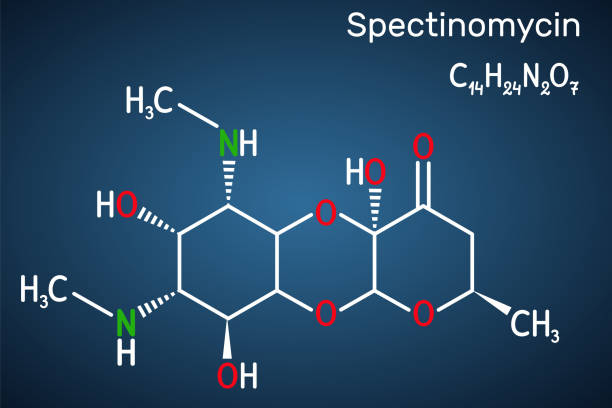
Spectinomycin belongs to the aminocyclitol class. It is structurally related to aminoglycosides but has distinct pharmacological characteristics.
Unlike many aminoglycosides, which are bactericidal, spectinomycin is primarily bacteriostatic, meaning that it inhibits the growth and multiplication of susceptible bacteria.
Mechanism of action
Spectinomycin binds to the 30S subunit of the bacterial ribosome.
When protein synthesis is disrupted:
- Bacteria cannot grow normally.
- Bacterial multiplication is inhibited.
- Treatment effectiveness depends on pathogen susceptibility and other factors.
The mechanism of action explains how the drug affects bacteria, but it is not enough on its own to determine whether spectinomycin is appropriate for a particular case.
Actual treatment effectiveness also depends on:
- Whether the bacteria are susceptible.
- Site of infection.
- Severity of disease.
- Ability of the drug to reach the site of infection.
- Dosage form.
- Route of administration.
- Health status of the animal.
2. Why Are Oral and Injectable Spectinomycin Not Interchangeable?
Spectinomycin has different absorption characteristics depending on the route of administration.
Oral spectinomycin
When administered through the gastrointestinal tract, spectinomycin is generally poorly absorbed.
This does not mean that oral spectinomycin is “inferior” to injectable spectinomycin.
Some oral products are designed to:
- Act mainly within the intestinal tract.
- Treat specific indications involving gastrointestinal bacterial infections.
- Be administered through drinking water or another approved oral route.
Injectable spectinomycin
With injectable formulations, the active ingredient may:
- Be absorbed into the systemic circulation.
- Be distributed throughout the body according to the pharmacokinetic characteristics of the product.
The appropriate scope of use must still be determined by the:
- Specific product.
- Approved injection route.
- Species.
- Indication.
Do not change the route of administration on your own
Do not:
- Inject a product intended for oral administration.
- Mix an injectable product into drinking water.
- Apply the dose of an oral product to an injectable product.
- Apply the instructions for one product to another.
Even when products contain the same active ingredient, differences in:
- Formulation.
- Concentration.
- Absorption.
- Route of administration.
can completely change how they should be used.
3. For Which Diseases May Spectinomycin Be Considered?
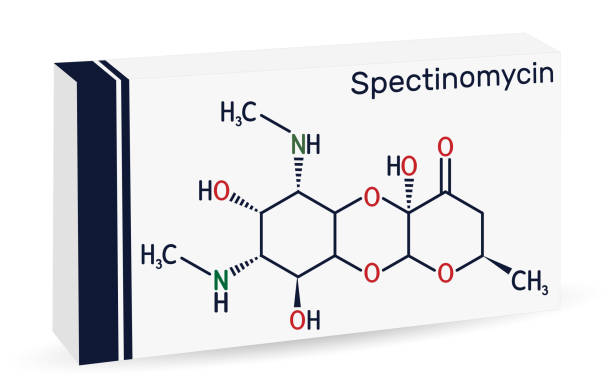
Spectinomycin has activity against some susceptible:
- Gram-positive bacteria.
- Gram-negative bacteria.
- Mycoplasma.
However, bacterial susceptibility cannot be determined from the name of the species or group alone.
Some products may have approved indications involving:
- Mycoplasma spp.
- Escherichia coli.
- Other pathogens included within the product’s approved indications.
When animals have respiratory problems
Some spectinomycin-containing products, particularly combination products, may be indicated for certain respiratory diseases in pigs or poultry caused by susceptible bacteria.
Some strains of Mycoplasma may be susceptible to spectinomycin.
However, signs such as:
- Coughing.
- Difficulty breathing.
- Respiratory discharge.
- Reduced feed intake.
are not enough to conclude that spectinomycin is needed.
Respiratory disease may also involve:
- Viruses.
- Other bacteria.
- Housing conditions.
- Air quality.
- Multiple pathogens at the same time.
Spectinomycin should therefore not be used simply because animals show respiratory signs.
When animals have diarrhea
Some products may be indicated for intestinal infections caused by susceptible E. coli or other pathogens included in the product registration.
However, diarrhea may also result from:
- Viruses.
- Parasites.
- Feed.
- Digestive disorders.
- Housing management.
- Environmental changes.
Diarrhea alone therefore does not indicate that an antibiotic should be used.
Situations in which spectinomycin may not be appropriate
Spectinomycin does not directly treat:
- Viral diseases.
- Parasitic diseases.
- Infections caused by resistant bacteria.
- Pathogens outside its appropriate spectrum of activity.
Spectinomycin is also not considered a reliable option against many anaerobic bacteria or Pseudomonas aeruginosa.
When a disease:
- Has a complicated course.
- Recurs.
- Does not respond to treatment.
- Affects multiple animals.
a veterinarian may consider sample collection, bacterial culture, and antimicrobial susceptibility testing.
4. What Is the Difference Between Spectinomycin Alone and Lin-Spec?
This distinction is important because both may be encountered when researching spectinomycin.
| Criterion | Spectinomycin alone | Lincomycin–spectinomycin |
| Active ingredient(s) | Spectinomycin | Lincomycin + spectinomycin |
| Drug class | Aminocyclitol | Combination of a lincosamide + aminocyclitol |
| Spectrum of activity | Based on the characteristics of spectinomycin and product data | Based on the combination and data for the specific product |
| Indications | Depend on the specific product | Depend on the registration of the combination product |
| Dose and route | According to the single-ingredient product | According to the combination product |
| Withdrawal period | According to the specific product | According to the specific product |
| Can they be considered equivalent? | No | No |
Spectinomycin as a single active ingredient
Single-ingredient products contain spectinomycin as the only antibiotic active ingredient.
They should be used according to the:
- Target species.
- Approved disease or condition.
- Dosage form.
- Route of administration.
- Specific product instructions.
A single-ingredient product should not be assumed to have the same treatment scope as a combination product.
Lincomycin–spectinomycin
Lincomycin–spectinomycin is commonly abbreviated as:
- Lin-Spec.
- L/S.
This formulation combines:
Lincomycin
A lincosamide antibiotic with activity against some susceptible:
- Gram-positive bacteria.
- Anaerobic bacteria.
- Mycoplasma.
Spectinomycin
An aminocyclitol with activity against some susceptible:
- Gram-positive bacteria.
- Gram-negative bacteria.
- Mycoplasma.
Some combination products are registered for respiratory or intestinal bacterial diseases in pigs and poultry.
However:
Combining two antibiotics does not automatically mean that the product will always be more effective than a single-ingredient product.
Effectiveness depends on:
- Pathogen.
- Susceptibility.
- Formulation.
- Indication.
- Data for the specific product.
Do not mix spectinomycin and lincomycin on your own
Do not take:
- A separate spectinomycin product.
- A separate lincomycin product.
and combine them yourself to create a “Lin-Spec” product.
The active-ingredient ratio, formulation, stability, indications, instructions for use, and withdrawal periods of commercial combination products are established for the specific product.
Combining products without professional guidance may result in:
- Incorrect dosing.
- Incorrect ingredient ratios.
- Increased risk of adverse reactions.
- More complicated residue control.
- Increased antimicrobial selection pressure.
5. If Spectinomycin Treatment Does Not Work, What Should Be Reassessed?

Failure to respond to treatment does not necessarily mean that the bacteria are resistant to spectinomycin.
Four main areas should be reassessed.
1. Is the diagnosis correct?
The original signs may be caused by:
- Viruses.
- Parasites.
- Bacteria not appropriately targeted by spectinomycin.
- Nutritional factors.
- Environmental conditions.
- Multiple causes occurring at the same time.
If the original diagnosis is incorrect, changing the dose or continuing the antibiotic may not improve the outcome.
2. Is the correct product being used?
Check:
- Is it a single-ingredient or combination product?
- Is the animal species included in the indications?
- Is the disease covered by the product indications?
- Is the concentration what was intended?
- Is the product within its expiry date?
- Has it been stored correctly?
3. Is the route of administration appropriate?
This is particularly important with spectinomycin.
Oral and injectable products have different absorption characteristics.
If the wrong dosage form is selected or the product is used differently from its approved instructions, the medicine may not achieve the intended treatment objective.
4. Are the bacteria still susceptible?
Antimicrobial resistance should be considered when:
- Correct treatment produces no response.
- Disease recurs.
- Effectiveness appears to decline over repeated treatment courses.
- Multiple animals in the herd or flock fail to respond.
However, these signs only indicate that reassessment is needed.
They are not sufficient evidence to conclude that spectinomycin resistance is present.
Do not independently:
- Increase the dose.
- Extend treatment.
- Add another antibiotic.
- Switch to another medicine.
without first reassessing the cause.
6. When Should Spectinomycin Resistance Be Considered?
Spectinomycin resistance occurs when bacteria can withstand the action of the drug, reducing or eliminating its antibacterial effect.
Resistance may arise through:
- Intrinsic resistance.
- Mutation.
- Acquisition of resistance genes.
Some mechanisms of resistance
Bacteria may:
- Alter the drug’s target site on the ribosome.
- Produce enzymes capable of inactivating the drug.
- Carry or acquire antimicrobial resistance genes.
The specific mechanism varies among bacteria.
Practices that increase antimicrobial selection pressure
In livestock production, the following should be avoided:
- Using antibiotics without an appropriate indication.
- Using an incorrect dose.
- Using an incorrect route.
- Altering the treatment course.
- Repeating an old treatment protocol for a new disease episode without reassessment.
- Combining multiple antibiotics without professional guidance.
- Routinely using antibiotics as a substitute for hygiene and disease prevention.
Antimicrobial resistance does not affect only the individual animal being treated.
Resistant bacteria or resistance genes may spread through:
- Animals.
- People.
- Equipment.
- Waste.
- The environment.
When should a treatment protocol be reassessed?
A veterinarian should be consulted when:
- Animals do not improve after the recommended treatment period.
- Disease recurs soon after treatment ends.
- Multiple animals fail to respond.
- The effectiveness of the same protocol noticeably decreases across repeated disease episodes.
Where appropriate, the veterinarian may recommend:
- Sample collection.
- Bacterial culture.
- Identification of the causative organism.
- Antimicrobial susceptibility testing.
Antimicrobial susceptibility results can support antibiotic selection but should be interpreted together with the clinical condition.
7. Choosing the Correct Product Is More Important Than Simply Remembering the Name Spectinomycin
Before use, check the label of the exact product available.
Information to confirm
- Trade name.
- Active ingredients.
- Concentration.
- Dosage form.
- Target animal species.
- Approved disease or condition.
- Route of administration.
- Recommended dosage.
- Treatment duration.
- Contraindications.
- Warnings.
- Withdrawal period.
- Expiry date.
- Storage conditions.
When switching to another product, all of this information should be checked again even if the new product also contains spectinomycin.
Monitor animals during treatment
Observe:
- Feed and water intake.
- Movement.
- Changes in clinical signs.
- Condition of other animals in the herd or flock.
- Any abnormal reactions after treatment.
If the condition:
- Worsens.
- Does not improve.
- Develops new abnormal signs.
consult a veterinarian for reassessment.
8. What Should Be Considered About Spectinomycin Withdrawal Periods?
There is no single withdrawal period that applies to all spectinomycin products.
The required period may vary according to:
- Animal species.
- Dosage form.
- Route of administration.
- Dose and treatment regimen.
- Single-ingredient or combination product.
- Meat, milk, or eggs.
Broilers and laying hens should not be treated as automatically equivalent
A product approved for broiler chickens is not automatically approved for:
- Laying hens.
- Eggs intended for human consumption.
Check both:
- Product indications and restrictions.
- Withdrawal period.
If a product is not approved for use in laying birds producing eggs for human consumption, a withdrawal period should not be guessed and applied on your own.
Single-ingredient and combination products may differ
Do not take the withdrawal period for:
- Spectinomycin alone
and apply it to:
- Lincomycin–spectinomycin.
Even two Lin-Spec products may differ in:
- Concentration.
- Formulation.
- Route of administration.
- Indications.
- Withdrawal period.
Track the withdrawal period in 5 steps
Step 1: Identify the exact product
Record:
- Trade name.
- Active ingredient(s).
- Concentration.
- Dosage form.
Step 2: Check the species and production purpose
Confirm whether the product is approved for:
- Pigs.
- Poultry.
- Other species listed on the label.
Also identify whether the animals are being raised for:
- Meat.
- Eggs.
- Other animal products.
Step 3: Check the withdrawal instructions
Read the information that specifically applies to the:
- Species.
- Animal product.
- Route of administration.
Step 4: Record the last dose
Record the exact date and time when the final dose was administered.
Step 5: Determine when the withdrawal period ends
Animals or animal products should enter the food chain only after:
- The full withdrawal period has been observed.
- Conditions of use have been followed.
- Relevant legal requirements have been met.
If:
- The label is unclear.
- No suitable information is available.
- The medicine was used differently from the approved instructions.
contact a veterinarian for guidance.
Do not guess the withdrawal period.
9. Reducing the Need for Repeated Spectinomycin Use in the Herd or Flock
If the same herd or flock repeatedly requires antibiotic treatment, the question should not simply be:
“Which antibiotic should we switch to this time?”
The underlying reason why disease continues to occur should be investigated.
Strengthen biosecurity
Control:
- People.
- Vehicles.
- Equipment.
- Newly introduced animals.
- Isolation areas.
- Waste.
- Cleaning and disinfection procedures.
Implement an appropriate vaccination program
For diseases with suitable vaccines, vaccination programs should be based on:
- Species.
- Age.
- Epidemiological risk.
- Farm conditions.
- Veterinary guidance.
Control the housing environment
Respiratory and gastrointestinal disease may be influenced by:
- Humidity.
- Ventilation.
- Stocking density.
- Litter or flooring quality.
- Drinking-water hygiene.
- Feed quality.
Nutrition and water
Rations should be appropriate for the:
- Species.
- Age.
- Growth stage.
- Production level.
Water supplies also need appropriate management because water quality can affect herd or flock health and the effectiveness of medicines administered through drinking water.
Record antibiotic-use history
Farms should track:
- Treatment date.
- Product.
- Active ingredient.
- Treated animals or group.
- Reason for use.
- Treatment response.
- Whether the disease recurred.
These records can help identify situations in which:
- The same disease repeatedly occurs.
- The same protocol is used too frequently.
- Effectiveness is gradually declining.
- Disease-prevention measures need to change.
The ultimate goal is to reduce the need for unnecessary antibiotic use, rather than simply replacing one antibiotic with another.
Frequently Asked Questions About Veterinary Spectinomycin

Can spectinomycin be used in every livestock species?
No.
The approved scope of use depends on the specific product.
Some products are registered for:
- Pigs.
- Poultry.
while products for other species may be available in certain markets.
Always check the correct product label and follow veterinary guidance.
Is spectinomycin effective against Mycoplasma?
Spectinomycin has activity against some susceptible Mycoplasma strains.
However, this does not mean that spectinomycin should be used for every disease suspected to involve Mycoplasma.
Effectiveness also depends on:
- Mycoplasma species.
- Susceptibility.
- Product.
- Route of administration.
- Disease condition.
Are spectinomycin alone and Lin-Spec the same?
No.
A single-ingredient spectinomycin product contains only spectinomycin.
Lin-Spec contains:
- Lincomycin.
- Spectinomycin.
The two types of products may differ in:
- Approved indications.
- Dose.
- Route of administration.
- Withdrawal period.
Can the dose of one spectinomycin product be used for another?
It should not be.
Products may differ in:
- Concentration.
- Dosage form.
- Formulation.
- Route of administration.
Applying the instructions for one product to another may lead to incorrect use and compromise residue control.
Does failure to respond to treatment mean spectinomycin resistance?
Not necessarily.
In addition to antimicrobial resistance, consider:
- Diagnosis.
- Causative pathogen.
- Product.
- Route of administration.
- How the medicine was used.
- Co-infections.
- Farm conditions.
If treatment does not produce the expected response, the case should be reassessed rather than automatically increasing the dose or switching medicines.
What should be done when spectinomycin resistance is suspected?
Contact a veterinarian to reassess the disease.
Where appropriate, this may involve:
- Sample collection.
- Bacterial culture.
- Identification of the bacterium.
- Antimicrobial susceptibility testing.
Do not switch to another antibiotic solely because the current protocol has not produced the expected result.
When Spectinomycin Becomes More Than a Single Treatment-Protocol Issue
Spectinomycin may be available as a single-active-ingredient product or in combination formulations and may be used for different disease conditions in pigs and poultry depending on the specific product. When treatment does not produce the expected result, the question should therefore go beyond “which antibiotic should we switch to?” The original diagnosis, dosage form, route of administration, bacterial susceptibility, and the herd or flock’s antibiotic-use history should all be reassessed.
At VIETSTOCK 2026, livestock producers, veterinarians, and businesses can compare how they currently manage respiratory and gastrointestinal diseases with solutions being applied across the industry. Across 10,000 sqm of exhibition area, the event is expected to showcase 300 brands and connect around 13,000 trade visitors from 40 countries.
For spectinomycin, some useful issues to discuss directly at the event include:
- Distinguishing single-ingredient and combination products: understand differences in indications, forms of administration, and scope of use rather than assuming that all spectinomycin-containing products are equivalent.
- Managing recurrent disease cases: explore diagnostic, sampling, and antimicrobial susceptibility assessment approaches when an established treatment protocol becomes progressively less effective.
- Managing medicine use at herd or flock level: explore solutions for recording products, treatment periods, the last dose, and antibiotic-use history.
- Monitoring withdrawal periods: learn how to reduce confusion between products, particularly in pigs, broiler poultry, and laying flocks producing eggs.
- Reducing the causes of repeated antibiotic use: explore vaccination, hygiene, biosecurity, nutrition, and housing-management approaches.
If spectinomycin is repeatedly used in a herd or flock but its effectiveness is becoming less consistent, the One Health Forum on October 22, 2026 can offer a broader perspective. Rather than focusing only on finding a replacement active ingredient, the program includes helping participants reassess disease prevention and reduce antimicrobial pressure across the entire farm.
This also reflects the direction of the article: spectinomycin resistance can become a concern not only for individual animals, but also at herd or flock level and within the livestock-production environment.
Date: October 21–23, 2026
Venue: Saigon Exhibition and Convention Center – SECC, 799 Nguyen Van Linh Street, Tan My Ward, Ho Chi Minh City, Vietnam
Event website: VIETSTOCK 2026
👉 Register to Visit VIETSTOCK 2026
👉 Visitor Registration Information
👉 Learn More About the One Health Forum
👉 Explore Innovation, Green Transition and Competitiveness at VIETSTOCK 2026
Contact information:
Exhibiting: Ms. Sophie Nguyen – [email protected]
Group Delegation Support: Ms. Phuong – [email protected]
Marcom Support: Ms. Anita Pham – [email protected]