Recombinant DNA Vaccines in Veterinary Medicine in 2026: Technology, Advantages, Limitations, and Prospects for Application
Explore recombinant DNA vaccines in veterinary medicine, including their mechanism, production process, benefits, limitations, livestock applications, and future prospects in Vietnam.
Recombinant DNA vaccines are one of the development directions attracting strong attention in modern veterinary vaccine technology. Instead of introducing killed or weakened pathogens into the animal’s body, as traditional vaccines do, recombinant DNA vaccines use genetic material encoding antigens to stimulate the immune system to generate a protective response from within.
This is a fundamentally different approach. It is considered to have potential in terms of safety and flexibility, but it also comes with significant challenges related to real-world immune effectiveness, cost, and regulatory barriers.
This article summarizes and analyzes the core aspects of recombinant DNA vaccines in the current veterinary context: from mechanism of action and technological process to comparisons with other vaccine platforms, research status, and application prospects in pigs, poultry, and cattle. The content is for reference only and does not replace advice from veterinarians, manufacturer instructions, or regulations issued by competent state regulatory authorities.
Quick Summary
- Recombinant DNA vaccines introduce plasmids carrying genes that encode antigens into the animal’s body. Mechanistically, they may activate both humoral immunity and cell-mediated immunity, but the actual level of response depends on the design of each vaccine, the target animal species, and the administration method.
- Key potential advantages include: no intact live pathogen in the product, greater design flexibility when new variants emerge, and possible combination with other vaccine platforms.
- Main challenges include: immune responses that may not always be strong enough under field conditions, high research and production costs, and many products still being in the research or trial stage.
- Globally, there have been studies on applications in pigs, poultry, and cattle, but the number of commercially available and licensed products remains significantly lower than that of traditional vaccine platforms.
- In Vietnam, this technology is still at an early stage and requires practical evaluation of scientific capacity, infrastructure, and economic feasibility before broad deployment can be considered.
What Are Recombinant Vaccines and Recombinant DNA Vaccines in Veterinary Medicine?

How Are Traditional, Inactivated, Live Attenuated, and Recombinant Vaccines Different?
Traditional vaccines are generally divided into two main groups.
Inactivated vaccines use pathogens that have been fully inactivated by heat or chemicals. They are considered safe but often require adjuvants and booster doses to maintain immunity.
Live attenuated vaccines use pathogens that are still alive but have been weakened. They usually stimulate stronger immunity, but in certain cases, there may be a risk of reversion to virulence.
In contrast, recombinant vaccines do not use the whole pathogen. Instead, they use a specific component capable of stimulating immunity, often a surface antigen protein or genetic material encoding that antigen.
This approach helps reduce or eliminate the need to introduce the intact target pathogen into the animal’s body, while allowing more precise control over the antigenic components included in the vaccine.
However, the level of safety still depends on the specific platform, vector, and product.
What Is a Recombinant DNA Vaccine and Where Does It Fit in New Veterinary Vaccine Technology?
A recombinant DNA vaccine is a type of vaccine in which a closed circular DNA molecule, called a plasmid, is designed to carry the gene encoding the antigen of the target pathogen.
When this plasmid is introduced into the animal’s body, usually through intramuscular or intradermal injection, host cells “read” and transcribe the gene to produce the antigenic protein inside the body. The immune system then recognizes this foreign protein and generates a protective response.
Recombinant DNA vaccines are one branch within the broader landscape of new veterinary vaccine technologies, including:
| Technology Platform | Main Component | Key Characteristics |
| Recombinant DNA vaccines | Plasmid DNA encoding an antigen | May activate both humoral and cell-mediated immune responses; do not contain a complete live pathogen. |
| mRNA vaccines | mRNA encoding an antigen, usually requiring a suitable delivery system such as lipid encapsulation | May shorten design time, but storage and transport requirements depend on formulation, stability data, and product-specific instructions. |
| Recombinant viral vector vaccines | A viral vector engineered to carry the gene encoding an antigen | Have been researched and used for some veterinary diseases; licensing and use depend on the country, disease, and product. |
| Recombinant protein vaccines | Antigenic proteins produced through an external expression system | More widely applied than many newer platforms, but often require suitable adjuvants to enhance immune response. |
| Synthetic peptide vaccines | Short peptide sequences that mimic target antigenic regions | Highly safe in terms of composition, but usually require adjuvants or delivery systems to generate a sufficiently strong immune response. |
Distinguishing Recombinant DNA Vaccines From Recombinant Protein, Viral Vector, and mRNA Vaccines
The key difference lies in how the antigen is produced:
- Recombinant protein vaccines: The antigenic protein is produced in advance in the laboratory, often using yeast, bacteria, or insect cells. It is then purified and formulated into a vaccine. The animal’s body receives the complete protein from the outside.
- Recombinant DNA vaccines: Only the genetic blueprint — the gene encoding the antigen — is introduced, allowing the animal’s own cells to produce the antigenic protein.
- mRNA vaccines: Similar to DNA vaccines, but they use mRNA instead of DNA. They bypass the transcription step in the cell nucleus, so the cell only needs to translate the mRNA directly into protein.
- Viral vector vaccines: An engineered viral vector is used to deliver the gene encoding the antigen into cells. Depending on the platform, the vector may be non-replicating or replication-limited in the body, and safety must be evaluated separately for each animal species, target disease, and specific product.
Each platform has its own advantages and limitations. In theory, recombinant DNA vaccines may be more stable than some stability-sensitive platforms such as mRNA vaccines, but they still require storage under product-specific appropriate cold-chain conditions. Immune effectiveness also still needs improvement for certain species and diseases.
How Recombinant DNA Vaccines Work in Livestock and Poultry
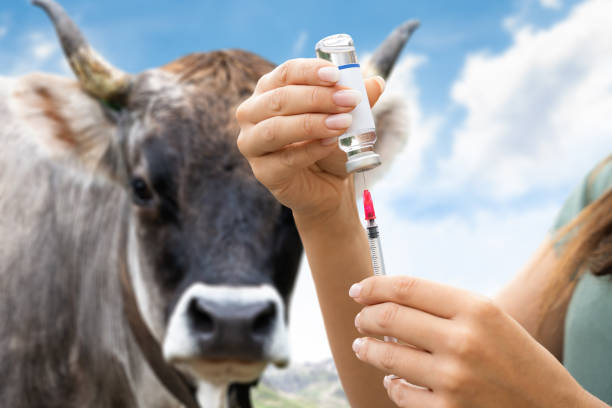
What Happens After an Animal Receives DNA Encoding an Antigen?
After a DNA vaccine is introduced into the body, the plasmid mainly remains outside the chromosomes in host cells and expresses the antigen. The risk of plasmid integration into the genome is generally considered very low, but it remains a safety criterion that should be evaluated during research, product registration, and post-market monitoring.
Host cells, mainly muscle cells and immune cells at the injection site, transcribe the plasmid gene into mRNA and then translate the mRNA into an antigenic protein.
This protein is presented on the cell surface or secreted from the cell, where the immune system recognizes it and begins a protective response.
This step initiates the immune response and partially mimics what happens when the body is infected by a pathogen. Mechanistically, the vaccine does not produce a complete pathogen. Available data suggest that the risk of the vaccine itself causing disease is very low, but adverse reactions still need to be monitored as with any vaccine product.
How Are Humoral and Cell-Mediated Immune Responses Activated?
Antigens synthesized inside cells are processed through the MHC class I pathway and presented to CD8+ T lymphocytes, thereby activating cell-mediated immunity, also known as cytotoxic T lymphocyte response.
This is an important difference from conventional recombinant protein vaccines, which mainly activate humoral immunity through antibodies.
At the same time, part of the antigenic protein may be secreted outside the cell and processed by antigen-presenting cells (APCs) through the MHC class II pathway, activating CD4+ T lymphocytes and leading to antibody production by B cells.
As a result, recombinant DNA vaccines may, mechanistically, activate both branches of specific immunity at the same time — something that many traditional vaccines do not easily achieve naturally.
However, the actual level of response in each animal group depends on vaccine design, adjuvants, and the vaccine delivery method.
Practical Factors Affecting Immune Effectiveness in Livestock and Poultry
The real-world immune effectiveness of recombinant DNA vaccines depends on many factors:
- Delivery method: For DNA delivery, conventional intramuscular injection may be less effective than intradermal injection, electroporation, or gene gun delivery, because the latter methods may help plasmids enter cells more efficiently.
- Codon design: The antigen gene needs to be codon-optimized for the target animal species to ensure sufficiently high protein expression.
- Animal species: Immune responses may vary significantly between pigs, poultry, and cattle, requiring formulation adjustments for each target species.
- Immune status of the herd or flock: Animals with maternally derived antibodies or immunosuppression may show a lower-than-expected response.
Technology and Production Process of Recombinant DNA Vaccines

Step 1: Selecting the Target Gene and Designing the Target Antigen
The first step is to identify which antigenic protein of the pathogen is most likely to stimulate strong protective immunity. Surface proteins that are easily recognized by the immune system and capable of inducing neutralizing antibodies are often prioritized.
After the target gene is selected, the codon sequence is optimized for the target animal species, while sequences that may destabilize RNA or inhibit gene expression are removed.
Step 2: Creating a Plasmid or Vector Carrying the Gene
The target gene is inserted into an expression plasmid, usually a circular DNA molecule designed to function efficiently in animal cells.
A plasmid needs to include:
- A strong promoter that works in animal cells, commonly the CMV promoter.
- A site for inserting the antigen gene.
- A polyadenylation signal sequence to stabilize mRNA.
Some research plasmids use selectable markers during bacterial amplification. For products intended for commercialization, the selection system, genetic markers, and plasmid purity need to be carefully evaluated to limit biosafety risks and meet regulatory requirements.
Step 3: Transfection, Antigen Expression, and Vaccine Formulation Optimization
The plasmid is amplified in bacteria, usually E. coli, and then purified to a level suitable for veterinary vaccination.
The formulation and delivery method of a DNA vaccine may vary depending on the product or trial. Some approaches use naked plasmid DNA, combinations with adjuvants or carriers, lipid/polymer-based delivery systems, or assisted delivery devices such as electroporation or gene gun systems to improve DNA entry into cells.
In vitro and in vivo testing is conducted to evaluate protein expression, immunogenicity, and safety before clinical trials are performed in the target animal species.
Technical Requirements, Quality Control, and Biosafety in Production
Production of recombinant DNA vaccines requires facilities that meet GMP standards, or good manufacturing practices, including clean rooms, cross-contamination control systems, and strict testing procedures.
Mandatory quality control indicators usually include:
- Confirmation that the target gene sequence has not mutated.
- Evaluation of plasmid purity, such as the ratio of supercoiled plasmid to other forms.
- Sterility, safety, and toxicity testing.
- Immunogenicity testing in animal models.
Biosafety in production is also a strict requirement, especially when working with genes derived from dangerous pathogens.
Advantages of Recombinant DNA Vaccines Compared With Traditional and Other Recombinant Vaccine Platforms

No Live Pathogen, Eliminating the Risk of Reversion to Virulence
This is the most fundamental safety advantage of recombinant DNA vaccines.
The absence of an intact live pathogen in the product means that reversion to virulence cannot occur in the way it may potentially occur with live attenuated vaccines.
This advantage is particularly important for dangerous pathogens such as swine fever viruses, avian influenza viruses, or foot-and-mouth disease virus.
Potential to Activate Both Humoral and Cell-Mediated Immunity
As discussed in the mechanism section, recombinant DNA vaccines may activate both antibodies and cytotoxic T lymphocytes.
This capability is especially valuable for diseases in which cell-mediated immunity plays an important protective role, such as certain intracellular viral diseases.
Conventional recombinant protein vaccines are often weaker in stimulating cell-mediated immunity unless specialized adjuvants are used.
Greater Design Flexibility When Pathogens Mutate or New Variants Emerge
When a new variant emerges with changes in surface proteins, updating the antigen gene sequence in a DNA vaccine may, at the laboratory design stage, be simpler than rebuilding a full process for culturing and inactivating a new pathogen.
However, testing, evaluation, and product registration still require significant time under regulatory requirements. Therefore, this should not be interpreted as meaning that the entire development process will be shortened proportionally.
This design flexibility has potential applications in the context of rapidly mutating viruses such as avian influenza or PRRS.
Potential to Shorten Early Vaccine Development in Emergency Disease Situations
Plasmid design and production do not require large-scale pathogen culture. In theory, this may shorten the early development stage compared with some traditional platforms.
However, the specific time advantage depends on the disease and production process. Safety, efficacy, and product registration stages must still be completed according to regulations, and essential evaluation steps cannot be skipped.
Potential Combination With Other New Vaccine Platforms to Improve Effectiveness
Recombinant DNA vaccines may be used in prime–boost strategies, combined with viral vector vaccines or recombinant protein vaccines.
This strategy is being studied for several important diseases, with some early results suggesting improved immune response compared with DNA vaccines used alone. However, superior effectiveness must be evaluated for each disease and each specific product.
Limitations, Risks, and Challenges of Recombinant DNA Vaccines in Veterinary Medicine
Immune Response May Not Be Strong Enough if Antigen Design Is Not Optimized
In practice, one of the biggest challenges of recombinant DNA vaccines is that immune responses may sometimes be lower than expected, especially in large-scale livestock and poultry populations using conventional injection methods.
Effectiveness depends heavily on plasmid design, antigen selection, adjuvants, and vaccine delivery method. If any of these factors are not optimized, protection across the herd or flock may be uneven.
Long-Term Biosafety Questions and the Possibility of Foreign DNA Integration
One concern raised in scientific discussions is whether plasmid DNA could integrate into the genome of host cells.
Available data suggest that the risk of integration is very low, but long-term data across multiple generations of livestock are still not sufficient for a complete conclusion.
This is why many regulatory authorities require long-term safety evaluation before granting commercial approval.
High Costs for Research, Clinical Trials, and Large-Scale Production
Developing and producing recombinant DNA vaccines requires major investment in equipment, specialized technical personnel, and quality control processes.
The production cost per dose may be higher than that of conventional inactivated vaccines, especially in the early stage before production reaches a scale large enough to create economies of scale.
Technology Infrastructure, Deployment Capacity, and Cold Chain Remain Practical Barriers
For recombinant DNA vaccines, storage and transport conditions must follow the stability data and instructions for each product. This remains an important factor to evaluate carefully, especially in farming areas far from major centers.
In addition, some delivery methods such as electroporation or gene gun delivery require specialized equipment and trained personnel.
These are significant practical barriers for small and medium-sized farms or areas with limited veterinary infrastructure.
Regulatory, Registration, and Farmer Acceptance Challenges
Because recombinant DNA vaccines are still a relatively new technology, they often face more complex registration procedures in many countries, including specific biosafety evaluation requirements.
In addition, awareness and acceptance among farmers toward genetic technologies used in vaccines will take time to build, especially in markets where information remains limited.
Comparison Table: Recombinant DNA Vaccines vs. Inactivated, Live Attenuated, and Other Recombinant Vaccines
Comparison Across 6 Criteria: Immune Effectiveness, Safety, Development Speed, Cost, Flexibility With Variants, and Commercial Availability
Note: The table below provides a relative, illustrative comparison based on the general characteristics of each platform. Specific evaluations may vary depending on the disease, product, and implementation conditions.
| Criteria | Inactivated Vaccines | Live Attenuated Vaccines | Recombinant Protein Vaccines | Recombinant DNA Vaccines | Viral Vector Vaccines |
| Immune effectiveness | Moderate – boosters needed | High | Moderate to good | Moderate – high potential | High |
| Cell-mediated immunity activation | Weak | Strong | Weak to moderate | Fairly good, depending on design | Strong |
| Safety | High | Moderate, with risk of reversion to virulence | High | High, but long-term evaluation needed | High, but vector evaluation needed |
| Development speed | Slow | Slow | Moderate | Faster at the initial design stage | Moderate to fast |
| Production cost | Low to moderate | Low to moderate | Moderate to high | High in the early stage | High |
| Flexibility with variants | Low | Low | Moderate | High at the design stage | Moderate to high |
| Commercial availability | Very common | Common | Common | Much less common | Limited but increasing |
When Do Recombinant DNA Vaccines Have a Clear Relative Advantage Over Inactivated or Live Attenuated Vaccines?
Recombinant DNA vaccines may have a clearer relative advantage in situations where:
- The pathogen has a high rate of genetic variation and antigen updates may be needed frequently.
- Strong cell-mediated immunity is required, and inactivated vaccines cannot provide an adequate response.
- The pathogen is dangerous and cannot be easily or safely cultured under conventional production conditions.
- The facility has sufficient technical infrastructure to implement advanced vaccine delivery methods.
When Should Recombinant Protein or Viral Vector Vaccines Be Prioritized Instead of DNA Vaccines?
Recombinant protein vaccines are often more practical when a product requires widely validated safety and efficacy data, a simpler registration pathway, and implementation under standard cold-chain conditions.
Viral vector vaccines may be suitable when the goal is to combine the stronger immune stimulation of live vaccines with greater safety than live attenuated vaccines, and when an approved vector is already available for the target animal species.
Overview of Current New Vaccine Technologies in Veterinary Medicine

DNA, mRNA, Viral Vector, Recombinant Protein, and Peptide Vaccines: What Problems Does Each Platform Address?
No platform is “absolutely best” for every disease and every animal species. Each technology has been developed to address limitations of earlier technologies:
- Recombinant protein vaccines: Address the safety concerns of live attenuated vaccines and have been widely licensed.
- Viral vector vaccines: Provide stronger immunity than recombinant protein vaccines by allowing intracellular antigen expression.
- Recombinant DNA vaccines: Bypass the need to produce protein or vectors and may activate both immune branches from a single plasmid.
- mRNA vaccines: Further shorten the production process compared with DNA vaccines and do not need to enter the cell nucleus, but are often less stable under storage conditions.
- Synthetic peptide vaccines: Offer high specificity but are usually weaker in immune stimulation and require strong adjuvants.
Where Do Recombinant DNA Vaccines Stand in Today’s Veterinary Vaccine Technology Trends?
At present, based on scientific reports and publications, recombinant DNA vaccines generally remain in the research and trial stage for many important veterinary diseases.
The number of commercial products is significantly lower than that of recombinant protein or inactivated vaccines. However, research continues, especially when combined with nanocarrier technologies to improve vaccine delivery into cells.
Following the success of mRNA vaccines in human medicine, mRNA platforms are also receiving considerable research interest in veterinary medicine.
Recombinant DNA and mRNA vaccines are often compared directly. DNA is generally considered to have advantages in stability and often less demanding storage requirements, while mRNA has an advantage in faster intracellular translation.
However, this comparison is qualitative and may change depending on the specific product configuration.
Real-World Applications of Recombinant DNA Vaccines Worldwide
In Pigs: Research on Classical Swine Fever, PRRS, and Other Important Viral Diseases
Recombinant DNA vaccines have been studied for several important pig diseases, including classical swine fever (CSF) and porcine reproductive and respiratory syndrome (PRRS).
Studies using plasmids encoding the E2 glycoprotein of classical swine fever virus have shown the ability to induce antibody responses. However, protection levels and duration of immunity need further evaluation under field conditions before they can be compared with licensed live attenuated vaccines.
For PRRS, the high genetic diversity of the virus is a major challenge for all vaccine platforms. Recombinant DNA vaccines are being considered as a more flexible direction for addressing new variants, although they remain in the research stage.
In Poultry: Directions for H5N1 Avian Influenza, Newcastle Disease, and Gumboro Disease
H5N1 avian influenza is one of the diseases receiving research attention for recombinant DNA vaccines, due to the dangerous nature of the virus and the need for more flexible solutions when new strains emerge, alongside traditional vaccine approaches.
Plasmids encoding hemagglutinin (HA) have been tested in poultry under research conditions, showing potential but still requiring further optimization for field protection.
For Newcastle disease and Gumboro disease, several viral vector vaccine platforms have been researched and applied in some markets. Recombinant DNA vaccines may be considered an additional research direction or combined in prime–boost models. However, when discussing licensed products, the status should be checked by country, disease, and product label.
In Cattle and Other Animals: Foot-and-Mouth Disease, Brucella, and Other Key Diseases
Foot-and-mouth disease (FMD) is a disease for which recombinant DNA vaccines were studied relatively early due to its severity and major economic impact.
Research has focused on plasmids encoding the VP1 protein of FMD virus, with initial results showing the ability to stimulate immune responses in cattle and pigs. However, there is currently no widely licensed commercial product from this approach.
Brucella is another example where recombinant DNA vaccines have been considered as a potentially safer option than live attenuated vaccines in the context of zoonosis prevention. However, this remains a research direction rather than a widely commercialized product.
Practical Lessons for Large-Scale Industrial Livestock Production
Global research experience suggests several important lessons:
- The vaccine delivery method has a major impact on effectiveness and is often no less important than plasmid design.
- Prime–boost protocols combining DNA vaccines with protein or vector vaccines have shown better results than DNA vaccines alone in some research models, although effectiveness must be confirmed for each specific disease.
- Large-scale farms with strong veterinary systems are better positioned to implement and monitor the effectiveness of new vaccines.
Prospects for Applying Recombinant DNA Vaccines in Vietnam’s Livestock Sector
What Is the Current Level of Domestic Scientific and Technological Capacity?
Vietnam already has several veterinary research institutions capable of conducting molecular biology techniques at the research level.
However, based on general industry assessment, moving from laboratory research to GMP-standard vaccine products that can be registered for circulation remains a major challenge and requires significant additional investment.
Cooperation programs with international organizations and technology transfer are likely to be more practical pathways in the near term.
Can Production, Testing, and Cold-Chain Infrastructure Meet the Requirements?
In practice, cold-chain capacity for vaccines in Vietnam may vary by region, distribution channel, and supplier. Therefore, storage and transport conditions need to be evaluated according to each product, locality, and livestock production model.
For recombinant DNA vaccines, storage and transport conditions must follow the stability data and instructions of each product. This remains a factor requiring careful evaluation, especially in farming areas far from major centers.
If recombinant DNA vaccines are to be developed and used, the vaccine testing system may need to supplement and update its capacity to evaluate specific indicators for this vaccine type, such as plasmid control and antigen expression.
Cost and Economic Efficiency at Farm Scale
The cost of recombinant DNA vaccines at present and in the early commercialization stage is usually higher than that of conventional inactivated vaccines.
Economic efficiency can only be evaluated based on:
- Vaccine cost per animal compared with disease-related losses that may be prevented.
- Actual protection effectiveness under specific farm conditions.
- Disease risk level of the farm type and geographic area.
In principle, because R&D and quality control costs are high, recombinant DNA vaccines in the early commercialization stage are usually unlikely to have a cost advantage over available inactivated vaccines, unless they can demonstrate superior benefits in effectiveness or control of new variants.
Policy Framework: Product Registration, Safety Monitoring, and the Role of Regulatory Authorities
In Vietnam, veterinary vaccines must be registered, tested, and circulated in accordance with current regulations issued by specialized regulatory authorities. In the current context, businesses need to follow guidance from the Department of Animal Health and Production, the Ministry of Agriculture and Environment, and relevant legal documents before researching, importing, distributing, or using new vaccine products.
As recombinant DNA vaccines are a new technology, the evaluation process may need to include additional criteria specific to biosafety and long-term risk assessment.
Farmers and businesses should monitor updates from competent authorities on regulations, technical guidance, and registration requirements related to new-technology vaccine products.
Which Diseases May Have Potential to Be Prioritized for Research or Trials in Vietnam?
Based on economic impact, disease pressure, and prevention needs in livestock production, several disease groups may be considered for priority in recombinant DNA vaccine research programs in Vietnam, including:
- H5N1/H5N6 avian influenza: A disease group with genetic variation risks requiring regular epidemiological surveillance. Research on new vaccines should be based on circulating virus data, cross-protection levels, and current regulatory requirements.
- PRRS in pigs: A disease with high genetic diversity, where prevention effectiveness depends on circulating virus strains, herd status, vaccine product, and the biosecurity process of each farm.
- Classical swine fever: A potential direction for future research or vaccine improvement, especially when further evaluation is needed regarding safety, protection effectiveness, and applicability under real livestock production conditions.
- Foot-and-mouth disease in cattle and pigs: This disease involves multiple virus types and variants. DNA vaccines should only be considered a potential research direction if data demonstrate their ability to generate protective immunity against strains circulating in Vietnam.
Note: The list above is for research orientation only. Selection of priority diseases should be based on updated epidemiological data, evaluation by veterinary authorities, regulatory requirements, and safety–efficacy trial results for each vaccine platform.
Practical Perspective for Farmers and Businesses
When Should Recombinant DNA Vaccines Be Considered in an Overall Disease Prevention Strategy?
At present, because the number of recombinant DNA vaccines commercialized and licensed in veterinary medicine remains limited, this technology is not yet a common option for broad application in livestock production.
Farmers should check the list of vaccines approved for circulation and consult competent authorities before use.
However, farmers and businesses should monitor this topic if they are:
- Managing large-scale farms with high disease risk and a need for an optimized long-term disease prevention strategy.
- Operating in vaccine production or distribution and considering new R&D directions.
- Research institutions or universities seeking to participate in collaborative programs for new vaccine development.
Criteria for Selecting New Vaccine Technology Suitable for Farm Scale and Production Type
When evaluating any new vaccine technology, including recombinant DNA vaccines, practical criteria should include:
- Is there verified safety and efficacy data for the specific target animal species and disease?
- Has the product been approved for circulation by a competent authority?
- Are storage and vaccination methods compatible with the farm’s infrastructure capacity?
- Is the cost per animal acceptable compared with the expected protection benefits?
Combining Vaccines With Biosecurity, Herd Management, and Existing Disease Prevention Schedules
Regardless of the vaccine technology used, vaccines are only one part of an overall disease prevention strategy.
Protection effectiveness depends heavily on:
- Overall farm biosecurity, including access control, hygiene, and disinfection.
- Health and nutrition status of the herd or flock at vaccination.
- Compliance with the vaccination schedule, dosage, and vaccine storage method.
- Post-vaccination monitoring and early detection of abnormal reactions.
When recombinant DNA vaccines are licensed and implemented, they should be integrated into a disease prevention protocol under the guidance of an experienced veterinarian. Farmers should not replace existing protocols on their own.
Common Misconceptions About New Vaccine Technologies
- “New vaccine = more effective than old vaccines in all cases”: Not true. Effectiveness depends on design, target animal species, target disease, and implementation conditions.
- “Recombinant DNA vaccines are ready for mass use”: Most are still in research or limited trial stages.
- “A good vaccine alone is enough”: Vaccines are supportive tools and cannot replace biosecurity and good herd management.
- “Higher cost means better effectiveness”: Higher cost reflects more complex technology, but it does not guarantee superior protection in all conditions.
Self-Assessment Checklist Before Considering New Vaccine Technology on the Farm

Does the Farm Have Enough Scale and Disease Risk for Recombinant DNA Vaccines to Make a Clear Difference?
- The farm is large enough for investment in new vaccine technology to create a clear economic difference.
- The farm is located in a high-pressure disease area or frequently faces problems with current vaccines.
- The farm has clear disease-loss data to compare costs and benefits.
- The farm has consulted a veterinarian about the suitability of the new technology.
For small farms that are controlling disease well with existing vaccine protocols, switching to new vaccine technologies such as DNA vaccines should be considered very carefully and only after consulting a veterinarian, based on specific product effectiveness and cost data.
Do Cold Storage, Vaccination Capacity, and Post-Vaccination Monitoring Meet the Requirements?
- The farm has a refrigerator or cold storage facility that meets vaccine temperature requirements.
- Technical staff are trained in correct vaccination procedures.
- A record-keeping and post-vaccination reaction monitoring system is available.
- The farm has a response plan and veterinary support available if abnormal reactions occur after vaccination.
Does the Product Have Safety and Efficacy Data and Approval for Circulation?
This is the most important checkpoint.
A product should only be considered for implementation when it has complete verified data and has been approved for circulation by a competent regulatory authority. Unlicensed products should not be used outside officially supervised clinical trial programs.
Is the Cost per Animal Suitable for the Farm’s Profit Margin and Production Goals?
Total cost should be calculated, including:
- Vaccine price.
- Storage and transport costs.
- Vaccination labor costs.
- Post-vaccination monitoring costs.
- Equipment costs if the vaccine delivery method requires special technology.
These costs should then be compared with potential disease-related losses that may be prevented and the expected protection effectiveness based on available field data.
Can the New Vaccine Be Integrated Into the Current Disease Prevention Protocol, or Does It Require Complete Replacement?
Farmers should consult a veterinarian and vaccine supplier about integration feasibility.
Some new vaccines are designed to be used in parallel with or sequentially after existing vaccines. Farmers should not stop an effective current vaccine just to try a new vaccine that lacks sufficient field data.
FAQ: Common Questions About Recombinant DNA Vaccines in Veterinary Medicine
Are Recombinant DNA Vaccines Safe for Livestock and Poultry?
Preclinical studies and some published applications suggest that DNA vaccines have safety potential because they do not contain a complete live pathogen.
However, the safety profile must be evaluated for each product, animal species, administration route, dosage, and post-vaccination monitoring dataset. Farmers should only use products that have been approved for circulation by a competent authority and should follow the manufacturer’s instructions and veterinary guidance.
Long-term safety data across multiple generations of livestock are still being collected and assessed. Before any vaccine is approved, it must go through a strict safety evaluation process by regulatory authorities.
What Is the Biggest Advantage of Recombinant DNA Vaccines Compared With Inactivated and Live Attenuated Vaccines?
There are three major potential advantages:
- They do not contain a complete live pathogen, so they do not carry the same reversion-to-virulence risk mechanism as live attenuated vaccines. However, each product still needs to be evaluated for safety, post-vaccination reactions, and protective effectiveness according to regulations.
- They may activate both humoral and cell-mediated immunity, which inactivated vaccines often do not do well.
- At the laboratory design stage, they may be updated more flexibly when new variants emerge, without rebuilding the entire production process.
However, these potential advantages need to be reviewed and confirmed in the specific context of each disease, farm condition, and clinically evaluated product.
Have Recombinant DNA Vaccines Been Commercialized for Diseases in Pigs, Poultry, and Cattle?
Compared with inactivated, live attenuated, and recombinant protein vaccines, the number of recombinant DNA vaccines officially commercialized and licensed in veterinary medicine remains significantly lower.
Most research remains at the preclinical or trial stage.
Farmers and businesses should verify the registration status of each specific product in the Vietnamese market through the Department of Animal Health and Production before making any decision.
What Are the Main Limitations and Risks of Recombinant DNA Vaccines Under Practical Farm Conditions?
The three biggest field challenges include:
- Immune response may be uneven or not strong enough in large herds or flocks if conventional injection is used instead of more advanced delivery technologies.
- Costs are high and strict storage infrastructure may be required.
- Regulatory barriers and registration procedures may be more complex than those for traditional vaccines, making the path from research to commercial product longer.
What Should Farmers and Businesses Prepare to Be Ready for New Vaccine Technologies When Products Become Available?
Practical preparation should begin in three areas:
- Improve awareness and understanding of the technology to properly evaluate information from manufacturers and veterinary advisors.
- Review and improve cold-chain infrastructure, vaccination capacity, and herd health monitoring systems.
- Build relationships with veterinarians who have vaccine expertise to obtain independent advice when evaluating new products.
Explore Next-Generation Veterinary Vaccine Technologies at VIETSTOCK 2026
Recombinant DNA vaccines show that veterinary medicine is entering a period of strong innovation, where biotechnology, epidemiological data, and animal health management are becoming increasingly connected. Although there are still many challenges related to field effectiveness, cost, research infrastructure, and regulatory frameworks, new vaccine platforms continue to open up prospects for proactive disease prevention, disease control, and stronger competitiveness in the livestock sector.
VIETSTOCK 2026 is a specialized connection platform for livestock businesses, veterinarians, researchers, vaccine suppliers, veterinary medicine providers, biotechnology companies, biosecurity solution providers, and animal health management providers. The event is expected to bring together more than 300 brands, over 10,000 m² of exhibition area, and 13,000 trade visitors from more than 40 countries and territories, creating opportunities for the industry community to access new technologies, trends, and cooperation models in modern veterinary medicine.
As new vaccine platforms such as recombinant DNA, mRNA, viral vector, and recombinant protein technologies gain attention in veterinary medicine, stronger connections are needed among businesses, research institutions, equipment suppliers, and quality control systems. The Vietnam Pavilion at VIETSTOCK 2026 gives Vietnamese companies a focused channel to present capabilities in veterinary vaccines, biotechnology, biological products, laboratory equipment, quality control, cold-chain systems, biosecurity, and animal health management.
With support from the Department of Animal Health and Production, companies participating in the Vietnam Pavilion may benefit from preferential participation support of up to 45%. This creates a practical opportunity for local exhibitors to connect with veterinarians, distributors, large-scale farms, research partners, and businesses exploring collaboration in vaccine development, product testing, and new-technology applications for proactive disease prevention.
At VIETSTOCK 2026, attendees can:
- Explore new trends in veterinary vaccines, biotechnology, recombinant vaccines, biological products, and proactive disease prevention solutions.
- Meet suppliers of vaccines, veterinary medicines, laboratory equipment, storage systems, and quality control solutions.
- Connect with experts, businesses, and partners in animal health, biosecurity, high-tech livestock production, and disease management.
- Access solutions that support stronger disease prevention capacity, traceability, and epidemiological risk management in livestock production.
- Explore opportunities to participate in the Vietnam Pavilion to increase brand visibility and expand international B2B cooperation.
Date: 21–23 October 2026
Venue: Saigon Exhibition and Convention Center (SECC), 799 Nguyen Van Linh Street, Ho Chi Minh City, Vietnam
Event website: https://www.vietstock.org/en/
Visitor registration: https://www.vietstock.org/en/online-registration-2/
If your business provides solutions in veterinary vaccines, biotechnology, biological products, laboratory equipment, biosecurity, or animal health management, VIETSTOCK 2026 is an opportunity to gain visibility among the professional livestock and animal health community, connect directly with potential customers, and expand partnerships across the livestock value chain.
👉 Book a stand at VIETSTOCK 2026 today to take advantage of a central location, available participation incentives, and global connection opportunities.
Contact:
- Exhibiting: Ms. Sophie Nguyen – [email protected]
- Visitor Support: Ms. Phuong – [email protected]
- Marcom Support: Ms. Anita Pham – [email protected]
Disclaimer: This article is for informational and educational purposes only. Any decision related to vaccine use, disease prevention protocols, and herd or flock health management should be made under the guidance of a qualified veterinarian and in compliance with instructions from competent state regulatory authorities.