Enteritis in Calves: Diarrhea Signs, Causes, and Prevention Measures
Enteritis and diarrhea in calves can quickly lead to dehydration, electrolyte imbalance, and weakness. Learn the key signs, common causes, supportive care, and practical prevention measures.
A calf develops loose feces in the morning. By the afternoon, it is drinking less milk, its eyes appear slightly sunken, and it spends more time lying down than usual.
In this situation, the most important initial question is not:
“Does the calf have E. coli, rotavirus, or Cryptosporidium?”
Instead, the first questions should be:
How dehydrated is the calf, and is it developing signs of systemic illness?
Calf diarrhea is a syndrome with multiple possible causes. Bacteria, viruses, and parasites can damage the intestinal tract, while errors in milk preparation, feeding procedures, or hygiene may also lead to loose feces.
In severe cases, the immediate risks are not limited to intestinal inflammation itself. They may include:
- Dehydration;
- Electrolyte disturbances;
- Acid–base disturbances;
- Energy deficit;
- Circulatory compromise;
- Systemic illness.
A practical approach to calf diarrhea should therefore follow this sequence:
Assess disease severity → begin rehydration early → investigate the likely cause → control sources of infection → review herd-management procedures.
1. When a Calf Develops Diarrhea, First Assess Disease Severity
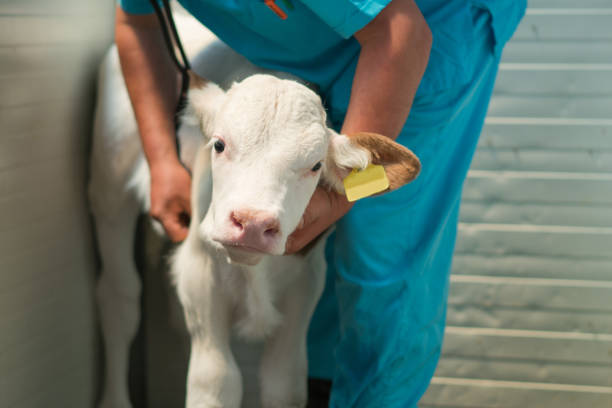
Loose feces are usually the most obvious clinical sign, but they are not necessarily the most important finding for determining urgency.
A calf that can still stand, has a strong suckle reflex, and shows little evidence of dehydration requires a different level of intervention from a calf that is recumbent, has markedly sunken eyes, and no longer suckles.
Clinical Signs to Check Immediately
Farm personnel should assess:
- Can the calf stand on its own?
- Is the suckle reflex still strong?
- Does the calf actively seek milk?
- Are the eyes sunken?
- Are the oral mucous membranes dry?
- Is skin elasticity reduced?
- Is the calf spending more time lying down or responding slowly?
- Is body temperature abnormally high or low?
- Is there blood in the feces?
These findings help provide an initial assessment of disease severity.
There is no need to wait until every sign is present before beginning appropriate management.
Particular concern is warranted when a calf:
Stops suckling – cannot stand – is clearly dehydrated – has an abnormal body temperature – is markedly depressed – or has blood in the feces.
These calves should receive prompt veterinary assessment.
Dehydration Is One of the Major Risks
Diarrhea causes calves to lose:
- Water;
- Sodium;
- Potassium;
- Bicarbonate;
- Other electrolytes.
If these losses continue, calves may develop acid–base abnormalities, weakness, and circulatory compromise.
Common signs associated with dehydration and worsening illness include:
- Sunken eyes;
- Dry mouth;
- Reduced skin elasticity;
- Weakness;
- Unsteady standing;
- Reduced suckle reflex;
- Increased recumbency.
A recumbent calf or one that can no longer drink voluntarily should be evaluated to determine whether intravenous fluid therapy is required.
2. Do Not Diagnose the Cause of Calf Diarrhea From Fecal Color
One common mistake when managing calf diarrhea is to look at the color of the feces and immediately conclude:
“This color means E. coli.”
or:
“This type of feces must be viral.”
This is not a reliable diagnostic approach.
Feces may vary in:
- Color;
- Odor;
- Fluidity;
- Mucus content;
- Presence of blood;
depending on intestinal function and disease severity.
These characteristics should be recorded as part of the clinical picture, but they are not sufficient to identify the causative agent.
Calf Age Is More Informative Than Fecal Color, but It Is Still Not a Diagnosis
Some pathogens tend to be associated with particular age ranges:
| Pathogen | Age Range Commonly Considered |
| ETEC E. coli | Primarily during the first days after birth |
| Rotavirus | Common during the first weeks of life; often notable around 5–15 days |
| Coronavirus | Common during the first weeks of life |
| Cryptosporidium parvum | May occur from approximately 5–35 days, often particularly relevant during the second week |
| Salmonella spp. | Can cause disease across a broader range of ages |
These age ranges are useful for orienting the diagnostic investigation, not for establishing absolute boundaries.
A calf may also be infected with more than one pathogen at the same time.
Therefore, when diarrhea:
- Affects multiple calves;
- Repeatedly occurs in successive groups;
- Produces high morbidity;
- Does not respond as expected to initial management;
a veterinarian may recommend appropriate sample collection and diagnostic testing.
3. What Can Cause Diarrhea in Calves?
Not all cases of calf diarrhea develop through the same mechanism.
The causes can broadly be divided into two groups:
- Infectious causes;
- Nutritional and management-related causes.
Infectious Causes
Commonly discussed infectious agents include:
ETEC E. coli
Enterotoxigenic Escherichia coli is particularly associated with calves during the first days of life and may cause secretory diarrhea with rapid fluid loss.
Salmonella spp.
Salmonella can cause intestinal disease and systemic illness. Some affected calves may develop septicemia.
Rotavirus and coronavirus
These viruses are important causes of diarrhea during the first weeks of life.
Cryptosporidium parvum
Cryptosporidium parvum is a protozoan parasite commonly associated with diarrhea in young calves.
An important additional consideration is that C. parvum is zoonotic and can infect humans.
Personnel caring for diarrheic calves should therefore pay particular attention to hand hygiene, protective measures, and manure handling.
Nutritional and Management-Related Causes
Loose feces may also be associated with:
- Incorrect milk-replacer concentration;
- Excessive total solids;
- Inconsistent mixing between feedings;
- Sudden changes in milk or milk replacer;
- Poorly digestible ingredients;
- Excessively hyperosmolar feeding solutions;
- Poorly cleaned feeding equipment;
- Contaminated water.
Therefore, when several calves develop diarrhea at the same time, the farm should not ask only:
“Which virus is circulating?”
It should also ask:
“Has anything changed in how milk is being prepared or fed?”
4. What Should Be Addressed First When a Calf Has Diarrhea?
In many cases, fluid replacement and correction of electrolyte and acid–base disturbances are the foundation of early supportive management.
This is generally more important than immediately searching for a medicine to simply “stop the diarrhea.”
If the Calf Can Still Stand and Drink
An oral electrolyte solution formulated for calves may be used according to the product instructions.
The objective is to replace:
- Water;
- Electrolytes;
- Components designed to support correction of acid–base disturbances according to the formulation.
Electrolyte solutions should not be mixed at arbitrary concentrations.
Should Milk Be Stopped?
Milk should not routinely be withheld simply because a calf has diarrhea.
If the calf can still suckle:
- Continue providing an appropriate amount of milk or milk replacer;
- Provide supplemental oral electrolytes between milk feedings or according to product instructions;
- Maintain an adequate source of energy during illness.
Providing only electrolyte solution while completely withholding milk may leave the calf with insufficient energy during recovery.
Electrolytes should not automatically be mixed directly into milk unless the product is specifically designed and labeled for that use.
The timing between milk and electrolyte feedings may also depend on the electrolyte formulation, so one fixed interval should not be applied to every product.
When May Oral Electrolytes No Longer Be Sufficient?
Calves that:
- Cannot stand;
- Do not suckle;
- Cannot drink voluntarily;
- Are severely dehydrated;
- Are markedly depressed or collapsed;
may require intravenous fluid therapy.
A veterinarian should assess:
- Degree of dehydration;
- Metabolic acidosis;
- Circulatory status;
- Evidence of systemic disease.
A calf without an adequate suckle reflex should not be forced to consume a large volume of oral fluid without appropriate guidance.
5. Does Every Calf With Diarrhea Need Antibiotics?
No.
Diarrhea alone is not an automatic indication for antibiotic treatment.
Antibiotics do not treat:
- Rotavirus;
- Coronavirus;
- Cryptosporidium infection.
Routine antibiotic administration to every calf with diarrhea can therefore result in unnecessary antimicrobial use.
However, This Does Not Mean Antibiotics Are Never Appropriate
Some diarrheic calves with signs of systemic illness may be at risk of:
- Bacteremia;
- Sepsis;
- Extraintestinal bacterial infection.
Veterinary assessment is particularly important when a calf shows:
- Fever or hypothermia;
- Marked reduction or loss of suckling;
- Recumbency;
- Severe depression;
- Other evidence of systemic illness.
In these situations, a veterinarian may determine that systemic antimicrobial treatment is appropriate.
The decision should therefore not be based on:
“What color are the feces?”
but rather on the broader clinical question:
“Does the calf have signs of systemic illness?”
Do Not Use Antibiotics Routinely to Prevent Diarrhea in Healthy Calves
Antibiotics do not replace:
- Colostrum management;
- Hygiene;
- Housing management;
- Control of sources of infection;
- Nutrition;
- Biosecurity.
Unnecessary antimicrobial exposure can also contribute to selection pressure for antimicrobial resistance.
6. When Several Calves Develop Diarrhea, Investigate the Herd System Rather Than Treating Only Individual Calves
One diarrheic calf may represent an isolated case.
However, if within several days:
- Multiple calves become affected;
- Calves of similar ages develop disease;
- Diarrhea repeatedly occurs in newly born calves;
the farm should review the entire calf-management system.
An investigation can begin with four key areas.
1. Colostrum Management
Check:
- Did the calf receive colostrum promptly?
- Is colostrum quality monitored?
- Was an appropriate amount provided?
- Were bottles and feeding equipment clean?
- How is stored colostrum handled?
Passive immunity during early life depends heavily on immunoglobulins, particularly IgG, obtained from colostrum.
The efficiency of IgG absorption declines rapidly after birth and becomes very limited by approximately 24 hours of age.
However, this 24-hour period should not be interpreted as permission to delay the first feeding until the end of the first day.
High-quality colostrum should be provided as soon as possible after birth, particularly during the first several hours of life.
2. Calf Housing and Fecal Exposure
Many important calf-diarrhea pathogens spread through the fecal–oral route.
Check:
- Is the calving area clean?
- Is the calf bedding dry?
- Is bedding replaced appropriately?
- Is manure accumulating?
- Are calves in frequent direct contact?
- Is equipment shared among calves?
In particular, many commonly used disinfectants have limited effectiveness against Cryptosporidium.
Disease control therefore cannot rely only on:
“Spraying more disinfectant.”
It also requires:
- Removal of organic material;
- Mechanical cleaning;
- Drying of surfaces;
- Effective manure management.
3. Feeding Equipment
Bottles, nipples, and milk buckets may become links in disease transmission when hygiene is poor.
Review whether:
- Equipment is cleaned after each use.
- Equipment is shared between sick and healthy calves.
- Milk residue remains in equipment for prolonged periods.
- Cleaning procedures are performed consistently across work shifts.
4. Milk-Preparation Procedures
Check:
- Correct mixing ratio;
- Correct amount of water;
- Consistency of the formulation;
- Absence of abrupt changes;
- Accuracy of measuring equipment.
If a group of calves begins developing diarrhea shortly after the milk replacer or mixing procedure has changed, this information should be included in the investigation.
7. Preventing Calf Diarrhea Begins Before the Calf Develops Loose Feces
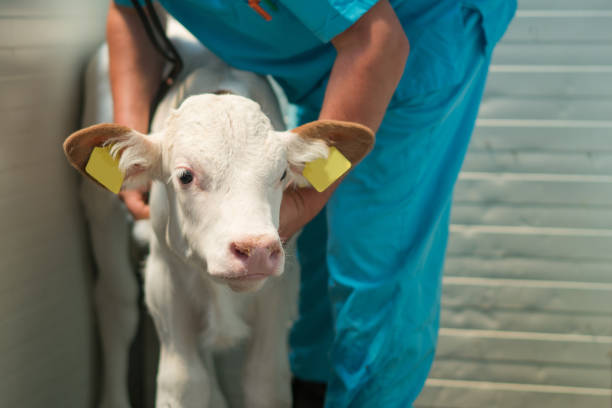
If disease prevention begins only after diarrhea appears, important opportunities have already been missed.
An effective program should cover the entire sequence:
Calving area → colostrum → calf housing → nutrition → hygiene → monitoring.
Preparing the Calving Area
The area should be:
- Clean;
- Dry;
- Relatively free of manure;
- Appropriately bedded;
- Protected from direct drafts;
- Adequately ventilated.
Manure and organic material should be removed before disinfectants are applied.
The First Hours After Birth
The priority is:
High-quality colostrum + adequate intake + as early as possible.
Colostrum management should also include:
- Collection procedures;
- Feeding equipment;
- Storage;
- Feeding method.
If an esophageal feeder is required, the person performing the procedure should be appropriately trained because incorrect technique may cause injury.
The First 30 Days of Life
Regularly monitor:
- Suckle behavior;
- Activity level;
- Feces;
- Perineal area;
- Hydration status;
- Body temperature when disease is suspected.
Calves should also have free-choice access to clean drinking water from the early days of life.
Milk provides most of the calf’s early nutrition, but it does not eliminate the need for access to drinking water.
Reducing Cross-Transmission
When a calf becomes ill:
- Use separate equipment where practical.
- Care for healthy calves before sick calves.
- Handle sick calves afterward.
- Wash hands appropriately.
- Clean boots.
- Clean feeding and care equipment.
- Reduce movement of manure from affected pens into healthy-calf areas.
Housing for sick calves should be:
- Dry;
- Clean;
- Appropriately bedded;
- Easy to observe.
8. Where Does a Calf-Diarrhea Outbreak Create Economic Loss?
The most obvious consequence is the risk of calf mortality.
However, the economic impact is broader.
Direct Costs
Farms may face increased costs for:
- Electrolytes;
- Medicines and treatment;
- Veterinary examinations;
- Labor;
- Diagnostic testing;
- Cleaning and hygiene.
Growth
Calves that survive a severe episode may grow more slowly during recovery, particularly when:
- Diarrhea is prolonged;
- Nutrient intake or absorption is reduced;
- Systemic illness develops.
Replacement Heifers
If growth is delayed, farms may incur additional costs to reach replacement-heifer growth targets.
Calf Losses
In breeding cattle operations, calves represent part of the productive value generated from each reproductive cycle.
High calf mortality therefore directly affects herd efficiency.
For this reason, investment in:
colostrum + hygiene + early detection + calf management
may provide greater long-term value than focusing only on medicines after an outbreak has already developed.
9. Checklist for Managing a Newly Identified Diarrheic Calf
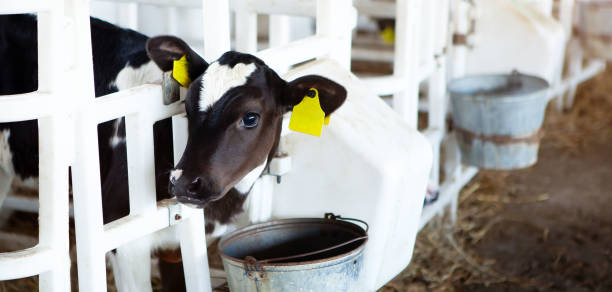
When a calf is first found with diarrhea, the following sequence can be used as an initial farm checklist.
Assess the Calf
- Can it stand?
- Does it still suckle?
- Are the eyes sunken?
- Is the mouth dry?
- Is skin elasticity reduced?
- Is body temperature abnormal?
- Is there blood in the feces?
- Is the calf markedly depressed?
Begin Supportive Care
If the calf can still drink:
- Provide an appropriate oral electrolyte solution.
- Continue milk feeding.
- Monitor closely.
If the calf does not suckle or cannot stand:
- Contact a veterinarian.
- Assess the need for intravenous fluid therapy.
Control Potential Sources of Infection
- Separate the sick calf.
- Limit shared equipment.
- Remove manure.
- Clean the affected area.
- Replace contaminated bedding.
- Clean hands and boots.
Review the Herd
If additional cases occur:
- Compare the ages of affected calves.
- Review colostrum management.
- Check milk-preparation procedures.
- Review feeding-equipment hygiene.
- Consider diagnostic testing when appropriate.
10. Frequently Asked Questions About Calf Diarrhea and Enteritis

Does Every Calf With Diarrhea Have Enteritis?
No.
Diarrhea is a syndrome with multiple possible causes.
It may be associated with:
- Bacteria;
- Viruses;
- Parasites;
- Nutrition;
- Feeding-management errors.
Some causes produce marked intestinal mucosal inflammation, while others primarily cause abnormalities in secretion, digestion, or absorption.
Does a Calf That Still Suckles Need Supportive Management?
Yes.
A calf that continues to suckle may still be losing substantial fluid.
This can be an appropriate stage to begin oral electrolyte supplementation when indicated rather than waiting until the calf becomes markedly weak or dehydrated.
Should Milk Be Stopped When a Calf Has Diarrhea?
Milk should not routinely be withheld.
If the calf is still able to suckle, continue providing an appropriate amount of milk or milk replacer to help maintain energy intake.
At What Age Are Calves Most Susceptible to Diarrhea?
The risk is particularly important during the first weeks of life.
However, different pathogens show different age distributions, and mixed infections can occur.
Age should therefore be used to guide investigation, not as a stand-alone diagnosis.
Should Antibiotics Be Used to Prevent Calf Diarrhea?
Routine preventive antibiotic use in healthy calves is not recommended.
Prevention should instead prioritize:
- Colostrum;
- Hygiene;
- Manure management;
- Nutrition;
- Biosecurity.
Can Calf Diarrhea Be a Risk to Humans?
It depends on the causative agent.
Of particular importance, Cryptosporidium parvum is zoonotic and can infect humans.
Personnel caring for affected calves should:
- Wear gloves when appropriate.
- Wash hands thoroughly.
- Clean boots.
- Minimize direct contact with feces.
People with weakened immune systems should exercise particular caution.
When Should a Veterinarian Be Contacted?
Do not wait for an arbitrary 24-hour period if a calf already has:
- Loss of suckling;
- Clear dehydration;
- Inability to stand;
- Fever or hypothermia;
- Blood in the feces;
- Severe depression or collapse;
- Multiple calves developing disease at the same time.
Strengthening Calf-Diarrhea Prevention at VIETSTOCK 2026
Calf diarrhea demonstrates that effective disease prevention depends on an entire management chain beginning before birth and continuing through the first weeks of life.
Colostrum management, calving-area hygiene, feeding equipment, bedding, water quality, nutrition, and early disease detection can all influence disease risk.
VIETSTOCK 2026 provides a specialized networking platform for livestock producers, veterinary technicians, businesses, and solution providers serving the dairy- and beef-cattle value chains.
The event is expected to bring together more than 300 brands, over 10,000 sqm of exhibition area, and 13,000 trade visitors from more than 40 countries and territories.
For calf-health management, visitors can explore products and solutions related to:
- Animal health, veterinary medicines, and vaccines;
- Dairy equipment, feeding equipment, and drinking-water equipment;
- Animal nutrition and feed additives;
- Biosecurity, hygiene, and disinfection;
- Information systems, data solutions, and farm-management technologies.
These solutions can help farms move from treating individual calves only after diarrhea develops toward a more systematic approach to colostrum management, hygiene, nutrition, control of sources of infection, and herd-health monitoring.
Through the VIETSTOCK 2026 Livestock Roadshows in Bac Ninh, Dong Thap and Ho Chi Minh City, VIETSTOCK 2026 continues to bring practical knowledge on herd management, disease prevention, farm hygiene, and biosecurity to key livestock-producing regions.
Date: 21–23 October 2026
Venue: Saigon Exhibition and Convention Center (SECC), 799 Nguyen Van Linh Street, Tan My Ward, Ho Chi Minh City, Vietnam
Event website:
VIETSTOCK 2026 English website
👉 Visitor registration for VIETSTOCK 2026
👉 Learn more about the VIETSTOCK 2026 Livestock Roadshows
Contact information:
Exhibiting: Ms. Sophie Nguyen – [email protected]
Visitor Support: Ms. Phuong – [email protected]
Marcom Support: Ms. Anita Pham – [email protected]