Computer Vision for Livestock Disease Detection
Computer Vision for Early Disease Detection: Potential Applications of AI Cameras on Farms in Vietnam
Each disease outbreak in a pig herd or poultry flock can cause serious economic losses, and most of those losses come from one simple reason: detection happens too late. By the time farmers can see abnormal signs with the naked eye, the health problem may already have progressed or affected many other animals in the herd or flock, depending on the disease type and barn conditions.
Computer vision — a technology that allows computers to “see” and analyze images in real time — is opening up a new approach for farms that need to monitor animal health using image and video data.
How Computer Vision Supports Early Detection of Abnormalities in Livestock
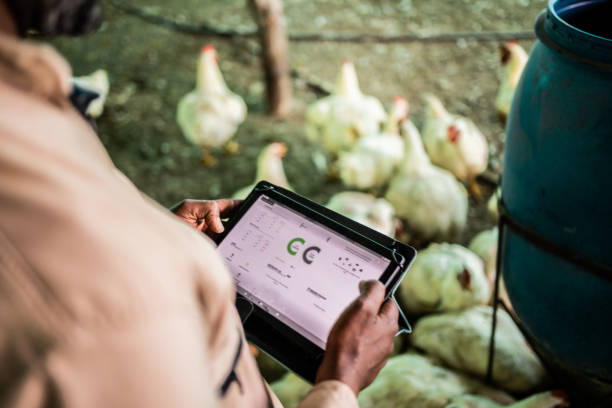
How AI cameras recognize livestock images
AI cameras in barns do more than record video. They continuously analyze each frame and compare it with the normal behavior dataset of the herd or flock.
The system can use machine learning or deep learning models trained on livestock image and video data to identify individual animals, track movement, posture, and certain visible changes such as ruffled feathers, bristled hair, abnormal posture, prolonged eye closure, or reduced mobility.
Livestock image recognition generally works in three basic steps: detecting and locating each animal in the frame, also known as object detection; tracking the movement of each individual over time, also known as tracking; and comparing current behavior with established normal thresholds, also known as anomaly detection.
When a pig or chicken shows unusual signs — such as standing apart from the group, walking unsteadily, or suddenly reducing movement — the system flags the case and sends an alert to the farm manager’s phone.
How barn video analytics analyzes behavior and abnormal signs
Video analytics does not only process still images. It analyzes behavior sequences over time. This is an important difference from conventional surveillance cameras. The system records indicators such as the herd or flock’s average movement level, feeding and drinking frequency, location distribution inside the barn, and response speed when there is an external stimulus.
Common abnormal signs monitored through video analytics include reduced activity compared with the baseline, prolonged separation from the group, changes in lying posture, changes in feeding or drinking behavior, and abnormal movement patterns.
According to studies on AI applications in livestock farming, in some cases, behavioral or physiological changes may appear before clear clinical symptoms. However, early detection time depends on the disease type, animal species, camera quality, baseline data, and how the system has been trained. If operated properly, early alerts can help farmers inspect animals and intervene more quickly.
Illustrative Scenarios of AI Camera Applications on Pig and Poultry Farms
Note: The scenarios below are illustrative and are built based on common ways AI cameras are used to monitor livestock behavior. They are not independently verified results from a specific farm unless an official source or case study is provided.
Actual effectiveness may vary depending on farm scale, animal species, data quality, system provider, and each farm’s operating process.
Illustrative scenario: a medium-sized pig farm detects early abnormal signs related to respiratory issues
For example, a medium-sized pig farm may install cameras in key pens to monitor movement, lying posture, and abnormal signs related to respiratory issues. When the system detects a group of pigs with reduced movement or unusual behavior, the farm manager can conduct an on-site inspection and call in a veterinarian for an earlier assessment.
In a hypothetical operating situation, the system may detect a group of pigs with reduced movement or abnormal behavior outside manual inspection hours, then send an alert so the farm manager can check the barn in person. Alerts may be sent through a mobile phone, dashboard, or any notification channel configured by the farm.
If the alert is confirmed to be accurate and the response process is carried out well, the farm may be able to inspect, isolate, and respond earlier, reducing the risk of delayed treatment. However, any reduction in mortality rate or medication costs needs to be measured using actual data from each farm.
Illustrative scenario: AI cameras support the detection of abnormal behavior in broiler flocks

For example, a large-scale broiler farm may deploy a video analytics system to monitor movement, flock distribution, and feeding behavior inside broiler houses.
The system may also be combined with environmental sensors or thermal cameras/sensors to monitor area temperature, surface temperature, or abnormal changes related to heat stress. These data sources do not replace body temperature measurement or veterinary diagnosis when disease confirmation is needed.
After the baseline setup period, AI cameras may detect abnormalities in movement behavior or activity levels in a specific barn area. After the alert, staff conduct an on-site inspection and identify several abnormal signs that require further veterinary assessment, such as reduced feed intake, reduced movement, or abnormal respiratory signs.
If the alert is confirmed and handled according to the right process, the farm may reduce the risk of late detection. However, the impact on productivity or economic losses needs to be measured using actual data from each farm.
Illustrative scenario: AI cameras support abnormal behavior detection in sow herds
Porcine reproductive and respiratory syndrome (PRRS) is especially dangerous for sow herds because it directly affects reproductive performance. For example, in sow herds, AI cameras can support the monitoring of gait, lying frequency, movement level, and certain abnormal behavior changes. In some cases, early signs of PRRS or reproductive-respiratory health problems may not be obvious, making early detection through manual observation difficult.
After AI cameras are deployed, the system may detect a group of sows with changes in gait — shorter steps and an abnormally higher lying frequency. Video analysis can help operators review behavioral changes that appeared before the direct inspection.
Early detection of abnormal behavior can help farms inspect, isolate, and collect samples earlier. However, losses related to PRRS, such as miscarriage, piglet mortality, or reduced reproductive performance, should only be concluded after veterinary assessment and actual monitoring data.
Note: AI cameras only support the detection of abnormal behavior. They do not diagnose PRRS on their own. Disease confirmation must be based on veterinary assessment and appropriate testing.
Illustrative scenario: video analytics detects abnormal reduction in feeding in broiler flocks
Newcastle disease is a dangerous infectious disease in poultry and can cause major losses if it is not prevented and handled in time. For example, a broiler farm may use video analytics to monitor how long the flock gathers around feeders and drinkers during the day.
The system detects a sudden drop in activity around the feeders compared with the baseline during one morning. At the same time, many birds are recorded standing away from the feeders with drooping heads or head-bobbing behavior. A veterinarian is called to inspect the flock, assess symptoms, and decide whether sample testing or disease prevention procedures are needed.
After the alert, the farm needs to isolate the affected area, conduct an on-site inspection, notify the veterinarian, and handle the situation according to professional guidance. Emergency vaccination, if applied, must follow an appropriate veterinary plan. It should not be considered a measure that provides immediate protection within a few hours.
Illustrative scenario: mixed farms need separate system configuration for each animal species
For example, on farms that raise both pigs and chickens, the system needs to be configured separately for each area because each species has different behavior and biological characteristics.
The farm invests in separate AI camera systems for each area, with AI models trained separately for pigs and chickens. During the first year of operation, the system detects multiple early alerts across both pig herds and poultry flocks, most of which are handled before disease spreads widely.
The ROI of an AI camera system depends on herd or flock size, equipment costs, software costs, maintenance costs, disease risk level, and the response capability of the operating team. Farms should calculate ROI based on specific quotations and actual loss data from previous production cycles.
Comparison Table: Before and After Applying Computer Vision
| Indicator | Before implementation | After implementation | Change trend |
| Average disease detection time | 48–72 hours after clear symptoms appear | May detect behavioral abnormalities earlier, depending on the disease type | Significantly earlier |
| Mortality rate due to disease | High, varies by season | May be significantly lower, depending on animal species, disease type, and response effectiveness | Clear improvement |
| Medication cost per production cycle | High due to late treatment and wider spread | May be lower due to earlier detection and timely isolation | Tends to decrease |
| Labor time for direct inspection | 2–4 hours/day/person | Focused on confirmation checks when alerts occur | Significant time savings |
| Night-time monitoring capability | Almost none | Continuous 24/7 monitoring | Strong increase |
| Number of widespread disease outbreaks per year | Multiple outbreaks per year depending on the farm | May decrease when early detection and timely response are maintained well | Clear decrease |
Note: The specific figures in the comparison table depend on each farm, animal species, disease type, and system operating quality. Actual results may vary.
Pigs vs. Poultry: Differences When Deploying AI Cameras for Abnormality Detection
What abnormal signs AI cameras can help identify in pigs
Pigs are relatively easy to monitor through cameras because of their larger body size and clear movement patterns. Abnormal signs that AI cameras can help detect in pigs include changes in gait, such as limping or shorter steps; abnormal lying posture, such as lying prone continuously or staying separated from the group; trembling or convulsions; reduced overall activity; and slow response to sound stimuli.
With sufficiently high-resolution cameras, the system may indirectly support the detection of certain breathing abnormalities in pigs. However, practical feasibility depends on each system’s characteristics and the lighting conditions inside the barn. For sows, the system can also monitor pre-farrowing behavior to provide early warnings of possible complications.
What abnormal signs AI cameras can help identify in poultry
Chickens are smaller and move faster, so they require cameras with a higher frame rate and higher resolution than pig barns. Abnormal signs that can be supported by AI detection include birds standing hunched with ruffled feathers, reduced flock-level activity, uneven distribution inside the house, such as crowding in one corner, changes in feeding and drinking behavior, and birds staying separated from the flock for a prolonged period.
Video analytics can support the detection of changes in feeding behavior or flock distribution. These are signals that require further inspection because they may be related to many health, environmental, or nutritional issues, including infectious diseases.
Camera configuration and installation angles differ between pig barns and poultry houses
For pig barns: cameras are usually installed at a height of around 2.5–3 meters, with an appropriate tilt angle to cover the entire pen. Infrared (IR) cameras are necessary for effective night-time operation. A commonly recommended minimum resolution is 2MP, although specific requirements depend on the system provider.
For poultry houses: because stocking density is higher and individual animals are smaller, more cameras are usually needed for the same area. Higher resolution, commonly from 4MP and above for reference, and a higher frame rate, often 25–30 fps, are needed to track movement. A wide-angle view is preferred for monitoring overall flock behavior. These specifications are for reference and should be confirmed by the provider for each specific system.
Step-by-Step Process for Installing AI Cameras and Video Analytics

Step 1: Assess barn infrastructure and choose equipment suitable for the farm scale
Before buying equipment, farms need to assess the barn area and the number of pens or zones that need monitoring, the stability of the power supply and whether backup UPS is available, network connectivity such as Wi-Fi or Ethernet, and lighting conditions inside the barn. Based on this assessment, the farm can choose the number of cameras, camera type, such as standard or infrared cameras, and the server or edge computing configuration needed for video processing.
Step 2: Install cameras and set up livestock image recognition software
Cameras are installed in fixed positions based on the site survey, ensuring there are no blind spots and that the viewing angle covers the entire monitoring area. Video analytics software is installed on a server or edge device, connected to the camera system, and configured with alert channels such as SMS, mobile app, or a web dashboard.
Step 3: Train the AI model according to the actual herd or flock characteristics
This is the most important step and is often overlooked. Each herd or flock has its own “behavioral baseline,” depending on breed, age, and farming conditions. The system needs to collect normal behavior data from the animals for at least 2–4 weeks before alerts are officially used. This phase helps the AI model distinguish what is normal behavior for that specific herd or flock and avoid false alerts.
Step 4: Integrate the alert system and run continuous monitoring
After the model becomes stable, the automatic alert system should be integrated with a clear response process: when an alert is received, who checks first, how the case is confirmed, and how quickly the veterinarian is notified. It is important to have a specific response process. Technology only works well when people have a clear action plan.
Common Mistakes When Deploying AI Cameras for Livestock Disease Detection
Below are the most common mistakes farms face during implementation:
Poor or uneven lighting: This is a common cause of recognition errors. In low-light conditions, cameras may produce blurry images and significantly reduce accuracy. Solution: install additional LED lighting inside the barn or use specialized infrared cameras.
Failure to complete the baseline training phase: Many farms want to turn on alert mode immediately after installing cameras, which can lead to dozens of false alerts every day. This causes staff to lose trust in the system and ignore even real alerts. Farms should allow enough time to complete the 2–4 week baseline data collection phase.
No response process after alerts: The system sends an alert, but no one knows what to do next. Farms need to build a clear SOP, or standard operating procedure: who receives the alert, who conducts the on-site inspection, and who contacts the veterinarian.
Dirty or blocked cameras: In barn environments, cameras can easily be affected by dust, spider webs, or water splashing onto the lens. Cameras should be cleaned regularly, for example weekly or based on the actual dust and humidity level inside the barn, and viewing angles should also be checked regularly.
Choosing equipment that does not match the barn environment: Cameras used in barns should prioritize dust and moisture resistance suitable for livestock environments. In many cases, an IP65 rating or higher, or a specialized protective enclosure, is safer than a conventional consumer-grade camera.
Conventional consumer cameras may quickly degrade or produce unstable image quality in barn environments with high humidity, dust, and corrosive gases.
Implementation Costs and What to Know Before Investing
The cost of deploying an AI camera system for disease detection can vary widely depending on farm scale and system complexity. For a 500–1,000 animal farm, the cost may vary greatly depending on the number of cameras, software, video processing devices, installation fees, and maintenance. Some basic systems may start from several tens of millions of VND, but farms need a direct quotation from the provider to get an accurate figure.
Before making an investment decision, farms should consider several practical factors:
First, an AI camera system does not completely replace veterinarians. It is a tool that supports early detection of abnormal behavior, but disease diagnosis and treatment still require veterinary expertise.
Second, farms with fewer than 500 animals may not yet be economically optimal for this level of investment. ROI is usually clearer for larger farms or high-value animals such as sows and breeding chickens. However, actual effectiveness still needs to be calculated based on investment costs, disease history, and each farm’s operating capability.
Third, long-term operating costs must be included: equipment maintenance, software updates, and staff training — not only the initial investment.
Fourth, farms should ask providers for a trial or pilot run in a small barn area before deploying the system across the entire farm.
FAQ
How much does it cost to install AI cameras for disease detection on a 500-animal pig or poultry farm?
The cost depends heavily on the number of cameras needed, the type of software, and the provider. For a 500-animal farm, usually 4–8 cameras may be needed depending on the barn layout. The starting investment for a workable system is often from several tens of millions of VND, excluding consulting, installation, and training costs. Farms should get quotations from at least 2–3 providers and compare specific features, especially AI-based behavior analytics capabilities, not only standard video recording.
Can AI cameras help detect abnormal signs suspected to be related to dangerous diseases?
AI cameras cannot diagnose specific diseases. The system only supports abnormality detection. Disease confirmation requires veterinary assessment and appropriate testing. However, the system can detect abnormal behavioral signs that may be early signs of many dangerous diseases.
Signs such as loss of appetite, lying lethargically for long periods, reduced movement, separation from the group, or changes in barn distribution may be related to many different causes. AI cameras only help detect abnormalities earlier so farmers can isolate animals, inspect them, and collect samples when needed. Final disease conclusions must still be based on veterinary assessment and appropriate testing.
Does weak night-time lighting in barns affect recognition accuracy?
Yes. Lighting directly affects recognition quality. In low-light conditions, cameras may produce blurry images and significantly reduce accuracy. The best solution is to use specialized infrared (IR) cameras or low-light cameras. Some farms may use low-intensity lighting or infrared/low-light cameras to support night-time monitoring. The choice of lighting should consider animal species, lighting intensity, and technical recommendations to avoid affecting resting behavior.
Should farms with fewer than 1,000 animals invest in barn video analytics systems?
The answer depends on the animal type, the economic value of the herd or flock, and the farm’s disease history. If the farm has suffered heavy disease-related losses in the past, or raises high-value animals such as sows or breeding chickens, the investment may still make sense even at a smaller scale.
For small commercial farms with stable disease history, it may be better to start with a more basic system, such as 1–2 cameras with limited monitoring features, before upgrading when the farm expands. The most important point is not to invest in expensive equipment without a clear operating plan and trained personnel.
See Livestock Monitoring Technologies in Person at VIETSTOCK 2026
VIETSTOCK 2026 – Vietnam’s Premier International Feed, Livestock, Meat Industry Show – is expected to bring together more than 300 brands and 13,000 trade visitors from many countries, including equipment and technology solution providers for the livestock industry. This is an opportunity to:
- Directly explore the latest equipment solutions and farm management technologies
- Update your knowledge of technology trends in livestock disease prevention and detection from local and international experts
- Expand your network with suppliers, veterinary experts, and businesses across the livestock value chain
Time: October 21–23, 2026
Venue: Saigon Exhibition and Convention Center (SECC), 799 Nguyen Van Linh, Ho Chi Minh City.
Register now to capture development and networking opportunities in the livestock industry:
Visitor registration: https://www.vietstock.org/en/online-registration-2/
Event website: https://www.vietstock.org/en/
Contact:
Ms. Sophie Nguyen – [email protected] (Booth booking)
Ms. Phuong – [email protected] (Visitor support)
Ms. Anita Pham – [email protected] (Communications & marketing)