Animal Quarantine Procedures 2026: Registration, Inspection, and Certificate Issuance Steps
Animal quarantine is not completed through a single document submission. It is a sequence of activities that begins with identifying the correct procedure and continues through document review, physical inspection, sample testing when required, certificate issuance, transportation, and record retention.
For farms and businesses, delays often occur not because the application form is difficult to complete, but because the consignment is not ready when the authority arrives, information differs across documents, the wrong receiving authority is contacted, or the transport schedule is arranged before the procedure is completed.
A practical quarantine workflow should therefore coordinate four elements:
- The consignment;
- The application documents;
- The inspection location and transport vehicle;
- The people responsible for each stage.
This article explains the animal quarantine procedure as an operational timeline, from the initial eligibility check to the final review of the Animal Quarantine Certificate.
Legal and Professional Note
This article provides practical guidance and does not replace official legal documents, published administrative procedures, or instructions from the competent veterinary authority.
In 2026, terrestrial-animal quarantine is governed by the Law on Veterinary Medicine and Circular 01/2026/TT-BNNMT. The Ministry of Agriculture and Environment also issued Consolidated Document 67/VBHN-BNNMT on 12 June 2026 for regulations on the quarantine of terrestrial animals and terrestrial animal products. Aquatic-animal quarantine is separately regulated by Circular 03/2026/TT-BNNMT, which took effect on 13 January 2026. Applicants should check the latest official or consolidated text before carrying out a procedure.
Requirements may vary according to species, product type, origin, destination, transport purpose, disease situation, market requirements, and administrative assignment.
Key Takeaways
- Quarantine procedures commonly involve registration, document review, inspection, technical measures when required, and certificate issuance.
- The first step is to determine whether the consignment is subject to quarantine and which procedure applies.
- Terrestrial and aquatic consignments follow separate regulations.
- Document submission does not mean the procedure has been completed.
- The actual consignment, inspection site, vehicle, and supporting records must be ready for verification.
- Not every consignment requires sample testing.
- If testing is required, the transport schedule should allow enough time for sampling and results.
- The certificate must be reviewed before the vehicle departs.
- Changes to the quantity, destination, vehicle, route, or shipment structure should be reported to the issuing authority.
- Previous experience with another shipment should not be applied mechanically to a new consignment.
1. Animal Quarantine Workflow at a Glance

A quarantine procedure can be divided into ten operating stages.
| Stage | Main activity | Expected output |
| 1 | Identify the consignment and procedure | Correct quarantine route |
| 2 | Assign responsibilities and establish the schedule | Internal action plan |
| 3 | Prepare the master consignment information | Consistent source data |
| 4 | Build and submit the application | Accepted application file |
| 5 | Respond to document review | Complete and valid documents |
| 6 | Prepare the consignment and inspection location | Inspection-ready shipment |
| 7 | Cooperate during physical inspection | Inspection record or findings |
| 8 | Manage sampling or corrective actions | Test results or completed measures |
| 9 | Receive and review the certificate | Accurate valid certificate |
| 10 | Transport and retain records | Traceable completed shipment |
The stages may vary according to domestic transport, export, import, transit, and the type of animal or product.
2. Stage 1: Identify the Correct Procedure
Before preparing any document, the consignment owner should determine exactly what is being transported and under which regulatory route.
2.1 Identify the subject group
Confirm whether the consignment consists of:
- Terrestrial animals;
- Terrestrial animal products;
- Aquatic animals;
- Aquatic animal products;
- Reproductive materials;
- Biological materials;
- Disease specimens;
- Another regulated product of animal origin.
Do not apply terrestrial procedures to aquatic consignments or use aquatic forms for terrestrial products.
2.2 Identify the direction of movement
Determine whether the movement is:
- Within the same province;
- Outside the province of origin;
- Export;
- Import;
- Transit;
- Temporary import for re-export;
- Temporary export for re-import;
- Border-gate transfer;
- Bonded-warehouse movement;
- Another regulated form.
2.3 Identify the purpose
The purpose may affect the applicable requirements.
Examples include:
- Commercial farming;
- Breeding;
- Slaughter;
- Processing;
- Trade;
- Research;
- Exhibition;
- Competition;
- Export production;
- Personal or companion-animal movement.
2.4 Check the disease situation
Before confirming the transport schedule, check whether the origin, destination, or route is affected by:
- A declared animal-disease outbreak;
- A threatened zone;
- A buffer zone;
- Temporary movement controls;
- Additional disease-surveillance requirements;
- Local veterinary instructions.
A procedure that was accepted for a previous shipment may need to be adjusted if the disease situation has changed.
2.5 Check whether an exemption applies
Some products may be exempt from quarantine under specific conditions.
However, exemption should be confirmed based on:
- The exact product;
- Processing method;
- Intended use;
- Origin;
- Applicable appendix;
- Conditions stated in the current regulation.
Commercial packaging, freezing, or heat treatment does not automatically establish an exemption in every case.
3. Stage 2: Assign Responsibilities Before Registration

Quarantine procedures often involve several parties:
- Farm owner;
- Consignment owner;
- Veterinary team;
- Sales department;
- Logistics company;
- Transport operator;
- Slaughterhouse or processing facility;
- Customs broker;
- Import-export department;
- Receiving facility.
The parties should agree on responsibilities before documents are prepared.
Suggested responsibility matrix
| Activity | Farm or origin facility | Consignment owner | Veterinary team | Transport operator | Receiving facility |
| Confirm animal or product information | Responsible | Reviews | Supports | — | Confirms receipt details |
| Prepare health records | Supports | Collects | Responsible | — | May review |
| Submit quarantine application | Supports | Responsible | May assist | — | — |
| Prepare inspection area | Responsible | Coordinates | Supports | — | — |
| Prepare vehicle | — | Coordinates | May inspect | Responsible | — |
| Support physical inspection | Responsible | Responsible | Supports | May attend | — |
| Carry certificate | — | Assigns | — | Responsible | Verifies upon receipt |
| Retain records | Keeps farm records | Keeps shipment file | Keeps technical records | Keeps transport records | Keeps receipt records |
The actual division of responsibility may differ, but it should be documented internally.
4. Stage 3: Establish a Quarantine Timeline
The transport date should be planned around the quarantine procedure, not the other way around.
A practical timeline should include:
- Target delivery date;
- Expected vehicle departure;
- Application submission date;
- Inspection date;
- Possible sampling date;
- Estimated testing period;
- Time for correcting documents;
- Time for cleaning or disinfecting the vehicle;
- Time for reviewing and issuing the certificate.
Three planning scenarios
Scenario A: No testing expected
The timeline mainly includes:
- Document preparation;
- Submission;
- Inspection scheduling;
- Physical inspection;
- Certificate issuance;
- Transport.
Scenario B: Testing may be required
Additional time is needed for:
- Sample collection;
- Sample transportation;
- Laboratory processing;
- Result review;
- Possible retesting or corrective measures.
Scenario C: Export or import
The timeline may also need to include:
- Market approval;
- International veterinary certificate requirements;
- Customs procedures;
- Facility verification;
- Isolation;
- Border-gate inspection;
- Storage while awaiting results;
- Coordination with shipping or container schedules.
Registration should not be delayed until the animals are already loaded or the container is waiting at the port.
5. Stage 4: Create a Master Consignment Information Sheet
Before completing the official application, the consignment owner should prepare one master information sheet.
This sheet should be the single source used by all departments.
Applicant information
- Legal name or individual name;
- Address;
- Contact person;
- Telephone number;
- Business information where applicable;
- Authorized representative.
Consignment information
- Species or product name;
- Breed or category when relevant;
- Quantity;
- Weight;
- Number of packages;
- Batch or lot number;
- Identification marks;
- Intended use.
Movement information
- Place of origin;
- Inspection location;
- Destination;
- Expected transport date;
- Route;
- Receiving facility.
Vehicle information
- Vehicle registration number;
- Vehicle type;
- Container number where applicable;
- Transport operator;
- Temperature-control requirements;
- Expected loading time.
Supporting information
- Vaccination history;
- Health-monitoring records;
- Test results;
- Treatment history when relevant;
- Commercial document references;
- Buyer or consignee information.
The same information should be used across the application, invoice, packing list, transport documents, warehouse records, and internal instructions.
6. Stage 5: Prepare the Application by Procedure Type

6.1 Domestic transport outside a province
Depending on the applicable procedure, the file may include:
- Quarantine application form;
- Consignment-owner information;
- Origin and destination information;
- Species, quantity, weight, and transport purpose;
- Origin or traceability records;
- Vaccination or health-monitoring records when required;
- Test results when applicable;
- Vehicle information;
- Supporting commercial documents.
A generic document checklist should not be used for all species and products.
6.2 Export
Export applications may require:
- Quarantine application;
- Market veterinary requirements;
- Certificate template accepted by the importing country;
- Facility or farming-area information;
- Product and batch details;
- Test results;
- Traceability records;
- Commercial contract;
- Invoice;
- Packing list;
- Container and shipping information;
- Additional declarations required by the market.
The exporter should confirm the destination market’s requirements before production, packing, or loading.
6.3 Import
Import files may include:
- Quarantine registration or declaration;
- Commercial contract;
- Invoice;
- Bill of lading;
- Packing list;
- Veterinary certificate issued by the exporting country;
- Import approval or permit when required;
- Facility or origin information;
- Risk-analysis documents where applicable;
- Storage or isolation location;
- Other specialized documents.
Preparation should be completed before the consignment arrives at the border gate.
6.4 Transit and special trade forms
For transit, temporary trade, border-gate transfer, or bonded-warehouse movement, the applicant should confirm:
- Correct procedure;
- Approved route;
- Entry and exit border gates;
- Storage or holding conditions;
- Vehicle or container details;
- Sealing requirements;
- Applicable veterinary certificate;
- Time allowed for movement.
7. Stage 6: Submit the Application to the Correct Authority
The receiving authority depends on the quarantine type and local administrative assignment.
Domestic transport
The application is generally submitted to the specialized veterinary authority or assigned unit at the place of origin.
Applicants should verify the exact receiving point through:
- The public service portal;
- Published administrative procedures;
- The specialized authority’s website;
- The local administrative-procedure unit;
- Direct confirmation from the veterinary authority.
Export, import, or transit
The responsible authority may be linked to:
- Border gate;
- Isolation site;
- Storage warehouse;
- Inspection site;
- Export location;
- Transit route.
Do not assume that the local unit responsible for domestic transport also processes all import-export procedures.
Submission channels
Depending on the procedure, submission may be available:
- In person;
- By post;
- Through a public service portal;
- Through the National Single Window;
- Through another authorized electronic system.
Email should only be used when the authority has specifically confirmed that it is an accepted submission channel.
8. Stage 7: Manage the Initial Document Review

After submission, the authority reviews whether the application is complete and suitable for the procedure.
Possible responses include:
- Application accepted;
- Additional documents required;
- Information correction required;
- Applicant directed to another authority;
- Inspection schedule provided;
- Sampling or isolation instructions provided.
Common points checked during document review
- Correct procedure;
- Correct form;
- Applicant identity;
- Species or product description;
- Quantity or weight;
- Origin;
- Destination;
- Transport purpose;
- Vehicle information;
- Supporting health records;
- Test results;
- Commercial documents;
- Market requirements.
How to respond to a supplementation request
When documents need to be supplemented:
- Read the request carefully;
- Identify every missing or inconsistent item;
- Correct the master consignment information;
- Update all affected documents;
- Avoid changing only one form while leaving conflicting information elsewhere;
- Resubmit through the instructed channel;
- Confirm that the updated file has been received.
9. Stage 8: Prepare the Inspection Location
Once the inspection schedule is confirmed, the origin facility should prepare a location suitable for inspecting the consignment.
For live animals
The location should allow the inspector to:
- Observe the animals;
- Verify quantity;
- Check identification;
- Assess clinical condition;
- Review gathering conditions;
- Access the relevant records;
- Examine the vehicle when required.
The facility should avoid mixing the inspected animals with unrelated herds or flocks.
For animal products
The inspection location should allow access to:
- Packages;
- Labels;
- Batch information;
- Storage areas;
- Temperature records when applicable;
- Product quantity;
- Supporting documents;
- Vehicle or container.
Products should not be loaded in a way that makes representative inspection impossible.
Prepare a responsible contact person
The person working with the inspection authority should understand:
- The application;
- Consignment details;
- Health records;
- Product records;
- Transport plan;
- Location of supporting documents;
- Any changes since submission.
10. Stage 9: Prepare the Animals or Products for Inspection
10.1 Live animals
Before inspection:
- Observe the herd or flock;
- Separate animals showing abnormal signs;
- Confirm quantity;
- Check identification;
- Review recent treatments;
- Prepare vaccination records;
- Clean the gathering area;
- Ensure suitable access for inspection.
Animals showing suspicious signs should not be concealed or mixed into the shipment.
10.2 Animal products
Before inspection:
- Confirm batch and package numbers;
- Check product labels;
- Verify quantity and weight;
- Review storage conditions;
- Separate damaged packages;
- Confirm origin records;
- Make the consignment accessible.
10.3 Transport vehicle
The vehicle should be:
- Suitable for the consignment;
- Cleaned after its previous use;
- Free from remaining waste;
- Able to prevent leakage;
- Equipped with covering or ventilation where needed;
- Temperature-controlled where required;
- Ready for cleaning or disinfection measures.
The vehicle registration number should match the application information.
11. Stage 10: Physical Inspection

The content of the physical inspection depends on the subject and applicable procedure.
Live-animal inspection may include
- Clinical observation;
- Species and quantity verification;
- Identification checks;
- Origin cross-checking;
- Gathering-condition assessment;
- Transport-vehicle inspection;
- Review of vaccination or health information.
Animal-product inspection may include
- Product description;
- Quantity or weight;
- Packaging;
- Labels;
- Batch information;
- Storage temperature;
- Condition of the consignment;
- Vehicle or container;
- Supporting documents.
Export-import inspection may additionally include
- Certificate-template requirements;
- Seal or container information;
- Facility codes;
- Storage or isolation conditions;
- Market declarations;
- Border-gate documents.
Physical inspection should be treated as a verification of the actual consignment, not merely as another document-review step.
12. When Is Sample Testing Required?
Not every consignment is sampled.
Sampling may depend on:
- Procedure;
- Species;
- Product type;
- Disease situation;
- Origin;
- Destination market;
- Import conditions;
- Surveillance program;
- Findings during inspection;
- Instructions of the competent authority.
If samples are collected
The consignment owner should record:
- Sample type;
- Number of samples;
- Sampling date and time;
- Animal, batch, or package represented;
- Laboratory;
- Expected result timeline;
- Conditions applied while awaiting results.
Managing the consignment while waiting
Depending on the procedure, the shipment may need to remain:
- At the farm;
- At a gathering point;
- In isolation;
- In a designated warehouse;
- At a border-gate inspection site;
- Under seal or another control measure.
The shipment should not be moved without permission merely because the commercial delivery date is approaching.
13. Possible Outcomes After Inspection
Outcome 1: The consignment meets the requirements
The authority proceeds with certificate issuance according to the applicable procedure.
Outcome 2: Documents need correction
The applicant may need to:
- Correct the quantity;
- Update the destination;
- Provide an omitted record;
- Replace an outdated document;
- Correct vehicle information;
- Clarify origin.
Outcome 3: Veterinary hygiene measures are required
Measures may include:
- Cleaning;
- Disinfection;
- Packaging correction;
- Vehicle treatment;
- Product handling;
- Separation of animals;
- Improvement of the gathering location.
Outcome 4: Testing or additional monitoring is required
The consignment remains under the applicable control conditions while results or further assessment are pending.
Outcome 5: The certificate is not issued
Reasons may include:
- Documents remain incomplete;
- Actual consignment does not match the application;
- Animals show signs of disease;
- Product conditions do not meet requirements;
- Test results are unsuitable;
- Origin cannot be verified;
- Required corrective measures have not been completed.
The applicant should obtain the reason and follow the authority’s guidance instead of attempting to transport the consignment without completing the procedure.
14. Certificate Issuance

When the consignment meets the applicable requirements, the competent authority issues the Animal Quarantine Certificate.
The certificate may state:
- Consignment owner;
- Species or product type;
- Quantity or weight;
- Origin;
- Destination;
- Vehicle;
- Date of issue;
- Validity period;
- Conditions or notes;
- Issuing authority information.
The certificate may be issued in paper or another legally accepted form under the applicable procedure.
15. Certificate Review Before Departure
The applicant should review the certificate immediately after receiving it.
Check the consignment information
- Correct species;
- Correct product name;
- Correct quantity;
- Correct weight;
- Correct batch or identification.
Check movement information
- Correct origin;
- Correct destination;
- Correct vehicle;
- Correct route where stated;
- Correct consignee where applicable.
Check validity
- Date of issue;
- Validity period;
- Conditions for use;
- Attached notes.
Check authentication
- Certificate number;
- Signature;
- Seal;
- Electronic confirmation where applicable.
If an error is found, it should be reported before loading or departure.
The applicant should not change the certificate manually.
16. Managing Changes After Certificate Issuance
Contact the issuing authority if there is a change to:
- Quantity;
- Weight;
- Animal identification;
- Batch number;
- Destination;
- Consignee;
- Vehicle;
- Route;
- Transport date;
- Number of trips;
- Number of vehicles.
The issuing authority will determine whether the certificate can be adjusted, needs to be reissued, or requires a new procedure.
17. Using the Certificate During Transportation

The certificate should accompany the consignment as required.
The transporter should know:
- Which shipment the certificate covers;
- Where the certificate is stored;
- The approved destination;
- The validity period;
- Any movement conditions;
- Who to contact if a problem occurs.
The transporter should not:
- Use the certificate for another consignment;
- Change the destination independently;
- Replace the approved vehicle without guidance;
- Continue using an expired certificate;
- Split the shipment without confirming the documentation requirement.
18. Actions at the Receiving Facility
The receiving facility should verify:
- Certificate number;
- Consignment owner;
- Origin;
- Destination;
- Species or product;
- Quantity;
- Vehicle;
- Validity;
- Condition of animals or products upon arrival.
Any major discrepancy should be recorded and reported through the appropriate internal or regulatory process.
For slaughterhouses or processing plants, the quarantine certificate does not replace the facility’s own responsibilities for slaughter control, veterinary hygiene, traceability, or food safety.
19. Post-Transport Record Retention
After delivery, the parties should retain records according to applicable requirements and internal traceability needs.
The shipment file may contain:
- Application;
- Supporting documents;
- Supplementation requests;
- Inspection information;
- Sampling record;
- Test results;
- Certificate;
- Transport documents;
- Delivery confirmation;
- Incident records;
- Records of corrections or changes.
Keeping a complete shipment file helps businesses:
- Respond to later inspections;
- Resolve buyer questions;
- Compare repeated procedures;
- Identify recurring errors;
- Prepare future consignments more efficiently.
20. Procedure Differences by Movement Type
| Activity | Domestic inter-provincial transport | Export | Import |
| Main starting point | Confirm quarantine subject and origin authority | Confirm importing-market requirements | Confirm import eligibility and pre-arrival requirements |
| Key documents | Application, origin, health and vehicle records | Market certificate, testing, facility and commercial records | Exporting-country certificate, import and commercial records |
| Inspection location | Origin facility or assigned location | Production, storage, inspection site or border gate | Border gate, isolation or designated storage site |
| Sampling | When required | According to procedure and market | According to procedure and risk controls |
| Other coordination | Transport and receiving facility | Customs, shipping, buyer and market authority | Customs, storage, border gate and exporting authority |
| Main operational risk | Late registration or mismatch with actual shipment | Certificate or market-document inconsistency | Missing pre-registration or incorrect exporting-country documents |
21. Common Causes of Delay
Wrong procedure selected
The applicant uses a domestic form for an export case or a terrestrial procedure for an aquatic consignment.
Prevention: Complete the eligibility check before preparing documents.
Wrong receiving authority
The file is sent to an office that does not process that procedure.
Prevention: Confirm the administrative assignment first.
Inconsistent information
Quantity, destination, vehicle, or product descriptions differ across documents.
Prevention: Use one master consignment information sheet.
Consignment not ready for inspection
Animals are not gathered, packages are inaccessible, or records cannot be found.
Prevention: Use an inspection-readiness checklist.
Testing was not included in the timeline
The commercial schedule assumes immediate certificate issuance.
Prevention: Ask whether sampling may apply before confirming delivery.
Vehicle changes at the last minute
The certificate or application contains another registration number.
Prevention: Confirm vehicle availability early and report changes immediately.
Abnormal animals are included
Animals showing signs of disease remain in the shipment.
Prevention: Conduct a health review before inspection and separate abnormal animals.
The certificate is not checked
An error is found only after the vehicle has departed.
Prevention: Assign one person to review the certificate against the master information sheet.
22. Practical Workflow Scenarios
Scenario 1: Pigs transported to another province
A farm plans to deliver pigs to a slaughterhouse in another province.
The workflow should include:
- Confirming the applicable quarantine obligation;
- Reviewing the disease situation;
- Preparing herd and origin information;
- Registering with the responsible authority;
- Confirming the inspection schedule;
- Preparing the pigs and vehicle;
- Supporting inspection and possible sampling;
- Reviewing the certificate;
- Transporting within the validity period;
- Retaining the shipment records.
Scenario 2: Breeding poultry delivered to another farm
The seller and buyer should agree on:
- Applicant;
- Origin facility;
- Destination facility;
- Number of birds;
- Identification;
- Vaccination and health records;
- Inspection location;
- Vehicle;
- Person carrying the certificate.
The destination farm should verify the certificate before accepting the birds.
Scenario 3: Frozen animal product exported
The exporter should first obtain the importing market’s requirements.
The process may involve:
- Facility eligibility;
- Product and batch preparation;
- Testing;
- Certificate-template review;
- Physical inspection;
- Container information;
- Coordination with customs and shipping;
- Final certificate review.
Scenario 4: Imported animal product
Before the consignment arrives, the importer should confirm:
- Registration requirements;
- Accepted exporting-country certificate;
- Border-gate procedure;
- Inspection or storage location;
- Possibility of sampling;
- Conditions while awaiting results;
- Customs coordination.
23. Frequently Asked Questions

Is document submission the final step?
No. The authority may still need to review the file, inspect the consignment, collect samples, or require technical measures before issuing the certificate.
Does every consignment require testing?
No. Testing depends on the procedure, animal or product, disease situation, origin, market, and authority’s requirements.
Can the procedure be completed online?
Some steps or procedures may be available through public service portals or the National Single Window. Availability depends on the procedure and responsible authority.
Can an authorized third party submit the application?
An authorized individual or organization may carry out procedures where permitted, but the relevant parties remain responsible for the accuracy of the information within their scope.
What should be done if the destination changes?
Contact the issuing authority. Do not alter the application or certificate independently.
Can one certificate cover several vehicles?
The applicant should confirm this before issuance. The certificate is linked to the consignment and transport information stated on it.
What happens if animals become sick after inspection?
The shipment should not proceed mechanically. The consignment owner should contact a veterinarian or the competent authority for guidance.
Can the vehicle depart while test results are pending?
Only when permitted under the applicable procedure and instructions. The consignment owner should not assume that movement is allowed.
How can processing delays be reduced?
The most effective measures are:
- Identify the correct procedure;
- Register early;
- Use consistent data;
- Prepare the inspection location;
- Confirm vehicle information;
- Allow time for testing;
- Review the certificate before departure.
Strengthen Proactive Quarantine Management at VIETSTOCK 2026
An effective quarantine process requires coordination across farms, veterinary teams, transport operators, laboratories, slaughterhouses, processors, and receiving facilities. When inspection schedules, health records, test results, vehicle information, and consignment data are managed separately, businesses may face avoidable corrections and delivery delays.
At VIETSTOCK 2026, livestock producers, veterinary professionals, logistics operators, processing businesses, laboratories, and technology providers can explore solutions that support each stage of quarantine management.
Visitors can:
- Explore technologies supporting quarantine workflows from document preparation to certificate completion.
- Discover tools for managing inspection schedules, herd and flock records, test results, and consignment information.
- Connect with veterinary laboratories, equipment suppliers, animal-identification companies, and traceability providers.
- Review solutions for transport monitoring, biosecurity, cleaning, disinfection, and cold-chain management.
- Exchange practical experience with businesses involved in livestock transport, slaughter, processing, logistics, and import-export operations.
VIETSTOCK 2026 is expected to bring together more than 300 brands, over 10,000 sqm of exhibition space, and 13,000 trade visitors from more than 40 countries and territories, creating opportunities for industry stakeholders to connect across the livestock and animal-health value chain.
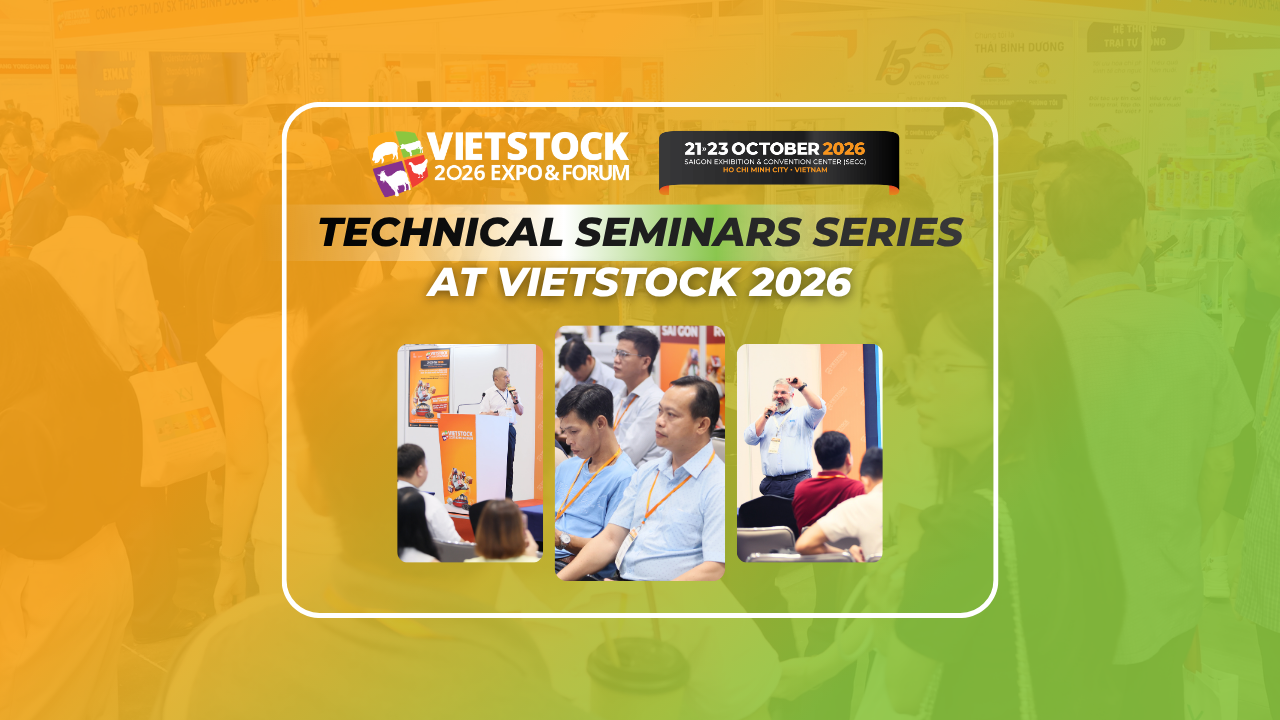
Alongside the exhibition and business-networking activities, VIETSTOCK 2026 will also organize an On-Farm Seminar Series, bringing practical knowledge on herd and flock management, disease prevention, biosecurity, and livestock-production efficiency to key livestock regions.
Date: 21–23 October 2026
Venue: Saigon Exhibition and Convention Center – SECC, 799 Nguyen Van Linh Street, Tan My Ward, Ho Chi Minh City, Vietnam
Event website: https://www.vietstock.org/en/
👉 Register to visit VIETSTOCK 2026 and explore solutions that support more proactive quarantine procedures and operational coordination.
👉 Learn more about the VIETSTOCK 2026 On-Farm Seminar Series.
CONTACT INFORMATION:
Exhibiting: Ms. Sophie Nguyen – [email protected]
Visitor Support: Ms. Phuong – [email protected]
Marcom Support: Ms. Anita Pham – [email protected]