Oxytetracycline in Veterinary Medicine: Characteristics, Scope of Use, and Safety Considerations
Oxytetracycline is widely used in veterinary medicine, but its appropriate use depends on the specific product, animal species, indication and route of administration. Explore its formulations, applications, safety considerations, antimicrobial resistance and withdrawal-time management in livestock production.
Oxytetracycline is an antibiotic in the tetracycline class used in veterinary medicine to treat certain bacterial infections caused by susceptible organisms in a range of animal species.
Rather than being available in only one dosage form, oxytetracycline may be formulated as soluble powders, injectable solutions, long-acting preparations, tablets, boluses, or topical products, depending on the product and market.
This variety can lead to a common mistake: assuming that all products containing oxytetracycline can be used in the same way. In practice, individual products may differ in their authorised animal species, indications, routes of administration, absorption characteristics, duration of action, and withdrawal times.
For orally administered products, effectiveness may also be affected by the mineral content of feed or drinking water. Ions such as calcium, magnesium, and iron can form complexes with tetracyclines and reduce the amount of drug absorbed through the gastrointestinal tract.
For this reason, the use of oxytetracycline should not begin with only the question, “What diseases does this medicine treat?” Several factors should be considered together:
- Whether the pathogen is likely to be susceptible to tetracyclines.
- Whether the product is authorised for the relevant animal species and condition.
- Whether the dosage form and route of administration are appropriate.
- Whether the animals are actually receiving the intended amount of medicine.
- How the withdrawal period should be managed after treatment.
Inappropriate use may reduce treatment effectiveness, increase selection pressure for antimicrobial resistance, and raise the risk of antibiotic residues in livestock products.
Before using oxytetracycline: 4 key issues to distinguish
Rather than memorising a list of diseases or animal species, oxytetracycline can be approached through four key considerations.
The right pathogen
Oxytetracycline has a relatively broad spectrum of activity, but “broad-spectrum” does not mean it can treat every infectious disease. Effectiveness depends on whether the causative bacteria remain susceptible to tetracyclines.
The right formulation
Oral, injectable, long-acting, and topical formulations are used differently. They should not be substituted for one another simply because they contain the same active ingredient.
The right conditions of use
With oral administration, water or feed intake and the presence of certain minerals may affect the amount of medicine actually absorbed.
The right post-treatment management
Withdrawal time is specific to the individual product. There is no single withdrawal period that applies to all oxytetracycline products.
1. One active ingredient does not mean all oxytetracycline products are the same
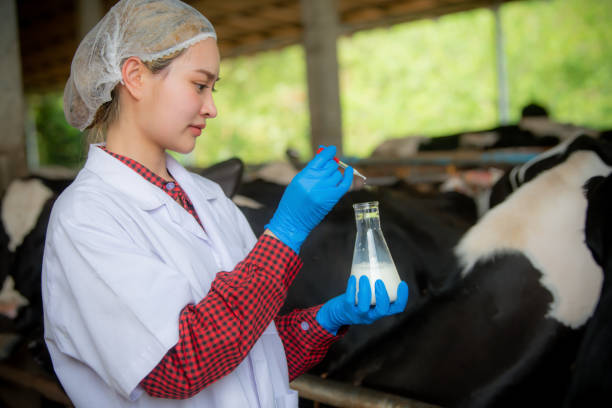
Oxytetracycline is a tetracycline antibiotic originally derived from Streptomyces rimosus.
It works by binding to the 30S subunit of the bacterial ribosome, thereby interfering with the protein synthesis required for bacterial growth and replication.
Oxytetracycline is primarily considered a bacteriostatic antibiotic.
Its spectrum of activity may include certain:
- Gram-positive bacteria.
- Gram-negative bacteria.
- Mycoplasma.
- Chlamydia.
- Rickettsia.
However, the theoretical spectrum of activity does not mean that every strain within these groups remains susceptible.
Susceptibility may vary according to:
- Bacterial species.
- Bacterial strain.
- Geographical area.
- Individual farm.
- History of antimicrobial use.
- Selection pressure within the herd or flock.
When disease recurs, treatment fails, or a herd or flock has a history of repeated tetracycline use, sample collection, bacterial culture, and antimicrobial susceptibility testing, where feasible, may help veterinarians make a more evidence-based treatment decision.
Products labelled “oxytetracycline” may still be very different
An oxytetracycline product is not defined only by the name of its active ingredient.
Other factors should also be considered:
- Strength or concentration.
- Dosage form.
- Excipients.
- Target species.
- Indications.
- Route of administration.
- Frequency of administration.
- Treatment duration.
- Injection-site requirements.
- Withdrawal time.
For example, a long-acting injectable oxytetracycline product should not be considered equivalent to a water-soluble product simply because both contain the same active ingredient.
Likewise, the duration of action of one long-acting formulation cannot be assumed to apply to every product labelled “long-acting.”
2. When may oxytetracycline actually be appropriate?
Oxytetracycline should not be selected solely on the basis of a disease name or a single clinical sign.
Its use should be based on:
- An appropriate diagnosis.
- The likelihood that the causative organism remains susceptible to tetracyclines.
- Animal species.
- Approved product indications.
- Route of administration.
- Veterinary assessment.
The clinical situations below represent areas in which certain products may have approved indications. They do not mean that every oxytetracycline product is authorised for all of these conditions.
Respiratory diseases
Some oxytetracycline products may be authorised for respiratory infections caused by susceptible bacteria, such as:
- Certain infections associated with Pasteurella multocida.
- Certain cases associated with Mannheimia haemolytica in cattle.
- Certain Mycoplasma infections in poultry or other species where consistent with the product indication.
- Certain bacterial respiratory diseases in pigs.
For Mycoplasma gallisepticum in poultry, tetracyclines may help reduce clinical signs in some cases, but they may not completely eliminate infection or the carrier state.
Therefore, antibiotics do not replace:
- Biosecurity.
- Breeding flock control.
- Vaccination.
- Disease surveillance.
Gastrointestinal diseases
Diarrhoea in piglets, calves, or buffalo calves is not automatically an indication for oxytetracycline.
Diarrhoea may be associated with:
- Bacteria.
- Viruses.
- Parasites.
- Nutrition.
- Feed management.
- Water quality.
- Housing conditions.
Oxytetracycline should only be considered when there is a reasonable basis to suspect a bacterial infection caused by a susceptible organism and when the product has an appropriate indication.
Antibiotics should not be selected solely on the basis of:
- Faecal colour.
- Number of days of diarrhoea.
- Reduced feed intake.
Reproductive infections
Some products may have indications for reproductive infections caused by susceptible bacteria.
Examples may include:
- Certain postpartum uterine infections.
- Certain reproductive infections in sows.
- Certain diseases associated with Chlamydia abortus in sheep or goats.
However, not every case of:
- Metritis.
- Endometritis.
- Abnormal vaginal discharge.
- Delayed postpartum recovery.
requires oxytetracycline.
Drug selection should take into account:
- Time since parturition.
- General condition of the animal.
- Suspected pathogen.
- Severity of disease.
- Professional diagnosis.
Skin, soft tissue, and certain foot infections
Some products may be used for:
- Infected wounds.
- Certain skin infections.
- Soft-tissue infections.
- Certain cases of foot rot in cattle when consistent with the approved indication.
Infectious foot diseases should be clearly distinguished from non-infectious conditions.
A broad term such as “hoof inflammation” should not be used as the sole basis for antibiotic treatment.
Conditions such as:
- Laminitis.
- Sole ulcers.
- White line disease.
should not automatically be assumed to be bacterial infections requiring oxytetracycline.
3. Which animal species can oxytetracycline be used in?
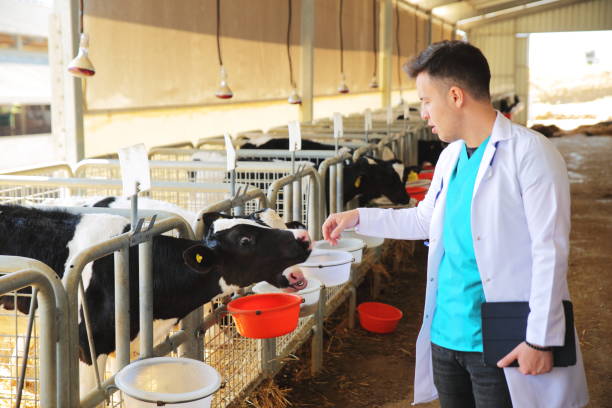
Oxytetracycline is included in veterinary products for a range of animal species, but not every formulation is authorised for every species.
In Vietnam, the authorisation status of veterinary medicines should be checked against current regulatory documents and databases, including Circular No. 18/2024/TT-BNNPTNT and relevant updates.
Pigs
Some products for pigs may be indicated for:
- Respiratory infections.
- Gastrointestinal infections caused by susceptible bacteria.
- Certain reproductive infections.
- Certain secondary bacterial infections.
Oxytetracycline should not be used simply because pigs are coughing or have diarrhoea without first assessing the likely cause.
Poultry
In chickens, ducks, or Muscovy ducks, some products may be authorised for:
- Certain respiratory infections.
- Certain conditions associated with Mycoplasma.
- Certain infections caused by susceptible bacteria.
The production category should be checked carefully.
A product authorised for broilers should not automatically be assumed suitable for poultry producing eggs for human consumption.
If the label states:
Do not use in birds producing eggs for human consumption.
a withdrawal period for eggs should not be independently assumed in order to use the product outside its authorised conditions.
Cattle
Some products may be authorised for:
- Respiratory infections.
- Certain bacterial foot diseases.
- Certain reproductive infections.
- Certain systemic infections.
For lactating dairy cattle, the following should be checked separately:
- Whether the product is authorised for use in lactating animals.
- Indications.
- Route of administration.
- Milk withdrawal time, where applicable.
If a product is not authorised for cattle producing milk for human consumption, an off-label withdrawal period should not be independently assumed.
Sheep and goats
Depending on the product, oxytetracycline may be indicated for:
- Certain Chlamydia-associated diseases.
- Respiratory infections.
- Certain postpartum infections.
- Soft-tissue infections.
Product selection should still be based on the specific authorised indication.
Aquaculture
In some countries and for certain products, oxytetracycline may be authorised for use in specific aquaculture species.
However, the scope of use varies considerably between markets.
Before use, confirm:
- Product.
- Aquaculture species.
- Indication.
- Directions for use.
- Withdrawal time.
- Current regulations.
Instructions from one country should not be applied directly to another market.
4. A key consideration with oral oxytetracycline: minerals may reduce absorption
One characteristic of tetracyclines that requires particular attention is their interaction with multivalent cations in the gastrointestinal tract.
When oxytetracycline is administered orally, absorption may be reduced when the medicine is given together with sources containing high levels of:
- Calcium.
- Magnesium.
- Iron.
- Certain other multivalent cations.
These ions can form complexes with tetracyclines, reducing the amount of medicine available for absorption through the gastrointestinal tract.
This means that a dosage calculation may be correct on paper while the animals still fail to achieve the intended drug exposure if the conditions of use are inappropriate.
This interaction is mainly relevant to oral administration
Mineral interactions should not be described in the same way for every route of administration.
Complex formation in the gastrointestinal tract is particularly relevant to oxytetracycline administered through:
- Drinking water.
- Feed.
- Certain direct oral formulations.
For injectable formulations, absorption characteristics and potential interactions should be assessed according to the specific product.
Why is extra caution needed in adult ruminants?
Therapeutic oral tetracycline administration should not be treated as universally appropriate for adult ruminants.
Reasons may include:
- Poor absorption.
- Potential effects on rumen microflora.
- Digestive physiology that differs from monogastric animals.
Therefore, such use should only be considered when the product is clearly authorised for:
- The species.
- The route of administration.
- The specific indication.
5. Oral, injectable, and long-acting formulations: the choice is not only about convenience
Oxytetracycline is available in several dosage forms, each with different factors that need to be controlled.
| Dosage form | Key consideration |
| Soluble powder/oral administration | Actual medicine intake depends on the amount of water or feed consumed |
| Injectable formulation | The correct route, injection site, and product directions must be followed |
| Long-acting formulation | Do not assume one duration of action applies to all products |
| Tablet or bolus | Use only for the authorised species, product, and route |
| Topical formulation | Does not replace systemic treatment when infection is widespread or systemic disease is present |
Soluble powders
Some products may be administered:
- Through drinking water.
- Through feed where permitted by the label.
This can be convenient when treating a group of animals.
However, the amount of medicine received by each animal depends on:
- Water intake.
- Feed intake.
- Disease status.
- Access to feeders or drinkers.
- Uniformity within the herd or flock.
Severely affected animals are often those that reduce feed or water intake the most. They may therefore receive less medicine than expected.
The medicine concentration should not be increased without veterinary guidance to compensate for this problem.
Injectable formulations
Some injectable products may be authorised for:
- Intramuscular administration.
- Subcutaneous administration.
Not every injectable formulation should be assumed suitable for both routes.
When administering injections, follow the product instructions regarding:
- Route of administration.
- Injection site.
- Maximum volume per injection site, where specified.
- Dosing interval.
- Storage conditions.
Long-acting formulations
Some products are designed to release oxytetracycline over a longer period.
However, the term “long-acting” does not represent one universal standard for:
- Duration of action.
- Dosing interval.
- Withdrawal time.
These parameters depend on the individual formulation.
The dosing schedule of one long-acting product should not be applied to another.
Tablets or boluses
These dosage forms may be available in some markets.
The availability of a bolus or tablet does not mean that oral tetracycline administration is generally appropriate for all large livestock species.
Particular caution is required in adult ruminants, as discussed above.
Topical formulations
Some products may be available as:
- Ointments.
- Topical solutions.
- Other externally applied products.
They should only be used on the sites and conditions specified on the product label.
Topical treatment should not be used as a substitute for systemic treatment when an animal has a widespread infection or systemic signs of disease.
6. Why can treatment fail even when oxytetracycline has been used?
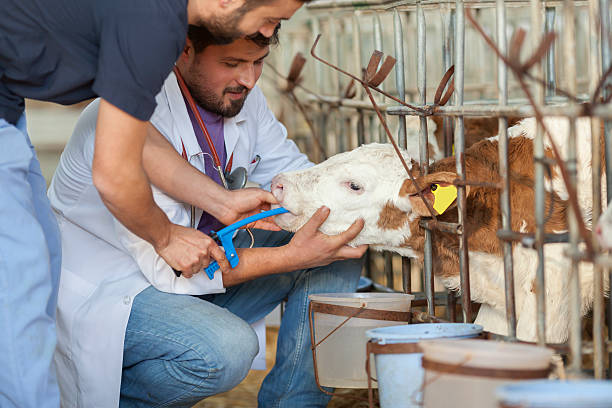
When an animal does not improve as expected, the immediate conclusion should not be:
“Oxytetracycline is no longer effective.”
Nor should the response automatically be to:
- Increase the dose.
- Extend the treatment period.
- Add several other antibiotics.
- Keep switching antibiotics.
Treatment failure can have several possible causes.
The initial diagnosis may not have been appropriate
The condition may be caused by:
- Viruses.
- Parasites.
- Nutritional factors.
- Environmental disorders.
- Non-infectious lesions.
- Multiple interacting causes.
In these situations, oxytetracycline may not address the primary cause.
The animals may not be receiving enough medicine
This is particularly relevant when medicine is administered through drinking water or feed.
A sick herd or flock may:
- Eat less.
- Drink less.
- Have uneven consumption between individuals.
As a result, the amount of medicine actually received by each animal may differ significantly from the calculated amount.
Oral absorption may be affected
Calcium, magnesium, iron, and certain other cations can reduce gastrointestinal absorption of tetracyclines.
This is one factor to investigate when an oral formulation is being used.
The bacteria may have reduced susceptibility or developed tetracycline resistance
Antimicrobial resistance is another possible explanation.
This may be associated with:
- Long-term selection pressure from tetracycline use.
- Circulation of resistant bacteria.
- Transfer of resistance genes between bacteria.
- Inappropriate antimicrobial use within the herd or flock.
When should bacterial culture and antimicrobial susceptibility testing be considered?
Particularly when:
- Disease recurs.
- Treatment does not produce the expected response.
- A previously effective regimen is becoming less effective.
- The herd or flock has received multiple antibiotics.
- A more evidence-based antibiotic choice is needed.
Where feasible, sample collection, bacterial culture, and antimicrobial susceptibility testing can provide additional information before treatment is changed or prolonged.
7. Situations requiring caution before using oxytetracycline
Oxytetracycline is not appropriate for every animal or every clinical condition.
Situations requiring particular attention may include:
- Pregnant animals.
- Young animals with developing bones and teeth.
- Animals with kidney disease.
- Animals with severe systemic disease.
- Animals receiving multiple other medicines.
- Cases in which the cause of disease has not yet been identified.
Tetracyclines can bind to calcium and may be deposited in developing bones, teeth, or foetal tissues.
This does not mean that oxytetracycline is absolutely contraindicated in every young or pregnant animal. However, its use should follow the product label and an appropriate veterinary benefit–risk assessment.
Kidney disease
Additional caution is required in animals with impaired renal function because elimination of certain tetracyclines may be affected.
Viral diseases
Oxytetracycline does not directly treat viral diseases.
Using an antibiotic for a purely viral infection:
- Does not act against the primary pathogen.
- Creates unnecessary antimicrobial exposure.
- May contribute to selection pressure for antimicrobial resistance.
Antibiotics should only be considered where an appropriate secondary bacterial infection is present and professional assessment supports their use.
Do not combine medicines without professional guidance
Oxytetracycline should not be independently combined with multiple antibiotics or other medicines without an appropriate professional basis.
Inappropriate combinations may:
- Fail to improve effectiveness.
- Increase the risk of adverse reactions.
- Complicate assessment of treatment response.
- Increase antimicrobial selection pressure.
- Complicate withdrawal-time management.
8. Controlling oxytetracycline resistance starts with reducing unnecessary antimicrobial use

Antimicrobial resistance does not arise solely because of a single course of treatment being “too short.”
It is influenced by the broader context of:
- Overall antimicrobial use.
- Frequency of exposure.
- Transmission of resistant bacteria.
- Biosecurity.
- Environment.
- Herd or flock management.
Practices that may increase selection pressure include:
- Reducing the dose to save costs.
- Stopping treatment early as soon as animals appear to improve.
- Extending treatment beyond product directions.
- Repeating an old treatment regimen without reassessing the diagnosis.
- Frequently switching antibiotics.
- Combining medicines without justification.
- Using antibiotics as a substitute for hygiene and vaccination.
- Failing to conduct antimicrobial susceptibility testing in recurrent or treatment-failure cases where testing is feasible.
- Routine use of antibiotics for disease prevention in ways that do not comply with current regulations.
Under Vietnam’s phased roadmap, the final transitional deadline for veterinary medicines containing antibiotics authorised for disease prevention expired on 31 December 2025.
Therefore, oxytetracycline should not be routinely added to feed to:
- Prevent disease on a scheduled basis.
- “Keep the herd healthy.”
- Compensate for poor housing conditions.
- Compensate for inadequate vaccination or biosecurity programmes.
Reducing antibiotic use starts with better herd and flock management
Farms may reduce the need for treatment by improving:
- Hygiene.
- Disinfection.
- Biosecurity.
- Vaccination programmes.
- Stocking density.
- Ventilation.
- Nutrition.
- Water quality.
- Control of incoming animals.
- Early detection of abnormal animals.
The objective is not only to use oxytetracycline more appropriately, but also to reduce how often the farm needs antibiotics at all.
9. Residue management starts with the correct product, not only the active ingredient
A common question is:
“How many days is the withdrawal period for oxytetracycline?”
That question does not provide enough information.
There is no single withdrawal time that applies to all oxytetracycline products.
First question: is the product authorised for that production group?
Before calculating a withdrawal period, check:
- Is the product authorised for the species?
- Is it authorised for animals producing milk?
- Is it authorised for poultry producing eggs for human consumption?
If the label prohibits use in a particular production group, a withdrawal time should not be independently assumed in order to use the product outside its authorised conditions.
Withdrawal time is specific to each product
A withdrawal time is the minimum period specified for an individual product between the final administration and the point at which food derived from the treated animal may enter the food chain.
This period may apply to:
- Meat.
- Milk.
- Eggs.
- Other food products.
Withdrawal time may depend on:
- Product.
- Species.
- Dosage form.
- Route of administration.
- Dose.
- Treatment schedule.
- Type of food product being collected.
For example, a long-acting injectable product may have a different withdrawal period from a water-soluble formulation.
The withdrawal time of one product must not be applied to another simply because both contain oxytetracycline.
MRL is different from withdrawal time
MRL – Maximum Residue Limit is the maximum permitted level of a residue in a specific food product.
MRLs may vary according to the species, tissue or food product, and applicable regulations.
In Vietnam, maximum residue limits for veterinary medicines in food are addressed under Circular No. 24/2013/TT-BYT of the Ministry of Health, except where a corresponding national technical regulation applies.
The distinction is important:
MRL = the maximum permitted residue level in food.
Withdrawal time = the period that must be observed after the final administration to help ensure that food products meet residue requirements when the medicine is used according to its authorised conditions.
10. From the start of treatment to the day of sale: an oxytetracycline control process

Instead of checking residue risk only on the day animals are sold, farms should begin managing it from the start of treatment.
Before treatment
Check:
- Correct product.
- Correct species.
- Correct indication.
- Correct route of administration.
- Any restrictions relating to milk or eggs.
- Withdrawal time stated on the label.
At the start of treatment
Record:
- Trade name of the medicine.
- Active ingredient.
- Product batch number where traceability is required.
- Start date.
- Individual animal or livestock group.
- Dose.
- Route of administration.
During treatment
Monitor:
- Treatment response.
- Water or feed intake when using oral medication.
- Each administration.
- Other medicines used at the same time.
- Adverse reactions, if any.
If the animal does not respond as expected, the dose should not be increased or treatment extended without reassessing the cause.
At the final dose
Record accurately:
- Date of the final dose.
- Time, if required by the farm management system.
- Withdrawal time.
- Earliest permitted date for sale.
Before entering the food chain
Check again:
- Has the animal completed the withdrawal period?
- Was another medicine used with a longer withdrawal time?
- Is milk or egg collection still subject to withholding?
- Has the treated group been correctly identified?
- Are treatment records complete?
Residue management should not depend on memory.
If the exact product or final-dose date cannot be confirmed, the information should be verified before the animal or its products enter the food chain.
11. Frequently asked questions about oxytetracycline

Is oxytetracycline a broad-spectrum antibiotic?
Yes.
Oxytetracycline is considered a relatively broad-spectrum antibiotic and may act against several groups of bacteria as well as certain microorganisms such as Mycoplasma and Chlamydia.
However, “broad-spectrum” does not mean that it:
- Is effective against every bacterium.
- Treats every disease.
- Can be used without a diagnosis.
- Makes antimicrobial susceptibility testing unnecessary when disease recurs or treatment fails.
Actual bacterial susceptibility can vary over time and between locations.
Can oxytetracycline be used in pigs, chickens, and cattle?
Potentially, depending on the specific product.
Veterinary products may be registered for:
- Pigs.
- Poultry.
- Cattle.
- Sheep.
- Goats.
- Certain other species.
Each product may only be authorised for certain species, diseases, and routes of administration.
Check:
- Product name.
- Species.
- Indication.
- Route of administration.
- Directions for use.
- Withdrawal time.
- Milk or egg restrictions.
Why do minerals matter with oral oxytetracycline?
Oxytetracycline can form complexes with ions such as:
- Calcium.
- Magnesium.
- Iron.
This can reduce gastrointestinal absorption.
For oral products, feed composition, water composition, and mineral supplementation may therefore need to be considered.
The method of administration should not be changed without guidance from the product label or a veterinarian.
Is the withdrawal time the same for all products?
No.
Withdrawal time depends on:
- Product.
- Dosage form.
- Route of administration.
- Species.
- Treatment regimen.
- Type of food product.
A long-acting formulation may have different requirements from an oral product.
Withdrawal times for meat may differ from those for milk or eggs.
If a product is not authorised for animals producing milk or eggs for human consumption, another withdrawal period should not be independently applied to justify its use.
Managing Oxytetracycline and Reducing Antibiotic Dependence at VIETSTOCK 2026
Oxytetracycline is most effective when used for the correct indication, species, and product, and when the causative organism remains susceptible. At farm level, managing this antibiotic should also include monitoring treatment response, controlling antimicrobial resistance, recording medicine use, and complying with withdrawal times to reduce the risk of residues in livestock products.
At VIETSTOCK 2026 – Vietnam’s Premier International Feed, Livestock & Meat Industry Show, farmers, veterinarians, and businesses can explore products, technologies, and solutions related to animal health, veterinary medicine, and biosecurity. The event is expected to bring together more than 300 brands, over 10,000 sqm of exhibition area, and 13,000 trade visitors from more than 40 countries and territories.
At the event, participants can explore solutions that support responsible antimicrobial use and help reduce the need for antimicrobial treatment on farms, including:
- Veterinary medicines and animal health solutions: exploring products, indications, dosage forms, and appropriate use for different livestock groups.
- Diagnostics and antimicrobial susceptibility testing: accessing technologies that support pathogen identification and more informed treatment decisions when disease recurs or response is poor.
- Medicine-use and residue management: learning about solutions for recording treatment history, administration dates, and withdrawal periods before animals are sold.
- Biosecurity and disease prevention: exploring solutions for disease control, hygiene, and farm management that help reduce disease pressure and the need for antibiotics.
- Nutrition and alternatives to antibiotics: exploring approaches that support animal health and reduce reliance on antibiotics in livestock production.
In particular, the One Health Forum on 22 October 2026 will include topics directly related to this issue, such as practical solutions for reducing antimicrobial resistance (AMR) in livestock production, alternatives to antibiotics, and gut microbiome modulation to improve resilience and stability. The programme also places reduced dependence on antibiotics within the broader context of nutrition, farm management, biosecurity, and hygiene, making it relevant to farms seeking better disease control without excessive reliance on antimicrobial treatment.
Date: 21–23 October 2026
Venue: Saigon Exhibition and Convention Center (SECC), 799 Nguyen Van Linh Street, Tan My Ward, Ho Chi Minh City, Vietnam
Event website: https://www.vietstock.org/en/
👉 VIETSTOCK 2026 Visitor Registration Information
👉 Learn more about the One Health Forum
Contact information:
Exhibiting: Ms. Sophie Nguyen – [email protected]
Visitor Support: Ms. Phuong – [email protected]
Marcom Support: Ms. Anita Pham – [email protected]