Amoxicillin in Veterinary Medicine: Scope of Use, Antimicrobial Resistance, and Residue Considerations
Amoxicillin is widely used in veterinary medicine, but its use varies by animal species, product, indication, and route of administration. This article explains responsible amoxicillin use, antimicrobial resistance, antibiotic residues, and withdrawal-time management in livestock production.
Amoxicillin is a beta-lactam antibiotic used in veterinary medicine in a range of registered products and formulations for specific animal species, indications, and routes of administration. However, the fact that a product contains amoxicillin does not mean it can be used in the same way in pigs, poultry, and cattle, or that oral, in-feed, and injectable administration can be used interchangeably.
Under farm conditions, the effectiveness of amoxicillin depends on several factors at the same time: the cause of disease, bacterial susceptibility, the correct animal species, the appropriate product, the actual amount of medicine received by the animal, and adherence to the recommended treatment duration.
In addition to treatment effectiveness, another important issue is the management of antibiotic residues in meat, milk, eggs, and other animal-derived products. There is no single withdrawal period that applies to amoxicillin as an active ingredient. The withdrawal time must be determined from the specific product being used.
Therefore, instead of asking only:
“What diseases can amoxicillin treat?”
farmers should ask a more complete set of questions:
Does this disease require an antibiotic, is amoxicillin appropriate, which product is authorised for use, and how should the animals be managed after treatment before they enter the food chain?
The information below provides general background to support this assessment and does not replace veterinary diagnosis, prescribing, or treatment guidance.
If you only need the essentials: 5 questions to ask before using amoxicillin
Instead of memorising a long list of information about the active ingredient, farmers can begin with five practical questions:
| Question to answer | What to check |
| 1. Does the disease actually require an antibiotic? | Amoxicillin is relevant only to bacterial infections caused by susceptible bacteria. It does not directly treat viruses, fungi, or parasites. |
| 2. Is amoxicillin appropriate for the suspected pathogen? | Consider the clinical picture, treatment history, laboratory findings, or antimicrobial susceptibility testing where appropriate. |
| 3. Is this product authorised for the correct species and route of administration? | Check the label, formulation, indications, route of administration, and production category, such as dairy cattle or laying poultry. |
| 4. Are the animals actually receiving the intended amount of medicine? | Weigh or reasonably estimate body weight, calculate the dose correctly, and monitor water or feed intake when medication is administered to a group. |
| 5. When can the animals or their products enter the market? | Record the final dose and follow the withdrawal time specified for the product used. |
These five questions also help reduce three major problems associated with farm use of amoxicillin: inappropriate treatment, antimicrobial resistance, and antibiotic residues.
1. What can amoxicillin do — and what can it not do?
Before discussing dosage or route of administration, it is important to understand the limitations of the active ingredient.
Amoxicillin belongs to the beta-lactam class of antibiotics and the aminopenicillin subgroup.
It works by binding to penicillin-binding proteins (PBPs), interfering with the synthesis and maintenance of the bacterial cell wall. When this process is disrupted in susceptible bacteria, the bacterial cell may lyse and die.
Amoxicillin is therefore considered a bactericidal antibiotic when:
- The pathogen remains susceptible;
- The animal receives an appropriate amount of the medicine;
- The route of administration is appropriate;
- The drug reaches the site of infection;
- The treatment regimen is followed correctly.
Which bacteria may be susceptible to amoxicillin?
Its activity may include certain Gram-positive and Gram-negative bacteria.
Commonly cited examples include:
- Streptococcus spp.;
- Some susceptible strains of Staphylococcus spp.;
- Some strains of E. coli;
- Some Pasteurella spp.;
- Other bacteria depending on the animal species, clinical condition, and approved indications of the individual product.
This list should not be interpreted as:
“If E. coli is detected, use amoxicillin.”
The same bacterial species can contain both susceptible and resistant strains. Previous antimicrobial use within the herd or flock, geographical location, timing, and circulating resistance mechanisms can all affect treatment effectiveness.
Typical situations in which amoxicillin has no direct effect
Viruses
Amoxicillin does not directly treat:
- African swine fever (ASF);
- Avian influenza;
- Foot-and-mouth disease (FMD);
- Other viral diseases.
If an animal has a viral disease together with a secondary bacterial infection, a veterinarian should separately assess whether antibiotic treatment is required.
Fungi
Amoxicillin is not an antifungal drug.
Parasites
It does not treat coccidiosis, helminth infections, or other parasitic diseases.
Mycoplasma
This is a particularly important point.
Amoxicillin acts on bacterial cell wall formation. Mycoplasma, however, lacks a typical cell wall.
For this reason, amoxicillin does not have a direct effect on Mycoplasma.
In a complex respiratory disease involving Mycoplasma together with other bacteria, the possible role of amoxicillin should be assessed based on the bacterial co-infections present and the approved indications of the product.
2. Why can products containing the same amoxicillin active ingredient not always be used in the same way?
A common mistake in practice is to look only at the name of the active ingredient and assume that different products are equivalent.
In reality, the name amoxicillin identifies only the main active ingredient.
A veterinary medicinal product is also defined by factors such as:
- Strength or concentration;
- Dosage form;
- Excipients;
- Route of administration;
- Target species;
- Age group;
- Indications;
- Dosing interval;
- Treatment duration;
- Withdrawal time;
- Storage conditions.
Therefore, two products containing amoxicillin may not be directly interchangeable.
Veterinary amoxicillin and amoxicillin for human use
The active ingredient has the same general mechanism of action in both human and veterinary medicine.
However, products for human and veterinary use are authorised for different populations and conditions.
Veterinary medicines must also address animal-specific issues such as:
- Dosage according to body weight and species;
- Treatment of large groups of animals;
- Residues in food;
- Meat withdrawal periods;
- Milk withdrawal periods;
- Conditions for use in laying poultry;
- Farm-level medicine management requirements.
For this reason, human amoxicillin should not be used in animals without appropriate veterinary direction.
Likewise, veterinary medicines must never be used in humans.
How is amoxicillin combined with clavulanic acid different?
One common mechanism of amoxicillin resistance is the production of beta-lactamase, an enzyme that can inactivate the beta-lactam structure of the antibiotic.
Some products are formulated as:
Amoxicillin + clavulanic acid
Clavulanic acid can inhibit certain beta-lactamases, helping protect amoxicillin from inactivation by these enzymes.
However, this does not mean that:
- Every amoxicillin-resistant bacterium will become susceptible to the combination;
- The combination is always better than amoxicillin alone;
- Farmers can purchase the two active ingredients separately and mix them themselves.
Only registered combination products intended for the correct species and indication should be used, under appropriate professional guidance.
3. Do pigs, poultry, and cattle have the same approved uses for amoxicillin?
No.
The approved scope of use can vary considerably between products.
Instead of relying on a general list of “diseases treated by amoxicillin,” a safer approach is to consider species + clinical condition + specific product.
In pigs
Some amoxicillin-containing products may be authorised for bacterial infections caused by susceptible organisms, including certain conditions involving:
- The respiratory tract;
- The gastrointestinal tract;
- Systemic infections;
- Localised infections.
For example, some product indications may include pathogens such as Pasteurella multocida, Streptococcus suis, or certain strains of E. coli.
However, farmers should not assume:
Pig coughing = use amoxicillin
or
Pig diarrhoea = use amoxicillin.
Respiratory disease or diarrhoea may be associated with:
- Viruses;
- Bacteria;
- Mycoplasma;
- Parasites;
- Environmental factors;
- Multiple interacting causes.
The underlying cause should therefore be assessed before an antibiotic is selected.
In chickens and ducks
Some amoxicillin products may be authorised for poultry through drinking water or feed where the product label permits this route.
Approved indications may include certain infections caused by susceptible bacteria or secondary bacterial infections under appropriate clinical circumstances.
Particular attention should be paid to whether:
- The product is authorised for chickens or ducks;
- It may be used in birds producing eggs for human consumption;
- The intended route of administration is permitted;
- The applicable withdrawal time is followed.
Instructions intended for broiler chickens should not automatically be applied to laying hens.
In cattle
Some amoxicillin products may be authorised for:
- Certain respiratory infections;
- Certain gastrointestinal infections;
- Other infections caused by susceptible bacteria;
- Some cases of mastitis, depending on the specific formulation.
For dairy cattle, checking the product label is particularly important.
A product authorised for beef cattle should not automatically be assumed suitable for dairy cattle producing milk for human consumption.
A milk withdrawal period should not be assumed or extrapolated if the product is not authorised for that production group.
4. Oral or injectable amoxicillin: the choice is not only about convenience
Veterinary amoxicillin is available in several dosage forms.
Administration through drinking water
Some powders or soluble formulations are designed for administration through drinking water.
This can be convenient for treating groups of animals, but one important issue must be considered:
The amount of medicine added to the water system is not necessarily the amount each animal actually receives.
If sick animals:
- Drink less;
- Experience competition at drinkers;
- Receive uneven water distribution;
- Are affected by problems in the water system;
the actual amount of medicine received by individual animals may vary.
The concentration should not be increased simply to “compensate” for lower water intake without professional justification.
Administration through feed
This route should only be used when the specific product is authorised for in-feed administration.
If animals reduce their feed intake while sick, the actual amount of medicine received may also decrease.
Farms should monitor:
- Feed consumption;
- Mixing uniformity;
- The group receiving the medicated feed;
- Treatment duration.
Injectable formulations
Some amoxicillin products are authorised as injectable medicines.
Depending on the product, permitted routes may include:
- Intramuscular injection;
- Subcutaneous injection;
- Another specific route stated on the label.
Not every injectable product is suitable for both IM and SC administration.
An injectable product should also not be added to drinking water simply because it contains the same active ingredient.
The dosage form, excipients, and absorption profile have been designed for a specific route of administration.
5. Before using amoxicillin on a farm, follow a structured assessment process
Instead of separating “medicine use principles” from “common mistakes,” it may be more practical to manage amoxicillin use through a clear sequence of steps.
Step 1: Determine whether the disease requires an antibiotic
First, consider:
- Is there evidence or reasonable suspicion of a bacterial infection?
- Could the disease primarily be viral?
- Could Mycoplasma or parasites be involved?
- Are housing or environmental conditions likely to be the main cause?
Antibiotics should not be used as an automatic response whenever animals:
- Develop a fever;
- Cough;
- Have diarrhoea;
- Reduce feed intake.
Step 2: Check the product
Read the label to confirm:
- Active ingredient;
- Strength;
- Target species;
- Indications;
- Route of administration;
- Dose;
- Frequency;
- Treatment duration;
- Contraindications;
- Withdrawal time.
Do not rely only on the word “amoxicillin” on the front of the package.
Step 3: Determine the amount of medicine the animals need to receive
Dosage may depend on:
- Body weight;
- Product concentration;
- Dosage form;
- Route of administration;
- Treatment regimen.
Inaccurate body-weight estimation can lead to an incorrect dose.
Underdosing
This may lead to inadequate drug exposure and increase the risk of treatment failure.
Exceeding the recommended dose
This may increase:
- The risk of adverse reactions;
- Complications in residue control;
- Risks associated with off-label medicine use.
The dose should not be increased or reduced without an appropriate professional basis.
Step 4: Check whether the animals are actually receiving the medicine
This is particularly important when medication is administered to a group.
For drinking water:
- How much water is the group consuming?
- Are severely affected animals still drinking?
- Is the medicine distributed evenly?
For feed:
- Has feed intake decreased?
- Is the medicated feed mixed uniformly?
- Are there animals or groups that cannot access the medicated feed?
This is one reason why a treatment regimen calculated correctly on paper may still fail to produce the expected response.
Step 5: Monitor and keep records
Records should include:
- Start date;
- Product name;
- Treated herd or flock;
- Dose;
- Route of administration;
- Administration time or schedule;
- End date;
- Date of the final dose;
- Withdrawal time.
These records are useful not only for the current treatment but also if the disease recurs.
6. Treatment failure does not automatically mean the bacteria are resistant to amoxicillin
This is an important distinction.
For example, if a herd or flock receives amoxicillin but does not improve after an appropriate assessment period, the first response should not be:
“The medicine is too weak, so the dose needs to be increased.”
Nor should the immediate conclusion be:
“The bacteria must be resistant to amoxicillin.”
The entire situation should be reassessed.
The initial diagnosis may have been incorrect
The disease may be:
- Viral;
- Caused by Mycoplasma;
- Parasitic;
- Related to environmental conditions;
- Associated with a complex co-infection.
In these situations, changing the amoxicillin dose will not address the primary cause.
The animals may not have received enough medicine
This is particularly likely when medicines are administered through:
- Drinking water;
- Feed.
Sick animals often eat and drink less, meaning the actual dose received can differ significantly from the calculated dose.
The bacteria may have reduced susceptibility or developed resistance
This is another possibility that should be considered.
Bacteria may resist amoxicillin through several mechanisms.
Beta-lactamase production
These enzymes can break down the beta-lactam structure and reduce or eliminate antibiotic activity.
Altered penicillin-binding proteins
Changes in the drug target may reduce amoxicillin binding.
Reduced permeability
Some bacteria may reduce the amount of antibiotic entering the cell.
Increased efflux
Efflux systems may contribute to reduced intracellular antibiotic concentrations in certain bacteria.
Acquisition of resistance genes
Resistance genes can spread between bacteria through different genetic mechanisms.
When should antimicrobial susceptibility testing be considered?
Consultation with a veterinarian is particularly important when:
- Disease repeatedly recurs;
- Several treatment attempts have been unsuccessful;
- The herd or flock has already received several antibiotics;
- Response to a previously effective regimen is becoming poorer;
- A more evidence-based antibiotic selection is needed.
Antimicrobial susceptibility testing does not simply identify “which antibiotic is stronger.” It provides information about the susceptibility of the isolated bacterial strain to the antibiotics tested.
7. Controlling amoxicillin resistance starts with reducing the need for antibiotics
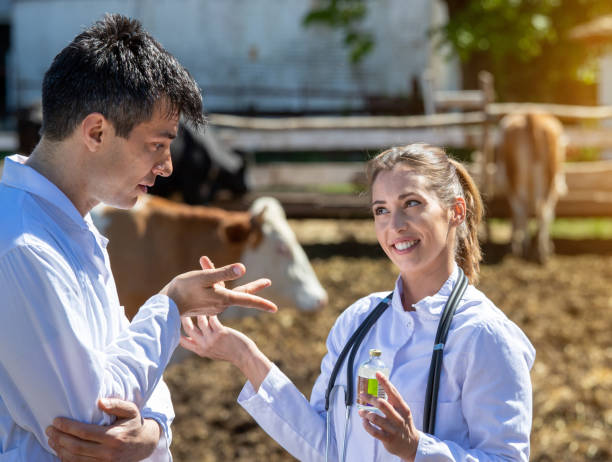
Managing antimicrobial resistance is not only about selecting the right antibiotic once animals are sick.
If a farm needs to use antibiotics repeatedly, an important question is:
Why does disease pressure remain high in the herd or flock?
Factors that may increase the need for antimicrobial treatment include:
- Inappropriate stocking density;
- Poor ventilation;
- Damp housing;
- Weak biosecurity;
- Inadequate hygiene procedures;
- Inappropriate vaccination programmes;
- Inadequate nutrition;
- Poor control of incoming animals;
- Delayed disease detection.
Practices that increase selection pressure
These may include:
- Using antibiotics when they are not necessary;
- Incorrect dosing;
- Incorrect dosing intervals;
- Treating for an inappropriate duration;
- Reusing old treatment regimens without reassessment;
- Using products of unclear origin;
- Failing to conduct diagnostic testing in recurrent cases when appropriate;
- Using antibiotics for disease prevention in ways that do not comply with current regulations.
Under Vietnam’s roadmap for managing antimicrobial use in livestock production, transitional deadlines for veterinary medicines containing antibiotics that had been authorised for disease prevention ended no later than 31 December 2025.
Therefore, routine amoxicillin use should not be built into farm programmes as an “insurance policy” for healthy animals.
The consequences of antimicrobial resistance go beyond switching to another drug
When a treatment regimen loses effectiveness, a farm may face:
- Prolonged disease;
- Higher recurrence rates;
- Increased diagnostic costs;
- Changes to treatment plans;
- Increased mortality or culling;
- Longer production cycles;
- Reduced productivity.
At a broader level, resistant bacteria and associated genetic elements may circulate between:
animals – humans – food – the environment.
This is why antimicrobial resistance should be managed through a One Health approach.
8. Amoxicillin residues: management starts from the final dose, not on the day animals are sold
An important part of safe veterinary medicine use is knowing when treated animals or animal-derived products may enter the food chain.
Residues and MRLs are not the same concept
Drug residues
These are amounts of the active ingredient or related residues that remain in tissues or animal-derived products after an animal has received a medicine.
MRL – Maximum Residue Limit
This is the maximum permitted level of a residue in a specific food product or tissue.
An MRL is not a single value that applies to:
- Every species;
- Meat;
- Milk;
- Eggs;
- Every market.
Therefore, it is not appropriate to ask:
“What is the MRL for amoxicillin?”
without identifying the tissue, food product, animal species, and applicable regulatory framework.
There is also no single withdrawal time for amoxicillin
A withdrawal time is the minimum period following the final administration of a medicine before an animal may be slaughtered or an animal-derived product may enter the food chain under the conditions specified for that medicine.
Withdrawal times may vary according to:
- Product;
- Strength;
- Route of administration;
- Species;
- Treatment regimen;
- Type of food product.
Two products containing amoxicillin may therefore have different withdrawal times.
For this reason, the withdrawal time from one product should not be applied to another product.
Extra caution is needed with milk and eggs
Before asking about a milk or egg withdrawal period, an even more important question should be checked first:
Is the product authorised for use in animals producing that type of food?
If a formulation is not authorised for:
- Dairy cattle producing milk for human consumption;
- Poultry producing eggs for human consumption;
a withdrawal time should not be assumed or calculated independently to justify its use.
9. A simple system to avoid selling animals before the withdrawal period has ended
Residue control should not depend on one person’s memory.
A farm can manage the process through a simple sequence:
Treatment → recording → identifying the treated group → recording the final dose → calculating the end of the withdrawal period → checking before sale.
At the start of treatment
Record:
- Product name;
- Active ingredient;
- Batch number where necessary;
- Herd, flock, or individual animal;
- Start date;
- Dose;
- Route of administration.
During treatment
Monitor and record:
- Each administration;
- Changes to the treatment regimen;
- Other medicines used at the same time;
- Any adverse reactions.
At the final dose
This is a particularly important point.
Record:
- Date;
- Time, if required by the farm SOP;
- Withdrawal time of the specific product;
- Earliest permitted date for sale or entry into the food chain.
Before sale
Check again:
- Is the herd or flock still within a withdrawal period?
- Was another medicine used with a longer withdrawal time?
- Is milk or egg collection still subject to withholding?
- Are there additional buyer or market requirements?
If there is uncertainty, animals or animal-derived products should not enter the food chain until the situation has been verified.
10. Frequently asked questions about the use of amoxicillin
What diseases is amoxicillin commonly used for?
Some products may be authorised for bacterial infections caused by susceptible organisms involving:
- The respiratory tract;
- The gastrointestinal tract;
- Mastitis under appropriate indications;
- Certain joint or tissue infections;
- Certain systemic infections.
However, this is not a universal treatment protocol.
The specific product and the cause of disease should be assessed before use.
Should amoxicillin be given routinely to prevent disease?
It should not be used routinely for disease prevention in ways that do not comply with current regulations.
Disease prevention should rely more heavily on:
- Vaccination;
- Biosecurity;
- Hygiene;
- Environmental management;
- Nutrition;
- Stocking density management;
- Early disease detection.
Does treatment failure mean the bacteria are resistant to amoxicillin?
Not necessarily.
Possible explanations include:
- Incorrect diagnosis;
- A non-bacterial pathogen;
- Mycoplasma;
- Non-susceptible bacteria;
- Inadequate medicine intake;
- Incorrect route of administration;
- Co-infections;
- Continued disease pressure from the farm environment.
When antimicrobial resistance is suspected, the situation should be reassessed and diagnostic testing considered rather than increasing the dose without veterinary guidance.
What should be done if the withdrawal period is uncertain?
The animals or products should not be sold.
Check:
- The exact product used;
- Date of the final dose;
- Withdrawal time on the product label;
- Animal species or production group;
- Type of food product;
- Other medicines used during the same period.
If records are unclear, consult a veterinarian or appropriate professional authority.
Residue testing may be used as part of a farm or supply-chain control programme, but it does not replace compliance with the required withdrawal time.
Can amoxicillin be used together with another antibiotic?
Antibiotics should not be combined without appropriate professional guidance.
Certain treatment regimens or registered combination products may be appropriate when supported by professional assessment, but factors such as the following should be considered:
- Pathogen;
- Susceptibility;
- Animal condition;
- Pharmacology;
- Drug interactions;
- Contraindications;
- Withdrawal time.
Amoxicillin combined with clavulanic acid is an example of a formulated and registered combination product. It is not a reason to mix two separate medicines independently.
From Responsible Amoxicillin Use to Reduced Antibiotic Dependence at VIETSTOCK 2026
Effective amoxicillin use goes beyond choosing the right active ingredient. Farms also need to identify the likely pathogen, monitor the actual amount of medication animals receive, maintain treatment records, and comply with withdrawal periods before animals or animal-derived products enter the food chain. These practices are important for reducing treatment failure, drug residues, and antimicrobial resistance.
At VIETSTOCK 2026, farmers, veterinarians, and businesses can explore solutions that support better disease prevention and more responsible medicine use at farm level, rather than focusing only on treatment after disease has already occurred. During the event, visitors can:
- Explore veterinary medicines and animal health solutions suited to different livestock species and production needs.
- Learn about diagnostic approaches and antimicrobial susceptibility testing that can support more evidence-based antibiotic selection when disease recurs or treatment response is poor.
- Discover technologies for treatment recordkeeping, traceability, and withdrawal-period monitoring.
- Explore solutions related to vaccination, nutrition, biosecurity, and farm environmental management that can help reduce disease pressure and unnecessary antibiotic use.
Alongside the exhibition, the One Health Forum on 22 October 2026 is particularly relevant for those interested in antimicrobial resistance. The program includes topics on practical solutions to reduce antimicrobial resistance (AMR) in livestock production, antibiotic alternatives, and gut microbiota modulation to improve animal resilience, helping participants broaden the discussion from the use of a single active ingredient such as amoxicillin to more sustainable herd-health strategies.
Date: 21–23 October 2026
Venue: Saigon Exhibition and Convention Center – SECC, 799 Nguyen Van Linh Street, Tan My Ward, Ho Chi Minh City, Vietnam
Event website: VIETSTOCK 2026
👉 Learn more about VIETSTOCK 2026
👉 Learn more about the One Health Forum
Contact:
Booth booking: Ms. Sophie Nguyen – [email protected]
Visitor support: Ms. Phuong – [email protected]
Media & marketing support: Ms. Anita Pham – [email protected]