Veterinary Medicines in Livestock Production in 2026: Classification, Principles of Use, and Safety Notes
An overview of veterinary medicines in livestock production, including common types, the 6 rights, withdrawal periods, antimicrobial resistance, and safe-use practices.

Veterinary medicines are an important tool in managing herd and flock health, especially when farms need to prevent disease, support treatment, or control disease risks. This article is for reference only and does not replace diagnosis, prescriptions, or treatment guidance from a veterinarian.
Using veterinary medicines properly helps control disease, protect livestock, and maintain the quality of animal products. In contrast, using the wrong medicine, using the wrong dose, or failing to follow the withdrawal period may cause significant economic losses, increase the risk of antimicrobial resistance, and leave residues that affect food safety.
In today’s livestock production context, requirements related to food safety, traceability, and regulatory compliance are making it increasingly important to understand veterinary medicines correctly. This article provides a general knowledge foundation on classification, principles of use, and essential safety notes. It is suitable for both new livestock farmers and experienced farm owners who want to systematize their knowledge.
Quick Summary
- Veterinary medicines include many different groups: antibiotics, vaccines, antiparasitic medicines, disinfectants, digestive support products, and reproductive regulation products. Each group has its own indications and limitations.
- The “6 rights” principle — the right medicine, right dose, right animal, right route, right timing, and right withdrawal period — is the minimum foundation for safe and effective use.
- The withdrawal period must be strictly followed to reduce the risk of antibiotic residues in meat, eggs, and milk before animals are marketed or products are harvested.
- Antimicrobial resistance may result from the overuse and misuse of antibiotics, causing losses in both treatment effectiveness and the ability to market livestock products.
- Farmers need to understand the basic legal requirements related to banned medicines, restricted-use medicines, and the responsibility to keep records of medicine use.
What Are Veterinary Medicines and Why Are They Important in Modern Livestock Production?
Definition of Veterinary Medicines Under Vietnamese Regulations and Practical Understanding
Under Vietnamese veterinary regulations, veterinary medicines are products used for animals for the purpose of disease prevention, diagnosis, treatment, or regulating physiological functions. When citing the legal definition in an official article, editors should check the exact wording in the Law on Veterinary Medicine and current guiding documents.
In daily production, farmers often understand veterinary medicines in a broader sense. This may include products such as vitamins, oral rehydration electrolytes, digestive enzymes, or disinfectants used for farm facilities. An important point to note is that many products used for livestock may not be classified as medicines in the legal sense, but they should still have a clear source/origin and be used according to instructions.
The Role of Veterinary Medicines in Industrial Livestock Production and Smallholder Farms
Veterinary medicines play a dual role in livestock production: prevention and treatment. In industrial-scale farming, medicines are integrated into a structured production process, with routine vaccination schedules, strict dosage control, and complete records. In smallholder farms, medicine use may be less standardized and therefore more prone to errors if there is no professional guidance.
Regardless of scale, veterinary medicines directly affect three core factors: herd and flock health, production costs, and the quality of final products. When used correctly, medicines may help shorten treatment time, reduce mortality, and maintain productivity. When used incorrectly, costs increase while effectiveness decreases, and long-term consequences may affect the entire herd or flock.
Distinguishing Veterinary Medicines, Vaccines, and Biological Products
These three concepts are often used interchangeably in practice:
- Veterinary medicines: In practice, veterinary medicines are often understood as products used for disease prevention, diagnosis, treatment, or support in controlling diseases in livestock.
- Veterinary vaccines: Biological products containing antigens that stimulate the immune system to develop a protective response against specific pathogens. Vaccines are a proactive disease prevention measure and do not treat an existing disease.
- Biological products: A broader group that includes vaccines, monoclonal antibodies, probiotics, digestive enzymes, and microbial support products.
Some biological products, vaccines, or support products used for animals may be managed under different regulatory mechanisms depending on their intended use, ingredients, and current regulations. Therefore, when using or trading these products, it is necessary to check their specific legal classification on the product label and in relevant regulatory documents.
Understanding these boundaries helps farmers avoid confusion between “injecting a vaccine” and “injecting a medicine,” and helps prevent incorrect expectations about what each product can do.
Current Context: Food Safety Requirements, Antimicrobial Resistance, and the Trend Toward Controlled Medicine Use
In recent years, Vietnam’s livestock sector has faced increasing pressure from multiple sides. Many import markets apply strict requirements for antibiotic residue testing and food safety. Domestic consumers are also paying more attention to the origin and safety of food. In addition, antimicrobial resistance has become a global concern, affecting not only livestock production but also public health.
The general trend is shifting from “using medicine whenever it seems necessary” to “systematic herd health management,” where veterinary medicines are used as a controlled tool in combination with biosecurity, nutrition, and routine health monitoring.
Basic Veterinary Pharmacology Farmers Should Understand
What Is Veterinary Pharmacology and How Is It Linked to Daily Farm Practice?
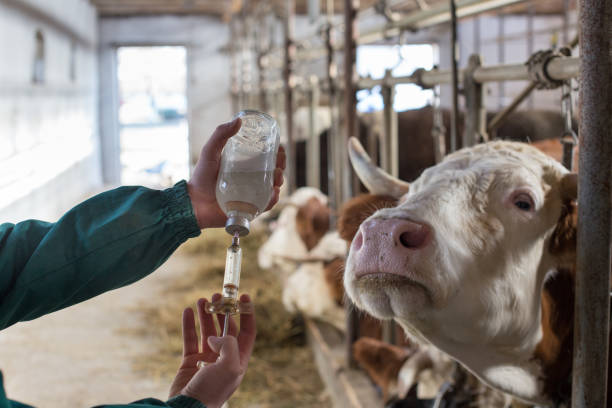
Veterinary pharmacology is the science that studies how medicines affect animals and how animals process medicines. It provides the foundation for farmers and veterinarians to select the right medicine, determine the appropriate dose, choose the correct timing, and understand why different animals may respond differently to the same medicine.
In daily practice, farmers do not need to memorize complex pharmacological theory. However, they should understand the basic principles needed to read product instructions, calculate doses correctly, and recognize signs that a medicine may not be working as expected.
Pharmacodynamics and Pharmacokinetics Explained Simply
Veterinary pharmacology consists of two complementary parts:
- Pharmacodynamics answers the question: How does a medicine act on the animal’s body? For example, one antibiotic may inhibit bacteria by disrupting the bacterial cell wall, while another may stop bacterial protein synthesis. Understanding this mechanism helps explain why not every antibiotic works against the same type of bacteria.
- Pharmacokinetics answers the question: Where does the medicine go in the body and for how long? After an animal is injected with or given medicine orally, the active ingredient is absorbed into the bloodstream, distributed to tissues, then metabolized and eliminated from the body. The withdrawal period before slaughter is based on this process to ensure that the medicine has been sufficiently eliminated.
Factors Affecting Medicine Effectiveness
The same medicine and the same dose may produce significantly different results depending on:
- Species and breed: Pigs, chickens, cattle, and goats absorb and metabolize medicines differently. Some active ingredients that are safe in one species may not be safe in another species or age group. Product-specific indications should always be checked.
- Age and body weight: Young animals often have immature metabolic enzyme systems and may be more prone to overdose.
- Health status: Animals with kidney or liver impairment may eliminate medicines more slowly, increasing the risk of accumulation.
- Environmental temperature: In high temperatures, the absorption and metabolism of medicines may change. Medicines mixed into drinking water may also break down faster in hot environments.
- Diet: Some medicines are absorbed better when animals have an empty stomach, while others are not.
Common Routes of Administration in Livestock Production
| Route of Administration | Advantages | Notes for Use | Commonly Applied For |
| Intramuscular injection (IM) | Fast absorption for some products | Requires proper technique; may cause stress or reactions at the injection site | Some antibiotics, vitamins, or vaccines according to the product label |
| Subcutaneous injection (SC) | Slower absorption for some products | May cause local reactions; requires the correct injection site and technique | Some vaccines or medicines indicated for subcutaneous use according to the product label |
| Oral / mixed into drinking water | Easy to apply and suitable for group treatment | Difficult to control the dose for each animal if animals eat or drink poorly | Some medicines, electrolytes, vitamins, or products approved for use through drinking water |
| Mixed into feed | Convenient when the product is approved for use through feed | Animals with poor appetite may not receive a sufficient dose; difficult to control the amount consumed by each animal | Some medicines or products approved for use through feed according to the product label and veterinary guidance |
| Spraying / topical application | Suitable for disinfection or external parasite control | Effectiveness depends on spraying technique, dilution concentration, and contact time | Disinfection of farm facilities or external parasite control according to product instructions |
Note: The route of administration for veterinary medicines must follow the product label, manufacturer instructions, and veterinary advice. Do not change the route of administration, dosage, or combine multiple medicines without professional guidance.
Classification of Veterinary Medicines by Use
Common Ways to Classify Veterinary Medicines in Production Practice
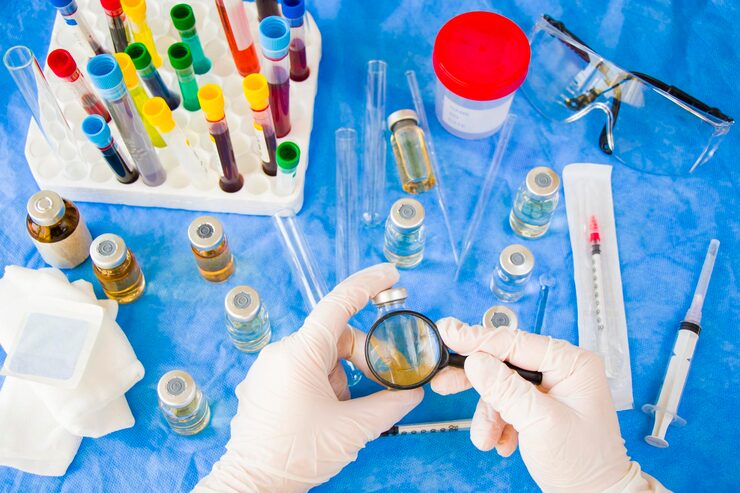
There are many ways to classify veterinary medicines: by origin, mechanism of action, route of administration, or intended use. In production practice, classification by use is the most practical and intuitive approach. It helps farmers identify which type of medicine may be needed in a specific situation.
Overview of Veterinary Medicine Groups
| Medicine Group | Purpose of Use | Important Notes |
| Antibiotics | Treat bacterial infections | Identify the correct bacteria, follow the treatment protocol, and observe the withdrawal period |
| Antiparasitic medicines | Control worms, flukes, ticks, mange mites, lice, and some protozoan parasites such as coccidia | Choose the right product according to the pathogen, animal species, body weight, age, product label, and veterinary guidance |
| Vaccines | Prevent infectious diseases | Do not treat an existing disease; require proper cold-chain storage |
| Disinfectants | Disinfect farm facilities and equipment | Use the correct concentration; do not apply directly to animals unless specifically indicated |
| Anti-inflammatory and antipyretic medicines | Reduce inflammation, pain, and fever symptoms | Support symptom control only; do not replace treatment of the root cause |
| Digestive support products, electrolytes, and probiotics | Support recovery and electrolyte supplementation | Supportive use only; not the main treatment for disease |
| Hormones and reproductive regulation products | Support reproduction under veterinary indication | Must be used under veterinary guidance; may affect animal products |
Veterinary Antibiotics: Spectrum, Indications, and Limitations to Understand
Antibiotics are among the most commonly used medicine groups in livestock production and also one of the groups with a high risk of misuse. Key points to understand include:
- Antibiotics do not kill viruses. For viral diseases, antibiotics do not treat the root cause. They should only be used under veterinary guidance, such as when secondary bacterial infection is suspected or confirmed.
- Each antibiotic group, such as beta-lactams, tetracyclines, fluoroquinolones, and aminoglycosides, has a different spectrum of activity and is suitable for different types of bacteria.
- Antibiotics need to be used at the correct dose and for the full recommended duration. Stopping treatment early when animals appear healthier is a common cause of relapse and resistance.
- Some antibiotic active ingredients may be subject to strict management, restricted use, or professional prescription requirements depending on current regulations.
Internal and External Antiparasitic Medicines
Parasites in livestock production can be divided into two main groups that require different control approaches:
- Internal parasites, such as worms, flukes, coccidia, and toxoplasma: These may include roundworms, flukes, tapeworms, and some protozoan parasites such as coccidia. Control measures should be selected according to the specific parasite, animal species, age group, and veterinary guidance. Not all parasite control should be broadly referred to as “deworming.”
- External parasites, such as ticks, fleas, mange mites, and lice: These may be controlled with topical sprays, baths, or spot-on products depending on the medicine and animal species. Care should be taken to prevent animals from licking the product.
Routine parasite control programs may help reduce disease burden, improve feed absorption, and support farm productivity depending on the conditions of each farm.
Veterinary Vaccines and Immune Products
Depending on the animal species and epidemiological risk, vaccines for diseases such as foot-and-mouth disease, avian influenza, classical swine fever, Newcastle disease, or hemorrhagic septicemia are often important components of disease prevention schedules. Specific vaccination schedules should be developed based on guidance from veterinarians and relevant authorities, in line with the animal species, disease risk in the area, and each farm’s production process.
Important points when using vaccines include:
- Vaccines must be stored according to the product label and manufacturer instructions. Many veterinary vaccines require a cold chain of 2–8°C, while some specialized products may require different storage conditions.
- Do not guess the required storage temperature without checking the product label. A broken cold chain may greatly reduce or eliminate vaccine potency.
- Vaccine effectiveness depends on animal health at the time of vaccination, storage quality, and vaccination technique.
- After vaccination, animals need time to develop immunity. The specific duration depends on each vaccine.
Disinfectants and Farm Sanitation Products
Disinfectants are not used to treat disease in animals. They are used to kill pathogens in the environment. Common disinfectant groups include quaternary ammonium compounds, iodine, chlorine, glutaraldehyde, and phenol. Each group has different effectiveness against bacteria, viruses, and fungi, as well as different levels of material corrosion. The right product should be selected for each purpose.
Anti-inflammatory, Antipyretic, and Pain Relief Medicines
NSAIDs, or non-steroidal anti-inflammatory drugs, are commonly used to control inflammation, fever, and pain during treatment. Corticosteroids also have anti-inflammatory effects but should be used carefully due to the risk of side effects. Long-term use may suppress immunity. These medicines support symptom management and do not treat the underlying cause of disease. Their use should follow veterinary guidance.
Digestive Support Products, Electrolytes, Probiotics, and Supportive Products
This group includes oral rehydration electrolyte solutions, which are especially important when animals have diarrhea or dehydration, as well as digestive enzymes, probiotics, prebiotics, vitamins, and mineral supplements. These products are not the main treatment for disease, but they play a supportive role in recovery and maintaining health during and after treatment.
Hormones and Reproductive Regulation Products
Reproductive hormone products such as oxytocin, prostaglandins, or GnRH should only be used under the indication and supervision of a veterinarian. Farmers need to follow the product label, approved animal species, withdrawal period if applicable, and current food safety regulations.
This group requires veterinary indication and supervision, because incorrect use may cause serious reproductive disorders in breeding animals.
When Should Veterinary Medicines Be Used on the Farm?
Distinguishing Medicine Use for Disease Prevention, Treatment, and Recovery Support
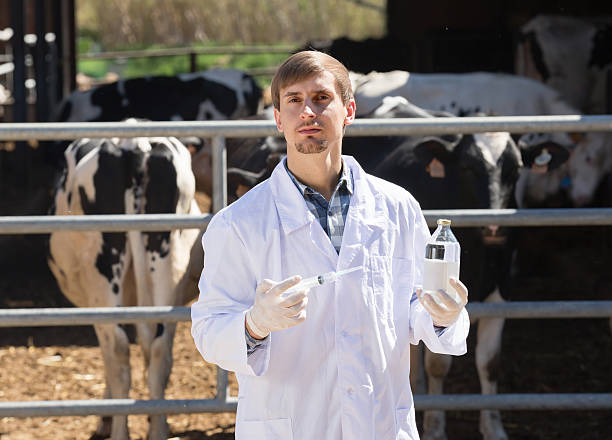
The purpose of medicine use determines the type of product and how it should be used:
- Disease prevention or prophylaxis: This includes scheduled vaccination, cleaning and disinfection of farm facilities, parasite control, and maintenance of biosecurity. Preventive medicine use should be based on epidemiological risk, animal species, production stage, veterinary guidance, product labels, and current regulations.
- Disease treatment: This involves using antibiotics, anti-inflammatory medicines, or specific treatments after the disease has been identified. Diagnosis is necessary, preferably from a veterinarian or an authorized animal health professional.
- Supportive care: This includes electrolytes, vitamins, and probiotics during and after treatment to help animals recover faster.
Signs of Herd or Flock Health Issues That May Require Medicine Intervention and When to Call a Veterinarian
Farmers should monitor animals closely and seek appropriate action when signs appear, such as:
- Poor appetite, reduced feed intake, or abnormal water consumption
- Fever, trembling, depression, or separation from the group
- Diarrhea, bloody feces, or abnormal feces color and odor
- Coughing, breathing difficulty, nasal discharge, or eye discharge
- Pale, yellow, or bluish skin and mucous membranes
- A sudden increase in mortality within the herd or flock
A veterinarian should be contacted immediately when many animals become sick at the same time, the disease progresses quickly, the cause cannot be identified, mortality increases, or animals do not improve after initial handling under professional guidance. Farmers should not use antibiotics or combine multiple medicines on their own before receiving veterinary advice.
When Should Isolation, Culling, or Handling Under Veterinary Guidance Be Considered?
Increasing medicine use is not always the solution. In some cases involving severe disease, suspected dangerous infectious diseases, or a high risk of rapid spread, farms should immediately isolate affected animals and contact a veterinarian or local animal health authority for handling guidance. Decisions on treatment, culling, or disposal must be based on diagnosis, current regulations, and professional risk assessment.
Frequently Asked Questions About Veterinary Medicines in Livestock Production
Can Farmers Buy and Use Veterinary Medicines on Their Own?
Some veterinary products may be used according to label instructions. However, treatment medicines, antibiotics, hormones, or medicines used for serious diseases should be used with veterinary advice. Farmers should not combine medicines on their own or reuse an old prescription for a newly sick herd or flock.
What Is the Withdrawal Period?
The withdrawal period is the time that must pass after medicine use before animals are slaughtered or before eggs, milk, or other animal products are harvested. The purpose is to reduce the risk of medicine residues exceeding permitted levels in food. This period depends on the active ingredient, animal species, route of administration, and product label.
Can Veterinary Vaccines Treat an Existing Disease?
Veterinary vaccines are mainly used for disease prevention by stimulating immunity before animals are exposed to pathogens. Vaccines are not medicines for treating an existing disease. When a herd or flock already shows signs of disease, farmers should contact a veterinarian for diagnosis and appropriate handling guidance.
Should Antibiotics Be Used Routinely for Disease Prevention?
Farmers should not use antibiotics routinely for disease prevention without diagnosis or professional indication. Overuse of antibiotics may increase the risk of antimicrobial resistance, reduce treatment effectiveness, and create residue risks in livestock products.
When Should a Veterinarian Be Called?
A veterinarian should be called when many animals become sick at the same time, the disease progresses quickly, mortality increases, animals have high fever, breathing difficulty, severe diarrhea, prolonged loss of appetite, or the cause cannot be identified. For suspected dangerous infectious diseases, affected animals should be isolated and handled according to professional guidance.
Should Farmers Combine Multiple Veterinary Medicines on Their Own?
Farmers should not combine multiple veterinary medicines without professional guidance. Some medicines may interact, reduce treatment effectiveness, or increase the risk of side effects. When animals are severely sick, the disease spreads quickly, or there is no improvement after medicine use, farmers should contact a veterinarian for diagnosis and appropriate handling guidance.
Explore Veterinary Solutions and Connect with the Livestock Value Chain at VIETSTOCK 2026
Using veterinary medicines properly not only helps control disease within herds and flocks, but is also directly linked to food safety, traceability, production costs, and the competitiveness of livestock businesses. As requirements for disease prevention, antimicrobial resistance control, biosecurity, and export standards become increasingly strict, businesses need greater access to modern veterinary solutions and preventive animal health management models.
VIETSTOCK 2026 will serve as a specialized connection platform for farms, livestock businesses, veterinary medicine suppliers, vaccine providers, biological product providers, farm equipment suppliers, and biosecurity solution providers. The event is expected to bring together more than 300 brands, over 10,000 m² of exhibition area, and 13,000 trade visitors from more than 40 countries and territories. It will create opportunities for the livestock community to update technologies, connect with partners, and find suitable solutions for the next stage of development.
The Vietnam Pavilion at VIETSTOCK 2026 provides a dedicated space for Vietnamese companies to showcase capabilities in animal health, vaccines, biological products, biosecurity, and herd health management. It also enables local solution providers to engage directly with farm owners, distributors, trade buyers, and partners across the livestock value chain.
With support from the Department of Animal Health and Production, companies participating in the Vietnam Pavilion may benefit from preferential participation support of up to 45%. This helps Vietnamese exhibitors optimize their participation costs while improving access to targeted audiences in the animal health, livestock, and biosecurity sectors.
At VIETSTOCK 2026, attendees can:
- Update new solutions in veterinary medicines, vaccines, biological products, and biosecurity for livestock production.
- Meet suppliers, experts, and businesses in the animal health sector.
- Learn about trends in disease management, responsible use of veterinary medicines, and antimicrobial resistance prevention.
- Connect with partners across the entire value chain: feed, breeding stock, animal health, farm equipment, production, and processing.
- Explore opportunities to participate in the Vietnam Pavilion to strengthen brand presence and expand international connections.
Date: 21–23 October 2026
Venue: Saigon Exhibition and Convention Center (SECC), 799 Nguyen Van Linh Street, District 7, Ho Chi Minh City, Vietnam
Event website: https://www.vietstock.org/en/
Visitor registration: https://www.vietstock.org/en/online-registration-2/
If your business provides solutions in animal health, vaccines, biosecurity, or livestock health management, this is also an opportunity to be present at the Vietnam Pavilion and connect directly with the domestic and international industry community.
👉 Book a stand at VIETSTOCK 2026 today to take advantage of a central location, available preferential support, and global connection opportunities.
Contact:
- Exhibiting: Ms. Sophie Nguyen – [email protected]
- Visitor Support: Ms. Phuong – [email protected]
- Marcom Support: Ms. Anita Pham – [email protected]