Farm Disinfectants for Livestock Housing: Active Ingredient Groups, Selection Criteria, and Safety Notes
Learn how to choose farm disinfectants based on active ingredients, target pathogens, livestock housing conditions and surface materials. This guide also covers cleaning, dilution, contact time and essential safety practices for effective farm biosecurity.
Farm disinfectants are chemical or bio-based products used to kill, inactivate, or reduce pathogens on livestock-housing surfaces, equipment, vehicles, pathways, and other areas involved in animal production.
They are an important component of farm biosecurity, but a disinfectant cannot compensate for poor cleaning, uncontrolled access, contaminated equipment, wet bedding, or ineffective waste management.
In practice, disinfection performance depends on several connected factors:
- The target pathogen;
- The amount of manure and organic matter present;
- The active ingredient and product formulation;
- Dilution concentration;
- Contact time;
- Surface material;
- Temperature and moisture;
- Whether animals are present;
- The ability of workers to follow the procedure consistently.
A product that performs well in an empty concrete pig house may not be suitable for routine application in an occupied poultry house. Similarly, a low-odor product used for daily access control may not provide the level of activity required after a serious disease event.
For this reason, farms should select disinfectants by use scenario and pathogen-control objective, not only by price, habit, or advertising claims.
Professional and Safety Note
This article provides general reference information and does not replace product labels, manufacturer instructions, veterinary advice, or guidance from the competent animal-health authority.
When a serious infectious disease is suspected or confirmed, farms should follow the disease-control instructions issued by the responsible veterinary authority. Concentrations should not be increased arbitrarily, and different disinfectants should not be mixed unless the product manufacturer has provided clear compatibility instructions.
Key Takeaways
- There is no single disinfectant that performs equally well against every pathogen and under every farm condition.
- Mechanical cleaning is essential because manure, mud, bedding, feed residues, and biofilms can reduce the activity of many disinfectants.
- Product selection should consider the target pathogen, housing status, surface type, contact time, corrosion risk, worker safety, and whether animals are present.
- Some products may be suitable for occupied livestock areas, but this must be confirmed on the label of the specific product.
- Aldehydes, strong alkalis, phenolic products, and high-concentration chlorine products generally require stricter controls and are more suitable for empty housing.
- Correct dilution does not mean using the strongest possible solution. Excessive concentration can increase toxicity, corrosion, residue, and operating cost.
- Footbaths and vehicle-disinfection points lose effectiveness when contaminated with soil, manure, rainwater, or organic matter.
- Different chemical groups should not be mixed without explicit manufacturer guidance.
- A complete disinfection program should include cleaning, application, contact time, drying or ventilation, documentation, and periodic review.
1. Where Disinfectants Fit Within Farm Biosecurity
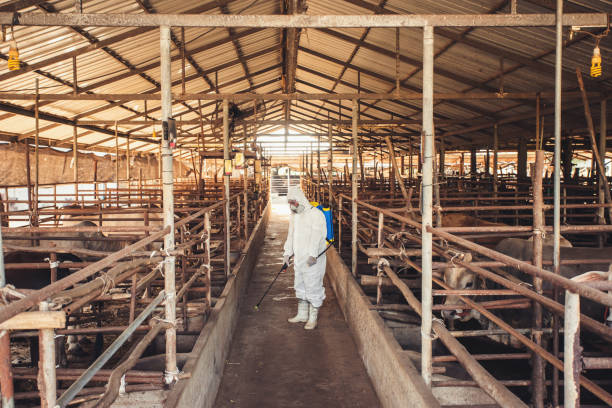
Disinfection is one control layer within a broader biosecurity system.
A complete program may include:
- Farm-access control;
- Separation of clean and dirty zones;
- Vehicle and visitor management;
- Quarantine of incoming animals;
- Cleaning of tools and equipment;
- Waste and mortality management;
- Rodent, insect, and wild-animal control;
- Feed and water hygiene;
- Vaccination;
- Disease surveillance;
- Livestock-housing disinfection.
Disinfectants help reduce pathogen pressure, but they do not replace these other measures.
Cleaning and disinfection are different activities
Mechanical cleaning removes:
- Manure;
- Bedding;
- Mud;
- Dust;
- Feed residues;
- Grease;
- Biofilm;
- Other organic matter.
Disinfection applies a suitable product to reduce or inactivate pathogens remaining after cleaning.
Spraying disinfectant onto a surface still covered with manure usually wastes product and may leave large areas insufficiently treated.
Disinfection and decontamination
The term disinfection generally refers to reducing disease-causing microorganisms on surfaces and in the environment.
The term decontamination is often used more broadly in high-risk situations where farms need to reduce pathogen contamination as far as practicable through coordinated cleaning, chemical treatment, isolation, waste handling, and access control.
The exact terminology may differ among product labels, technical protocols, and regulatory documents.
2. Select the Use Scenario Before Selecting the Product
The same farm may need several disinfectant products for different purposes.
Scenario 1: Routine access control
Typical treatment areas include:
- Footbaths;
- Farm entrances;
- Vehicle wheels;
- Tools entering controlled areas;
- Staff-changing areas;
- Delivery points.
The product should be:
- Suitable for frequent use;
- Compatible with the treated materials;
- Easy to prepare;
- Stable for the required period;
- Effective under the level of contamination expected;
- Safe for workers when used correctly.
The solution should be replaced when visibly dirty or when it has exceeded the manufacturer’s recommended use period.
Scenario 2: Routine disinfection during production
When animals remain in the building, the farm must use only a product specifically labelled or recommended for that use.
Selection should consider:
- Animal species;
- Age and production stage;
- Ventilation;
- Spray-droplet size;
- Respiratory sensitivity;
- Contact with feed and water;
- Product concentration;
- Re-entry or exposure instructions.
A product belonging to a generally lower-toxicity group is not automatically safe to spray over animals.
Scenario 3: Empty housing between production cycles
After animals are removed, the farm has more flexibility to carry out:
- Dry cleaning;
- Washing;
- Biofilm removal;
- Surface treatment;
- Equipment disinfection;
- Longer contact periods;
- Ventilation;
- Drying.
This stage may allow the use of stronger products when appropriate, provided the housing remains empty until all safety and re-entry conditions have been completed.
Scenario 4: Preparation before restocking
Before a new herd or flock arrives, the farm should verify that:
- Cleaning has been completed;
- Surfaces are dry or in the condition required by the product;
- Disinfection has covered all target areas;
- Contact time has been completed;
- Feeders and drinkers have been rinsed if required;
- Chemical odour has dissipated;
- Ventilation has been completed;
- The building is safe for animals to enter.
Scenario 5: Suspected or confirmed disease event
In a high-risk disease situation, product selection should be based on:
- Suspected pathogen;
- Product efficacy claim;
- Required concentration;
- Contact time;
- Surface and organic-matter conditions;
- Temperature;
- Disease-control instructions;
- Areas requiring treatment;
- Frequency of application.
The farm should not automatically repeat its routine weekly product when a higher-risk pathogen is involved.
3. Main Active Ingredient Groups
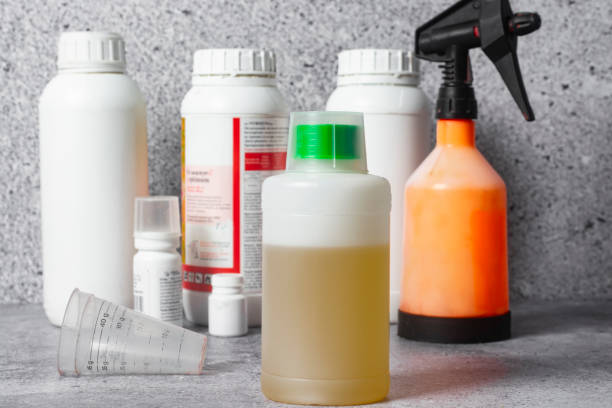
3.1 Chlorine-Releasing Compounds
This group includes products that release active chlorine, such as:
- Sodium hypochlorite;
- Calcium hypochlorite;
- Chloramine-based products;
- Other chlorine-releasing formulations.
Active chlorine acts through oxidation and may be effective against many bacteria, viruses, and fungi when the correct product concentration, contact time, and surface conditions are achieved.
Practical advantages
- Relatively broad activity;
- Rapid action under suitable conditions;
- Common availability;
- Generally low cost;
- Useful for many environmental and equipment applications.
Practical limitations
- Organic matter can greatly reduce effectiveness;
- Some products have a strong odour;
- High concentrations may corrode metals;
- Product activity may decline during storage or after dilution;
- Light, temperature, pH, and water quality may affect some formulations;
- Improper mixing can release dangerous gases.
Best suited for
Depending on the product:
- Cleaned floors and walls;
- Empty housing;
- Equipment;
- Vehicle-treatment points;
- Water-system treatment where specifically permitted;
- Disease-control programs when the label supports the target pathogen.
Important warning
Chlorine products must not be mixed with:
- Acids;
- Vinegar;
- Ammonia;
- Nitrogen-containing cleaners;
- Other chemicals unless the manufacturer specifically confirms compatibility.
Such mixtures may release toxic gases.
Potassium permanganate is an oxidizing agent and is not a chlorine compound. It should be treated as a separate substance and used only according to suitable technical instructions.
3.2 Iodine and Iodophors
Iodophor products release iodine in a form designed to improve stability and handling. PVP-iodine is one commonly recognized example.
These products may provide relatively broad activity against bacteria, many viruses, and fungi when used under appropriate conditions.
Practical advantages
- Broad use across many routine farm-hygiene situations;
- Often less corrosive than strong chlorine solutions;
- Some formulations may be approved for use in occupied areas;
- Useful for certain equipment, entry-control, and environmental applications.
Practical limitations
- Organic matter can reduce performance;
- Some products may leave yellow or brown staining;
- Cost may be higher than basic chlorine products;
- Performance against spores and highly resistant pathogens depends on the formulation and label claim.
Best suited for
Depending on the product:
- Routine farm sanitation;
- Footbaths;
- Equipment;
- Selected occupied-area applications;
- Surfaces where strong corrosion is a concern.
The label of the actual commercial product should be checked rather than assuming that every iodophor has the same safety and efficacy profile.
3.3 Quaternary Ammonium Compounds
Quaternary ammonium compounds, commonly called QACs, include active ingredients such as benzalkonium chloride.
They are widely used in routine cleaning and disinfection programs.
Practical advantages
- Generally low odour;
- Lower corrosion risk on many materials;
- Convenient for frequent use;
- Some formulations combine cleaning and disinfection properties;
- Certain products may be suitable for occupied livestock areas.
Practical limitations
- Organic matter can reduce activity;
- Soap and anionic detergents may inactivate or weaken QACs;
- Activity may be limited against spores;
- Many non-enveloped viruses are more resistant;
- The group may be unsuitable for some high-risk pathogen-control objectives.
Best suited for
Depending on the formulation:
- Routine disinfection;
- Clean surfaces;
- Equipment;
- Footbaths;
- Occupied areas where the product label permits;
- Lower-corrosion applications.
The farm should not use a QAC immediately after an incompatible detergent without rinsing the surface or cleaning the equipment as required.
3.4 Aldehydes
The aldehyde group includes:
- Formaldehyde or formalin;
- Glutaraldehyde;
- Combination products containing aldehydes and other active ingredients.
Aldehydes may have a broad spectrum of activity and may provide stronger performance under suitable conditions. Some formulations can act against highly resistant organisms when used correctly.
Practical advantages
- Broad activity under controlled conditions;
- May be more stable than some other groups in the presence of limited organic contamination;
- May be considered for high-level empty-housing treatment;
- Some combination products provide extended activity.
Practical limitations
- Significant inhalation, skin, and eye risks;
- Strong and persistent odour;
- Requires strict personal protection;
- Requires controlled ventilation;
- May require a long re-entry period;
- Unsuitable for routine uncontrolled use around animals;
- Formaldehyde requires particularly careful risk management.
Best suited for
- Completely empty housing;
- Controlled terminal disinfection;
- High-risk situations under veterinary or technical supervision;
- Applications where sufficient ventilation and waiting time are available.
Workers should not enter treated areas until the required ventilation and re-entry conditions have been met.
3.5 Peroxygen Compounds
This group may include:
- Hydrogen peroxide;
- Peracetic-acid formulations;
- Peroxymonosulfate products;
- Other oxygen-releasing disinfectants.
They act through oxidation and may provide broad activity when the correct formulation and application conditions are used.
Practical advantages
- Broad activity in many commercial formulations;
- Some products break down into substances with lower persistence;
- Selected formulations may be used in occupied areas;
- Useful for surfaces, equipment, and certain water-system applications when labelled.
Practical limitations
- Cost may be higher;
- Some products are sensitive to heat and light;
- Concentrated products may be corrosive;
- Strong formulations may irritate skin, eyes, and respiratory tissues;
- Storage conditions are important.
Best suited for
Depending on the product:
- Empty-housing treatment;
- Equipment;
- Water systems;
- Occupied-area applications specifically permitted on the label;
- Programs targeting a broad range of pathogens.
3.6 Phenols and Phenolic Derivatives
Phenolic products include active ingredients such as cresol and other phenolic derivatives.
They may be effective against many bacteria and some enveloped viruses and can retain activity better than certain disinfectants in environments containing organic material.
Practical advantages
- Relatively persistent activity;
- May perform better than some groups in partially contaminated conditions;
- Can be cost-effective;
- Useful for selected environmental applications.
Practical limitations
- Toxicity risks to people and animals;
- Particularly unsuitable for some sensitive species, including cats;
- Strong odour;
- Potential environmental persistence;
- Limited activity against many non-enveloped viruses;
- Not suitable for food-contact surfaces unless specifically permitted;
- Generally unsuitable for occupied housing unless the label clearly allows use.
Best suited for
- Selected empty-housing applications;
- Non-food-contact environmental areas;
- Situations where the formulation matches the target pathogen and surface.
3.7 Alkalis, Quicklime, and Related Materials
This group includes:
- Quicklime or calcium oxide;
- Hydrated lime or calcium hydroxide;
- Sodium hydroxide;
- Other alkaline substances used in specific sanitation programs.
Quicklime and hydrated lime
Lime may help increase environmental pH and reduce the survival of some pathogens under suitable conditions.
It is commonly considered for:
- Pathways;
- Surrounding ground;
- Selected floor areas;
- Environmental support measures.
However, lime does not eliminate all pathogens and cannot replace a complete disinfection program.
Sodium hydroxide
Sodium hydroxide is a highly corrosive strong alkali. It may inactivate certain pathogens under controlled conditions but presents serious risks to:
- Skin;
- Eyes;
- Respiratory tissues;
- Animals;
- Metals and other materials;
- Wastewater systems.
It should only be used under a defined technical procedure in empty areas.
Practical limitations of alkalis
- Performance depends on concentration, pH, moisture, and contact time;
- Organic matter can interfere with application;
- Strong alkalis are dangerous to workers;
- Material damage may occur;
- Animals must be excluded;
- Thorough rinsing or neutralization may be required according to the procedure.
4. Comparison of Active Ingredient Groups
The following table provides a qualitative comparison. Actual performance depends on the specific commercial product, formulation, label concentration, contact time, temperature, pH, organic matter, and target pathogen.
| Active ingredient group | General activity profile | Organic-matter sensitivity | Corrosion risk | Worker-safety concern | Typical use context |
| Chlorine compounds | Broad against many bacteria, viruses, and fungi | High | Moderate to high | Moderate | Cleaned surfaces, equipment, empty housing |
| Iodophors | Broad routine activity | Moderate to high | Generally lower | Low to moderate | Routine use, equipment, selected occupied areas |
| QACs | Stronger against many bacteria and enveloped viruses | High | Low | Generally lower at label concentration | Routine sanitation and selected occupied areas |
| Aldehydes | Broad, potentially including resistant organisms under suitable conditions | Lower than some groups | Low to moderate | High | Empty-housing terminal disinfection |
| Peroxygen compounds | Broad in many formulations | Variable | Moderate at high concentration | Moderate | Empty housing, equipment, selected occupied applications |
| Phenolic compounds | Good against many bacteria and enveloped viruses | Relatively more tolerant | Low | High | Selected empty environmental areas |
| Alkalis and lime | Variable and highly condition-dependent | Variable | High for strong alkalis | High | Ground, empty housing, controlled specialist use |
This table should not be used as a substitute for a product’s efficacy claim.
5. How to Match a Product to the Target Pathogen
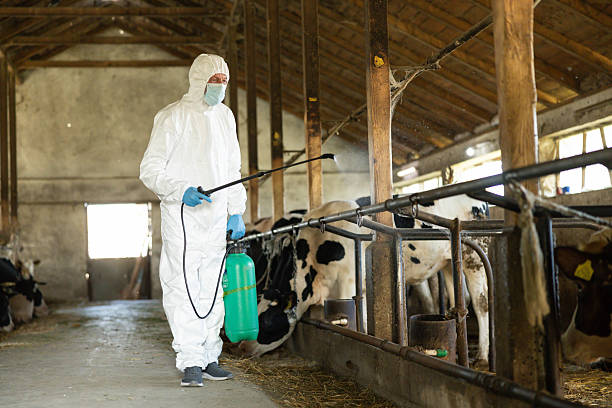
Enveloped viruses
Enveloped viruses are often more susceptible to disinfectants than non-enveloped viruses.
Depending on the formulation and application conditions, several groups may be considered, including:
- Chlorine compounds;
- Iodophors;
- QACs;
- Aldehydes;
- Peroxygen products.
Examples often discussed in livestock production include influenza viruses, Newcastle disease virus, and African swine fever virus.
For serious diseases, farms should use products with efficacy information relevant to the target pathogen and follow official disease-control guidance.
Non-enveloped viruses
Non-enveloped viruses are generally more resistant to many routine disinfectants.
Some QAC products may provide insufficient control. Farms should prioritize products with a clear label claim or technical evidence for the target virus.
Product selection should consider:
- Concentration;
- Contact time;
- Surface cleanliness;
- Temperature;
- Formulation;
- Disease-control instructions.
Bacteria
Many disinfectant groups can reduce bacterial contamination when used properly.
However, performance can be affected by:
- Biofilm;
- Manure;
- Grease;
- Surface cracks;
- Hard water;
- Incompatible detergents;
- Insufficient contact time.
Cleaning remains essential even when using a broad-spectrum bactericidal product.
Fungi
Iodophors, chlorine products, aldehydes, and peroxygen products may provide antifungal activity depending on the formulation.
Persistent moisture problems should also be corrected. Chemical treatment alone will not solve fungal growth caused by leaks or inadequate ventilation.
Bacterial spores
Spores are more resistant than ordinary vegetative bacterial cells.
Only selected formulations and conditions may provide effective sporicidal action. The product label should clearly support the intended use.
Parasites and coccidial oocysts
Routine disinfectants may not reliably control all parasite eggs or oocysts.
Control may require:
- Removal of organic matter;
- Drying;
- Heat;
- Environmental management;
- Specialized products;
- Veterinary guidance.
A general disinfectant should not be assumed to replace a parasite-control program.
6. Selection by Housing Status
Empty livestock housing
When the building is empty, selection may prioritize:
- Broad pathogen activity;
- High-level terminal disinfection;
- Treatment of hidden surfaces;
- Longer contact time;
- Ability to ventilate;
- Re-entry interval;
- Compatibility with equipment.
Aldehydes, selected peroxygen products, chlorine products, and other strong formulations may be considered when the label and risk-control conditions permit.
Housing with animals present
Only use products specifically approved or labelled for this application.
Potential product groups may include selected:
- QAC formulations;
- Iodophors;
- Peroxygen formulations.
Before use, confirm:
- Animal species;
- Application concentration;
- Spray method;
- Required ventilation;
- Distance from feed and water;
- Exposure limitations;
- Re-entry or drying conditions.
Feeders and drinkers
The product should be suitable for surfaces that contact feed or water.
After disinfection:
- Rinse when required;
- Remove residues;
- Allow surfaces to dry;
- Refill only after completing label instructions.
Vehicles
Vehicle products should account for:
- Mud and manure contamination;
- Metal surfaces;
- Tires;
- Undercarriage;
- Loading compartments;
- Corrosion;
- Wastewater control.
Vehicle washing should precede chemical treatment.
Footbaths
The selected product should be:
- Stable for the intended period;
- Suitable for footwear materials;
- Effective under the expected environmental conditions;
- Replaced when contaminated.
A footbath full of mud and manure should not be considered functional simply because it still contains liquid.
7. Selection by Surface Material
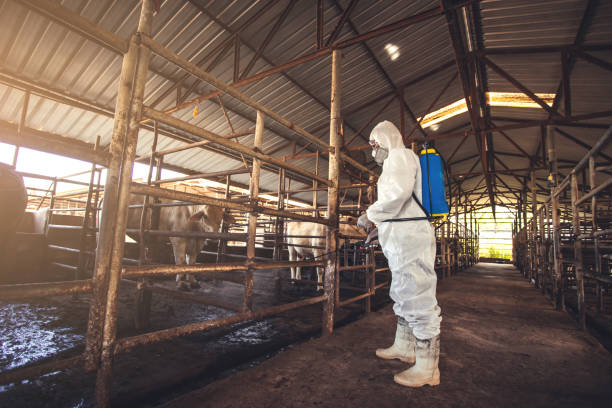
Concrete
Concrete is durable but porous.
Effective treatment may require:
- Removal of organic matter;
- Pressure washing where appropriate;
- Attention to cracks;
- Adequate solution volume;
- Full contact time.
Strong chlorine, alkalis, or oxidizers may affect surfaces or embedded metal over repeated use.
Compacted soil
Liquid disinfectants may be absorbed or neutralized by soil and organic matter.
Environmental management may include:
- Removing contaminated material;
- Drying;
- Lime application where appropriate;
- Improving drainage;
- Limiting access.
The farm should not assume that routine surface spraying will adequately disinfect deep soil contamination.
Wood
Wood is porous and difficult to disinfect.
It can retain:
- Moisture;
- Organic matter;
- Biofilm;
- Pathogens in cracks.
Cleaning and drying are especially important. Strong chemicals may damage the material.
Metal
Selection should consider corrosion.
High concentrations of:
- Chlorine;
- Peroxygen products;
- Strong alkalis;
may damage metal components.
Rinsing, drying, and equipment maintenance may be required.
Plastic and rubber
Many plastics and rubber materials tolerate routine disinfectants at label concentration. However, repeated exposure to strong oxidizers, phenols, aldehydes, or concentrated alkalis may reduce durability.
8. Selection by Farm Type and Operating Capacity
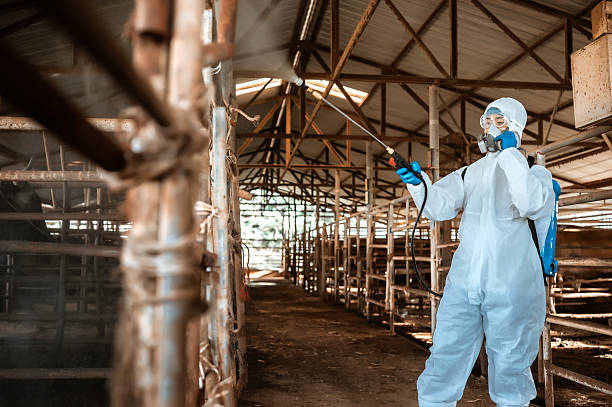
Large industrial farms
These farms may need separate products for:
- Vehicles;
- Empty housing;
- Occupied areas;
- Water lines;
- Equipment;
- Footbaths;
- Disease emergencies.
Selection should consider:
- Automated dosing;
- Application volume;
- Worker training;
- Chemical storage;
- Monitoring records;
- Compatibility with farm equipment;
- Supplier technical support.
Medium-scale farms
The program should balance:
- Spectrum of activity;
- Cost per treated area;
- Ease of dilution;
- Worker safety;
- Equipment availability;
- Frequency of use.
Using fewer products may simplify operations, but one product should not be forced into applications for which it is unsuitable.
Smallholder farms
Affordable products may include selected chlorine products, QAC products, or lime-based environmental measures.
However, low cost should not replace attention to:
- Correct measurement;
- Protective equipment;
- Cleaning;
- Contact time;
- Safe chemical storage;
- Protection of animals and water sources.
9. A Practical Product-Selection Checklist
Before buying a disinfectant, check the following.
Product information
- The product has a clear label;
- Active ingredient and concentration are stated;
- Manufacturer or responsible supplier is identified;
- Expiry date is valid;
- Storage conditions are clear;
- Instructions are available in a language understood by workers.
Target application
- Empty housing or occupied housing;
- Vehicle or pathway;
- Equipment;
- Feed and water contact;
- Footbath;
- Disease emergency;
- Routine weekly sanitation.
Target pathogen
- Bacteria;
- Enveloped virus;
- Non-enveloped virus;
- Fungus;
- Spore;
- Specific disease agent.
Farm conditions
- Level of organic contamination;
- Water quality;
- Temperature;
- Surface material;
- Ventilation;
- Available contact time;
- Corrosion sensitivity.
Safety
- Required personal protective equipment;
- Re-entry interval;
- Rinsing requirement;
- Animal-exposure limitation;
- Chemical incompatibilities;
- Wastewater-disposal instructions.
Operational practicality
- Dilution accuracy;
- Cost per treated area;
- Equipment compatibility;
- Product stability after dilution;
- Supplier technical support;
- Worker-training requirements.
10. Why Cleaning Determines Disinfection Performance
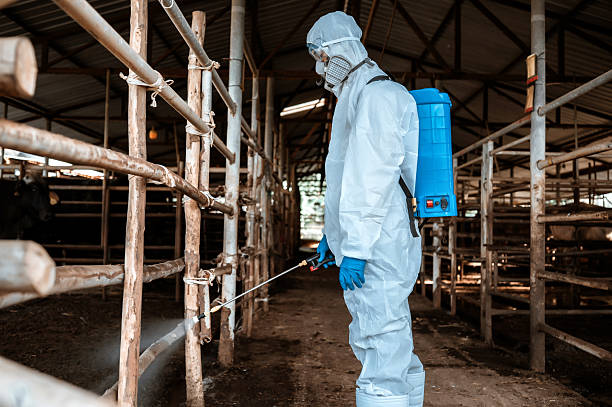
The most common reason for poor disinfection is not always the wrong active ingredient. It is often incomplete cleaning.
Organic matter may:
- Shield pathogens;
- React with the disinfectant;
- Lower the active concentration;
- Prevent surface contact;
- Support biofilm;
- Contaminate the solution in footbaths or spray systems.
Recommended preparation sequence
- Remove animals where the procedure requires empty housing;
- Remove manure and bedding;
- Remove feed residues;
- Dry-clean dust and loose material;
- Wash surfaces;
- Apply detergent when appropriate;
- Rinse;
- Allow surfaces to drain or dry as required;
- Apply disinfectant;
- Maintain contact time;
- Rinse if required;
- Dry and ventilate;
- Confirm re-entry safety.
The exact sequence may vary by product and facility.
11. Dilution and Mixing Control
Incorrect dilution may result in either insufficient activity or excessive chemical exposure.
Good dilution practices
- Read the label before preparation;
- Use a calibrated measuring tool;
- Check the required product-to-water ratio;
- Use suitable water;
- Prepare only the quantity needed;
- Label the mixing container;
- Record the preparation time;
- Use the solution within the recommended period;
- Clean equipment after use.
Example of a simple dilution record
| Date and time | Product | Batch number | Dilution rate | Water volume | Prepared by | Application area |
| … | … | … | … | … | … | … |
Do not estimate by colour or smell
A darker solution or stronger smell does not prove that the concentration is correct.
Do not mix products arbitrarily
A mixture may:
- Release toxic gas;
- Reduce active ingredients;
- Create precipitates;
- Damage equipment;
- Increase worker exposure;
- Produce an unknown efficacy profile.
Use one product according to its own instructions.
12. Application and Contact Time
The application method should match the product and treatment objective.
Methods may include:
- Low-pressure spraying;
- Foaming;
- Fogging where specifically permitted;
- Brushing;
- Soaking;
- Wiping;
- Spreading dry material;
- Automated dosing.
Surface coverage
In empty housing, a logical route may be:
- Ceiling and upper structures;
- Walls;
- Equipment;
- Feeders and drinkers;
- Floors;
- Drains;
- Entry points;
- Tools and mobile equipment.
Special attention should be given to:
- Cracks;
- Corners;
- Undersides of equipment;
- Slatted-floor areas;
- Drainage points;
- Door handles;
- Loading zones.
Contact time
The treated surface should remain under the required product conditions for the full contact period.
Disinfection may fail if:
- The solution dries too quickly;
- The farm rinses too early;
- Rain dilutes the product;
- Workers walk through the area;
- The surface was not completely covered.
13. Footbath and Vehicle-Disinfection Management
Footbaths
A footbath program should define:
- Product;
- Dilution;
- Fill level;
- Replacement schedule;
- Cleaning frequency;
- Responsible person;
- Location;
- Method for removing mud before entry.
Footbaths should not be placed where rainwater or soil continuously enters the tray.
Vehicle treatment
The sequence should generally include:
- Remove manure and mud;
- Wash wheels, undercarriage, body, and loading compartment;
- Allow drainage where required;
- Apply the disinfectant;
- Maintain contact time;
- Control runoff;
- Record the treatment.
Spraying disinfectant over thick mud does not provide reliable vehicle decontamination.
14. Frequency of Disinfection
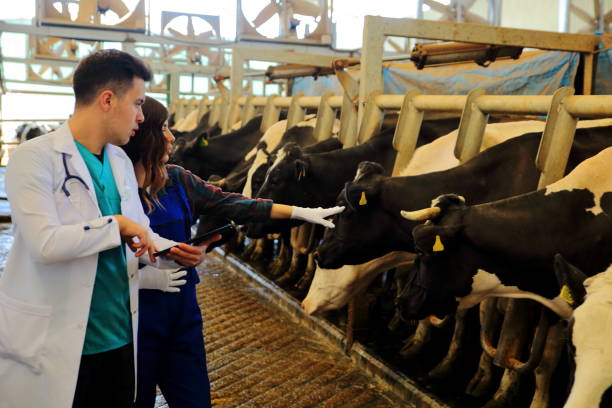
There is no universal schedule for every farm.
Frequency should reflect:
- Animal species;
- Production stage;
- Stocking density;
- Farm layout;
- Disease history;
- Season;
- Rainfall;
- Visitor and vehicle frequency;
- Building occupancy;
- Current disease alerts.
Routine conditions
The farm may define different frequencies for:
- Housing surfaces;
- Footbaths;
- Vehicles;
- Tools;
- Loading areas;
- Dead-animal areas;
- Feed-delivery points.
Elevated disease risk
When disease risk increases, farms may need to:
- Restrict access;
- Increase cleaning;
- Treat high-risk routes more frequently;
- Separate equipment by area;
- Update active ingredients;
- Consult veterinary authorities.
Increasing frequency without improving cleaning may not improve control.
15. Worker Safety
Workers mixing or applying disinfectants may face exposure through:
- Inhalation;
- Skin contact;
- Eye splashes;
- Accidental ingestion;
- Contaminated clothing.
Personal protective equipment may include
- Chemical-resistant gloves;
- Safety goggles;
- Face shield;
- Protective clothing;
- Rubber boots;
- Respiratory protection appropriate to the product.
The exact equipment should follow the product’s safety information.
After application
Workers should:
- Wash hands and exposed skin;
- Clean reusable protective equipment;
- Remove contaminated clothing;
- Wash work clothing separately;
- Report symptoms;
- Follow first-aid instructions after exposure.
Symptoms requiring attention may include:
- Eye irritation;
- Persistent coughing;
- Breathing difficulty;
- Dizziness;
- Nausea;
- Skin burns;
- Prolonged discomfort.
16. Chemical Compatibility Warnings
Chlorine and acids
Mixing chlorine with acids may release chlorine gas.
Chlorine and ammonia
Mixing chlorine with ammonia or nitrogen-containing compounds may form toxic chloramine gases.
QACs and anionic detergents
Soap or anionic detergents may reduce QAC activity.
Strong oxidizers and other chemicals
Combining oxidizers with aldehydes, organic chemicals, or unknown products may cause dangerous reactions.
Switching products
Before changing to another chemical:
- Empty the sprayer;
- Rinse the tank;
- Clean hoses;
- Flush nozzles;
- Remove residue;
- Confirm material compatibility.
17. Chemical Storage and Waste Management
Disinfectants should be stored:
- In original labelled containers;
- In a cool, dry, ventilated area;
- Away from direct sunlight;
- Away from feed and drinking water;
- Away from children and animals;
- With incompatible chemicals separated.
Do not:
- Transfer chemicals into beverage bottles;
- Store products without labels;
- Use expired chemicals;
- Burn containers without authorization;
- Bury containers arbitrarily;
- Discharge concentrated product into drains or surface water.
Wastewater should be managed so it does not contaminate:
- Ponds;
- Canals;
- Wells;
- Watercourses;
- Neighbouring farms;
- Domestic water sources.
18. Common Disinfection Failures
Spraying before cleaning
Why it fails: Organic matter blocks and inactivates the product.
Using too little product
Why it fails: The active concentration or surface volume is insufficient.
Using excessive concentration
Why it fails: It increases cost, toxicity, corrosion, and residue without guaranteeing better performance.
Ignoring contact time
Why it fails: The product is removed or dries before completing its required action.
Missing hidden surfaces
Why it fails: Pathogens remain under equipment, in cracks, or around drains.
Using an occupied-area product incorrectly
Why it fails: Incorrect concentration or spray method may expose animals and workers.
Failing to replace footbath solution
Why it fails: The disinfectant becomes diluted or contaminated.
Reusing the same program without review
Why it fails: Target pathogens, farm conditions, products, or cleaning quality may have changed.
Allowing animals to re-enter too early
Why it fails: Wet surfaces, chemical vapour, or residue may create health risks.
19. How to Evaluate Whether the Program Is Working
A disinfectant program should not be judged only by smell or visual appearance.
Farms can review:
- Cleaning records;
- Dilution records;
- Application coverage;
- Contact time;
- Footbath condition;
- Vehicle-treatment logs;
- Worker compliance;
- Disease patterns;
- Environmental microbiology results where available;
- Productivity and mortality trends;
- Recurring high-risk locations.
Questions for a periodic review
- Are surfaces clean before spraying?
- Are workers measuring the product accurately?
- Is the selected product appropriate for the current pathogen risk?
- Are contact times completed?
- Are footbaths clean?
- Are vehicles washed before treatment?
- Are animals re-entering too early?
- Is the same product being used for every application?
- Are corrosion or respiratory issues increasing?
- Are records sufficient to identify repeated failures?
The review should consider the entire biosecurity program, not disinfectant use alone.
20. Frequently Asked Questions

Can disinfectants be sprayed while animals are present?
Only use a specific product when its label or manufacturer explicitly permits application in occupied livestock areas.
Selected QAC, iodophor, or peroxygen products may be suitable, but not every product within these groups is approved for this purpose.
How often should a farm disinfect housing?
There is no universal frequency. The schedule should reflect species, production stage, housing conditions, movement level, season, and disease risk.
Can quicklime replace commercial disinfectants?
No. Lime may support environmental management in suitable areas but does not provide complete control of all pathogens.
Which products should be used for African swine fever or avian influenza?
Use products with suitable efficacy information and follow official veterinary guidance. Farms should not select a product based only on colour, smell, price, or general advertising.
Are low-odour products always safer?
No. Odour does not reliably indicate toxicity or animal safety. Read the product label and safety information.
Can the farm mix two disinfectants to increase effectiveness?
Not unless the manufacturer specifically confirms the mixture. Chemical combinations may reduce effectiveness or release hazardous substances.
Can diluted disinfectant be stored for the next day?
Only if the manufacturer allows it. Some diluted solutions lose activity rapidly.
Can disinfectant be applied directly over manure?
This is generally ineffective. Organic matter should be removed before treatment.
Does stronger concentration shorten contact time?
Not necessarily. Concentration and contact time must follow the product instructions.
How can a farm compare product costs?
Compare the cost per correctly treated area or volume, not only the price per bottle. Include dilution, application volume, labour, equipment, corrosion, and frequency of use.
Explore Disinfection and Biosecurity Solutions at VIETSTOCK 2026
Effective disinfection begins with selecting the right product for the target pathogen, production stage, housing conditions, surface material, and safety requirements. It also depends on mechanical cleaning, correct dosing, complete surface coverage, sufficient contact time, and consistent implementation by farm workers.
At VIETSTOCK 2026, livestock producers, farm managers, veterinary professionals, animal-health companies, equipment manufacturers, and biosecurity specialists can explore solutions supporting livestock-housing hygiene and disease prevention.
Visitors can:
- Compare disinfectant products for empty housing, occupied areas, vehicles, equipment, and access-control points.
- Explore dosing, mixing, spraying, foaming, and solution-distribution equipment for different farm scales.
- Discover cleaning systems for livestock housing, feeders, drinkers, tools, vehicles, and loading areas.
- Connect with animal-health companies, equipment suppliers, and biosecurity solution providers.
- Discuss how to integrate cleaning and disinfection into broader disease-control and farm-management programs.
Expected to feature more than 300 brands, over 10,000 sqm of exhibition space, and 13,000 trade visitors from more than 40 countries and territories, VIETSTOCK 2026 creates opportunities for farms and businesses to compare technologies and build specialized connections across the livestock and animal-health value chain.
Alongside the exhibition and business-networking activities, VIETSTOCK 2026 will also organize an On-Farm Seminar Series, bringing practical knowledge on herd and flock management, disease prevention, biosecurity, and livestock-production efficiency to key livestock regions.
Date: 21–23 October 2026
Venue: Saigon Exhibition and Convention Center – SECC, 799 Nguyen Van Linh Street, Tan My Ward, Ho Chi Minh City, Vietnam
Event website: https://www.vietstock.org/en/
👉 Register to visit VIETSTOCK 2026 and explore disinfection, livestock-housing cleaning, and biosecurity solutions:
https://www.vietstock.org/en/online-registration-2/
👉 Learn more about the VIETSTOCK 2026 On-Farm Seminar Series:
https://www.vietstock.org/en/event-features/vietstock-2026-livestock-roadshows-bringing-industry-knowledge-to-key-livestock-regions/
CONTACT INFORMATION:
Exhibiting: Ms. Sophie Nguyen – [email protected]
Visitor Support: Ms. Phuong – [email protected]
Marcom Support: Ms. Anita Pham – [email protected]