Lincomycin in Veterinary Medicine: Characteristics, Scope of Use, and Antimicrobial Resistance Considerations
Lincomycin is an antibiotic in the lincosamide class used in veterinary medicine to treat certain bacterial infections caused by susceptible organisms. Unlike antibiotics with a relatively broad spectrum of activity, lincomycin has a more specific antibacterial spectrum, acting mainly against certain Gram-positive bacteria, many anaerobic bacteria, and susceptible Mycoplasma, while most aerobic Gram-negative bacteria fall outside its appropriate spectrum of activity.
In addition to its limited antibacterial spectrum, lincomycin has important species-specific safety considerations. Lincosamides can severely disrupt the gastrointestinal microbiota of certain herbivorous animals. For this reason, indications for pigs or poultry should not be extrapolated to horses, rabbits, ruminants, or other species.
Lincomycin is also relevant to the issue of cross-resistance between lincosamides and certain macrolides through the MLSB mechanism. In addition, fixed lincomycin–spectinomycin combination products are available for certain species and specific indications.
Therefore, before using lincomycin, the question should not simply be:
“What diseases does lincomycin treat?”
Instead, it is important to determine:
- Whether the suspected pathogen falls within an appropriate spectrum of activity.
- Whether the animal species is authorised for that product.
- Whether the formulation and route of administration are appropriate.
- Whether the animal is actually receiving the intended amount of medicine.
- Whether there is a risk of cross-resistance or treatment failure.
- How the withdrawal time should be managed before animals or their products enter the food chain.
Lincomycin: 4 limitations to remember before use
Antibacterial spectrum limitations
Lincomycin is active against certain Gram-positive bacteria, many anaerobic bacteria, and susceptible Mycoplasma, but it is generally not appropriate for most aerobic Gram-negative bacteria, including many strains of E. coli, Salmonella, and Pasteurella.
Species limitations
Lincosamides can cause severe disruption of the gastrointestinal microbiota in certain herbivorous species. Lincomycin use in pigs or poultry should not be extrapolated to horses, rabbits, ruminants, or other species unless the specific product permits such use.
Combination and resistance limitations
Lincomycin–spectinomycin is available as a fixed combination in certain registered veterinary products. This does not mean that farmers should purchase the two medicines separately and mix them independently.
Lincomycin may also be associated with cross-resistance to certain macrolides through the MLSB mechanism. Therefore, failure with lincomycin does not necessarily mean that simply switching to a macrolide will resolve the problem.
Food-safety and withdrawal limitations
Withdrawal time, restrictions on use in animals producing milk or eggs, and conditions for sale must be checked for the specific product being used.
1. Where is lincomycin effective, and where are its limitations?

Lincomycin belongs to the lincosamide class of antibiotics, which differs structurally and mechanistically from beta-lactams and tetracyclines.
In veterinary medicine, lincomycin commonly appears as lincomycin hydrochloride in formulations designed for different species, routes of administration, and indications.
Mechanism of action
Lincomycin binds to the 50S subunit of the bacterial ribosome, interfering with the protein synthesis required for bacterial growth and replication.
It is generally described as a bacteriostatic antibiotic, although its effect may vary depending on:
- Drug concentration.
- Bacterial species.
- Bacterial load.
- Conditions at the site of infection.
Treatment effectiveness also depends on:
- Susceptibility of the pathogen.
- Drug concentration achieved in the target tissue.
- Condition of the animal.
- Route of administration.
- Formulation.
- Appropriate use according to the indication.
Main spectrum of activity
Lincomycin is active against certain Gram-positive bacteria, including:
- Staphylococcus spp.
- Streptococcus spp.
- Erysipelothrix rhusiopathiae.
Certain anaerobic bacteria may also be susceptible to lincosamides, including some strains belonging to:
- Clostridium spp.
- Bacteroides spp.
In addition, certain susceptible Mycoplasma may fall within lincomycin’s spectrum of activity.
However, identifying a bacterial species or genus does not mean that every strain remains susceptible.
Important limitations against aerobic Gram-negative bacteria
Lincomycin does not have an appropriate spectrum of activity against most aerobic Gram-negative bacteria.
Many strains within the following groups are generally not suitable targets:
- E. coli.
- Salmonella.
- Pasteurella.
This is particularly important because respiratory and gastrointestinal diseases in livestock may involve several pathogen groups at the same time.
Coughing, diarrhoea, or fever does not automatically mean that lincomycin is an appropriate choice.
Lincomycin’s relatively specific antibacterial spectrum should be understood before the medicine is selected. It should not be treated as a reason to add multiple antibiotics simply to “broaden the spectrum.”
2. Which clinical conditions may be appropriate for lincomycin?
Lincomycin should only be considered when the following conditions are met:
- Correct animal species.
- Correct product.
- Correct indication.
- Correct route of administration.
- The suspected or confirmed pathogen is expected to be susceptible.
- Appropriate professional assessment has been made.
Lincomycin should not be selected solely from a clinical sign.
Mycoplasma and respiratory disease
In pigs, some lincomycin products may be authorised for respiratory diseases associated with Mycoplasma hyopneumoniae where the organism remains susceptible and the product carries an appropriate indication.
In poultry, certain formulations may also be used for some Mycoplasma infections.
However, antibiotic treatment does not necessarily eliminate infection or the carrier state completely.
Lincomycin therefore does not replace:
- Biosecurity.
- Control of breeding stock sources.
- Appropriate vaccination.
- Hygiene.
- Environmental management.
- Disease surveillance.
Respiratory syndromes in livestock often involve several contributing factors, including:
- Viruses.
- Bacteria.
- Mycoplasma.
- Stocking density.
- Ventilation.
- Stress.
- Air quality.
Coughing or respiratory difficulty alone is therefore not sufficient justification for lincomycin use.
Certain intestinal diseases
Lincomycin should not be used simply because an animal has diarrhoea.
Diarrhoea may be associated with:
- Viruses.
- Parasites.
- Nutrition.
- Stress.
- Bacteria.
- Multiple interacting causes.
Certain lincomycin products may be authorised for specific intestinal diseases.
For example, some formulations may have indications for necrotic enteritis in chickens caused by susceptible Clostridium perfringens or for certain specific intestinal diseases in pigs.
However, this should not be interpreted to mean that:
- Every gastrointestinal disease involving Clostridium should be treated with lincomycin.
- Every case of diarrhoea requires an antibiotic.
- Detecting a bacterium within lincomycin’s spectrum is sufficient to determine treatment.
The indication of the specific product should always be checked.
Certain bone, joint, and deep-tissue infections
Lincosamides can distribute into several tissues, including:
- Soft tissue.
- Bone tissue.
- Certain musculoskeletal tissues.
However, good tissue distribution does not mean that lincomycin is a universal treatment for:
- Arthritis.
- Osteomyelitis.
- Synovitis.
- Deep-tissue infections.
These conditions may involve many different pathogens, and lincosamide resistance may vary between bacterial strains.
Lincomycin should only be considered where:
- The diagnosis is appropriate.
- The pathogen is expected to remain susceptible.
- The product carries the relevant indication.
- Veterinary assessment supports its use.
If a deep-seated infection does not improve, lincomycin should not simply be prolonged without reassessing the underlying cause.
Skin and soft-tissue infections
Certain skin infections, infected wounds, abscesses, or soft-tissue infections caused by susceptible Gram-positive or anaerobic bacteria may fall within the indications of some products.
However, tissue distribution should not be used to assume that lincomycin is automatically appropriate for:
- Mastitis.
- Osteomyelitis.
- Every abscess.
- Every infected wound.
The approved indication must be checked for the specific product.
3. First determine whether lincomycin can be used in the species
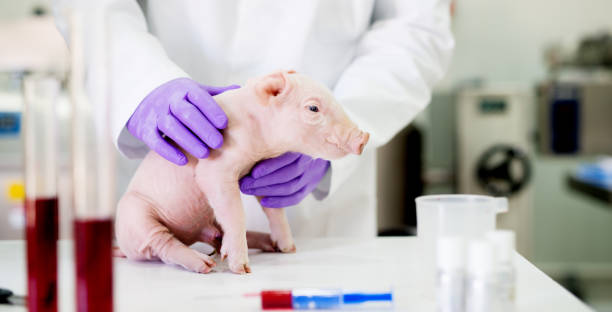
This is one of the most important safety considerations for lincomycin.
Lincosamides can cause severe changes to the gastrointestinal microbiota of certain herbivorous species.
Pigs and poultry
Pigs and poultry are among the species commonly included in the indications of veterinary lincomycin products.
Depending on the formulation, the medicine may be administered:
- Through drinking water.
- Through feed.
- By injection.
- As part of a combination product.
However, not every product has the same:
- Target species.
- Indications.
- Route of administration.
- Dose.
- Treatment duration.
Horses, rabbits, and certain herbivorous species
Lincosamides may severely disrupt the intestinal microbiota of susceptible species and may lead to enterocolitis.
Many products carry warnings or contraindications for species such as:
- Horses.
- Rabbits.
- Guinea pigs.
- Hamsters.
- Chinchillas.
In these species, disruption of the intestinal microbiota may become severe and potentially life-threatening.
Lincomycin use in pigs or poultry should therefore never be assumed to apply in the same way to these animals.
Cattle and other ruminants
Lincomycin should not be treated as a general-use antibiotic for cattle or other ruminants.
Many products are not authorised for these animals because of the potential effects on gastrointestinal microbiota.
Use should only be considered when:
- The specific product is authorised for the species.
- The route of administration is appropriate.
- The indication is appropriate.
- The label does not list a contraindication.
For dairy cattle producing milk for human consumption, it is particularly important to confirm whether the product is authorised for use.
If the label states that the medicine should not be used in animals producing milk for human consumption, an independent withdrawal period should not be created to justify off-label use.
Pregnant animals and breeding stock
A general conclusion should not be made that lincomycin is either safe or contraindicated in all pregnant animals.
Use should depend on:
- Species.
- Stage of pregnancy.
- Clinical condition.
- Product.
- Route of administration.
- Safety information on the label.
Likewise, lincomycin should not be used routinely in breeding stock for disease prevention without an appropriate indication.
Neonatal animals
Lincomycin should not be broadly applied to neonatal animals because drug metabolism may not yet be fully developed.
Use should only be considered where:
- The product permits it.
- The species and age group are appropriate.
- Professional assessment supports treatment.
4. Lincomycin alone and lincomycin–spectinomycin are not used in the same way
A notable feature of veterinary medicine is the availability of fixed lincomycin–spectinomycin combination products.
The two active ingredients have different antibacterial characteristics and may be combined in registered products for particular species and diseases.
However, an important distinction must be made:
A combination product that has been developed and registered does not mean that farmers can independently purchase separate lincomycin and spectinomycin products and mix them together.
What should be checked when using a combination product?
Confirm:
- The product is authorised.
- Correct species.
- Correct disease.
- Correct route of administration.
- Correct strength and combination ratio.
- Correct treatment duration.
- Correct withdrawal time.
Lincomycin–spectinomycin should not be treated as a universal combination for every:
- Respiratory disease.
- Gastrointestinal disease.
- Mixed bacterial infection.
Why should medicines not be combined independently?
Mixing separate products without appropriate guidance may result in:
- Incorrect active-ingredient ratios.
- Incorrect total dosage.
- Increased risk of adverse reactions.
- More difficult assessment of treatment effectiveness.
- Difficulty determining the correct withdrawal time.
- Unnecessary antimicrobial exposure.
Any antimicrobial combination should have a clear professional basis.
5. Drinking water, feed, or injection: actual drug intake must be monitored
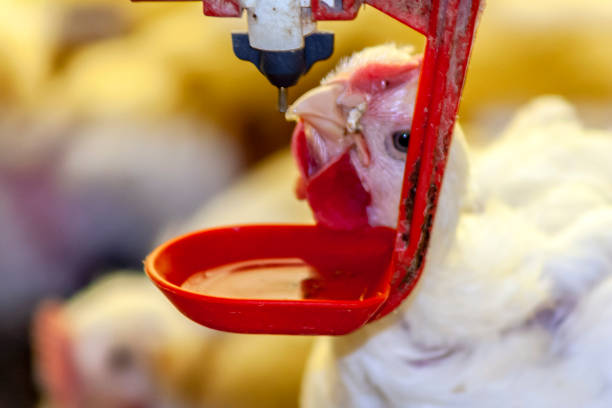
Lincomycin is available in several formulations depending on the product.
Common forms may include:
- Injectable solutions.
- Soluble powders.
- Medicated-feed premixes.
- Combination products.
An important principle is:
A dose calculated correctly on paper does not necessarily equal the amount of medicine the animal actually receives.
This is particularly important when treating groups of animals.
Administration through drinking water
Certain products are designed for administration through drinking water in pigs or poultry.
Actual medicine intake depends on:
- Water consumption.
- Disease status.
- Temperature and housing conditions.
- Access to the water system.
- Variation between individual animals.
Severely affected animals may drink less and therefore receive less medicine than expected.
The medicine concentration should not be increased simply to “compensate” for this problem without appropriate guidance.
Administration through feed
Certain premix products may be administered through feed where this is consistent with the indication and applicable regulations.
However, sick animals often:
- Eat less.
- Consume feed unevenly.
- Receive insufficient medicated feed.
Actual feed intake should therefore be monitored.
If animals are eating substantially less, the suitability of in-feed administration should be reassessed rather than assuming that every animal continues to receive the intended dose.
Injectable formulations
Only use injectable lincomycin when the product:
- Is authorised for the relevant species.
- Permits the specific injection route.
- Has an appropriate indication.
An injectable formulation should not be extrapolated to another species or route of administration.
There is no single lincomycin dose for every situation
Dose depends on:
- Species.
- Body weight.
- Product strength.
- Dosage form.
- Route of administration.
- Disease.
- Disease severity.
- Actual water or feed intake.
Therefore:
- Do not reduce the dose to save costs.
- Do not increase the dose simply because the disease has not improved.
- Do not apply the dose of one product to another.
- Do not apply the dose intended for one species to another.
6. If lincomycin fails, do not immediately switch to a macrolide
This is an important consideration in lincosamide management.
Lincomycin and certain macrolides have nearby or overlapping binding sites on the bacterial 50S ribosomal subunit.
Common macrolides may include:
- Tylosin.
- Erythromycin.
- Tilmicosin.
If treatment with lincomycin fails, it should not be assumed that switching to a macrolide will necessarily resolve the problem.
MLSB cross-resistance
An important resistance mechanism is associated with genes such as erm.
Bacteria may methylate the target site on the 50S ribosomal subunit, reducing the binding of certain antibiotics in three groups:
- Macrolides.
- Lincosamides.
- Streptogramin B.
This is known as the MLSB resistance phenotype.
When bacteria carry this mechanism, lincomycin resistance may occur together with reduced susceptibility or resistance to certain macrolides.
Therefore:
Switching to a different antibiotic class does not necessarily mean that the bacteria will be susceptible, particularly when cross-resistance mechanisms are involved.
Other resistance mechanisms
In addition to ribosomal methylation, bacteria may resist lincosamides through other mechanisms.
Efflux pumps
Certain bacteria have systems that reduce intracellular drug concentrations.
Drug inactivation
Certain enzymes may modify or inactivate lincosamides.
Multiple resistance mechanisms
A single bacterial strain may carry several resistance mechanisms simultaneously.
Treatment failure does not necessarily mean antimicrobial resistance
If animals do not improve, other possibilities should also be assessed:
- Incorrect diagnosis.
- The pathogen falls outside lincomycin’s spectrum.
- The disease is primarily viral.
- Co-infection is present.
- The animals receive an inadequate amount of medicine.
- Feed or water intake has decreased.
- The medicine was prepared incorrectly.
- Biosecurity has not improved.
- Environmental conditions continue to create disease pressure.
No single clinical sign can confirm lincomycin resistance.
When should bacterial culture and antimicrobial susceptibility testing be considered?
Particularly when:
- Disease recurs.
- Treatment does not produce the expected response.
- A previously effective regimen has become less effective.
- The herd or flock has received lincomycin repeatedly.
- A switch to a macrolide or another antibiotic is being considered.
Where feasible, bacterial culture and antimicrobial susceptibility testing can provide additional evidence for selecting a more appropriate treatment approach.
7. Safety and drug interactions: points to check before and during treatment
In addition to species-related concerns, lincomycin has several other important safety and interaction considerations.
Gastrointestinal disturbances
Lincomycin may cause:
- Diarrhoea.
- Soft faeces.
- Reduced feed intake.
- Changes in intestinal microbiota.
In susceptible species, the consequences may be more severe and can progress to enterocolitis.
Injection-site reactions
Some animals may experience:
- Pain.
- Swelling.
- Local irritation.
Hypersensitivity reactions
Some animals may develop allergic reactions.
If an animal has a known history of hypersensitivity to lincosamides, the product should not be used where the label lists this as a contraindication.
Animals with liver or kidney disease
Lincosamides undergo substantial hepatic metabolism, so animals with impaired liver function should be assessed before use.
For animals with kidney disease or severe systemic illness, a single universal contraindication should not be applied across all species. Factors to consider include:
- Species.
- Severity of disease.
- Product.
- Route of administration.
- Other medicines being used.
Potential effects on neuromuscular transmission
Lincosamides may have neuromuscular blocking effects under certain conditions.
This is particularly relevant when animals are also receiving:
- Anaesthetic agents.
- Muscle relaxants.
- Certain aminoglycosides.
- Other medicines that affect neuromuscular transmission.
Medicines should not be combined independently in these situations.
Lincomycin and macrolides
Lincomycin should not be combined with a macrolide simply to broaden the antibacterial spectrum.
In addition to acting at nearby ribosomal sites, the two groups may also be linked through MLSB cross-resistance.
Lincomycin and chloramphenicol
Both groups act on the 50S ribosomal subunit and may have overlapping target sites.
They should not be combined independently based on the idea that:
“More antibiotics mean stronger treatment.”
Concurrent use should be based on:
- Appropriate diagnosis.
- Pharmacological rationale.
- Susceptibility assessment.
- Professional guidance.
8. Managing lincomycin from treatment to sale
Responsible antimicrobial use does not end with choosing the correct medicine.
Farms also need to manage:
- Actual medicine intake.
- Treatment response.
- Medicine-use records.
- Withdrawal time.
- Milk or egg restrictions.
- Permitted sale date.
Before use
Check:
- Whether the suspected pathogen is compatible with lincomycin’s spectrum.
- Whether the product is authorised for the species.
- Whether the species is listed under any product contraindication.
- Indication.
- Product strength.
- Route of administration.
- Withdrawal time.
- Restrictions relating to milk or eggs.
- The herd or flock’s antimicrobial-use history.
During treatment
Farmers should:
- Use the correct dose.
- Use the correct route.
- Follow the recommended duration.
- Monitor water or feed intake when treating groups.
- Record clinical response.
- Monitor adverse reactions.
- Avoid adding other antibiotics without appropriate guidance.
If feed or water intake decreases, the actual medicine intake should be reassessed.
At the final dose
Record:
- Date of the final administration.
- Exact product name.
- Treated animal group.
- Withdrawal time.
- Earliest permitted sale date.
Before sale
Check:
- Has the withdrawal period ended?
- Was another medicine used with a longer withdrawal time?
- Are milk or eggs still subject to withholding?
- Has the treated group been correctly identified?
- Are the records sufficient for traceability?
Lincomycin is not a routine disease-prevention or growth-promotion tool
Historically, certain antibiotics were used at low levels in feed to promote growth.
This practice can increase the risk of:
- Selection of resistant bacteria.
- Spread of antimicrobial resistance genes.
- Changes in microbiota.
- Greater AMR pressure from a One Health perspective.
In Vietnam, the use of antibiotics in animal feed for growth promotion is prohibited.
Lincomycin should not be used to:
- Promote weight gain.
- Improve growth rate.
- Compensate for inadequate nutrition.
- Compensate for poor livestock-management conditions.
In addition, Vietnam’s phased roadmap for veterinary medicines containing antibiotics that had been authorised for disease prevention ended progressively by antimicrobial group, with the final transitional deadline on 31 December 2025.
Therefore, in 2026, farms should not establish prolonged or routine in-feed lincomycin programmes for disease prevention.
The long-term objective should be to reduce disease pressure through:
- Vaccination.
- Biosecurity.
- Hygiene.
- Ventilation.
- Appropriate stocking density.
- Breeding stock management.
- Nutrition.
- Early disease detection.
Frequently asked questions about lincomycin

Which groups of pathogens are most relevant to lincomycin?
Lincomycin is mainly active against:
- Certain susceptible Gram-positive bacteria.
- Many anaerobic bacteria.
- Certain susceptible Mycoplasma.
It does not have an appropriate spectrum against most aerobic Gram-negative bacteria.
Lincomycin should therefore not be selected solely from signs such as:
- Coughing.
- Diarrhoea.
- Arthritis.
- Fever.
The clinical condition, animal species, and specific product should be assessed before use.
Why should lincomycin not be used casually in horses or rabbits?
Lincosamides can severely disrupt the intestinal microbiota of certain herbivorous animals.
In species such as horses, rabbits, guinea pigs, hamsters, or chinchillas, this disruption can progress to severe enterocolitis.
The contraindications of the specific product should therefore be checked, and experience from pigs or poultry should not be extrapolated to these species.
Can lincomycin and spectinomycin be mixed independently?
No.
Lincomycin–spectinomycin is available in certain fixed combination products that have been developed and registered for specific uses.
This does not mean that users should independently purchase:
- Lincomycin.
- Spectinomycin.
and mix them according to an estimated ratio.
Use the correct product for the correct species, disease, and route of administration.
If lincomycin fails, should farmers switch to tylosin or another macrolide?
This should not be assumed.
Lincomycin and certain macrolides may be linked through MLSB cross-resistance.
If bacteria carry mechanisms such as ribosomal methylation mediated by erm genes, switching to another macrolide may still fail to resolve the problem.
When treatment fails, reassess:
- Diagnosis.
- Pathogen.
- Actual drug intake.
- Route of administration.
- Biosecurity.
- Potential antimicrobial resistance.
Bacterial culture and antimicrobial susceptibility testing should be considered where appropriate.
Responsible Lincomycin Use and Reducing Antimicrobial Resistance Risk at VIETSTOCK 2026
Effective lincomycin use depends not only on selecting the correct antibiotic, but also on identifying the appropriate pathogen, controlling actual medicine intake, monitoring treatment response, and observing the required withdrawal time. In particular, the potential for cross-resistance with other antibiotic groups shows why repeatedly changing or reusing medicines based only on previous experience can make antimicrobial resistance management on farms more complex.
At VIETSTOCK 2026 – Vietnam’s Premier International Feed, Livestock & Meat Industry Show, farmers, veterinarians, and businesses can explore products, technologies, and solutions for animal health, disease prevention, and farm management. The event is expected to bring together more than 300 brands, over 10,000 sqm of exhibition area, and 13,000 trade visitors from approximately 40 countries.
For farms seeking more precise antimicrobial use and fewer repeated treatment courses, participants can explore solutions including:
- Veterinary medicines and herd health management: exploring products and solutions appropriate for different animal species, clinical conditions, and herd or flock health needs.
- Diagnostics and antimicrobial susceptibility testing: accessing technologies that support pathogen identification and provide stronger evidence when selecting or changing antibiotics.
- Medicine-use record management: exploring solutions that help record treatment history, medicines used, and recurrent disease cases.
- Residue control and traceability: learning about approaches for managing withdrawal periods, identifying treated groups, and controlling animal-derived products before they enter the food chain.
- Disease prevention and reduced antimicrobial pressure: exploring vaccination, biosecurity, nutrition, and environmental-management solutions that help reduce the need for antimicrobial treatment.
The One Health Forum on 22 October 2026 will also include in-depth content on antimicrobial resistance (AMR) in livestock production. For those interested in lincomycin, the forum provides an opportunity to view the use of a specific antibiotic within the broader One Health context, where animal health, human health, and the environment are closely interconnected.
Date: 21–23 October 2026
Venue: Saigon Exhibition and Convention Center (SECC), 799 Nguyen Van Linh Street, Tan My Ward, Ho Chi Minh City, Vietnam
Event website: https://www.vietstock.org/en/
Register to visit now: https://ers-vn.informa-info.com/vs26
👉 VIETSTOCK 2026 Visitor Registration Information
👉 Learn more about the One Health Forum
Contact information:
Exhibiting: Ms. Sophie Nguyen – [email protected]
Visitor Support: Ms. Phuong – [email protected]
Marcom Support: Ms. Anita Pham – [email protected]