Doxycycline in Veterinary Medicine: Scope of Use and Antimicrobial Resistance Considerations
Doxycycline is an antibiotic in the tetracycline class used in veterinary medicine for certain bacterial infections in pigs, poultry, and other animal species, depending on the authorised product and its specific indications.
Doxycycline is a semisynthetic tetracycline with high lipid solubility and a longer duration of action than some older tetracyclines. However, it should not be selected solely on the basis of a disease name or clinical signs.
Its use should take into account:
- Animal species.
- Diagnosis.
- Suspected or confirmed bacterial pathogen.
- Susceptibility to doxycycline.
- Authorised product.
- Route of administration.
- Current regulations.
Use for inappropriate indications, incorrect dosing, repeated treatment courses, or unnecessarily prolonged use can increase selection pressure for antimicrobial resistance. Failure to observe the required withdrawal time may also increase the risk of antibiotic residues in livestock products.
Key takeaways
- Doxycycline is a semisynthetic tetracycline with a bacteriostatic effect through inhibition of bacterial protein synthesis.
- It should only be used for the correct species, product, and indication, and when the bacterial pathogen is expected to remain susceptible.
- Doxycycline should not be used solely on the basis of signs such as coughing, diarrhoea, or respiratory disease of an uncertain cause.
- In poultry, doxycycline may help reduce clinical signs associated with certain Mycoplasma infections, but it does not completely eliminate infection or the carrier state.
- Do not independently reduce the dose or shorten or extend treatment beyond the product label or veterinary instructions.
- Withdrawal time is specific to each product and is not a single value that applies to doxycycline as an active ingredient.
- If a product is not authorised for poultry producing eggs or dairy cattle producing milk for human consumption, a separate off-label withdrawal period should not be assumed.
1. What is veterinary doxycycline?
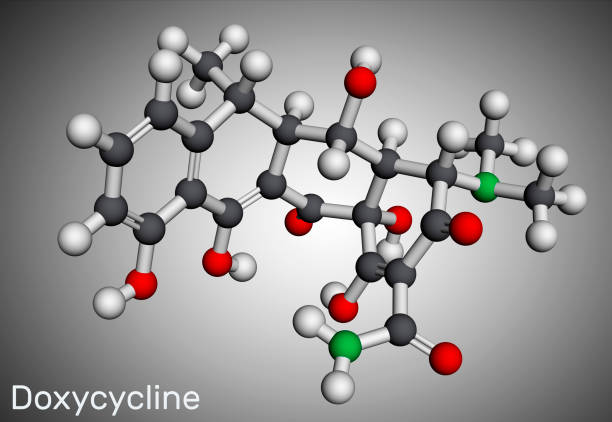
1.1. What class of antibiotic does doxycycline belong to?
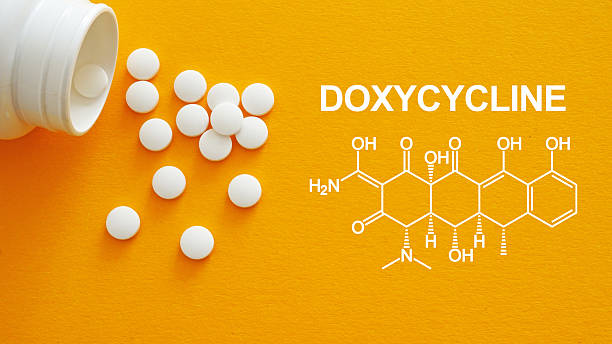
Doxycycline is a semisynthetic tetracycline antibiotic and is considered a relatively long-acting member of the tetracycline class.
Its mechanism of action involves binding to the 30S subunit of the bacterial ribosome, interfering with the binding of aminoacyl-tRNA to the mRNA-ribosome complex.
When protein synthesis is disrupted, bacteria can no longer grow and multiply normally.
Doxycycline is classified as a bacteriostatic antibiotic, meaning that its primary effect is to inhibit bacterial growth rather than directly kill bacteria.
Treatment effectiveness depends on:
- Susceptibility of the causative pathogen.
- Ability of the drug to reach an appropriate concentration at the site of infection.
- Animal species.
- Route of administration and dosage form.
- Immune status of the animal.
- Correct dose and treatment duration according to the product directions or veterinary guidance.
Its bacteriostatic mechanism should not be interpreted as a reason to extend treatment beyond the recommended duration. Users should follow the treatment period specified for the product or advised by a veterinarian rather than shortening or prolonging it independently.
1.2. Antibacterial spectrum of doxycycline
Doxycycline has a relatively broad spectrum of activity and may act against certain:
- Gram-positive bacteria.
- Gram-negative bacteria.
- Mycoplasma.
- Chlamydia.
- Rickettsia.
However, its theoretical spectrum does not mean that every strain within these groups remains susceptible to doxycycline.
Susceptibility may vary according to:
- Bacterial species.
- Geographical area.
- Individual farm.
- History of antimicrobial use.
- Selection pressure for antimicrobial resistance.
- Timing of sample collection.
Doxycycline should therefore not be selected simply because a suspected pathogen is “within its spectrum.”
When treatment fails, disease recurs, or antimicrobial resistance is a concern, sample collection, bacterial culture, and antimicrobial susceptibility testing should be considered where feasible before the treatment regimen is changed or repeated.
1.3. Advantages compared with some older tetracyclines
Compared with oxytetracycline or chlortetracycline, doxycycline has several different pharmacokinetic characteristics.
Good oral absorption
Doxycycline has high lipid solubility and, in some species, may have better oral absorption than older tetracyclines.
However, oral bioavailability varies considerably between species. Data from one species should not automatically be applied to another.
Longer half-life
Doxycycline has a longer duration of action than some older tetracyclines.
Even so, the specific treatment schedule still depends on the product, animal species, disease, and route of administration.
Good tissue distribution
Doxycycline has high lipid solubility and is widely distributed in many tissues.
This characteristic helps explain why doxycycline may be used in certain respiratory infection indications.
However, good tissue distribution is not sufficient justification for selecting the drug without first considering the cause of disease and pathogen susceptibility.
2. What conditions may doxycycline be indicated for in livestock production?
Doxycycline should not be selected solely on the basis of a disease name or symptom.
Its use should be based on:
- A product authorised for the relevant species.
- Approved indications stated on the label.
- A suspected or confirmed bacterial pathogen that is expected to remain susceptible.
- Clinical condition.
- Herd or flock epidemiology.
- Diagnostic results where necessary.
The disease categories below reflect uses that may appear on certain products or in certain markets. They are not a universal list of indications for every doxycycline formulation.
2.1. Respiratory diseases in pigs
In pigs, some doxycycline products may be indicated for respiratory diseases associated with susceptible bacteria such as:
- Mycoplasma hyopneumoniae.
- Pasteurella multocida.
- Actinobacillus pleuropneumoniae.
However, the presence of a pathogen name in product information or technical literature does not mean that every strain remains susceptible to doxycycline.
Porcine respiratory disease often involves multiple contributing factors, including:
- Viruses.
- Bacteria.
- Mycoplasma.
- Ventilation.
- Stocking density.
- Stress.
- Biosecurity.
Doxycycline should therefore not be used solely because pigs are coughing or showing respiratory difficulty.
Drug selection should be based on diagnosis, epidemiological conditions, authorised product use, and pathogen susceptibility where data are available.
2.2. Respiratory diseases in poultry
In poultry, some doxycycline products may be used in conditions associated with:
- Mycoplasma gallisepticum.
- Mycoplasma synoviae.
- Certain respiratory infections caused by susceptible bacteria.
Doxycycline and other tetracyclines may help reduce clinical signs in some Mycoplasma infections.
However, antibiotic treatment does not completely eliminate infection or the carrier state.
Doxycycline therefore does not replace:
- Biosecurity.
- Breeding stock control.
- Appropriate vaccination programmes.
- Flock management.
- Disease surveillance.
For viral respiratory diseases, doxycycline does not act against the virus.
Antibiotics should only be considered when there is evidence or reasonable suspicion of a secondary bacterial infection caused by susceptible organisms.
2.3. Respiratory infections in cattle and other ruminants
In cattle and other ruminants, doxycycline use should be based on a product authorised for the correct species and route of administration.
Some products or technical references in certain markets may mention respiratory infections associated with pathogens such as:
- Mannheimia haemolytica.
- Pasteurella multocida.
However, this should not be interpreted to mean that every doxycycline product is authorised for cattle.
In particular, therapeutic oral tetracycline administration should not be treated as generally appropriate for adult ruminants, because absorption may be poor and the medicine may affect rumen microflora.
Users should check:
- Species stated on the label.
- Route of administration.
- Indications.
- Restrictions for dairy cattle.
- Withdrawal time.
2.4. Gastrointestinal and systemic bacterial infections
Diarrhoea in pigs, poultry, or other animals is not automatically an indication for doxycycline.
Diarrhoea may be associated with:
- Bacteria.
- Viruses.
- Parasites.
- Nutrition.
- Drinking water.
- Feed management.
- Stress.
Doxycycline should only be considered when there is a reasonable basis to suspect an infection caused by susceptible bacteria and when the specific product has an appropriate indication.
Certain products or technical references may also mention:
- Some Chlamydia infections in poultry.
- Certain systemic infections caused by susceptible bacteria.
The use of doxycycline should not be extended to diseases or pathogens that fall outside the approved product indications.
The decision to use doxycycline or change to another antibiotic should consider:
- Diagnosis.
- Treatment history.
- Resistance patterns.
- Diagnostic results.
- Antimicrobial susceptibility testing where feasible.
3. Dosage and administration of doxycycline in veterinary medicine
3.1. Common routes of administration
In livestock production, the route of doxycycline administration depends on the authorised product.
Administration through drinking water
This is a common route for certain oral doxycycline products in pigs and poultry.
When using medicated drinking water:
- Prepare the solution according to product instructions.
- Do not independently change the concentration.
- Ensure that the water system is operating properly.
- Monitor actual water consumption.
- Do not keep the medicated solution longer than specified on the label.
Severely affected animals may drink less water and therefore receive less medicine than expected.
Correctly preparing the intended concentration does not automatically mean that every animal receives the intended dose.
Administration through feed
This route should only be used when permitted by the product and current regulations.
Effectiveness depends on:
- Uniform mixing.
- Actual feed intake.
- Disease status.
Severely affected animals often reduce feed intake, so in-feed medication may not be suitable in every situation.
Injectable formulations
Some markets may have injectable doxycycline products for specific species or indications.
An injectable doxycycline formulation should not be assumed to be a common or authorised option for every species.
Always check the specific product label.
3.2. Factors that may affect effectiveness when doxycycline is mixed into drinking water
Some oral doxycycline products may be affected by:
- Water quality.
- Water hardness.
- Mineral content.
- pH.
- Light exposure.
- How long the prepared solution is kept before use.
- Storage conditions.
Doxycycline may also form complexes with certain metal ions, although the degree of interaction may differ from some older tetracyclines.
A single mixing procedure should therefore not be applied to every product.
Follow the specific product instructions for:
- Concentration.
- Mixing sequence.
- Water quality.
- Use period after preparation.
- Storage requirements.
3.3. Principles for calculating dosage by species and body weight
Doxycycline dosage should be based on the directions for the specific product and appropriate veterinary guidance.
Relevant factors include:
- Species.
- Body weight.
- Indication.
- Route of administration.
- Dosage form.
- Product strength.
- Water or feed consumption.
Do not:
- Reduce the dose to save costs.
- Increase the dose because animals have not yet improved.
- Apply a dose intended for one species to another.
- Apply the dose of one product to another product.
- Estimate doses based only on experience.
If a herd or flock does not respond as expected, reassess:
- Whether the diagnosis is correct.
- Whether the pathogen remains susceptible.
- Whether the animals are receiving the intended dose.
- Whether they are actually consuming enough water or feed.
- Whether viral disease or co-infection is present.
- Whether there may be problems with medicine or water quality.
The dose should not simply be increased without first identifying the possible cause of treatment failure.
3.4. Treatment duration and common mistakes
Treatment duration depends on:
- Product.
- Species.
- Indication.
- Route of administration.
- Clinical condition.
- Veterinary assessment.
There is no single treatment duration that applies to every use of doxycycline.
Farmers should follow the treatment duration stated on the product label or provided through professional guidance.
Common mistakes include:
- Stopping treatment as soon as clinical signs begin to improve.
- Extending treatment when the disease does not improve.
- Mixing the medicine at the wrong concentration.
- Estimating medicine quantities rather than measuring them accurately.
- Failing to account for actual water or feed intake.
- Applying a regimen intended for another product.
- Using antibiotics routinely as a substitute for biosecurity.
- Storing the medicine incorrectly.
If the herd or flock does not respond after an appropriate treatment period, the diagnosis and possibility of antimicrobial resistance should be reassessed instead of continuing doxycycline without sufficient justification.
4. Doxycycline resistance: causes, warning signs, and consequences
4.1. Common contributing factors on farms
Doxycycline resistance may be promoted by inappropriate antimicrobial use and the spread of resistant bacteria or resistance genes.
Important contributing factors include:
Inappropriate dosing
If animals receive less medicine than required, bacterial populations with lower susceptibility may survive and continue to spread.
This may occur because of:
- Incorrect mixing.
- Incorrect body-weight estimation.
- Reduced feed or water intake.
- Uneven water distribution.
Independently shortening or extending treatment
Treatment should not be stopped simply because clinical signs begin to improve.
At the same time, extending treatment beyond the recommended duration without reassessment can increase unnecessary antimicrobial exposure.
The treatment duration specified on the label or prescribed by a veterinarian should be followed.
Inappropriate use of antibiotics for disease prevention
Antibiotics should not be used to compensate for:
- Poor hygiene.
- Excessive stocking density.
- Poor ventilation.
- Inadequate vaccination.
- Weak biosecurity.
Under Vietnam’s phased roadmap, the permitted use of veterinary medicines containing antibiotics for disease prevention was progressively restricted by antimicrobial group, with the final transitional deadline ending on 31 December 2025.
In the 2026 context, doxycycline should not be recommended for routine in-feed disease prevention.
Repeated courses of doxycycline
Repeated use of the same antibiotic without reassessing the diagnosis and susceptibility pattern may increase selection pressure and reduce the likelihood of successful treatment in the future.
4.2. Mechanisms and spread of tetracycline resistance
Tetracycline resistance may involve several mechanisms, including:
- Efflux pumps that remove the drug from bacterial cells.
- Ribosomal protection proteins.
- Certain drug-inactivation mechanisms.
- Changes in bacterial susceptibility.
Many tetracycline resistance genes may be carried on plasmids, transposons, or other mobile genetic elements.
This allows resistance genes to spread between bacteria and through:
- Animals.
- Manure.
- Wastewater.
- Equipment.
- The environment.
- Farms.
Managing doxycycline resistance is therefore not only an issue for an individual animal under treatment, but also for the wider livestock production system.
4.3. Signs that treatment effectiveness may be declining
No clinical sign can confirm doxycycline resistance on its own.
Situations that warrant reassessment include:
- The herd or flock does not improve despite correct product use and an appropriate treatment duration.
- Clinical signs improve but quickly recur.
- Mortality or culling rates continue to rise.
- A previously effective regimen gradually becomes less effective.
However, treatment failure is not always caused by antimicrobial resistance.
Other explanations may include:
- Incorrect diagnosis.
- Viral disease.
- Co-infections.
- Reduced water or feed consumption.
- Incorrect medicine preparation.
- Water quality affecting medicine performance.
- Inadequate actual dose.
- Biosecurity problems that have not been addressed.
Where feasible, sample collection, diagnostic testing, and antimicrobial susceptibility testing should be considered before changing or repeatedly reusing antibiotics.
4.4. Consequences of doxycycline resistance
Doxycycline resistance can have consequences across several areas.
Economic impact
- Higher diagnostic and treatment costs.
- Longer disease duration.
- Increased mortality or culling.
- Longer production cycles.
- Reduced productivity.
- Higher disease-management costs.
Epidemiological impact
Resistant bacteria or resistance genes may spread between:
- Animals within a herd or flock.
- Different areas of a farm.
- Other farms.
- The surrounding environment.
Food safety and public health
Tetracycline resistance forms part of the broader antimicrobial resistance challenge addressed through a One Health approach.
Responsible doxycycline management can help reduce unnecessary selection pressure in livestock production and contribute to preserving antimicrobial effectiveness.
5. Principles for responsible doxycycline use
Responsible use of doxycycline should be based on the following principles:
- Use only when there is an appropriate indication.
- Do not select the medicine solely from clinical signs.
- Prioritise diagnosis before treatment.
- Check the correct species and approved product indication.
- Follow the correct dose.
- Follow the recommended treatment duration.
- Do not independently extend treatment.
- Monitor actual water or feed intake when medicating a group.
- Monitor clinical response.
- Do not use doxycycline routinely as a substitute for biosecurity.
- Collect samples and perform antimicrobial susceptibility testing in recurrent or treatment-failure cases where feasible.
- Consult a veterinarian before changing or combining antibiotics.
- Keep complete records of medicine use.
In Vietnam, the product being used should be checked to confirm that it is included in the current list of authorised veterinary medicines and that its marketing authorisation remains valid.
Circular No. 18/2024/TT-BNNPTNT sets out the lists of veterinary medicines authorised for circulation and veterinary medicines prohibited from use in Vietnam.
The objective of antimicrobial stewardship is not only to treat the current disease, but also to reduce unnecessary antimicrobial exposure and limit the long-term risk of resistance.
6. Doxycycline withdrawal time and food safety
6.1. What is a withdrawal time?
A withdrawal time is the minimum period between the final administration of a medicine and the point at which food derived from the treated animal may enter the food chain.
Relevant products may include:
- Meat.
- Milk.
- Eggs.
Withdrawal time is established for the specific product.
The withdrawal period from one doxycycline product must not be applied to another simply because both contain the same active ingredient.
6.2. What is an MRL?
MRL – Maximum Residue Limit is the maximum permitted level of a residue in a specific food product.
MRLs may vary according to species, tissue or food product, and applicable market regulations.
In Vietnam, maximum residue limits for veterinary medicines in food are addressed under Circular No. 24/2013/TT-BYT and the corresponding national technical regulations where applicable.
MRL and withdrawal time are different concepts:
- MRL: the maximum permitted residue level.
- Withdrawal time: the period that must be observed for the specific product after the final administration.
6.3. How is the withdrawal time determined?
Withdrawal time should be determined from:
- Product label.
- Package leaflet or instructions for use.
- Registration dossier.
- Current regulations.
It may differ according to:
- Manufacturer.
- Product strength.
- Dosage form.
- Route of administration.
- Species.
- Indication.
Withdrawal periods obtained from the internet, another product, or another farm’s experience should not be used in place of the label for the actual product being administered.
If a product is not authorised for animals producing milk or eggs for human consumption, an off-label withdrawal period should not be independently assumed to justify its use.
6.4. Reference by animal group and route of administration
| Animal group | Route of administration | Key note |
| Pigs | Drinking water / in-feed | Use only where the product is authorised; withdrawal time depends on the specific product |
| Meat poultry | Drinking water / in-feed | Check the product label directly |
| Laying poultry | Drinking water / in-feed | If the label does not permit use in birds producing eggs for human consumption, do not independently assign a withdrawal period |
| Beef cattle | Depends on the product and authorised route | Oral therapeutic tetracycline administration should not be treated as generally appropriate for adult ruminants |
| Dairy cattle | Depends on the product | If the label does not permit use in lactating cattle producing milk for human consumption, do not use the product outside its authorised conditions |
This table is intended only as guidance for checking product labels. It is not a withdrawal-time table and does not replace the directions for the specific veterinary medicine.
6.5. Risks of selling animals before the withdrawal period has ended
If animals are slaughtered, or products such as milk or eggs enter the food chain before the permitted time, doxycycline residues may fail to meet applicable food-safety requirements.
Possible consequences include:
- Failure to meet residue-testing requirements.
- Rejection of the product or batch.
- Additional handling or disposal costs.
- Non-compliance with food-safety requirements.
- Damage to farm reputation.
- Difficulty participating in supply chains with residue-control requirements.
Medicine-use records should clearly include:
- Product name.
- Treatment start date.
- Date of the final dose.
- Animal species or treated group.
- Withdrawal time.
- Earliest permitted date for sale or product collection.
7. Safety considerations, contraindications, and drug interactions
7.1. Young animals require caution
Tetracyclines can form complexes with calcium and may be deposited in developing bones and teeth.
Doxycycline tends to bind calcium less strongly than some older tetracyclines, but its use in young animals should still follow the specific product label.
Young age should not automatically be treated as an absolute contraindication for every product. At the same time, doxycycline should not be used independently simply because it is perceived as “safer than other tetracyclines.”
The decision should consider:
- Species.
- Age.
- Indication.
- Product.
- Benefit–risk assessment.
7.2. Animals with underlying conditions
Animals with liver disease, kidney disease, or severe systemic illness should be assessed before treatment.
Doxycycline has different elimination characteristics from some older tetracyclines, and the extent of renal dependence may differ between species.
A single general contraindication should therefore not be applied to every animal with kidney or liver disease.
A veterinarian should assess:
- Species.
- Severity of the underlying disease.
- Hydration status.
- Other medicines being used.
- Route of administration.
- Benefit–risk balance.
7.3. Caution in laying poultry
The most important question when considering doxycycline in laying poultry is whether the specific product is authorised for birds producing eggs for human consumption.
If the label states that it must not be used in laying birds producing eggs for human consumption, an alternative withdrawal period should not be independently assigned to justify off-label use.
Check:
- Species and production stage.
- Intended use of the eggs.
- Label restrictions.
- Withdrawal time where the product is authorised.
7.4. Interactions with minerals
Doxycycline can form complexes with certain multivalent cations, including:
- Calcium.
- Magnesium.
- Aluminium.
- Iron.
The effect on absorption may be lower than with some older tetracyclines, but it still depends on:
- Species.
- Formulation.
- Mineral concentration.
- Timing of administration.
- Route of administration.
Farmers should not independently change the administration schedule or remove minerals from the diet without appropriate guidance.
Follow the instructions for the specific product.
7.5. Combining doxycycline with other antibiotics
Doxycycline should not be combined with another antibiotic solely on the basis of whether the medicines are classified as:
- Bacteriostatic.
- Bactericidal.
The idea that “bacteriostatic antibiotics always antagonise bactericidal antibiotics” is an oversimplification and should not be applied as a universal rule.
Combination therapy should be based on:
- Diagnosis.
- Causative pathogen.
- Pharmacological rationale.
- Bacterial susceptibility.
- Potential interactions.
- Veterinary guidance.
Multiple antibiotics should not be combined simply in an attempt to “increase treatment strength” without a sound professional basis.
8. Checklist for responsible veterinary doxycycline use
Before use
- Confirm the diagnosis or establish a reasonable basis for suspecting a bacterial infection.
- Check the animal species listed on the label.
- Check the indication.
- Check the active ingredient and strength.
- Check the route of administration.
- Check the expiry date.
- Check the withdrawal time.
- Check restrictions relating to milk or eggs.
- Determine or estimate body weight accurately and identify the relevant group size.
- Check water or feed quality if the medicine will be given orally.
- Review recent doxycycline or tetracycline use.
- Consider collecting samples before treatment if the disease is recurrent or has previously failed to respond to antibiotics.
During treatment
- Prepare or mix the medicine according to instructions.
- Do not independently change the concentration.
- Monitor actual water and feed intake.
- Do not assume that every animal receives the intended dose simply because the correct concentration was prepared.
- Record the treatment start date.
- Record the product name.
- Record the route of administration.
- Record the treated animal group.
- Monitor clinical response.
- Monitor mortality and culling rates.
- Contact a veterinarian if the herd or flock does not improve after an appropriate treatment period.
If many severely affected animals have reduced feed or water intake, reassess whether administration through drinking water or feed remains appropriate.
After treatment
- Record the date of the final dose.
- Recheck the withdrawal time for the specific product.
- Calculate the earliest permitted sale date.
- Do not sell animals before that date.
- Do not allow milk or eggs to enter the food chain until applicable requirements have been met.
- Retain medicine-use records.
- Do not automatically repeat doxycycline if the previous treatment produced a poor response.
- Consider diagnostic testing and antimicrobial susceptibility testing if disease recurs or fails to respond.
- Reassess biosecurity, hygiene, vaccination, ventilation, and other management factors if disease repeatedly occurs.
9. Frequently asked questions about veterinary doxycycline
9.1. What conditions is veterinary doxycycline commonly used for in pigs and poultry?
In pigs and poultry, certain doxycycline products may be indicated for infections caused by susceptible bacteria or Mycoplasma, particularly respiratory infections.
In pigs, pathogens mentioned in some approved indications or technical references may include:
- Mycoplasma hyopneumoniae.
- Pasteurella multocida.
- Actinobacillus pleuropneumoniae.
In poultry, examples may include:
- Mycoplasma gallisepticum.
- Mycoplasma synoviae.
- Certain susceptible respiratory bacteria.
However, the pathogen name alone is not sufficient to determine whether doxycycline should be used.
Check:
- Correct product.
- Correct species.
- Correct indication.
- Bacterial susceptibility.
- Current regulations.
For poultry Mycoplasma infections, doxycycline may reduce clinical signs but does not completely eliminate the carrier state.
9.2. How long should doxycycline treatment continue?
There is no single treatment duration that applies to every case.
Treatment duration depends on:
- Product.
- Species.
- Indication.
- Route of administration.
- Disease condition.
- Veterinary guidance.
Treatment should not be stopped simply because clinical signs begin to improve.
It should also not be extended independently if the disease does not improve.
If the herd or flock responds poorly, the underlying cause should be reassessed rather than automatically increasing the dose or extending treatment.
9.3. How can farmers tell whether a herd or flock may be experiencing doxycycline resistance?
Doxycycline resistance cannot be confirmed from clinical signs alone.
Situations suggesting that further assessment may be needed include:
- The herd or flock does not improve despite correct use.
- Disease quickly recurs.
- A previously effective regimen now produces a poorer response.
- Mortality or culling rates do not decline.
Other possible causes should first be considered, including:
- Incorrect diagnosis.
- Viral disease.
- Co-infections.
- Low actual drug intake.
- Reduced feed or water consumption.
- Incorrect preparation.
- Water quality.
- Poor herd or flock management.
Where feasible, antimicrobial susceptibility testing is an important tool for assessing bacterial susceptibility.
9.4. Can doxycycline be combined with other antibiotics?
It may be appropriate in certain professionally assessed situations, but antibiotics should not be combined independently.
Combination therapy should consider:
- Diagnosis.
- Causative pathogen.
- Susceptibility results where available.
- Pharmacological rationale.
- Potential interactions.
- Route of administration.
- Veterinary guidance.
Combination decisions should not be based simply on one medicine being “bacteriostatic” and another being “bactericidal.”
9.5. How is the doxycycline withdrawal time determined?
Withdrawal time is established separately for each product based on its registration dossier and supporting product data.
Users should check directly:
- Label.
- Package leaflet.
- Species.
- Route of administration.
- Relevant food product.
The withdrawal period of one doxycycline product should not be applied to another, even when both contain the same active ingredient.
If the label prohibits use in animals producing milk or eggs for human consumption, an alternative withdrawal period should not be independently assumed to justify off-label use.
From Doxycycline Management to Antimicrobial Resistance Control at VIETSTOCK 2026
Doxycycline can play a role in treating certain bacterial infections in livestock, but its effectiveness depends on diagnosis, pathogen susceptibility, the specific product used, and the amount of medicine the animals actually receive. At farm level, responsible doxycycline use should also include monitoring treatment response, limiting unnecessary repeated antimicrobial use, managing withdrawal periods, and improving management factors that contribute to disease pressure.
At VIETSTOCK 2026 – Vietnam’s Premier International Feed, Livestock & Meat Industry Show, farmers, veterinarians, and businesses can explore products, technologies, and solutions related to veterinary medicine, biosecurity, nutrition, and farm management. The event is expected to bring together more than 300 brands, over 10,000 sqm of exhibition area, and 13,000 trade visitors from more than 40 countries and territories.
For farms seeking more responsible approaches to doxycycline and other tetracycline antibiotics, participants can explore solutions including:
- Veterinary medicines and animal health: exploring products and solutions appropriate for different livestock groups and herd or flock health-management needs.
- Diagnostics and antimicrobial resistance control: accessing diagnostic technologies that support identification of disease causes and provide a stronger basis for antibiotic selection or changes in treatment.
- Biosecurity and vaccination: exploring preventive measures that reduce infection pressure and the need for repeated antibiotic treatment.
- Nutrition and gut health: exploring approaches that support animal health and resilience, helping reduce dependence on antimicrobial treatment.
- Farm and environmental management: learning about technologies for water, hygiene, and housing management that help control factors increasing disease risk.
For the antimicrobial resistance issues discussed in this article, the One Health Forum on 22 October 2026 is a particularly relevant programme at VIETSTOCK 2026. The forum will include discussions on practical solutions for reducing antimicrobial resistance (AMR) in livestock production, helping participants consider antimicrobial use not only at the individual farm-treatment level but also within the broader relationship between animal health, human health, and the environment.
Date: 21–23 October 2026
Venue: Saigon Exhibition and Convention Center (SECC), 799 Nguyen Van Linh Street, Tan My Ward, Ho Chi Minh City, Vietnam
Event website: https://www.vietstock.org/en/
👉 VIETSTOCK 2026 Visitor Registration Information
👉 Learn more about the One Health Forum
Contact information:
Exhibiting: Ms. Sophie Nguyen – [email protected]
Visitor Support: Ms. Phuong – [email protected]
Marcom Support: Ms. Anita Pham – [email protected]