Animal Quarantine Certificate 2026: When It Is Required, Documents, and Application Process
Learn when an animal quarantine certificate is required, which documents to prepare, how to apply, its validity, and common mistakes to avoid in 2026.
An animal quarantine certificate is issued after a consignment of animals or animal products subject to quarantine has been examined under the applicable procedure and found to meet the relevant veterinary requirements.
In day-to-day livestock operations, this document may be referred to as a quarantine certificate or veterinary certificate. However, applicants should use the official certificate name and form required for the specific procedure rather than relying only on common business terminology.
The certificate is normally linked to a specific consignment. It may contain information such as:
- The consignment owner;
- Type and quantity of animals or products;
- Place of origin;
- Destination;
- Transport vehicle;
- Issue date;
- Validity period;
- Conditions or notes attached to transportation.
It does not automatically replace invoices, transport documents, customs declarations, food safety records, warehouse release documents, commercial contracts, or other papers required for the shipment.
In 2026, applicants need to distinguish between terrestrial and aquatic consignments from the beginning. Circular 01/2026/TT-BNNMT regulates quarantine for terrestrial animals and terrestrial animal products, while Circular 03/2026/TT-BNNMT regulates aquatic animals and aquatic animal products. The two circulars contain separate lists, forms, subjects, and procedures.
Correctly identifying the consignment and procedure before preparing the application can help farms and businesses avoid submitting the wrong form, contacting the wrong authority, or delaying transportation while documents are corrected.
Key Takeaways
- An animal quarantine certificate may be required when animals or animal products subject to quarantine are transported outside a province, exported, imported, transited, or handled under another regulated form.
- The certificate is issued for a particular consignment and should be used according to the information and conditions stated on it.
- There is no single document checklist that applies to every animal, product, route, or commercial purpose.
- Origin records, vaccination information, test results, vehicle information, and commercial documents may be required depending on the procedure.
- Not every consignment requires sample testing.
- Processing time can be longer when the authority needs to inspect the consignment, collect samples, wait for test results, or request supplementary documents.
- When the quantity, destination, vehicle, route, or shipment structure changes, the consignment owner should confirm the next step with the issuing authority instead of altering the certificate independently.
- The application should be prepared before the scheduled transport date, not when the vehicle is already waiting to depart.
1. What Does an Animal Quarantine Certificate Confirm?
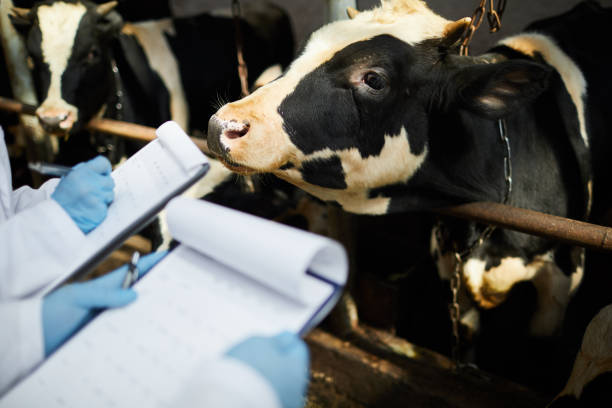
An animal quarantine certificate confirms that the consignment has been handled under the relevant quarantine procedure and has met the requirements recorded on the certificate at the time of issuance.
Depending on the type of consignment, the procedure may include:
- Reviewing application documents;
- Verifying the origin and destination;
- Checking the quantity or identification of animals;
- Conducting a clinical inspection;
- Inspecting animal products, packaging, or storage conditions;
- Checking the transport vehicle or container;
- Collecting samples when required;
- Applying or confirming veterinary hygiene measures;
- Issuing the appropriate certificate form.
The certificate should not be interpreted more broadly than its actual content. It does not prove that the shipment has completed every other regulatory or commercial requirement.
For example, a shipment may still require:
- A sales invoice;
- A transport contract;
- A warehouse release note;
- Slaughter-control documents;
- Food safety documents;
- Customs procedures;
- Product quality inspection;
- Market-specific certificates;
- Traceability records requested by the buyer.
2. Common Names and Official Document Names
Farm owners, traders, and transport operators often use several expressions interchangeably:
- Animal quarantine certificate;
- Quarantine certificate;
- Veterinary certificate;
- Health certificate.
These terms may refer generally to veterinary documentation, but they should not be treated as exact substitutes in an official application.
The appropriate name and form depend on:
- Domestic transport, export, import, or transit;
- Terrestrial or aquatic animals;
- Live animals or animal products;
- The direction of trade;
- The procedure and certificate template currently in force.
Before preparing a form, the applicant should confirm:
- The official name of the procedure;
- The correct application form;
- The correct certificate category;
- The receiving authority;
- The required submission method.
This reduces the risk of using an outdated template or a form intended for another type of consignment.
3. When May a Quarantine Certificate Be Required?

3.1 Transport outside a province
When animals or animal products included in the applicable quarantine list are transported outside the province of origin, the consignment owner needs to check whether the inter-provincial quarantine procedure applies.
The decision should be based on:
- Type of animal or product;
- Origin;
- Destination;
- Transport purpose;
- Current disease situation;
- Exemption conditions, if any;
- Temporary disease-control measures.
The fact that a shipment is sold commercially does not by itself determine the quarantine obligation. The subject and route still need to be checked against the current regulations.
3.2 Transport within the same province
Transport within the same province is generally not processed under the procedure for transporting a quarantined consignment outside a province.
However, the shipment may still be subject to:
- Origin-control requirements;
- Disease prevention and control measures;
- Slaughter control;
- Veterinary hygiene requirements;
- Local movement restrictions;
- Temporary rules during an outbreak.
“Within the same province” should therefore not be understood as exemption from all veterinary controls.
3.3 Export
Exported animals and animal products may need to meet both Vietnamese quarantine requirements and the veterinary conditions of the importing country.
Before confirming an order, the exporter should identify:
- Whether the product is permitted in the destination market;
- Whether the farm, slaughterhouse, or processing plant needs approval;
- The certificate template accepted by the importing authority;
- Required disease tests;
- Isolation or surveillance conditions;
- Product and batch identification requirements;
- Traceability information;
- Storage and transport conditions;
- Additional buyer specifications.
A certificate acceptable for one market may not be accepted for another.
3.4 Import
Imported consignments may be subject to:
- Registration before import;
- Risk analysis;
- A veterinary certificate from the exporting country;
- Border-gate declaration;
- Physical inspection;
- Isolation;
- Sampling;
- Storage pending results;
- Conditions for movement to a designated location.
Live animals, fresh products, frozen products, processed products, feed materials of animal origin, and biological materials may follow different procedures.
The official terrestrial-animal regulation includes separate provisions for import registration, border-gate quarantine declaration, isolation, sampling, and certificate issuance.
3.5 Transit and other trade forms
Quarantine requirements may also apply to:
- Transit through Vietnam;
- Temporary import for re-export;
- Temporary export for re-import;
- Border-gate transfer;
- Bonded warehouse movements;
- On-the-spot export or import;
- Animals attending exhibitions, competitions, or events;
- Certain consignments carried by travelers.
The correct process should be identified according to the exact transaction rather than being treated as a normal domestic shipment.
4. Start with a Five-Question Eligibility Check
Before collecting documents, the consignment owner should answer five questions.
Question 1: Is the consignment terrestrial or aquatic?
Terrestrial animals and products are governed separately from aquatic animals and products.
Do not use terrestrial-animal lists, application forms, or procedures for aquatic consignments, and vice versa.
Question 2: Is the subject included in the quarantine list?
The common product name is not always enough to determine the obligation.
The applicant should identify:
- Species;
- Product form;
- Level of processing;
- Intended use;
- Origin;
- Relevant appendix;
- Possible exemption.
Question 3: What is the direction of movement?
The procedure differs among:
- Transport within a province;
- Transport outside a province;
- Export;
- Import;
- Transit;
- Temporary trade;
- Other regulated forms.
Question 4: What is the purpose?
Examples include:
- Commercial farming;
- Breeding;
- Slaughter;
- Processing;
- Research;
- Exhibition;
- Export production;
- Personal or companion-animal purposes.
The same species may be subject to different conditions depending on its purpose.
Question 5: Is there a special disease situation?
Additional measures may apply when the origin or destination is:
- An outbreak area;
- A threatened zone;
- A buffer zone;
- An area under movement control;
- A locality applying temporary disease measures.
Routine experience from an earlier shipment should not be applied automatically when the disease situation has changed.
5. Which Animals and Products Should Be Checked?

5.1 Terrestrial animals
Groups that may need to be checked against the applicable list include:
- Pigs;
- Chickens;
- Ducks;
- Muscovy ducks;
- Geese;
- Quails;
- Buffaloes;
- Cattle;
- Goats;
- Sheep;
- Horses;
- Rabbits;
- Breeding animals;
- Certain pets and laboratory animals;
- Semen, embryos, and reproductive materials.
The exact obligation must be determined from the current list and the shipment circumstances.
5.2 Terrestrial animal products
Products that may require review include:
- Fresh meat;
- Chilled meat;
- Frozen meat;
- Offal;
- Raw milk;
- Eggs;
- Hides and skins;
- Hair;
- Horns and hooves;
- Slaughter by-products;
- Raw materials of animal origin;
- Other products listed under the applicable regulations.
Processing or commercial packaging does not automatically mean that the product is exempt. The exemption must match the product description and conditions in the current list.
5.3 Aquatic animals and products
Aquatic consignments may include:
- Live fish;
- Shrimp;
- Mollusks;
- Breeding aquatic animals;
- Aquatic animals from outbreak areas;
- Aquatic products for farming, processing, export, or import;
- Disease specimens or biological materials in certain cases.
The procedure depends on the species, product form, origin, intended use, and disease risk.
6. Types of Quarantine Certificates

The certificate type should match the movement and purpose of the consignment.
| Certificate category | Typical application | Main information linked to the certificate |
| Domestic transport quarantine | Animals or products subject to quarantine moving outside a province | Origin, destination, consignment details, vehicle and validity |
| Export quarantine | Animals or products leaving Vietnam | Vietnamese requirements and conditions of the importing market |
| Import quarantine | Animals or products entering Vietnam | Exporting-country documents, inspection, isolation or sampling where applicable |
| Transit or other regulated movement | Goods passing through or handled under a special trade form | Route, control conditions and applicable procedure |
The certificate should be reviewed as a shipment-specific document rather than a reusable general license.
7. Build the Application File in Five Document Groups
Instead of collecting papers without a clear system, applicants can organize the file into five groups.
7.1 Group 1: Application and applicant information
This group may contain:
- Quarantine application or declaration form;
- Name of the consignment owner;
- Address;
- Contact information;
- Identification or business information when required;
- Authorized representative information;
- Power of attorney if another party submits the application.
The applicant’s name should be consistent across the form, commercial documents, origin records, and other supporting papers.
7.2 Group 2: Consignment information
The application should clearly identify:
- Animal species or product name;
- Breed or category when relevant;
- Quantity;
- Weight;
- Number of packages;
- Batch or lot number;
- Identification marks;
- Intended use;
- Expected transport date.
Descriptions should be specific enough to match the actual consignment.
Avoid inconsistent descriptions such as:
- “Poultry” in one document and “broiler chickens” in another;
- Different quantities between the application and invoice;
- Different product names between the packing list and certificate request;
- Different batch numbers across documents.
7.3 Group 3: Origin and destination records
Depending on the procedure, this group may include:
- Farm or facility information;
- Herd or flock records;
- Purchase contract;
- Sales invoice;
- Warehouse release note;
- Production batch records;
- Farming-area information;
- Traceability documents;
- Name and address of the receiving facility;
- Slaughterhouse or processing-plant information.
The origin stated in the application should match the place where the consignment is available for inspection.
7.4 Group 4: Animal-health and technical records
This group may include:
- Vaccination records;
- Herd or flock health records;
- Disease-monitoring information;
- Previous test reports;
- Veterinary treatment records;
- Isolation records;
- Facility surveillance records;
- Other technical documents requested for the procedure.
Not every consignment needs all of these documents.
The applicant should not assume that:
- Every species requires the same vaccines;
- One old test report remains valid indefinitely;
- A vaccination record automatically replaces testing;
- A previous consignment’s health documents can be reused without review.
7.5 Group 5: Transport and commercial records
This group may include:
- Vehicle registration number;
- Vehicle type;
- Container number;
- Transport operator information;
- Planned route;
- Commercial contract;
- Invoice;
- Bill of lading;
- Packing list;
- Customs information;
- Storage location;
- Import or export approval documents;
- Veterinary certificate from the exporting country.
For cross-border consignments, commercial and quarantine documents should use consistent product, weight, package, and destination information.
8. Domestic Inter-Provincial Application Checklist

For a domestic consignment moving outside a province, applicants should confirm the following before submission.
Consignment identification
- The animal or product is included in the relevant quarantine list;
- The correct species or product description has been used;
- Quantity and weight have been verified;
- The transport purpose is clear;
- The destination is final and accurate.
Origin information
- The origin facility is correctly identified;
- Records proving origin are available when required;
- Herd or flock information can be cross-checked;
- The consignment is available at the stated inspection location.
Health information
- Animals have been monitored for abnormal signs;
- Relevant vaccination information is available;
- Previous treatments have been recorded;
- Required tests have been arranged when applicable;
- Any suspected disease has been reported to the responsible veterinarian.
Vehicle information
- The vehicle matches the application;
- The loading compartment has been cleaned;
- No waste remains from the previous trip;
- The vehicle is suitable for the animal or product;
- Required covering, ventilation, drainage, or temperature control is available.
Submission information
- The correct form is being used;
- The receiving authority has been confirmed;
- The submission method has been confirmed;
- The proposed inspection schedule is realistic;
- Sufficient time has been allowed for possible testing.
9. Export Application Checklist
Exporters should start by obtaining the veterinary requirements of the importing market.
Confirm market access
Before production or loading, confirm:
- The product is permitted;
- The species and product form are accepted;
- The facility is eligible;
- The farming area or production chain meets market requirements;
- The certificate template is recognized.
Confirm testing and certification requirements
Check:
- Diseases or indicators to be tested;
- Sampling stage;
- Laboratory requirements;
- Validity of test results;
- Isolation or monitoring period;
- Additional declarations required on the certificate.
Align commercial and technical documents
Cross-check:
- Product name;
- Scientific name where required;
- Batch number;
- Quantity;
- Weight;
- Container number;
- Destination;
- Consignee;
- Facility code;
- Production date;
- Storage conditions.
An inconsistency in one field may delay certificate issuance even when the products themselves meet the technical requirements.
10. Import Application Checklist

Importers should complete preparation before the goods arrive.
Confirm whether pre-registration is required
Depending on the item, the importer may need to:
- Register the import;
- Obtain written guidance or approval;
- Complete risk analysis;
- Confirm the exporting facility;
- Arrange an isolation or storage location.
Review the exporting-country certificate
Check whether the document contains:
- Correct competent authority;
- Accepted certificate form;
- Consignment information;
- Origin information;
- Required disease declarations;
- Signature and official confirmation;
- Consistent product and quantity details.
Prepare arrival documents
Common documents may include:
- Quarantine application or declaration;
- Contract;
- Invoice;
- Bill of lading;
- Packing list;
- Exporting-country veterinary certificate;
- Permit or approval where required;
- Storage information;
- Facility documentation;
- Risk-analysis records where applicable.
The terrestrial-animal circular provides different steps for import registration, quarantine declaration, inspection, sampling, isolation, and certificate issuance depending on the type of import.
11. Step-by-Step Application Process
Step 1: Identify the exact procedure
Before completing a form, determine:
- Terrestrial or aquatic;
- Animal or animal product;
- Domestic, export, import, or transit;
- Quarantine or exemption status;
- Correct authority;
- Correct form;
- Submission channel.
If any of these points is unclear, contact the competent veterinary authority before arranging transportation.
Step 2: Prepare one master consignment information sheet
A master information sheet can reduce inconsistencies.
It should contain:
- Applicant name;
- Origin;
- Destination;
- Species or product;
- Quantity;
- Weight;
- Batch number;
- Vehicle;
- Transport date;
- Purpose;
- Contact person.
Use this sheet to complete every application, invoice, transport document, and supporting record.
Step 3: Collect supporting documents
Prepare only the documents relevant to the procedure, but make sure they are:
- Current;
- Legible;
- Consistent;
- Properly signed or confirmed where required;
- Matched to the consignment;
- Available in the required format.
Do not rely on a generic checklist copied from a previous shipment.
Step 4: Submit to the correct authority
Submission may be available:
- In person;
- By post;
- Through a public service portal;
- Through the National Single Window;
- By another channel permitted under the relevant procedure.
The available method depends on the type of quarantine, locality, border gate, and administrative system.
Step 5: Respond to document-review requests
The authority may request the applicant to:
- Correct a form;
- Clarify the origin;
- Update vehicle information;
- Provide an omitted document;
- Adjust inconsistent quantities;
- Submit an additional technical record.
Applicants should respond before the planned inspection date when possible.
Step 6: Prepare the consignment for inspection
The actual animals or products should match the application.
Preparation may include:
- Gathering animals at the stated location;
- Making identification marks visible;
- Preparing product packages for inspection;
- Providing access to the warehouse;
- Having the vehicle available;
- Arranging staff to assist;
- Preparing records for cross-checking.
Step 7: Physical inspection and sampling where required
Depending on the procedure, the authority may:
- Inspect the clinical status of live animals;
- Verify species, quantity, identification, or weight;
- Examine products and packaging;
- Check storage conditions;
- Inspect the vehicle;
- Collect samples;
- Confirm cleaning, disinfection, or sealing measures.
Not every consignment is sampled. The need for testing depends on the procedure, product, disease situation, market requirements, and risk controls.
Step 8: Complete required corrective or technical measures
If the shipment does not yet meet the requirements, the applicant may need to:
- Supplement documents;
- Correct information;
- Replace inappropriate packaging;
- Clean or disinfect the vehicle;
- Wait for testing;
- Apply another veterinary hygiene measure;
- Separate animals showing abnormal signs;
- Adjust the transport arrangement.
Step 9: Receive and review the certificate
Do not file the certificate immediately without checking it.
Review:
- Applicant name;
- Consignment description;
- Species;
- Quantity or weight;
- Origin;
- Destination;
- Vehicle;
- Issue date;
- Validity;
- Certificate number;
- Attached conditions;
- Seal, signature, or electronic confirmation.
Report discrepancies before the consignment departs.
Step 10: Keep the certificate with the consignment
The certificate and related records should accompany the shipment as required.
The transporter should know:
- Where the certificate is stored;
- Which consignment it belongs to;
- The approved destination;
- The validity period;
- Any conditions recorded on it;
- Who to contact if the route or vehicle changes.
12. Where Should the Application Be Submitted?
The receiving authority depends on the procedure and management assignment.
Domestic transport
Applications are generally submitted to the specialized veterinary authority or the assigned unit at the place of origin.
The authority’s local name and administrative structure may differ. Applicants should check:
- The public service portal;
- The relevant specialized authority’s website;
- The local administrative procedure unit;
- Direct guidance from the veterinary authority.
Export, import, and transit
Applications are submitted to the authority responsible for:
- The border gate;
- Isolation site;
- Storage location;
- Export inspection location;
- Transit route;
- Other designated inspection point.
Do not submit an export or import application automatically to the same local unit that handles domestic transport.
13. How Long Does the Process Take?
There is no single processing period that can be safely applied to every case.
The timeline depends on:
- Procedure type;
- Completeness of the documents;
- Inspection schedule;
- Consignment location;
- Need for sample testing;
- Laboratory turnaround time;
- Isolation requirements;
- Disease situation;
- Market requirements;
- Border-gate operations.
Cases involving only document review and inspection may be completed sooner than cases requiring laboratory results.
Applicants should ask the receiving authority:
- When the application should be submitted;
- When the consignment must be ready;
- Whether testing is expected;
- When results may be available;
- Whether the authority accepts applications outside normal working hours;
- Whether weekend or holiday schedules affect processing.
14. How Long Is the Certificate Valid?
The applicable validity period is the period stated on the issued certificate.
It may depend on:
- Live animals or animal products;
- Route;
- Distance;
- Disease status;
- Storage conditions;
- Transport conditions;
- Importing-market requirements;
- Other notes on the certificate.
Do not calculate validity based only on experience from a previous shipment.
Before departure, check that:
- The certificate is still valid;
- The vehicle will leave within the permitted period;
- The expected arrival time is consistent with the certificate;
- The destination has not changed;
- The consignment still matches the approved quantity and description.
15. What Happens When Shipment Information Changes?
A quarantine certificate should not be altered independently.
Contact the issuing authority if there is a change to:
- Quantity;
- Weight;
- Animal identification;
- Product batch;
- Destination;
- Transport date;
- Vehicle;
- Route;
- Consignee;
- Shipment structure.
The authority will determine whether the change can be adjusted, requires reissuance, or requires a new procedure.
16. Can One Certificate Be Used for Multiple Trips?
A certificate is linked to the consignment information stated on it.
If a shipment will be:
- Divided into several vehicles;
- Delivered in separate trips;
- Delivered to multiple locations;
- Partially released;
- Transported on different dates;
the consignment owner should discuss the arrangement before issuance.
Do not assume that one certificate can automatically cover every partial shipment.
Official terrestrial quarantine forms provide for original, copy, and electronic certificates under specified conditions, but their use must follow the applicable procedure and the information issued by the competent authority.
17. Document-Control Checklist Before Submission
Applicant details
- The legal or personal name is correct;
- The address is consistent;
- Contact information is current;
- Authorization documents are available if needed.
Consignment details
- Species or product name is consistent;
- Quantity and weight have been checked;
- Batch and identification numbers match;
- Purpose is clearly stated;
- Packaging information is accurate.
Origin and destination
- Origin address is correct;
- Receiving facility is correctly named;
- Province and locality are consistent;
- The actual route matches the declared movement.
Health and technical records
- Vaccination records correspond to the animals;
- Test results belong to the correct consignment or group;
- Dates are within the period accepted by the authority;
- Treatment or disease information has not been omitted;
- Copies are readable.
Vehicle and timing
- Vehicle registration is correct;
- Transport date is realistic;
- Inspection time has been confirmed;
- The vehicle will be available when needed;
- Cleaning and disinfection have been completed.
Form and submission
- Correct application form;
- Correct receiving authority;
- Correct submission channel;
- Required signatures or confirmation;
- All attachments included.
18. Common Application Errors
Using a general checklist for every shipment
A pig consignment, frozen poultry shipment, breeding-animal shipment, and imported aquatic product do not necessarily require the same documents.
Better approach: Identify the procedure first and build the checklist afterward.
Inconsistent quantities
The application may state one quantity while the invoice, warehouse release note, or actual consignment shows another.
Better approach: Confirm the final quantity before submitting.
Incorrect destination
A buyer’s office address may be entered instead of the actual farm, slaughterhouse, warehouse, or processing location.
Better approach: Confirm the physical delivery and inspection destination.
Vehicle changes after certificate preparation
The originally declared vehicle may become unavailable.
Better approach: Contact the issuing authority before using another vehicle.
Registering too late
The applicant submits the form immediately before loading, leaving no time for correction or testing.
Better approach: Register early and separate the administrative schedule from the final loading schedule.
Assuming testing is never required
A previous shipment may not have been sampled, but a new shipment may be treated differently because of product type, disease risk, market requirement, or inspection plan.
Better approach: Ask whether sampling may apply before confirming delivery time.
Concealing abnormal animals
Transporting animals showing signs of disease without professional assessment can increase disease risk and create regulatory consequences.
Better approach: Separate abnormal animals and contact the responsible veterinarian or authority.
Treating the certificate as a reusable permit
A certificate issued for one consignment is used for another shipment.
Better approach: Match every certificate to the actual consignment, route, vehicle, and validity period.
19. Practical Scenarios
Scenario 1: Market pigs transported to another province
A farm plans to send market pigs to a slaughterhouse in another province.
The farm should:
- Confirm that the consignment is subject to quarantine;
- Check the disease status of the origin area;
- Prepare origin and herd records;
- Review relevant vaccination information;
- Confirm the receiving slaughterhouse;
- Register with the competent authority;
- Prepare the animals and vehicle for inspection;
- Review the issued certificate before departure.
If the number of pigs changes after inspection, the farm should not edit the certificate independently.
Scenario 2: Breeding chickens delivered to a farm
The buyer and seller should agree in advance on:
- Which party applies;
- Which farm is listed as the origin;
- Which facility is the destination;
- The number and identification of birds;
- Relevant health and vaccination records;
- The transport vehicle;
- Who carries the certificate.
The buyer should verify the certificate when receiving the consignment.
Scenario 3: Frozen poultry meat for export
The exporter needs to confirm the importing market’s requirements before packing and loading.
The document file may need to align:
- Certificate template;
- Facility information;
- Product name;
- Batch number;
- Production date;
- Container number;
- Weight;
- Test results;
- Destination;
- Consignee.
The quarantine process should be coordinated with customs and food safety procedures without assuming that one procedure replaces the others.
Scenario 4: Imported animal product
Before arrival, the importer should determine:
- Whether registration is required;
- Whether the product is subject to risk analysis;
- Which exporting-country certificate is accepted;
- Where the shipment will be inspected or stored;
- Whether sampling is expected;
- Whether the goods may be moved while results are pending.
The commercial documents and veterinary certificate should be reviewed before the vessel or vehicle arrives.
20. Frequently Asked Questions

Is a quarantine certificate required when transporting animals within the same province?
This is generally not processed as inter-provincial quarantine. However, local disease-control, origin, slaughter-control, and veterinary-hygiene requirements may still apply.
Can the certificate be applied for online?
Some procedures may be available through public service portals or single-window systems. Availability depends on the procedure, locality, and border gate.
Does every application require test results?
No. Testing depends on the consignment, disease situation, procedure, market, and instructions of the competent authority.
Can old vaccination records be reused?
They may support cross-checking if relevant, but they do not automatically remain valid for every new consignment or replace a procedure-specific requirement.
Can the transporter apply instead of the farm owner?
The applicant may be the consignment owner, facility owner, or an authorized organization or individual, depending on the procedure. The parties should decide who provides information, submits the documents, and carries the certificate.
Does the certificate replace an invoice?
No. It confirms compliance with the quarantine requirements recorded on the certificate. Commercial and transport documents may still be required.
Can an expired certificate be extended?
The consignment owner should contact the issuing authority. The authority will determine whether adjustment, reissuance, or a new application is required.
Can the destination be changed after issuance?
The certificate should not be modified independently. Contact the issuing authority before changing the destination.
What should be done if the animals become sick after the certificate is issued?
The consignment should not be transported mechanically just because the certificate has already been issued. Contact a veterinarian or the competent authority for guidance.
Should a copy of the certificate be kept after delivery?
The consignment owner should retain the certificate and related records according to the applicable management process and internal traceability needs.
Professional and Legal Note
This article provides a practical overview and does not replace official legal documents, published administrative procedures, or guidance from the competent veterinary authority.
Lists, forms, testing requirements, certificate templates, submission methods, processing timelines, and responsible authorities may vary according to:
- Animal or product type;
- Terrestrial or aquatic group;
- Origin;
- Destination;
- Disease situation;
- Transport purpose;
- Direction of trade;
- Market requirements;
- Current legal amendments.
Before submitting an application, the consignment owner should check the current procedure and confirm the requirements with the authority responsible for the specific case.
Strengthen Quarantine Documentation and Livestock Data Management at VIETSTOCK 2026
Preparing an animal quarantine certificate requires accurate information long before the application is submitted. Farms and businesses need to manage livestock origin, vaccination history, test results, animal numbers, treatment records, transport details, and individual or batch identification consistently.
When information is stored in separate files, recorded manually, or updated by different departments, businesses may spend additional time checking records and correcting discrepancies before transportation.
At VIETSTOCK 2026, livestock producers, veterinary professionals, testing service providers, transport operators, processing companies, and technology businesses can explore solutions supporting more reliable quarantine preparation and livestock-data management.
Visitors can:
- Explore software for farm, herd and flock, vaccination, treatment, and quarantine-record management.
- Discover animal identification, tagging, and traceability technologies for individual animals and production batches.
- Connect with testing service providers, veterinary-equipment suppliers, and herd and flock health-monitoring companies.
- Discuss data integration with technology providers to improve existing operational workflows.
- Review solutions supporting the storage, updating, and cross-checking of information before quarantine registration.
Expected to feature more than 300 brands, over 10,000 sqm of exhibition space, and 13,000 trade visitors from more than 40 countries and territories, VIETSTOCK 2026 creates opportunities for industry stakeholders to exchange practical approaches to record standardization, traceability, and livestock-health management.
Alongside the exhibition and business-networking activities, VIETSTOCK 2026 will also organize an On-Farm Seminar Series, bringing practical knowledge on herd and flock management, disease prevention, biosecurity, and livestock-production efficiency to key farming provinces.
Date: 21–23 October 2026
Venue: Saigon Exhibition and Convention Center – SECC, 799 Nguyen Van Linh Street, Tan My Ward, Ho Chi Minh City, Vietnam
Event website: VIETSTOCK 2026
👉 Register to visit VIETSTOCK 2026 and explore solutions for livestock records, traceability, and quarantine-data management.
👉 Learn more about the VIETSTOCK 2026 On-Farm Seminar Series.
CONTACT INFORMATION:
Exhibiting: Ms. Sophie Nguyen – [email protected]
Visitor Support: Ms. Phuong – [email protected]
Marcom Support: Ms. Anita Pham – [email protected]