Florfenicol in Veterinary Medicine: Uses, Principles of Responsible Use, and Safety Considerations
Florfenicol is an amphenicol antimicrobial used in veterinary medicine for specific animal species and indications. Learn about its formulations, responsible use, resistance risks, withdrawal-period management, and key safety considerations in livestock production.
Florfenicol is a synthetic antimicrobial belonging to the amphenicol class and is used in veterinary medicine for certain animal species and specific indications, depending on the authorized product. In livestock production, florfenicol is commonly discussed in relation to certain bacterial infections, particularly respiratory diseases in pigs, poultry, or cattle when the specific product is appropriately indicated.
However, the fact that an antimicrobial has activity against a broad range of bacteria does not mean that it is appropriate for every herd or flock showing coughing, fever, or reduced feed intake.
Before florfenicol is used, several questions should be addressed:
- Is the disease actually associated with a bacterial infection requiring antimicrobial treatment?
- Is florfenicol within the authorized indication of the specific product for the relevant species and production group?
- Is the suspected or isolated organism likely to be susceptible?
- Should an injectable, drinking-water, or premix formulation be used?
- Is the animal part of a food-producing group that requires withdrawal-period control?
- If treatment is unsuccessful, is antimicrobial resistance the cause, or could other factors be involved?
In Vietnam, florfenicol is listed in the regulatory category referred to in Vietnamese as “kháng sinh rất quan trọng.” In WHO terminology, highly important is the appropriate English category wording rather than “very important.”
Under Vietnam’s antimicrobial-management roadmap for livestock production, veterinary medicines containing antimicrobials in this category were permitted to remain in circulation and be used for disease-prevention purposes until 31 December 2021. From 1 January 2022, florfenicol was no longer permitted for disease-prevention purposes under this roadmap.
Use for treatment or preventive treatment as defined under Vietnamese veterinary regulations should comply with veterinary prescription requirements, the specific product label, and professional veterinary assessment.
1. First, Understand What Florfenicol Is and Which Bacteria It May Affect

Florfenicol is a synthetic antimicrobial in the amphenicol class. It is structurally related to chloramphenicol but was developed for veterinary use.
Florfenicol acts by binding to the 50S subunit of the bacterial ribosome, disrupting bacterial protein synthesis. When protein synthesis is inhibited, the growth and multiplication of susceptible bacteria are restricted.
Florfenicol is generally described as primarily bacteriostatic, although its actual effect may depend on factors including:
- Bacterial strain;
- Drug concentration;
- Site of infection;
- Animal species;
- Product formulation;
- Clinical circumstances.
How Does Florfenicol Differ From Chloramphenicol and Thiamphenicol?
Florfenicol differs structurally from chloramphenicol and does not contain the characteristic nitro group found in chloramphenicol.
Compared with thiamphenicol, florfenicol has structural modifications that may reduce the effect of certain resistance mechanisms involving acetylation.
This means that, from a mechanistic perspective, some bacterial strains resistant to chloramphenicol or thiamphenicol through this particular mechanism may remain susceptible to florfenicol.
However, it should not be assumed that:
“If a bacterium is resistant to chloramphenicol, florfenicol will definitely still work.”
Susceptibility should be evaluated at the strain level. In recurrent disease, treatment failure, or herds and flocks with substantial antimicrobial-use histories, culture and antimicrobial susceptibility testing (AST) should be considered when appropriate.
Antibacterial Spectrum of Florfenicol
Florfenicol has activity against many Gram-negative bacteria, certain Gram-positive bacteria, and some Mycoplasma.
Organisms that may appear on product labels or in professional veterinary references include:
- Pasteurella multocida;
- Mannheimia haemolytica;
- Glaesserella parasuis;
- Actinobacillus pleuropneumoniae;
- Certain Streptococcus spp.;
- Certain Mycoplasma species.
Organisms such as E. coli, Salmonella spp., or other bacteria should only be considered treatment targets when they fall within the authorized product indication or when appropriate professional evidence supports use for the relevant species and disease condition.
Antibacterial spectrum is not the same as an indication list.
This distinction is important when livestock producers read information about an antimicrobial active ingredient.
2. When May Florfenicol Be Considered, and When Should It Not Be Used?
Florfenicol should not be selected simply because an animal has fever, coughing, or diarrhea.
The likelihood of a bacterial infection should first be assessed.
A practical way to consider this is:
| Situation | May florfenicol be considered? |
| Disease caused by a susceptible bacterium and the product has an appropriate indication | May be considered |
| Respiratory disease with reasonable evidence of a relevant bacterial infection | Depends on species, product, and veterinary assessment |
| Disease primarily caused by a virus | Does not address the viral cause |
| The organism has been identified as resistant to florfenicol | Should no longer be considered an appropriate option |
| The product is not authorized for the animal species | No |
| Disease-prevention use in Vietnam | Not permitted under the current management framework |
| Recurrent disease | Diagnosis should be reassessed and AST considered when appropriate |
In Pigs
Certain florfenicol products may be authorized for respiratory bacterial infections caused by susceptible organisms.
Porcine respiratory disease complex (PRDC) may involve multiple contributing factors. Bacteria such as:
- Pasteurella multocida;
- Glaesserella parasuis;
- Actinobacillus pleuropneumoniae;
may fall within the indications of certain florfenicol products.
However, PRDC is a multifactorial syndrome. If viruses, inadequate ventilation, stocking density, stress, or co-infections are major contributors, antimicrobial selection alone will not resolve the entire problem.
In Poultry
The authorized use of florfenicol in chickens and ducks varies among countries, markets, and individual products.
Certain products in some markets may be authorized for:
- Respiratory bacterial infections caused by susceptible organisms;
- Certain secondary bacterial infections;
- Specific disease conditions stated on the product label.
Instructions for florfenicol use in chickens or ducks from one country should not be applied directly to Vietnam or another market.
In Cattle
Certain florfenicol products are authorized for bovine respiratory disease (BRD) associated with susceptible organisms such as:
- Mannheimia haemolytica;
- Pasteurella multocida;
- Histophilus somni.
Other indications should be confirmed directly from the specific product label.
For cattle producing milk for human consumption, it is especially important to confirm whether the particular product is authorized for that production group.
A milk withdrawal period should not be independently inferred when a product is not approved for lactating dairy cattle producing milk for human consumption.
3. Injectable, Drinking-Water, and Premix Florfenicol Products Are Not Interchangeable
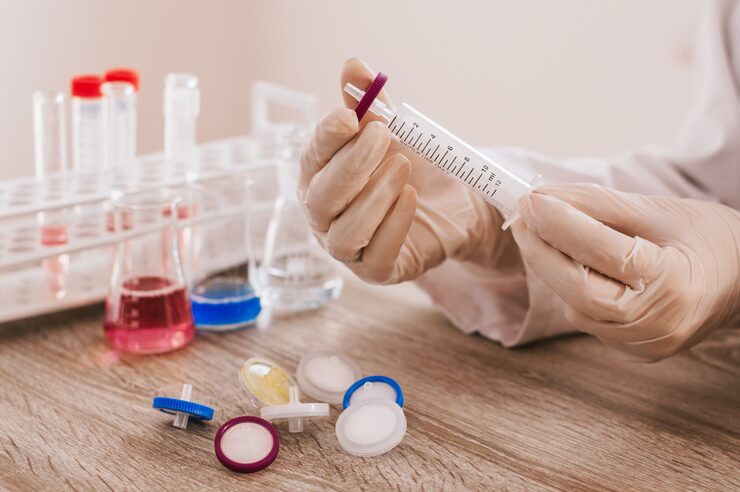
Florfenicol may be available in different dosage forms depending on the product and market, including:
- Injectable solutions;
- Soluble powders or solutions administered through drinking water;
- Premixes administered through feed.
The important point is that each formulation is designed for a specific method of administration.
It should not be assumed that:
“They all contain florfenicol, so an injectable formulation can also be mixed into drinking water if the amount is calculated correctly.”
This is not an appropriate approach.
Injectable and oral formulations may differ in:
- Concentration;
- Excipients;
- Stability;
- Absorption;
- Route of administration;
- Dosing regimen;
- Withdrawal period.
When Should an Injectable Product Be Used?
Only when:
- The product is authorized for injection;
- It is authorized for the relevant animal species;
- The disease falls within its indication;
- A veterinarian determines that this route is appropriate.
An injectable product should not be selected simply because the animal appears “more severely ill.”
When May a Drinking-Water Product Be Used?
Certain products are authorized for administration through drinking water in specific species.
When treating a group of animals through drinking water, relevant factors include:
- Actual water consumption;
- Environmental temperature;
- Condition of the flock or herd;
- Stability of the product after preparation;
- Water-delivery system;
- Length of time medicated water is provided.
When diseased animals reduce water intake, the amount of medicine actually consumed by each animal may be lower than expected.
The concentration should not be independently increased simply to compensate for reduced water intake.
Premix Formulations
Premixes should only be used when the product is authorized for administration through feed.
Feed consumption, mixing uniformity, and reduced appetite during disease may all affect the amount of medicine actually received by the animals.
4. There Is No Single “Standard Florfenicol Dose” for Every Species and Product
Florfenicol doses may be expressed in mg/kg body weight or by another dosing method depending on the specific product.
A table such as:
Pigs = X mg/kg
Chickens = Y mg/kg
Cattle = Z mg/kg
should not be created and then applied to every florfenicol product.
This approach may be incorrect because products differ in:
- Formulation;
- Concentration;
- Route of administration;
- Indication;
- Frequency;
- Treatment duration;
- Market in which the product is authorized.
A safer management approach is:
| Species | Dose | Route | Duration |
| Pigs | According to the specific product label and veterinary prescription | According to the product | According to the indication |
| Chickens and ducks | Only when the product is authorized for the relevant species | According to the label | According to the label |
| Cattle | According to the label and veterinary prescription | According to the product | According to the indication |
When Dosing Is Based on Body Weight
Body weight should be determined using an appropriate method.
If body weight is estimated incorrectly, the calculated amount of medicine will also be inaccurate.
This is particularly important in groups that are:
- Uneven in size;
- Composed of several age groups;
- Highly variable in body weight.
Using an overly simplified average body weight may increase dosing error.
Do Not Independently Increase the Dose Because Disease Is More Severe
More severe disease does not automatically justify a higher dose.
If treatment is unsuccessful, possible causes include:
- Incorrect diagnosis;
- A non-susceptible organism;
- Disease primarily caused by a virus;
- Co-infection;
- An inappropriate route of administration;
- Insufficient drug intake by the animals;
- Uncontrolled housing or management factors.
Increasing the dose does not resolve these underlying problems.
5. If Florfenicol Does Not Work, Resistance Should Not Be Assumed Immediately

Treatment failure is a reason to reassess the case, but it is not by itself proof of florfenicol resistance.
For example, a pig herd may receive florfenicol for respiratory disease but fail to improve after an appropriate period.
Several questions should then be considered:
- Is the disease truly bacterial?
- Is the suspected organism within the drug’s spectrum and authorized indication?
- Have the animals received an adequate amount of medicine?
- Was the formulation administered by the correct route?
- Is there a concurrent viral infection?
- Are ventilation and stocking density continuing to contribute to disease?
- Has florfenicol been used repeatedly in this herd?
- Should samples be collected for culture and AST?
How Can Bacteria Develop Resistance to Florfenicol?
Several mechanisms may contribute to florfenicol resistance.
Efflux pumps
Some bacteria have systems that remove antimicrobials from the cell. The floR gene is one example associated with florfenicol resistance and may be carried on mobile genetic elements.
Alteration of the Target Site
Changes involving the bacterial ribosome may reduce susceptibility to the drug.
Horizontal Transfer of Resistance Genes
Genetic elements carrying resistance determinants may spread between bacteria within livestock-production environments.
Not every case of florfenicol resistance is caused by floR. Multiple resistance mechanisms may be involved.
Practices That Increase Antimicrobial Selection Pressure
- Using florfenicol without adequate evidence of bacterial infection;
- Incorrect dose;
- Incorrect route of administration;
- Incorrect treatment duration;
- Repeated florfenicol use;
- Use for disease-prevention purposes contrary to current regulations;
- Poor disease management that results in frequent antimicrobial use.
Risk reduction should combine:
- Appropriate diagnosis;
- AST when indicated;
- Vaccination;
- Biosecurity;
- Nutrition;
- Hygiene;
- Environmental management;
- Medication-use records.
6. Florfenicol Withdrawal Periods Must Be Managed by Individual Product
One potentially dangerous question is:
“How many days is the withdrawal period for florfenicol?”
That question does not provide enough information.
There is no single withdrawal period for florfenicol as an active ingredient.
The withdrawal period depends on:
- Product;
- Animal species;
- Formulation;
- Route of administration;
- Dosing regimen;
- Type of food product;
- Market.
How Is a Withdrawal Period Different From an MRL?
A withdrawal period is the required period after the final administration of a veterinary medicine before the treated animal or animal-derived product may enter the food supply chain.
An MRL — Maximum Residue Limit is the maximum permitted concentration of residues of an active substance or designated marker residue in a particular food.
The concepts are related but are not the same.
The withdrawal period of a particular product is established to help ensure that residues decline to levels compatible with regulatory requirements when the product is used according to the authorized regimen.
Management by Animal and Production Group
| Production group | Management principle |
| Finishing pigs | Follow the withdrawal period of the specific product |
| Broiler chickens | Only when the product is authorized; follow the specific label |
| Meat ducks | Follow the specific product and applicable market requirements |
| Beef cattle | Follow the specific product |
| Lactating dairy cattle | First confirm whether the product is authorized for cattle producing milk for human consumption |
| Laying poultry | Confirm separately whether the product is authorized for birds producing eggs for human consumption |
For eggs and milk in particular, a withdrawal period should not be independently created for a product that is not authorized for the relevant production group.
Export Products Require Additional Review of Destination-Market Requirements
Requirements for:
- MRLs;
- Marker residues;
- Authorized florfenicol use;
- Eligible production groups;
may differ between markets.
Livestock products intended for export should therefore meet both purchaser requirements and the applicable regulations of the destination market.
Medication Records Help Prevent Premature Marketing
Farms should record:
- Product name;
- Batch number;
- Treatment start date;
- Treatment end date;
- Date of the final administration;
- Treated herd, flock, or individual animal;
- Withdrawal period;
- Earliest permitted marketing date.
These dates should not be managed from memory alone.
An animal that has clinically recovered has not necessarily completed the required withdrawal period.
7. Florfenicol Safety Is Not Only About the Treated Animal
Adverse effects associated with florfenicol vary according to:
- Animal species;
- Product;
- Route of administration;
- Dose;
- Individual patient condition.
Potential reactions listed on individual product labels may include:
- Changes in feed or water intake;
- Gastrointestinal disturbances;
- Injection-site reactions;
- Warnings involving breeding animals or other specific production groups.
An adverse-effect list from one florfenicol product should not be applied universally to every formulation.
Groups Requiring Particular Attention to Product Warnings
The label should be reviewed carefully when florfenicol is being considered for:
- Breeding animals;
- Pregnant animals;
- Young animals;
- Animals with underlying disease;
- Cattle producing milk for human consumption;
- Poultry producing eggs for human consumption.
Do Not Independently Combine Antimicrobials
If florfenicol does not produce the expected response, another antimicrobial should not simply be added to the regimen.
Combination therapy requires consideration of:
- Diagnosis;
- Causative organism;
- AST results;
- Potential interactions;
- Product indications;
- AMR risk;
- Withdrawal period of each medicine.
Antimicrobial combinations should not be selected according to the simplistic assumption:
“One bacteriostatic drug + one bactericidal drug will be stronger.”
The decision should be based on the actual clinical situation.
Safety for People Handling the Medicine
Users should:
- Wear personal protective equipment as specified on the product label;
- Avoid contact with the eyes, skin, and mucous membranes;
- Use needles, syringes, and other equipment according to facility procedures;
- Dispose of sharps in designated sharps containers;
- Avoid disposing of unused medicine into water sources;
- Handle unused medicine and packaging according to facility SOPs and applicable local requirements.
8. Florfenicol Management Checklist: From the Treatment Decision to Marketing

Rather than checking only the medicine before treatment, farms should manage the entire process.
Before Treatment
- Has the cause of disease been assessed?
- Is there adequate evidence of a bacterial infection requiring antimicrobial treatment?
- Is florfenicol appropriate?
- Is the product authorized for the relevant animal species?
- Is it authorized for the relevant production group?
- Should AST be considered?
When Selecting a Product
- Injectable, drinking-water, or premix formulation?
- Correct concentration?
- Correct route?
- Correct indication?
- Product within expiry date?
- Correct storage conditions?
During Treatment
- Are the dose and frequency consistent with the veterinary prescription?
- Are animals receiving adequate water or feed when group medication is used?
- Are adverse reactions present?
- Are clinical signs improving as expected?
- Does the veterinarian need to reassess the case?
After the Final Administration
Clearly record:
- Date and time of the final administration;
- Herd, flock, or individual animal;
- Withdrawal period;
- Expected date on which the withdrawal period ends.
Before Marketing
Check:
- Has the withdrawal period been completed?
- Has any other medicine with a longer withdrawal period also been used?
- Have treated animals been correctly identified?
- Does the destination market have additional requirements?
Frequently Asked Questions About Florfenicol in Veterinary Medicine

Is Florfenicol Mainly Used for Respiratory Disease?
Florfenicol is commonly associated with the treatment of certain respiratory bacterial diseases in pigs, cattle, and some other species when the specific product has an appropriate indication.
However, florfenicol should not be used for every case of coughing or respiratory difficulty because respiratory disease may involve viruses, bacteria, Mycoplasma, environmental factors, or co-infections.
Diagnosis remains an important step before antimicrobial selection.
Should Injectable Florfenicol or a Drinking-Water Product Be Chosen?
There is no universal answer.
The decision should depend on:
- Specific product;
- Animal species;
- Indication;
- Authorized route of administration;
- Condition of the animal;
- Veterinary assessment.
An injectable formulation should not be independently converted for administration through drinking water.
How Many Days Is the Florfenicol Withdrawal Period?
There is no universal number.
The withdrawal period of the specific product being used should be checked.
Can Florfenicol Be Used in Dairy Cattle?
This depends on the specific product.
If the label does not authorize use in cattle producing milk for human consumption, a milk withdrawal period should not be independently inferred in order to justify its use.
Should the Florfenicol Dose Be Increased if Treatment Does Not Work?
No.
The case should be reassessed for:
- Diagnosis;
- Causative organism;
- Antimicrobial susceptibility;
- Route of administration;
- Amount of medicine actually received by the animals;
- Co-infection;
- Farm conditions.
Can Florfenicol Be Used to Prevent Disease in a Herd or Flock?
Under the antimicrobial-management framework described in this article, florfenicol should not be used for disease-prevention purposes in Vietnam.
Florfenicol is included in the regulatory category referred to in Vietnamese as “kháng sinh rất quan trọng.” Antimicrobials in this category were permitted to remain in circulation and be used for disease-prevention purposes until 31 December 2021; from 1 January 2022, this use was no longer permitted under the applicable roadmap.
This should be distinguished from preventive treatment as defined under Vietnamese veterinary regulations, which is a different regulatory concept and must be based on professional veterinary assessment, a veterinary prescription, and applicable regulations.
Note: This article provides general reference information about florfenicol in veterinary medicine and does not replace veterinary diagnosis, prescription, or treatment decisions. Product selection, indication, dose, route of administration, treatment duration, and withdrawal period should comply with the specific product label, applicable regulations, and the requirements of the destination market.
Supporting Responsible Florfenicol Management at VIETSTOCK 2026
Florfenicol illustrates why antimicrobial management on farms involves more than asking whether a medicine “works.” A treatment decision also depends on diagnosis, susceptibility of the causative organism, formulation, route of administration, the amount of medicine animals actually receive, monitoring of treatment response, and control of withdrawal periods before food products enter the supply chain.
VIETSTOCK 2026 is an industry networking platform for livestock producers, veterinarians, veterinary pharmaceutical companies, equipment suppliers, and organizations across the livestock value chain. The event is expected to bring together more than 300 brands, over 10,000 sqm of exhibition area, and 13,000 trade visitors from more than 40 countries and territories.
For antimicrobial management, visitors can explore solutions involving veterinary medicines, diagnostics, antimicrobial susceptibility testing, herd and flock health management, medication-use records, data traceability, and withdrawal-period control. Vaccination, nutrition, housing hygiene, and biosecurity solutions also play an important role in reducing disease pressure and limiting the need for antimicrobial treatment.
Alongside the exhibition, the VIETSTOCK 2026 Livestock Roadshows in Bac Ninh, Dong Thap and Ho Chi Minh City continue to bring practical knowledge on disease prevention, herd health management, responsible medicine use, and improving livestock production efficiency to key livestock-producing regions.
Date: 21–23 October 2026
Venue: Saigon Exhibition and Convention Center (SECC), 799 Nguyen Van Linh Street, Tan My Ward, Ho Chi Minh City, Vietnam
Event website: VIETSTOCK 2026 English website
👉 Visitor registration for VIETSTOCK 2026
👉 Learn more about the VIETSTOCK 2026 Livestock Roadshows
Contact information:
Exhibiting: Ms. Sophie Nguyen – [email protected]
Visitor Support: Ms. Phuong – [email protected]
Marcom Support: Ms. Anita Pham – [email protected]