Swinepox: Clinical Signs, Transmission Routes, and Prevention Measures
Swinepox is a viral disease of pigs that causes characteristic skin lesions, particularly in young pigs. Learn its clinical signs, transmission routes, and practical prevention measures for pig farms.
Swinepox is an infectious viral disease of pigs characterized by pox-like skin lesions. The disease can affect pigs of different ages but is generally more apparent in young pigs, particularly those up to around four months of age. Adult pigs may develop milder or subclinical infections.
Swinepox is usually relatively mild and self-limiting, but it can still spread within a herd, particularly when pigs have skin abrasions, ectoparasites are poorly controlled, and farm-management conditions facilitate transmission between animals.
This article helps livestock producers recognize the clinical signs of swinepox, understand how the virus spreads, and identify practical prevention measures that can be applied on farms.
Key takeaways
- Swinepox is caused by swinepox virus, a member of the genus Suipoxvirus in the family Poxviridae.
- Disease is generally more apparent in young pigs, particularly pigs up to around four months of age, while adult pigs may develop mild or subclinical infections.
- Skin lesions generally begin as reddish macules or papules and may progress to vesicles or vesicle-like lesions, followed by ulceration, crusting, and healing. The overall disease course often lasts approximately 3–4 weeks.
- The virus commonly enters through damaged or abraded skin. Ectoparasites, particularly pig lice, can contribute to mechanical transmission.
- There is currently no commercially available vaccine specifically for swinepox; prevention therefore focuses on hygiene, ectoparasite control, and biosecurity.
- When vesicular or vesicle-like lesions occur, particularly around the mouth, snout, feet, or coronary bands, swinepox should not be assumed without further assessment. Animal movements should not continue as normal until important vesicular diseases have been appropriately excluded.
What Is Swinepox?
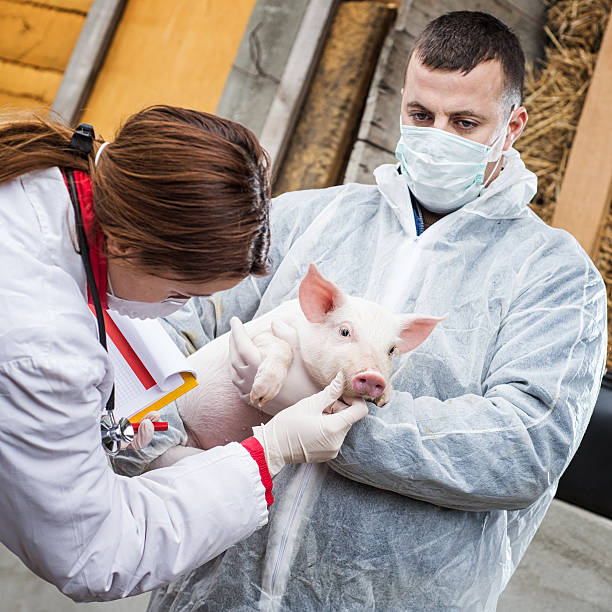
Swinepox is an infectious viral disease of pigs caused by swinepox virus, a member of the Poxviridae family.
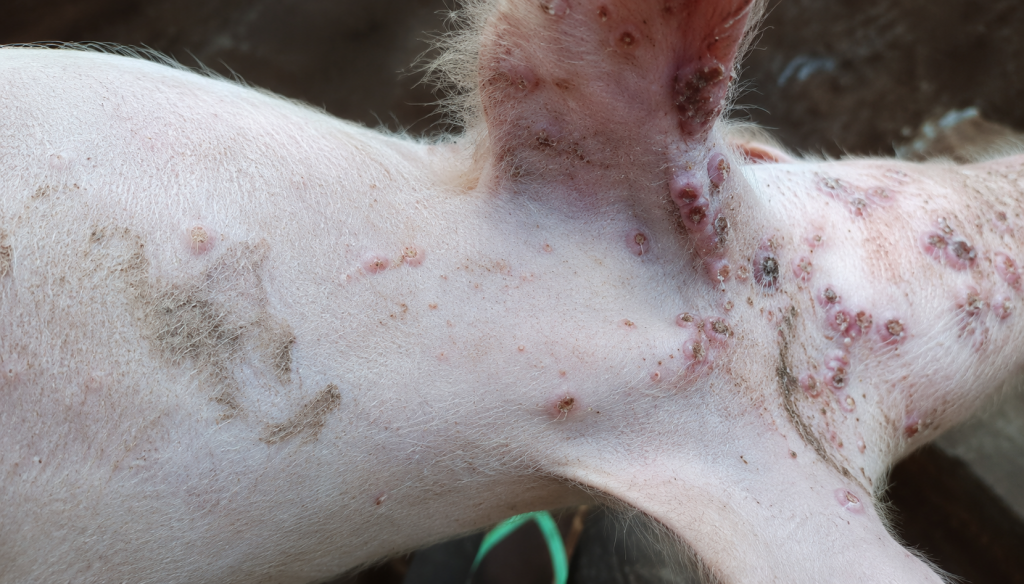
The disease produces characteristic skin lesions. These lesions commonly begin as reddish macules or small papules and may progress to vesicles or vesicle-like lesions, then ulcerate, form scabs, and heal.
The disease is generally mild and self-limiting, particularly in adult pigs. Young pigs may show more obvious lesions and should be monitored closely to help limit transmission and identify secondary complications.
Cause of Swinepox
The causative agent of swinepox is swinepox virus, belonging to the genus Suipoxvirus in the family Poxviridae.
It is a DNA virus capable of persisting for prolonged periods outside the animal. Veterinary reports indicate that the virus may persist in the environment, particularly in dried skin scabs, for up to approximately one year under favorable conditions.
For this reason, removal of contaminated scabs and organic material, proper cleaning of housing, and management of shared equipment are important components of disease control.
Current veterinary descriptions identify swinepox virus as the causative agent of swinepox.
However, the causative agent should not be determined solely from the appearance of skin lesions because other diseases in pigs may also cause vesicles, ulcers, or similar dermatological changes.
When lesions are atypical or important differential diagnoses need to be excluded, a veterinarian may consider confirmatory methods such as PCR or other appropriate laboratory testing.
Epidemiology and Pigs More Commonly Affected
Swinepox has a wide geographic distribution and can occur under different pig-production systems.
Clinical disease is generally more apparent in young pigs, particularly during the first months of life and commonly in pigs up to around four months of age.
Adult pigs may develop mild or subclinical infection and may still contribute to maintenance of the virus within a herd.
The occurrence and spread of disease can be influenced by:
- Skin condition and the presence of abrasions.
- Stocking density and contact between animals.
- Housing hygiene.
- Control of pig lice and other ectoparasites.
- Herd-management and biosecurity procedures.
Mortality is generally low, and most pigs recover in the absence of serious complications.
Economic effects may be associated with slower growth in affected young pigs, additional care requirements, ectoparasite-control costs, and management of skin lesions complicated by secondary bacterial infection.
Clinical Signs of Swinepox
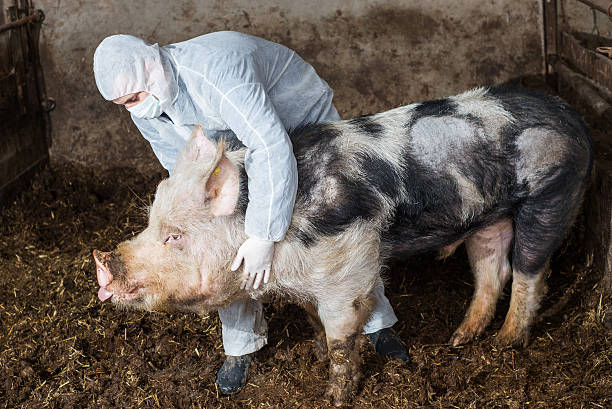
Early recognition can help farms separate affected animals, improve monitoring, and reduce opportunities for transmission.
However, skin lesions alone are not always sufficient for diagnosis. Other vesicular diseases of pigs may have substantially greater animal-health and epidemiological significance and should be excluded when appropriate.
Early Clinical Signs
During the early stage of disease, small reddish macules or papules may develop on the skin.
Lesions may be observed on areas including:
- Abdomen and chest.
- Inner legs or thighs.
- Ears.
- Head or snout.
- Other skin areas depending on disease severity.
Some pigs may show mild reductions in feed intake, lethargy, or other mild systemic clinical signs, although skin lesions are often the most noticeable feature.
Clinical disease is generally more apparent in young pigs than in adults.
Clinical Signs as the Disease Progresses
Reddish macules or papules may progress to vesicles or vesicle-like lesions, followed by ulceration and crusting.
The appearance of individual lesions can vary according to disease stage, and not every lesion necessarily passes through every visible stage in exactly the same way.
Over time, dried scabs are shed and the skin heals.
The overall course of disease commonly lasts approximately 3–4 weeks.
In young pigs or under poor husbandry conditions, skin lesions may become more extensive. Secondary bacterial infection can prolong inflammation and delay healing of affected skin.
Swinepox is generally self-limiting, and most pigs recover without severe complications.
Differentiating Swinepox From Other Skin Diseases in Pigs
Swinepox can be confused with several dermatological conditions and diseases that cause vesicular or vesicle-like lesions.
Important differential diagnoses may include:
- Sarcoptic mange: commonly causes marked pruritus, crusting, and thickened skin, with a lesion pattern that differs from typical swinepox.
- Bacterial dermatitis: may cause inflammation, discharge, or widespread skin lesions and requires assessment of the underlying cause and possible secondary infection.
- Porcine dermatitis and nephropathy syndrome (PDNS): commonly produces red-to-purple skin lesions, hemorrhagic changes, or necrosis accompanied by a different distribution and systemic disease pattern.
- Vesicular diseases: vesicles or vesicle-like lesions around the mouth, snout, feet, or coronary bands may resemble important diseases such as foot-and-mouth disease (FMD), disease associated with Senecavirus A, and other vesicular diseases of pigs.
This is particularly important diagnostically.
If pigs develop vesicular or vesicle-like lesions around the mouth, snout, feet, or coronary bands, particularly when multiple animals are affected at the same time, swinepox should not be assumed and the herd should not continue to be moved as normal.
A veterinarian should be contacted to assess the animals, exclude vesicular diseases of major epidemiological significance, and determine whether sampling, laboratory testing, or regulatory notification is required under the applicable rules.
When necessary, PCR and other appropriate confirmatory tests can support diagnosis.
How Swinepox Is Transmitted
Understanding transmission helps livestock producers identify control points within pig housing and farm-management systems.
Swinepox virus commonly gains entry through damaged skin, while ectoparasites represent an important epidemiological factor in transmission.
Direct Transmission Between Pigs
The virus may spread from infected or virus-carrying pigs to susceptible animals when infectious material comes into contact with abraded or damaged skin.
Potential sources of exposure include:
- Scabs from skin lesions.
- Material from active lesions.
- Other contaminated biological material.
Skin abrasions caused by:
- Rubbing.
- Fighting or biting.
- Rough housing surfaces.
- Ectoparasite bites.
may create sites through which the virus can enter.
Under high-density production conditions, frequent contact and rubbing between pigs may contribute to spread within a pen or between groups.
However, direct contact should not be assumed to be the only or necessarily the dominant route in every outbreak.
Transmission Through the Environment, Equipment, and Farm Personnel
Poxviruses can remain stable for prolonged periods in the environment, particularly in dried scabs and organic material.
Equipment or materials contaminated with scabs or lesion material may contribute to indirect transmission when cleaning and disinfection are inadequate.
Shared equipment such as:
- Shovels.
- Brooms.
- Feeders.
- Drinkers.
- Animal-care equipment.
should be appropriately cleaned and, where practical, separated between production areas.
Farm personnel should also clean or change protective clothing and footwear and perform appropriate hand hygiene when moving between affected and unaffected pig areas.
Ectoparasites deserve particular attention.
The pig louse (Haematopinus suis) is an important mechanical vector associated with swinepox transmission.
Other ectoparasites and insects, including mites and flies, should also be managed as part of general parasite control and farm hygiene. Their role in swinepox transmission should not be assumed to be equivalent to the better-established association with pig lice.
Ectoparasite management should therefore be considered an important part of swinepox prevention and control.
Factors That Can Accelerate Spread Within a Farm
Conditions that may facilitate virus transmission include:
- High stocking density, increasing contact and skin abrasion.
- Inadequate cleaning of housing and equipment.
- Frequent skin injuries or wounds.
- Poor control of pig lice and other ectoparasites.
- Introduction of new pigs without appropriate observation and separation procedures.
- Sharing equipment between production areas without adequate cleaning.
- Inadequate biosecurity between affected and unaffected areas.
Appropriate nutrition and husbandry can support general animal health but do not replace control of the virus source or mechanical vectors.
Prevention of Swinepox
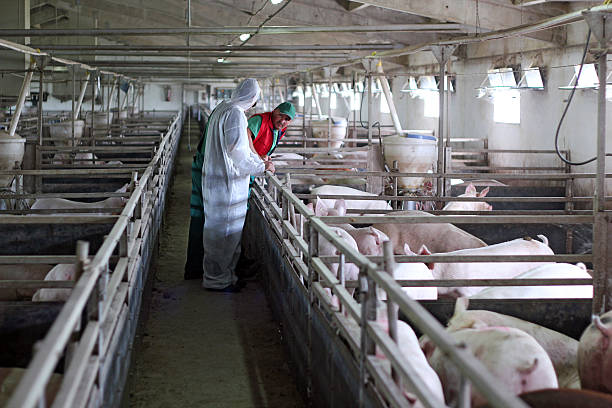
Swinepox prevention primarily relies on herd management, hygiene, ectoparasite control, and reduction of factors that allow the virus to enter through damaged skin.
These measures should form part of the farm’s overall biosecurity program.
Housing Hygiene and Stocking-Density Management
Regular cleaning is a fundamental part of control:
- Remove manure, scabs, and waste material routinely.
- Remove or appropriately manage bedding and materials that may be contaminated with infectious material.
- Clean and disinfect housing using products suitable for the intended purpose and according to label instructions.
- Avoid excessive stocking density that increases rubbing and skin injuries.
- Inspect housing surfaces, fences, and equipment for areas that may injure pigs.
- Control pig lice and other ectoparasites using measures appropriate for the production stage.
- Limit sharing of equipment between affected and unaffected areas.
- Maintain housing conditions that support animal health and welfare.
Because the virus may persist for prolonged periods in contaminated material, hygiene should be maintained continuously rather than intensified only after clinical disease appears.
Managing Replacement Stock and Newly Introduced Pigs
New pigs can introduce many infectious agents into a herd, including diseases associated with skin lesions.
To reduce risk:
- Purchase animals from sources with clear health and origin records.
- Quarantine and observe newly introduced pigs according to the farm’s biosecurity SOP.
- The quarantine period should be based on the farm’s disease-prevention program and veterinary guidance rather than applying an arbitrary fixed period specifically for swinepox.
- Monitor for skin lesions, pig lice, other ectoparasites, and additional clinical signs during quarantine.
- Avoid sharing equipment between quarantine areas and the main herd unless appropriate cleaning and disinfection have been completed.
Vaccination and Supporting General Herd Health
There is currently no commercially available vaccine specifically for swinepox.
Prevention therefore focuses on:
- Housing hygiene.
- Pig-louse and ectoparasite control.
- Reducing causes of skin injury.
- Managing newly introduced pigs.
- Separating equipment between production areas.
- Implementing appropriate farm biosecurity.
- Detecting skin lesions early so affected pigs can be separated and monitored.
Balanced nutrition and appropriate husbandry help maintain the general condition of the herd.
Vitamin, mineral, or nutritional supplementation should be based on actual animal requirements and the farm’s nutrition program.
These measures are not specific prevention methods against swinepox virus and do not replace hygiene, vector control, or biosecurity.
What to Do When Swinepox Is Suspected
There is currently no specific antiviral treatment for swinepox virus infection.
Most affected pigs can recover naturally. Management therefore focuses on monitoring, supportive care, reducing transmission, improving hygiene, and controlling ectoparasites.
Before swinepox is diagnosed, however, important vesicular diseases should be excluded when the clinical presentation is atypical.
Isolate and Monitor Suspected Cases
When suspicious skin lesions are identified, the affected individual or group should be separated from healthy pigs to facilitate monitoring and reduce direct contact.
Pigs should not continue to be mixed between groups or moved between farm areas while the cause of unexplained vesicular lesions remains undetermined.
Monitor:
- Progression of skin lesions.
- Anatomical distribution of lesions.
- Feed and water intake.
- Body temperature and overall condition.
- Inflammation or evidence of secondary infection in affected skin.
- Presence of pig lice or other ectoparasites.
This information can help a veterinarian evaluate the clinical presentation more accurately.
The remainder of the herd should also be observed for new cases, and the level of ectoparasite infestation within the affected housing area should be assessed.
Antibiotics should not be administered simply because skin lesions are present. Antimicrobial treatment should only be considered if a veterinarian identifies a secondary bacterial infection requiring treatment.
Clean and Disinfect Affected Areas
After pigs suspected of infection have been separated, cleaning and hygiene should be intensified in relevant areas:
- Remove scabs, manure, bedding, and organic material.
- Clean surfaces before applying a disinfectant.
- Disinfect housing, feeders, drinkers, and equipment using an appropriate product.
- Do not share equipment between affected and unaffected areas.
- Implement pig-louse and ectoparasite control across the relevant group.
- Farm personnel should clean their hands, footwear, and protective equipment before moving to another area.
Disinfectant selection, concentration, and contact time should follow the product instructions and the farm’s SOP.
Because virus may remain in contaminated scabs and organic material for prolonged periods, physical removal of organic material and dried scabs is an important step before disinfection.
When Should a Veterinarian Be Contacted?
Livestock producers should seek veterinary assessment when:
- It is unclear whether lesions are consistent with swinepox.
- Vesicular or vesicle-like lesions occur around the mouth, snout, feet, or coronary bands, especially when several pigs are affected.
- The number of affected pigs increases rapidly or lesions appear across several pens.
- Pigs develop high fever, marked loss of appetite, weakness, or other abnormal systemic clinical signs.
- Skin lesions become inflamed, produce discharge, or appear secondarily infected.
- Newborn piglets or groups of young pigs are severely affected.
- The disease does not follow the relatively mild, self-limiting pattern usually associated with swinepox.
When unexplained vesicular lesions are present, animals should not continue to be transported or moved as normal before veterinary assessment.
A veterinarian may assess the lesions clinically and, when appropriate, collect samples for testing to confirm swinepox virus or exclude other causative agents.
Supportive treatment and other professional interventions should be performed under veterinary guidance.
Frequently Asked Questions About Swinepox

Can Swinepox Be Transmitted to Humans?
Current evidence does not indicate that swinepox virus is zoonotic or transmitted from pigs to humans.
The known host range is highly restricted to swine.
Nevertheless, personnel handling pigs with skin lesions should continue to use appropriate hygiene and biosecurity measures:
- Wear gloves when directly handling lesions.
- Wash hands after animal care.
- Clean equipment.
- Cover open wounds on the hands.
- Avoid carrying contaminated material into unaffected pig areas.
These measures help reduce transmission of pathogens within the farm and protect workers from other organisms that may be present on affected skin or in the housing environment.
Can Pigs Recover From Swinepox Without Specific Treatment?
Yes.
Swinepox is usually self-limiting, and most pigs recover without specific antiviral treatment.
The overall disease course commonly lasts around 3–4 weeks.
Adult pigs generally develop milder disease, while young pigs, particularly those up to around four months of age, may show more apparent clinical signs.
However, the herd should not simply be left unmanaged while the disease progresses.
Important measures include:
- Monitoring lesions.
- Limiting contact with unaffected pigs.
- Controlling pig lice and other ectoparasites.
- Cleaning affected housing areas.
- Detecting secondary infection or unusual clinical signs.
If the lesions are inconsistent with typical swinepox or animals develop severe systemic disease, veterinary reassessment is needed.
Can Pigs Still Be Marketed When Swinepox Is Present in the Herd?
If pigs develop lesions suspected to be swinepox but the diagnosis has not yet been confirmed, transport or marketing should not proceed automatically.
This is particularly important when pigs have vesicular or vesicle-like lesions involving the mouth, snout, feet, or coronary bands because important vesicular diseases need to be excluded.
If several pigs develop these lesions simultaneously, the herd should not continue to be moved as normal before veterinary assessment.
Once the cause has been appropriately identified, decisions about transport or marketing should consider:
- Health status of the herd.
- Applicable animal-movement and quarantine requirements.
- Local disease situation.
- Guidance from the competent authority or veterinarian where appropriate.
Swinepox itself should not automatically be assumed to result in the same movement restrictions in every situation, but animals should also not be moved while the cause of unexplained vesicular lesions remains unresolved.
Are “Bệnh Đậu Lợn” and “Bệnh Đậu Heo” the Same Disease?
Yes. In Vietnamese veterinary usage, “bệnh đậu lợn” and “bệnh đậu heo” generally refer to the same disease caused by swinepox virus.
The difference is primarily regional language usage:
- “Lợn” is more commonly used in northern Vietnam.
- “Heo” is more commonly used in southern Vietnam.
Regardless of terminology, diagnosis should not be based solely on the name used or on a photograph of skin lesions.
When lesions are atypical, especially when vesicular lesions occur around the mouth or feet, veterinary assessment is needed to exclude other diseases.
Strengthening Swinepox Prevention Through Biosecurity at VIETSTOCK 2026
Swinepox illustrates a common challenge in herd-health management: when skin lesions are not recognized early, affected pigs are not separated promptly, or housing is not properly cleaned and disinfected, infectious material may spread through animal contact, contaminated equipment, the environment, and routine farm-care activities.
For pig farms, disease prevention therefore should not begin only after suspected cases appear. It should include management of incoming pigs, appropriate stocking density, control of external parasites, nutrition, and an integrated biosecurity program.
VIETSTOCK 2026 provides an opportunity for livestock producers, farm owners, veterinarians, and industry businesses to explore solutions that support more proactive disease prevention and swine herd-health management.
The event is expected to bring together more than 300 brands, over 10,000 sqm of exhibition area, and 13,000 trade visitors from more than 40 countries and territories.
At the event, visitors can explore:
- Farm biosecurity: solutions for cleaning, disinfection, management of shared equipment, and separation between affected and unaffected production areas.
- Management of incoming pigs: approaches to quarantine, initial health monitoring, and reducing disease-introduction risks when new pigs enter the farm.
- Parasite and insect control: explore approaches for controlling pig lice, ticks, flies, and other ectoparasites or insects as part of farm parasite-management programs. Pig lice remain the most notable mechanical vector associated with swinepox.
- Nutrition and general health support: explore feed, additives, vitamins, and mineral solutions that support the general condition of pigs during periods of increased disease risk.
- Herd-health monitoring: tools for recording cases, tracking skin-lesion progression, identifying affected production areas, and documenting responses to control measures.
The VIETSTOCK 2026 Livestock Roadshows in Bac Ninh, Dong Thap and Ho Chi Minh City also serve as a practical support channel for local farms, with topics such as disease prevention, herd management, farm hygiene, and biosecurity shared in ways that closely reflect real-world livestock production conditions.
Date: 21–23 October 2026
Venue: Saigon Exhibition and Convention Center (SECC), 799 Nguyen Van Linh Street, Tan My Ward, Ho Chi Minh City, Vietnam
Event website:
VIETSTOCK 2026 English website
👉 Visitor registration for VIETSTOCK 2026
👉 Learn more about the VIETSTOCK 2026 Livestock Roadshows
Contact information:
Exhibiting: Ms. Sophie Nguyen – [email protected]
Visitor Support: Ms. Phuong – [email protected]
Marcom Support: Ms. Anita Pham – [email protected]