Learn how to calculate veterinary drug doses by body weight, convert mg/kg into mL, check product concentrations, and reduce medication errors in livestock production.
How to Calculate Veterinary Drug Doses: Body-Weight-Based Principles and Safety Considerations
Calculating veterinary drug doses is not simply a matter of knowing an animal’s body weight and multiplying it by a fixed number. Before administering any medicine, livestock producers or farm technicians also need to determine which dosing unit is specified on the product label, the concentration or strength of the active ingredient, whether the route of administration is appropriate, and how the calculated amount should be converted into mL, tablets, sachets, or quantities to be prepared for a herd or flock.
For example, two products containing the same active ingredient but at different concentrations will not require the same volume. Similarly, a product labeled in mg/kg cannot be calculated in the same way as one labeled in mL/animal, g/L of drinking water, or g/tonne of feed.
The purpose of understanding dose-calculation formulas is therefore not to create a treatment protocol independently, but to read the product label correctly, verify calculations, and reduce medication errors when using veterinary medicines according to appropriate guidance.
This is especially important in food-producing animals, where incorrect dosing may affect treatment outcomes, the risk of adverse reactions, drug residues, and withdrawal periods.
This article focuses on how to read and verify veterinary drug dose calculations in practical livestock production, from an individual animal to an entire herd or flock.
1. Before Calculating a Dose, Identify the Unit Used on the Product Label
Not every veterinary medicine is dosed in mg/kg.
This is the first point to check on the product label.
Common dosing formats include:
- mg/kg body weight: the number of milligrams of active ingredient per kilogram of animal body weight.
- mL/kg body weight: the volume of product per kilogram of body weight.
- mL/animal: the amount of product specified for each individual animal in a defined target group.
- g/L of drinking water: the amount of product to be mixed into a specified volume of water.
- g/tonne of feed: the amount of product to be mixed into a specified quantity of feed.
- Other dosing methods specified by the manufacturer.
The key principle is to use the exact dosing unit stated on the product label.
If the product label states:
1 mL/10 kg body weight
there is generally no need to convert the instruction back into mg/kg unless there is a professional reason to do so.
In contrast, if the label specifies a dose in mg of active ingredient per kg of body weight, the user also needs to know the product concentration or strength before determining how many mL or dosage units are required.
Do Not Look Only at the Active Ingredient
Two products containing the same active ingredient may differ in:
- Concentration or strength;
- Dosage form;
- Route of administration;
- Approved indications;
- Animal species for which they are approved;
- Withdrawal periods.
Therefore, the dose from one product should not be applied directly to another product simply because both contain the same active ingredient.
Information to Check on the Product Label
Before performing any calculation, at minimum check:
- Active ingredient;
- Strength or concentration;
- Approved animal species;
- Indication;
- Dose;
- Route of administration;
- Frequency;
- Duration of treatment;
- Contraindications and warnings;
- Withdrawal period for food-producing animals, when applicable.
If any important information is missing or the label instructions are unclear, consult a veterinarian or the product supplier rather than making assumptions.
2. How Is an mg/kg Dose Calculated?
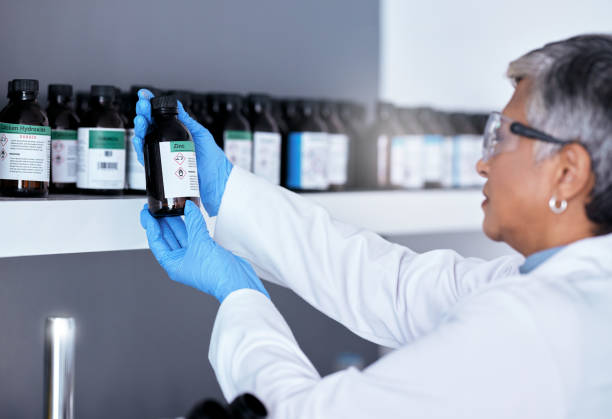
When the product label specifically gives the dose in mg of active ingredient/kg body weight, the basic calculation is:
Total amount of active ingredient required (mg) = Label dose (mg/kg) × Animal body weight (kg)
Mathematical example:
Assume an animal weighs 50 kg and a hypothetical product has a label dose of 10 mg/kg.
The total amount of active ingredient is:
10 mg/kg × 50 kg = 500 mg
This means the calculation gives 500 mg of active ingredient.
It does not yet indicate how many mL of the product should be measured.
To calculate volume, the product concentration must also be known.
Converting mg of Active Ingredient to mL of Product
If a liquid product states its concentration in mg/mL:
Volume required (mL) = Total active ingredient required (mg) ÷ Product concentration (mg/mL)
Continuing the example above, assume the hypothetical product has:
- Dose: 10 mg/kg;
- Animal body weight: 50 kg;
- Concentration: 100 mg/mL.
Total active ingredient:
10 × 50 = 500 mg
Volume:
500 ÷ 100 = 5 mL
These figures are provided only to illustrate the calculation and are not dosing recommendations for any specific veterinary medicine.
Why Is This Conversion Important?
Suppose the required amount is still 500 mg of active ingredient, but two products have different concentrations:
- Product A: 100 mg/mL;
- Product B: 50 mg/mL.
For Product A:
500 ÷ 100 = 5 mL
For Product B:
500 ÷ 50 = 10 mL
The required amount of active ingredient is the same, but the volume of product is completely different.
This is one reason not to memorize doses in statements such as:
“This animal received 5 mL last time.”
A volume is meaningful only when it is linked to the correct product, concentration, and indication.
3. A Dose Calculation Should Be Checked in Four Steps
Rather than memorizing many separate formulas, the calculation process can be checked using four basic steps.
Step 1: Determine Body Weight
When a medicine is dosed according to body weight, the animal’s weight is an important input.
Actual weighing should be preferred when practical.
Visual estimation may be significantly inaccurate, particularly when:
- The herd or flock is not uniform;
- Animals are unusually thin or overweight;
- Breeds have different body conformations;
- The person estimating weight has limited experience.
In some situations, weight may be estimated using heart girth, body length, or species-specific weight charts. However, these methods should still be understood as estimates.
Step 2: Read the Dose Unit Correctly
For example:
- 10 mg/kg;
- 1 mL/10 kg;
- 2 g/L of water;
represent three completely different dosing instructions.
One of the most serious calculation errors is using the correct number with the wrong unit.
Step 3: Identify the Strength or Concentration
If a dose needs to be converted from mg to mL, determine how many milligrams of active ingredient are contained in each mL of product.
For tablets or sachets, determine:
- How many mg are contained in each tablet;
- How many mg or g are contained in each sachet;
- Whether the tablet or sachet is intended to be divided into smaller portions.
Not every tablet can be divided accurately, and not every sachet is designed to be split into smaller portions.
Step 4: Check the Result Before Administration
Extra caution is needed if the calculated result produces:
- A very large volume;
- A very small volume;
- An unusual number of tablets;
- A dose that differs substantially from previous use.
Stop and recheck:
- Body weight;
- Units;
- Decimal point;
- Concentration;
- Formula;
- Product label.
A misplaced decimal point can produce a tenfold error.
4. Mathematical Example: The Same Principle Produces Different Results at Different Body Weights
Assume a completely hypothetical product has:
- Dose: 10 mg/kg;
- Concentration: 100 mg/mL.
The table below is provided only to illustrate the calculation.
| Animal body weight | Calculated active ingredient | Calculated volume |
| 5 kg | 50 mg | 0.5 mL |
| 20 kg | 200 mg | 2 mL |
| 50 kg | 500 mg | 5 mL |
| 100 kg | 1,000 mg | 10 mL |
| 300 kg | 3,000 mg | 30 mL |
This example shows that when a dose is expressed in mg/kg, the total amount of active ingredient increases with body weight.
However, this table does not mean that:
- Chickens, pigs, and cattle can all use this hypothetical product;
- Every medicine follows the same linear dosing relationship;
- Every product with a concentration of 100 mg/mL should be used at 10 mg/kg;
- These numbers can be used for actual treatment.
The only purpose of the example is to illustrate the relationship:
Body weight → mg/kg dose → total active ingredient → concentration → volume
When the Calculated Volume Is Very Small
In small animals, the calculated volume may be only a fraction of a milliliter.
In these situations, measurement error can become significant.
Hypothetical example:
- Body weight: 2 kg;
- Dose: 20 mg/kg;
- Concentration: 50 mg/mL.
Total active ingredient:
20 × 2 = 40 mg
Volume:
40 ÷ 50 = 0.8 mL
In practice, if the calculated volume is much smaller, an appropriately sized measuring device should be used.
Do not dilute a medicine independently simply to make measurement easier unless the manufacturer or veterinarian has provided instructions regarding the diluent, dilution ratio, and stability after dilution.
5. How Is Calculating Medication for a Herd or Flock Different From Calculating for One Animal?
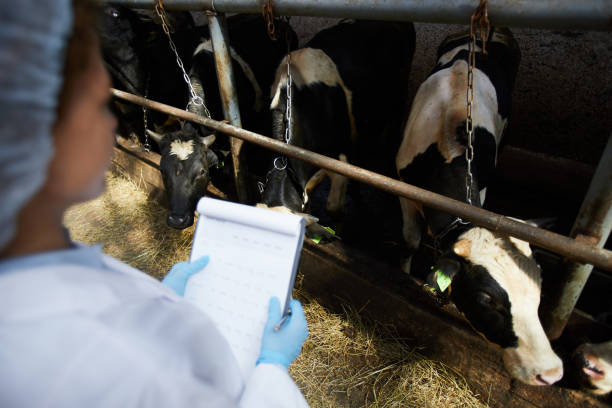
This is an area where errors can easily occur.
For an individual animal, body weight can be relatively straightforward to determine.
However, when medicines are administered through:
- Drinking water;
- Feed;
the amount of medicine actually received by the animals also depends on the herd or flock’s actual consumption.
Do Not Simply Use “Number of Animals × Individual Dose”
Suppose a product is approved for administration through drinking water and the instructions require calculation based on total herd or flock body weight.
Relevant information may include:
- Number of animals;
- Average body weight;
- Uniformity of the herd or flock;
- Total body weight;
- Actual water consumption;
- Duration for which medicated water will be supplied;
- Instructions for the specific product.
A herd or flock containing several weight groups may make the use of a single average body weight less accurate.
Water Consumption Changes With Production Conditions
Drinking-water consumption may vary considerably according to:
- Environmental temperature;
- Age;
- Species;
- Feed;
- Disease status;
- Humidity;
- Drinking system;
- Water quality.
Animals with fever or severe illness may drink less than normal.
If medicine is administered through drinking water but the herd or flock consumes less water than expected, the amount actually received by each animal may be lower than calculated on paper.
Do Not Change the Route of Administration Independently
A medicine labeled for:
- Individual injection;
cannot automatically be mixed into drinking water for an entire herd or flock.
Similarly, a product formulated for administration through feed should not be switched to drinking water unless the label permits that route.
The route of administration affects:
- Absorption;
- Stability;
- Bioavailability;
- Safety;
- Effectiveness.
Medicines should therefore be administered through drinking water or feed only when the product is approved for the corresponding route.
6. A Correct Calculation Can Still Result in an Incorrect Dose if the Medicine Is Prepared Incorrectly
An accurate calculation alone does not guarantee that an animal receives the intended amount of medicine.
Several practical factors still need to be controlled after the calculation.
Medication Through Drinking Water
When the product label allows administration through drinking water, factors to consider include:
- Actual water consumption by the herd or flock;
- Measuring equipment;
- Solubility;
- Mixing sequence;
- Water temperature;
- pH;
- Water hardness;
- Light exposure;
- Stability after mixing;
- Water-line and drinking-system conditions.
Do not independently make the solution more concentrated on the assumption that animals that drink less will still receive enough medicine.
Water intake should also not be excessively restricted in an attempt to force animals to consume all medicated water.
Water is an essential requirement, particularly for sick animals or animals exposed to hot conditions.
Medication Through Feed
When a medicine is approved for administration through feed, an important objective is to distribute the product as evenly as possible throughout the feed being used.
Poor mixing may result in:
- Some animals receiving more;
- Some animals receiving less.
Medication through feed should follow product instructions and an appropriate mixing procedure.
Injectable Medicines
Injectable medicines require careful control because they are administered directly into the body.
Before administration, check:
- Expiry date;
- Condition of the vial;
- Concentration;
- Diluent if reconstitution is required;
- Injection equipment;
- Route of injection;
- Calculated volume;
- Storage conditions after opening.
If the product requires reconstitution, only use the diluent and ratio specified by the manufacturer.
Do not substitute another diluent independently, as this may affect:
- Solubility;
- pH;
- Stability;
- Product safety.
Measuring Equipment Can Also Introduce Errors
Errors may result from:
- Using a syringe that is too large for a small volume;
- Inaccurate measuring cups;
- Uncalibrated dosing pumps;
- Residual medicine from previous use;
- Incorrect reading of measurement markings.
For small volumes, use measuring equipment appropriate to the required range.
7. Where Do Dosing Errors Commonly Occur, and What Can the Consequences Be?
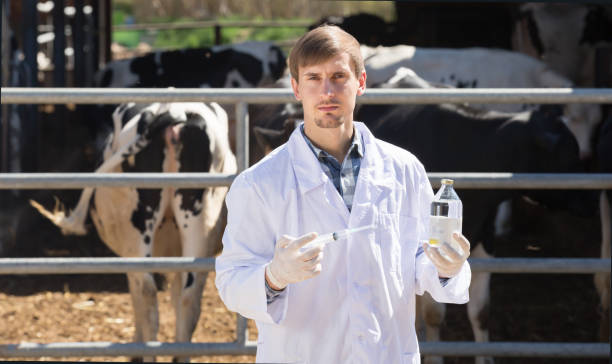
Dosing errors are not limited to only “overdosing” or “underdosing.”
Other errors may include:
- Incorrect concentration;
- Incorrect route of administration;
- Incorrect frequency;
- Incorrect treatment duration;
- Wrong target animal or animal group;
- Wrong product;
- Incorrect mixing quantity;
- Errors caused by inadequate water or feed consumption.
Common Causes
Some medication errors may occur directly on the farm.
Incorrect Body-Weight Estimation
An animal may be estimated at 50 kg but actually weigh substantially more or less.
Confusing mg With mL
mg is a unit of mass for the active ingredient, while mL is a unit of volume.
They cannot be converted directly without knowing the product concentration.
Using the Wrong Concentration
Two products may contain the same active ingredient but at different strengths.
Decimal-Point Errors
0.5 mL and 5 mL differ by a factor of ten.
Mixing Medication With an Inappropriate Amount of Water
The calculation may be correct, but actual water consumption may differ from the expected amount.
Failing to Recalculate When Moving From Individual to Herd/Flock Administration
An individual-animal dose cannot automatically be multiplied across the herd or flock if group administration follows different product instructions.
When an Overdose Is Suspected
The potential effects depend on factors including:
- Active ingredient;
- Degree of overdose;
- Species;
- Age;
- Route of administration;
- Health status.
Possible abnormal signs may include:
- Tremors;
- Seizures;
- Excessive salivation;
- Difficulty breathing;
- Behavioral changes;
- Weakness;
- Loss of appetite;
- Prolonged lying;
- Severe reactions occurring after medication.
These signs are not specific to overdose and may also be caused by disease or other adverse reactions.
If an overdose is suspected or a serious reaction occurs:
- Do not independently continue with the next dose before obtaining professional guidance;
- Record the product and amount administered;
- Keep the product packaging;
- Monitor the animal;
- Contact a veterinarian as soon as possible.
Do not administer another medicine as an attempted “antidote” without identifying the cause and receiving appropriate professional guidance.
Is Giving Less Than the Recommended Amount Safer?
No.
If drug exposure is inadequate, the medicine may fail to achieve the intended effect.
For antibiotics, inappropriate use regimens may also contribute to selection pressure favoring antimicrobial-resistant bacteria in some situations.
This does not mean that the dose should be increased independently to prevent antimicrobial resistance.
The appropriate principle is to follow:
- The product label;
- Professional veterinary guidance;
- The correct dose;
- The correct frequency;
- The correct treatment duration.
8. What Should Be Done if the Calculation Is Correct but the Medicine Is Not Working?
A common reaction when an animal does not improve is:
“Maybe increase the dose a little.”
This is not an appropriate approach.
Treatment failure can result from many causes unrelated to an insufficient dose.
Examples include:
- The initial diagnosis may be incorrect;
- The disease may not be caused by the target organism or agent;
- The bacteria may have reduced susceptibility or antimicrobial resistance;
- Co-infection may be present;
- The route of administration may be inappropriate;
- The medicine may not achieve adequate exposure at the site of disease;
- The animals may be eating or drinking less;
- The medicine may have been prepared or stored incorrectly;
- Housing conditions may continue to worsen the disease;
- The animal may already have severe lesions or damage.
When a bacterial infection is suspected but treatment does not produce the expected response, the veterinarian may consider reassessing the diagnosis, collecting appropriate samples, or performing antimicrobial susceptibility testing (AST) when indicated.
Therefore, rather than independently increasing:
- Dose;
- Frequency;
- Number of treatment days;
the underlying cause should be reassessed.
9. A Short Checklist Before Each Medication Administration
Rather than treating the checklist as a separate concept, it can be used as a final check before medication is administered.
Before Preparing the Medicine for Use
- Is this the correct product?
- Is the active ingredient correct?
- Is the concentration correct?
- Is the product within its expiry date?
- Are the packaging and medicine in normal condition?
Before Calculating
- What is the animal’s body weight?
- Was the animal weighed or only estimated?
- Does the label specify mg/kg, mL/kg, or another dosing unit?
- Has the decimal point been read correctly?
After Calculating
- Does the result appear reasonable?
- If converting from mg to mL, was the correct product concentration used?
- Can the measuring equipment accurately measure the required amount?
- Is veterinary advice needed before administration?
Before Administration
- Correct species?
- Correct route of administration?
- Correct timing?
- Are there interactions or contraindications that need to be considered?
- Is the product approved for use in animals at this stage?
After Administration
Record:
- Product name;
- Active ingredient;
- Date and time;
- Dose;
- Route of administration;
- Individual animal or herd/flock;
- Person administering the medicine;
- Withdrawal period, when applicable.
Record keeping helps reduce accidental repeat dosing and supports monitoring of treatment response.
10. Frequently Asked Questions About Veterinary Drug Dose Calculations
What Does an mg/kg Dose Mean?
It refers to the number of milligrams of active ingredient used per kilogram of body weight when the product label specifies the dose in this unit.
Mathematical example:
10 mg/kg × 50 kg = 500 mg.
The amount must then be converted into the actual product volume or dosage unit according to the product concentration.
The 10 mg/kg figure in this example is not a recommended dose for any specific medicine.
Can Body Weight Be Estimated if a Scale Is Not Available?
Species-appropriate estimation methods may be used in some situations, but the error can be substantial.
If the medicine has a narrow safety margin or dosing requires high accuracy, actual weighing should be preferred.
Can a Dose Used in Pigs Be Applied to Cattle or Chickens if the Active Ingredient Is the Same?
It should not be assumed that it can.
Animal species differ in physiology, metabolism, and approved indications.
The medicine should be used according to the species stated on the product label or under appropriate veterinary guidance.
Can the Dose Be Increased if the Disease Is Severe?
No.
More severe disease does not automatically mean that a higher dose is appropriate.
Failure to respond should prompt reassessment of the diagnosis, causative agent, medicine, route of administration, and other relevant factors.
What if the Dose Was Calculated Correctly but the Animal Does Not Drink All of the Medicated Water?
When medicine is administered through drinking water, the actual amount received depends on water consumption.
If the herd or flock drinks less, actual drug exposure may be lower than expected.
The condition of the animals should be assessed and a veterinarian or technician should be consulted rather than increasing the concentration independently.
When Is It Particularly Important to Consult a Veterinarian?
Veterinary advice is especially important when:
- The diagnosis is unclear;
- The dose calculation is uncertain;
- The product does not clearly state the approved species;
- The route of administration is unclear;
- Treating young or pregnant animals;
- Animals are weakened;
- The medicine is being used in food-producing animals;
- Treatment does not produce the expected response;
- Overdose is suspected;
- An abnormal reaction occurs.
11. From Accurate Dose Calculation to Safe Medication Management on the Farm
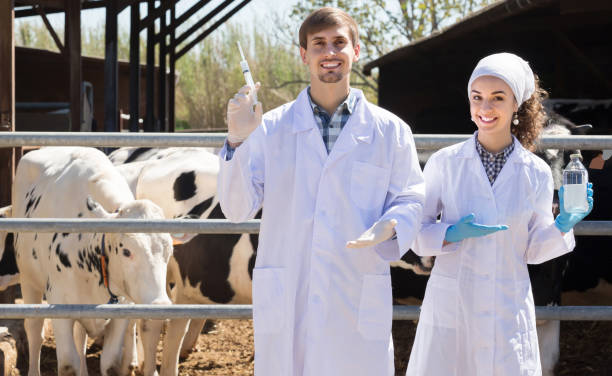
A safe veterinary medicine program should not depend solely on the ability to calculate mg/kg correctly.
Farms also need to manage the entire process:
Diagnosis → medicine selection → label review → body-weight determination → dose calculation → measurement → administration → monitoring → record keeping → withdrawal period
An error at any stage can affect the outcome.
For example:
- Correct calculation + incorrect diagnosis → the medicine does not address the underlying cause.
- Correct calculation + incorrect reading of concentration → incorrect amount administered.
- Correct calculation + inadequate water intake → lower-than-expected drug exposure.
- Correct calculation + improper preparation → altered stability or distribution.
- Correct calculation + failure to monitor the withdrawal period → increased risk of residue-management problems.
For Food-Producing Animals
Withdrawal periods should be checked carefully for:
- Meat;
- Milk;
- Eggs;
- Other food products.
Withdrawal periods should be tracked from the beginning of medication use.
Do not wait until shortly before animals or products are marketed to look up the withdrawal information.
Record Keeping Helps Reduce Errors
A simple medication record may include:
| Information | What to record |
| Date of administration | Date and time |
| Animal/group | Individual animal or herd/flock |
| Medicine | Product name and active ingredient |
| Dose | Prescribed dose and amount administered |
| Route of administration | Injection, drinking water, feed, etc. |
| Person administering | Person responsible for administering the medicine |
| Withdrawal period | Applicable withdrawal information |
| Monitoring | Reactions and treatment response |
When several people work on the same farm, record keeping can also reduce the risk of an animal being medicated twice because of incomplete handover.
Discover Veterinary Medicine Management and Safe-Use Solutions at VIETSTOCK 2026
Accurate dose calculation is an important part of safe veterinary medicine use, but practical farm management also involves dosing equipment, medication-mixing systems, water quality, treatment records, withdrawal-period management, and herd or flock health monitoring.
VIETSTOCK 2026 is an industry networking platform for livestock producers, veterinarians, farm technicians, veterinary pharmaceutical companies, equipment suppliers, and organizations across the livestock value chain. The event is expected to bring together more than 300 brands, over 10,000 sqm of exhibition area, and 13,000 trade visitors from more than 40 countries and territories.
For veterinary medicine use, visitors can explore practical solutions from multiple perspectives, including veterinary medicines and supporting products, dosing equipment, injection tools, drinking-water medication systems, treatment-data management solutions, and technologies that support tracking medication-use history on farms.
The event also provides an opportunity for livestock producers and farm technicians to engage directly with companies, suppliers, and industry organizations on common operational challenges such as dosing for non-uniform herds or flocks, managing drinking-water medication systems, maintaining treatment records, and tracking withdrawal periods.
Alongside the exhibition, the VIETSTOCK 2026 Livestock Roadshows in Bac Ninh, Dong Thap and Ho Chi Minh City bring practical knowledge on herd health management, responsible medicine use, disease prevention and biosecurity closer to livestock farmers in key livestock-producing regions.
Date: 21–23 October 2026
Venue: Saigon Exhibition and Convention Center (SECC), 799 Nguyen Van Linh Street, Tan My Ward, Ho Chi Minh City, Vietnam
Event website: https://www.vietstock.org/en/
👉 Visitor registration for VIETSTOCK 2026
👉 Learn more about the VIETSTOCK 2026 Livestock Roadshows
Contact information:
Exhibiting: Ms. Sophie Nguyen – [email protected]
Visitor Support: Ms. Phuong – [email protected]
Marcom Support: Ms. Anita Pham – [email protected]